
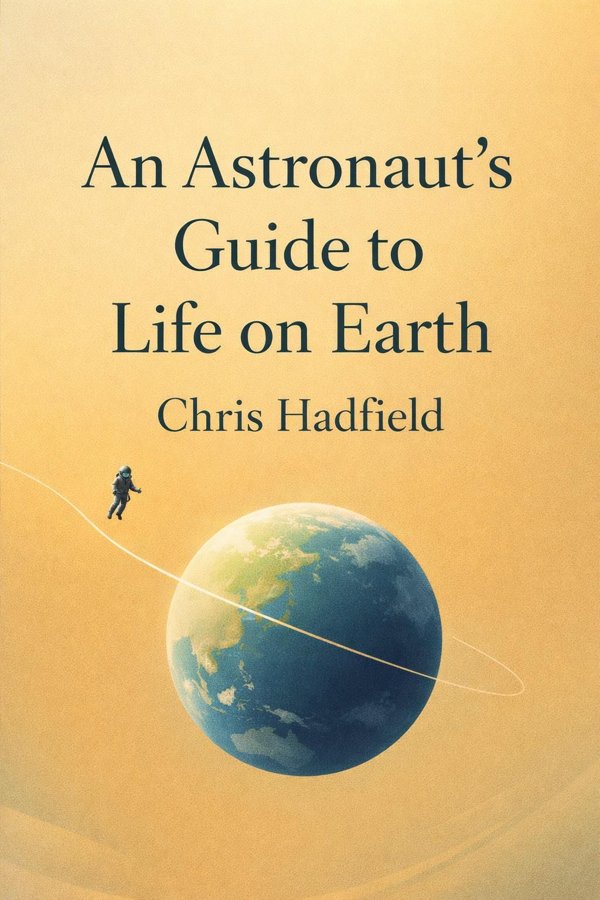
An Astronaut's Guide to Life on Earth: Summary & Key Insights
 10 min9 chaptersAudio available
What Is An Astronaut's Guide to Life on Earth About?
An Astronaut's Guide to Life on Earth by Chris Hadfield is a biographies book spanning 9 pages. In this memoir, Canadian astronaut Chris Hadfield shares lessons learned from his experiences in space and on Earth. He offers insights into preparation, teamwork, and perspective, showing how thinking like an astronaut can help anyone achieve success and handle challenges in everyday life.
This FizzRead summary covers all 9 key chapters of An Astronaut's Guide to Life on Earth in approximately 10 minutes, distilling the most important ideas, arguments, and takeaways from Chris Hadfield's work. Also available as an audio summary and Key Quotes Podcast.
An Astronaut's Guide to Life on Earth
In this memoir, Canadian astronaut Chris Hadfield shares lessons learned from his experiences in space and on Earth. He offers insights into preparation, teamwork, and perspective, showing how thinking like an astronaut can help anyone achieve success and handle challenges in everyday life.
Who Should Read An Astronaut's Guide to Life on Earth?
This book is perfect for anyone interested in biographies and looking to gain actionable insights in a short read. Whether you're a student, professional, or lifelong learner, the key ideas from An Astronaut's Guide to Life on Earth by Chris Hadfield will help you think differently.
- ✓Readers who enjoy biographies and want practical takeaways
- ✓Professionals looking to apply new ideas to their work and life
- ✓Anyone who wants the core insights of An Astronaut's Guide to Life on Earth in just 10 minutes
Want the full summary?
Get instant access to this book summary and 100K+ more with Fizz Moment.
Get Free SummaryAvailable on App Store • Free to download
Key Chapters
I was nine years old when I watched Neil Armstrong take that small step onto the Moon, and something in me shifted permanently. In that moment, space stopped being an abstract idea—it became a destination. But as a Canadian kid in 1969, the pathway to that destination didn’t exist. Canada had no astronaut program, no rockets, no roadmap. What I did have was a clear sense of direction. I decided that every day, I would live as if I were preparing to be an astronaut.
That decision was more formative than any later milestone in my career. It meant approaching school differently—choosing subjects not because they were easy or immediately rewarding, but because they built the skills space required: math, science, discipline. It also meant adopting a mindset of contribution. Astronauts aren’t solo adventurers; they’re members of interdependent teams. So I learned to see how I could make whatever team I was on function better, whether it was my family, my flight squadron, or later, NASA.
Looking back, that early vision wasn’t about a single goal; it was about identity. The dream gave shape to the habits, the habits shaped opportunities, and opportunities eventually made the dream real. The lesson isn’t that you need to know your destination early—it’s that you can live today as the person who could reach it. Every daily choice to prepare matters. You don’t wait for a dream to become possible to start living it.
Astronaut training is a relentless pursuit of competence in a field where there’s zero margin for error. Before I ever saw a rocket up close, I spent years mastering the hundred parallel disciplines that orbit around spaceflight. Pilots, engineers, surgeons, linguists—we’re expected to be all of them, often in the same day. The training never really ends. You simulate emergencies that seem absurdly unlikely, because experience tells you that when things go wrong in space, they go wrong fast.
What that taught me—and what anyone can apply—is that preparation is the purest form of respect for your craft and your teammates. You never train for the best‑case scenario. You train for the worst day of your life, so that when it comes, you can function through it instead of freezing. It’s a discipline of humility. You have to accept that you’re not naturally good enough; only deliberate effort makes you effective.
At NASA, before a mission, we would rehearse every tiny operation hundreds of times, until the routine was encoded in muscle memory. At first, it felt redundant. Then, one day in orbit, something unexpected would happen—an alarm, a pressure valve misreading—and instinct would take over. Preparation turns chaos into competence.
On Earth, the same rule applies. Whether you’re giving a presentation, teaching a class, or making a tough decision, preparation shows that you take your responsibilities seriously. It creates quiet confidence, not bravado. It frees you to perform under pressure because you’ve already done the work.
+ 7 more chapters — available in the FizzRead app
All Chapters in An Astronaut's Guide to Life on Earth
About the Author
Chris Hadfield is a Canadian astronaut, engineer, and former commander of the International Space Station. Known for his engaging communication and educational outreach, he became widely recognized for sharing life in space through social media and public speaking.
Get This Summary in Your Preferred Format
Read or listen to the An Astronaut's Guide to Life on Earth summary by Chris Hadfield anytime, anywhere. FizzRead offers multiple formats so you can learn on your terms — all free.
Available formats: App · Audio · PDF · EPUB — All included free with FizzRead
Download An Astronaut's Guide to Life on Earth PDF and EPUB Summary
Key Quotes from An Astronaut's Guide to Life on Earth
“I was nine years old when I watched Neil Armstrong take that small step onto the Moon, and something in me shifted permanently.”
“Astronaut training is a relentless pursuit of competence in a field where there’s zero margin for error.”
Frequently Asked Questions about An Astronaut's Guide to Life on Earth
An Astronaut's Guide to Life on Earth by Chris Hadfield is a biographies book that explores key ideas across 9 chapters. In this memoir, Canadian astronaut Chris Hadfield shares lessons learned from his experiences in space and on Earth. He offers insights into preparation, teamwork, and perspective, showing how thinking like an astronaut can help anyone achieve success and handle challenges in everyday life.
You Might Also Like

An American Marriage
Tayari Jones
10 min
Benjamin Franklin: An American Life
Walter Isaacson
10 min
I Know Why The Caged Bird Sings
Maya Angelou
10 min
Long Walk to Freedom
Nelson Mandela
10 min
Persepolis
Marjane Satrapi
10 min
Surely You're Joking, Mr. Feynman!
Richard P. Feynman
10 minBrowse by Category
Ready to read An Astronaut's Guide to Life on Earth?
Get the full summary and 100K+ more books with Fizz Moment.