
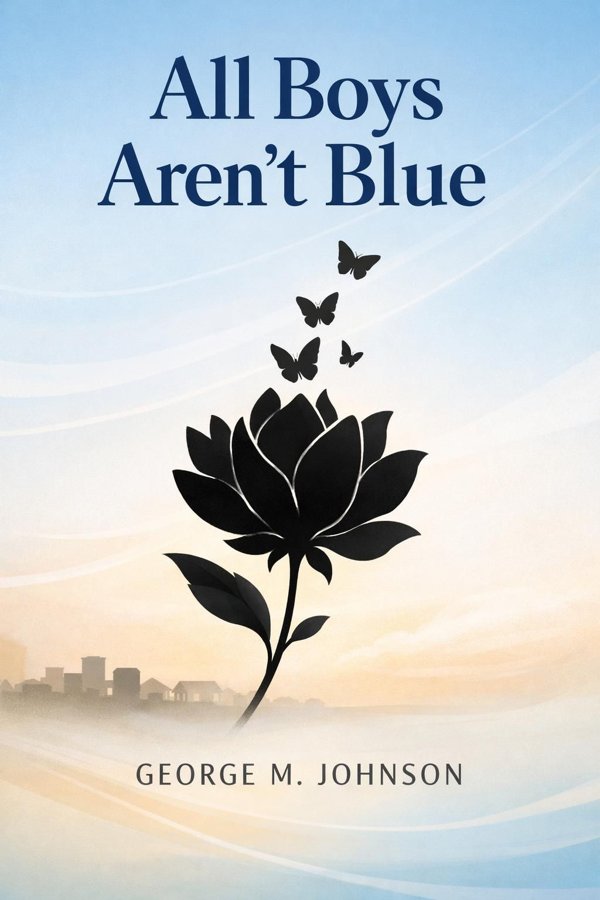
All Boys Aren't Blue: A Memoir-Manifesto: Summary & Key Insights
 10 min10 chaptersAudio available
Key Takeaways from All Boys Aren't Blue: A Memoir-Manifesto
Before people can name who they are, they often feel who they are.
When masculinity is treated as survival, tenderness is often punished.
School is supposed to be a place of learning, but for many queer children it first becomes a place of surveillance.
Self-recognition can begin with attraction, long before comfort or language arrives.
Community is not automatically liberating; sometimes it asks you to belong at the cost of your full self.
What Is All Boys Aren't Blue: A Memoir-Manifesto About?
All Boys Aren't Blue: A Memoir-Manifesto by George M. Johnson is a biographies book spanning 10 pages. All Boys Aren't Blue: A Memoir-Manifesto is George M. Johnson’s deeply personal and politically urgent account of growing up Black, queer, and vulnerable in America. Blending memoir, cultural critique, and direct affirmation, Johnson traces childhood, adolescence, and early adulthood through stories of family, bullying, first love, sexual awakening, trauma, friendship, and self-definition. The result is not just a life story, but a challenge to the rigid ideas society imposes on race, gender, masculinity, and sexuality. What makes the book so powerful is its honesty: Johnson writes with tenderness and precision about experiences often silenced, especially within conversations about Black identity and manhood. As a journalist, activist, and public voice on LGBTQ+ issues, Johnson brings both lived experience and cultural insight to these pages. This book matters because it offers visibility to those who rarely see themselves represented fully and compassionately, while also inviting all readers to rethink what safety, family, and acceptance truly mean. It is a memoir for healing, a manifesto for liberation, and a testimony to the life-saving power of telling the truth.
This FizzRead summary covers all 10 key chapters of All Boys Aren't Blue: A Memoir-Manifesto in approximately 10 minutes, distilling the most important ideas, arguments, and takeaways from George M. Johnson's work. Also available as an audio summary and Key Quotes Podcast.
All Boys Aren't Blue: A Memoir-Manifesto
All Boys Aren't Blue: A Memoir-Manifesto is George M. Johnson’s deeply personal and politically urgent account of growing up Black, queer, and vulnerable in America. Blending memoir, cultural critique, and direct affirmation, Johnson traces childhood, adolescence, and early adulthood through stories of family, bullying, first love, sexual awakening, trauma, friendship, and self-definition. The result is not just a life story, but a challenge to the rigid ideas society imposes on race, gender, masculinity, and sexuality. What makes the book so powerful is its honesty: Johnson writes with tenderness and precision about experiences often silenced, especially within conversations about Black identity and manhood. As a journalist, activist, and public voice on LGBTQ+ issues, Johnson brings both lived experience and cultural insight to these pages. This book matters because it offers visibility to those who rarely see themselves represented fully and compassionately, while also inviting all readers to rethink what safety, family, and acceptance truly mean. It is a memoir for healing, a manifesto for liberation, and a testimony to the life-saving power of telling the truth.
Who Should Read All Boys Aren't Blue: A Memoir-Manifesto?
This book is perfect for anyone interested in biographies and looking to gain actionable insights in a short read. Whether you're a student, professional, or lifelong learner, the key ideas from All Boys Aren't Blue: A Memoir-Manifesto by George M. Johnson will help you think differently.
- ✓Readers who enjoy biographies and want practical takeaways
- ✓Professionals looking to apply new ideas to their work and life
- ✓Anyone who wants the core insights of All Boys Aren't Blue: A Memoir-Manifesto in just 10 minutes
Want the full summary?
Get instant access to this book summary and 100K+ more with Fizz Moment.
Get Free SummaryAvailable on App Store • Free to download
Key Chapters
Before people can name who they are, they often feel who they are. Johnson’s early childhood in Plainfield, New Jersey, reveals how identity begins long before formal self-understanding. Surrounded by a large extended family, church culture, neighborhood expectations, and the stabilizing presence of his grandmother Nanny, he learned that love and contradiction can coexist. Home was full of care, humor, discipline, and tradition, yet it was also a place where certain forms of difference were sensed before they were spoken aloud.
Johnson’s childhood memories show how children absorb messages about belonging from tone, gesture, and reaction. He noticed what kinds of behavior earned approval and what sparked discomfort. That is especially important for queer children, who may recognize that they are somehow outside the norm before they understand words like gay, queer, or nonbinary. Johnson’s story reminds us that identity is not invented in adolescence; it is often experienced in childhood through instincts, preferences, and emotional truths.
This idea has practical relevance for parents, teachers, and caregivers. A child who does not conform to gender expectations does not need correction; they need room. Adults can create that room by avoiding shaming language, listening carefully, and resisting the urge to force children into narrow roles. Small actions matter: allowing children to express emotion freely, avoiding jokes about “acting like a boy” or “acting like a girl,” and treating curiosity with warmth rather than fear.
Johnson’s childhood also demonstrates the power of one affirming adult. Nanny did not need activist vocabulary to offer grounding. Her presence communicated safety. For many young people, one stable, loving figure can become the difference between shame and self-trust.
Actionable takeaway: Think about the messages your home, classroom, or community sends to children, and replace correction-based responses with curiosity, dignity, and emotional safety.
When masculinity is treated as survival, tenderness is often punished. Johnson explores how Black masculinity in his family and community functioned as a strict social code built around strength, control, dominance, and emotional restraint. These expectations did not emerge from nowhere; they were shaped by racism, danger, and the pressure placed on Black boys to appear tough in a hostile world. But what protects can also wound. In Johnson’s life, masculinity was presented as a performance with severe consequences for failure.
The tragedy of rigid masculinity is that it narrows human possibility. Boys learn that crying is weakness, softness invites ridicule, and affection can be misread. For queer Black boys, the pressure intensifies: they must navigate both external racism and internal policing of what a “real man” is supposed to be. Johnson shows that this policing is not merely cultural discomfort; it can produce shame, silence, and fractured self-worth.
This theme applies far beyond the memoir. Many families still pass down ideas of manhood that reward suppression over honesty. A boy who loves dance, speaks gently, or avoids aggression may be treated as a problem to fix. Workplaces, sports teams, and schools can reinforce the same script, teaching men to perform toughness instead of building emotional literacy.
Johnson’s critique is not an attack on Black communities but an invitation to widen the meaning of masculinity. Strength can include vulnerability. Leadership can include empathy. Protection can include making space for truth.
In practical terms, this means encouraging boys to name feelings, modeling affection without embarrassment, and refusing language that equates sensitivity with failure. Communities do not become weaker when men are more human; they become healthier.
Actionable takeaway: Challenge one inherited belief about manhood this week by affirming emotion, softness, or openness in yourself or someone else.
School is supposed to be a place of learning, but for many queer children it first becomes a place of surveillance. Johnson’s school years reveal how bullying teaches a child to monitor their voice, walk, clothing, gestures, and friendships. Long before academic success or failure becomes central, survival becomes the real curriculum. The lesson is brutal: difference is visible, and visibility can be dangerous.
Johnson captures how bullying is not only about individual cruelty. It is often sustained by silence from adults, laughter from peers, and institutions that do not know how to protect children who fall outside gender norms. A student may be mocked for being “too soft,” isolated socially, or treated as suspect before they have even named their identity. Over time, these experiences can produce hypervigilance, anxiety, and self-erasure.
The wider implication is that anti-bullying efforts fail when they address only extreme incidents. Harm often lives in routine comments, repeated jokes, and the message that queer children must become less visible to stay safe. A school can claim neutrality while still rewarding conformity.
There are practical ways to respond. Teachers can interrupt gender-based teasing immediately rather than treating it as normal childhood behavior. Schools can include LGBTQ+ representation in reading lists and health education so that queer students do not feel invisible. Parents can ask more than “How was school?” and instead ask, “Did you feel safe being yourself today?” That question can open a door many children need.
Johnson’s story makes clear that bullying does not just hurt in the moment; it shapes how a person imagines their future. Protection, therefore, is not merely about discipline but about restoring the right to exist openly.
Actionable takeaway: If you influence a school or youth space, address subtle gender policing as seriously as overt bullying, because both teach children to fear themselves.
Self-recognition can begin with attraction, long before comfort or language arrives. Johnson’s reflections on sexual identity and first attractions show how desire can be both illuminating and terrifying. Feeling drawn to someone may offer a first glimpse of truth, but in an environment shaped by shame, that truth can feel dangerous. Instead of simple discovery, early attraction becomes tangled with secrecy, guilt, fantasy, and fear of exposure.
What makes Johnson’s account especially meaningful is that he refuses to romanticize this period. First attractions were not just innocent crushes; they existed within systems that denied queer youth healthy language, consent-centered education, and emotional support. Without affirming examples, young people often interpret their feelings through confusion or risk. They may hide, dissociate, or seek validation in unsafe ways.
This has practical implications for families and educators. When sexuality is discussed only through silence or stigma, young people are left to learn from peers, pornography, rumor, or coercive experiences. Comprehensive, inclusive education does not “encourage” queerness; it reduces fear and helps young people understand their bodies, boundaries, and desires responsibly.
Johnson also shows that accepting one’s sexuality is not a single breakthrough. It is often a gradual process of allowing internal truth to become livable. That process requires mirrors: stories, mentors, media representation, and communities where desire is not treated as deviance.
For readers, this idea can prompt reflection on how we respond to young people’s emerging identities. Do we give them tools, or only warnings? Do we make self-knowledge safer, or more painful?
Actionable takeaway: Support age-appropriate, inclusive conversations about identity and attraction so that young people can understand themselves without attaching shame to desire.
Community is not automatically liberating; sometimes it asks you to belong at the cost of your full self. In Johnson’s account of college and fraternity life, brotherhood appears as both support system and testing ground. College opens space for growth, experimentation, and chosen family. It also magnifies social pressures around performance, masculinity, sex, and status. In that environment, the desire to be accepted can lead people to hide parts of themselves even while building powerful bonds.
Johnson’s experience shows why institutions of brotherhood matter so much. For many Black students, especially those navigating predominantly white environments, organizations and peer networks offer cultural grounding, protection, and pride. Yet the same spaces can reinforce narrow expectations about gender and sexuality. A person may feel embraced as long as their difference remains manageable or unspoken.
This tension is common in many forms of community: sports teams, faith groups, friend circles, even activist spaces. People often celebrate belonging without asking who must edit themselves to fit in. Johnson helps readers see that the goal is not to reject community, but to make it more honest.
Practically, this means building cultures where disclosure is not punished and respect is not conditional on conformity. Group leaders can model this by addressing homophobia directly, welcoming vulnerability, and refusing jokes or rituals that depend on humiliation. Friendship also deepens when people ask better questions: “Who do you feel safe being around?” or “What part of yourself do you hide here?”
Johnson’s larger point is that brotherhood should not require self-betrayal. The best communities do more than include difference; they let difference breathe.
Actionable takeaway: Examine one group you belong to and ask whether its sense of unity depends on silence from people who do not fit the dominant mold.
Silence can preserve survival, but it can also preserve pain. One of the most important contributions of Johnson’s memoir is his willingness to speak about trauma, including sexual harm, emotional wounds, and the lasting effects of growing up in environments that did not always protect him. By naming these experiences, he rejects the cultural expectation that Black men, and especially queer Black men, must endure suffering without language.
Johnson’s treatment of trauma is nuanced. Healing is not portrayed as neat, linear, or inspirational in a simplistic way. Trauma affects relationships, body image, trust, sexuality, and self-perception. It can produce coping mechanisms that once felt necessary but later become barriers to intimacy and peace. This honesty matters because many memoirs either sensationalize pain or rush too quickly toward redemption. Johnson instead shows healing as an ongoing practice of truth-telling, boundary-setting, memory work, and self-compassion.
Readers can apply this insight in practical ways. First, trauma should be met with belief rather than interrogation. When someone shares harm, the initial task is not to question but to create safety. Second, therapy, support groups, spiritual care, and trusted friendships all have roles in healing. No single tool is enough for everyone. Third, communities need to stop treating disclosure as family betrayal. Protecting reputation at the expense of survivors only extends the damage.
Johnson also reminds us that speaking out can help others find words for their own experiences. Personal testimony becomes communal permission.
Actionable takeaway: If trauma has shaped your life, take one concrete step toward support—tell a trusted person, seek therapy, journal honestly, or establish one boundary that protects your well-being.
Many people grow up believing love means finally being wanted, but Johnson suggests that real love also requires safety, reciprocity, and self-respect. His reflections on relationships reveal how early wounds can shape what feels attractive or familiar. If someone has learned to equate secrecy with intimacy or validation with worth, they may accept less than they deserve in order to avoid abandonment.
Johnson’s experiences illuminate a broader truth: queer relationships often develop under social conditions that complicate openness. Fear of public judgment, family rejection, or internalized shame can make relationships uneven from the start. One partner may be out while the other is hidden. One may seek tenderness while the other can offer only fragments. In such contexts, love is not just emotional; it is also political, because the world influences what people believe they are allowed to have.
This idea applies widely, regardless of identity. Healthy relationships ask more than attraction. They ask whether both people can be honest, accountable, and emotionally present. Johnson’s memoir encourages readers to examine whether they are pursuing connection or merely chasing relief from loneliness.
Practical applications include learning to identify red flags, practicing clear communication, and refusing relationships that demand self-erasure. It also means understanding that healing and partnership are linked but not identical. A relationship cannot substitute for self-worth. In fact, the more grounded a person becomes, the less appealing unhealthy dynamics often feel.
Johnson does not offer a formula for perfect love. Instead, he asks a better question: does this relationship let you exist more fully, or less?
Actionable takeaway: In your closest relationship, identify one place where honesty, boundaries, or mutual care could be strengthened, and address it directly.
Seeing yourself reflected in the world is not a luxury; it can be a survival tool. Johnson emphasizes the importance of community and representation because invisibility carries psychological cost. When Black queer youth do not encounter people like themselves in books, media, classrooms, or leadership, they may interpret their difference as isolation. Representation interrupts that lie. It says: you exist, you have history, and your future is imaginable.
Johnson’s memoir itself functions as representation, but he also points beyond the page. Community can take many forms: a trusted friend, a local LGBTQ+ center, online networks, artists, mentors, and intergenerational relationships. These spaces do not erase hardship, but they provide language, affirmation, and practical guidance. They show that identity can be lived with joy, not only with struggle.
There is a concrete lesson here for cultural institutions. Libraries, schools, publishers, and media companies shape what kinds of lives seem legible. A curriculum without Black queer writers sends a message, even if unintentionally. Likewise, a family that never speaks positively about queer people creates a silence that children must interpret alone.
Readers can apply this idea by becoming intentional about the stories they support and share. Recommend books by marginalized authors. Diversify classroom materials. Follow creators whose work expands your understanding of human experience. If you are in a position of mentorship, be visible in ways that help younger people imagine possibility.
Representation is not about token inclusion. Its deepest value lies in reducing loneliness and enlarging hope.
Actionable takeaway: Add one Black queer voice to your reading, teaching, parenting, or leadership practice this month, and treat representation as necessary rather than optional.
One of Johnson’s most powerful messages is that surviving oppression is not enough; people deserve affirmation. The book’s final lessons and reflections move beyond recounting pain to offering direct encouragement, especially to Black queer youth. Johnson writes as someone who has endured confusion, rejection, and trauma, but also as someone determined to speak life into others. In that sense, the book becomes a manifesto: a declaration that dignity, softness, pleasure, truth, and self-definition are worth defending.
Affirmation matters because many marginalized people are taught to organize their lives around avoidance: avoid danger, avoid judgment, avoid rejection. While caution may be necessary, a life built only around defense becomes spiritually small. Johnson instead argues for a fuller vision of freedom, one that includes joy, expression, chosen family, and the right to define one’s own masculinity and identity.
This insight has practical force. Affirmation can look like using someone’s chosen language, defending them in hostile spaces, celebrating milestones others ignore, or simply saying, “You do not need to shrink to be loved.” Institutions can practice affirmation through inclusive policies, visible support, and leadership that reflects the communities they serve.
Importantly, Johnson frames affirmation not as empty positivity but as resistance. In a culture that often devalues Black queer lives, to affirm those lives openly is a political act. It challenges systems that rely on shame and erasure.
For readers, the book offers both mirror and mission: heal what you can, tell the truth where possible, and become for others the support you may have once needed.
Actionable takeaway: Offer one explicit affirmation today—to yourself or someone else—that counters a message of shame, and make that practice part of everyday life.
All Chapters in All Boys Aren't Blue: A Memoir-Manifesto
About the Author
George M. Johnson is an American writer, journalist, and activist whose work centers on the intersections of Black identity, queerness, gender, and social justice. They have contributed essays and commentary to major outlets such as Teen Vogue, BuzzFeed, and The Root, where they have written about politics, culture, LGBTQ+ rights, and the lived realities of marginalized communities. Johnson is best known for All Boys Aren't Blue, a bestselling memoir-manifesto that brought national attention to the experiences of Black queer youth and the pressures of masculinity in America. Their writing is recognized for its emotional honesty, accessibility, and political clarity. Through both journalism and memoir, Johnson has become an important public voice advocating for visibility, affirmation, and dignity for Black queer people.
Get This Summary in Your Preferred Format
Read or listen to the All Boys Aren't Blue: A Memoir-Manifesto summary by George M. Johnson anytime, anywhere. FizzRead offers multiple formats so you can learn on your terms — all free.
Available formats: App · Audio · PDF · EPUB — All included free with FizzRead
Download All Boys Aren't Blue: A Memoir-Manifesto PDF and EPUB Summary
Key Quotes from All Boys Aren't Blue: A Memoir-Manifesto
“Before people can name who they are, they often feel who they are.”
“When masculinity is treated as survival, tenderness is often punished.”
“School is supposed to be a place of learning, but for many queer children it first becomes a place of surveillance.”
“Self-recognition can begin with attraction, long before comfort or language arrives.”
“Community is not automatically liberating; sometimes it asks you to belong at the cost of your full self.”
Frequently Asked Questions about All Boys Aren't Blue: A Memoir-Manifesto
All Boys Aren't Blue: A Memoir-Manifesto by George M. Johnson is a biographies book that explores key ideas across 10 chapters. All Boys Aren't Blue: A Memoir-Manifesto is George M. Johnson’s deeply personal and politically urgent account of growing up Black, queer, and vulnerable in America. Blending memoir, cultural critique, and direct affirmation, Johnson traces childhood, adolescence, and early adulthood through stories of family, bullying, first love, sexual awakening, trauma, friendship, and self-definition. The result is not just a life story, but a challenge to the rigid ideas society imposes on race, gender, masculinity, and sexuality. What makes the book so powerful is its honesty: Johnson writes with tenderness and precision about experiences often silenced, especially within conversations about Black identity and manhood. As a journalist, activist, and public voice on LGBTQ+ issues, Johnson brings both lived experience and cultural insight to these pages. This book matters because it offers visibility to those who rarely see themselves represented fully and compassionately, while also inviting all readers to rethink what safety, family, and acceptance truly mean. It is a memoir for healing, a manifesto for liberation, and a testimony to the life-saving power of telling the truth.
You Might Also Like

An American Marriage
Tayari Jones
10 min
Benjamin Franklin: An American Life
Walter Isaacson
10 min
I Know Why The Caged Bird Sings
Maya Angelou
10 min
Long Walk to Freedom
Nelson Mandela
10 min
Persepolis
Marjane Satrapi
10 min
Surely You're Joking, Mr. Feynman!
Richard P. Feynman
10 minBrowse by Category
Ready to read All Boys Aren't Blue: A Memoir-Manifesto?
Get the full summary and 100K+ more books with Fizz Moment.