
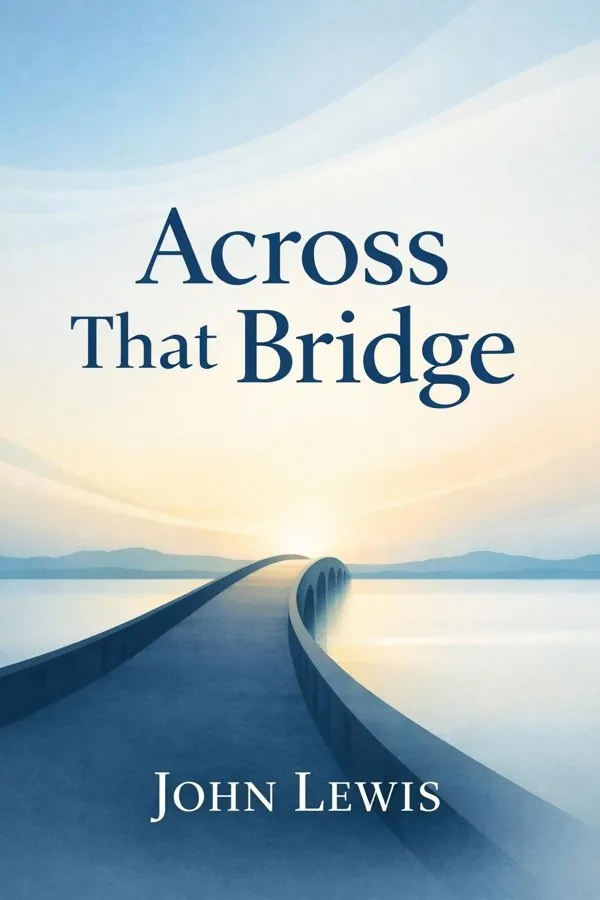
Across That Bridge: A Vision for Change and the Future of America: Summary & Key Insights
by John Lewis
 10 min8 chaptersAudio available
What Is Across That Bridge: A Vision for Change and the Future of America About?
Across That Bridge: A Vision for Change and the Future of America by John Lewis is a biographies book spanning 8 pages. In this reflective and inspiring work, civil rights leader and U.S. Congressman John Lewis shares lessons from his lifelong commitment to justice and equality. Drawing on his experiences in the Civil Rights Movement, Lewis explores the moral and spiritual foundations of social change, emphasizing courage, faith, and perseverance as essential forces for building a more just America.
This FizzRead summary covers all 8 key chapters of Across That Bridge: A Vision for Change and the Future of America in approximately 10 minutes, distilling the most important ideas, arguments, and takeaways from John Lewis's work. Also available as an audio summary and Key Quotes Podcast.
Across That Bridge: A Vision for Change and the Future of America
In this reflective and inspiring work, civil rights leader and U.S. Congressman John Lewis shares lessons from his lifelong commitment to justice and equality. Drawing on his experiences in the Civil Rights Movement, Lewis explores the moral and spiritual foundations of social change, emphasizing courage, faith, and perseverance as essential forces for building a more just America.
Who Should Read Across That Bridge: A Vision for Change and the Future of America?
This book is perfect for anyone interested in biographies and looking to gain actionable insights in a short read. Whether you're a student, professional, or lifelong learner, the key ideas from Across That Bridge: A Vision for Change and the Future of America by John Lewis will help you think differently.
- ✓Readers who enjoy biographies and want practical takeaways
- ✓Professionals looking to apply new ideas to their work and life
- ✓Anyone who wants the core insights of Across That Bridge: A Vision for Change and the Future of America in just 10 minutes
Want the full summary?
Get instant access to this book summary and 100K+ more with Fizz Moment.
Get Free SummaryAvailable on App Store • Free to download
Key Chapters
Faith is where all transformation begins. In the darkest hours of the Civil Rights Movement, when jails filled and blood stained the pavements, faith was our anchor. I am often asked how we endured beatings, threats, and humiliation. The answer is simple: we believed that the struggle for justice was not merely political—it was sacred. Faith gave our suffering meaning, turned pain into purpose, and gave us confidence to face forces far greater than ourselves.
I learned early, as a boy on an Alabama farm, that faith was not confined to Sunday sermons. It was a living, breathing discipline. My parents and preachers taught me that God has no favorites, that every child is precious. When I later met Dr. Martin Luther King, Jr., that truth deepened. He taught us that faith without works is dead, that nonviolence was faith translated into action. Even when we were afraid, faith told us that love could change hearts more powerfully than any weapon.
Faith requires seeing beyond the visible. When we crossed the Edmund Pettus Bridge and were met with batons and tear gas, faith prevented despair. We did not yet see the Voting Rights Act, but we knew righteousness was on the move. Faith is never passive; it gives us the courage to act as though the world we hope for already exists. It is the lens through which justice takes form.
Many people want justice now, and rightly so. But the kind of enduring justice this world needs cannot be hurried by anger alone. Patience is not resignation; it is strength mastered. During the long years before Civil Rights laws were passed, there were days when progress seemed frozen. Yet we discovered that patience allowed us to persist without losing hope.
The hardest lesson of patience came in waiting for hearts to change. We could force laws, but we could not legislate love. Over time, however, those who once shouted insults began to whisper regrets. Patience gave space for redemption, both for others and ourselves. I have always believed that hatred corrodes the vessel that carries it. Patience trains the soul to hold steadfastly to compassion, even when justice feels slow in arriving.
In a world of instant gratification, patience may seem weak. But think of the farmer who tends the soil through seasons of drought and frost before the harvest comes. The Civil Rights Movement was like that. Every march, every speech, every prayer meeting was a planting of seeds. We did not know which would sprout. We only knew that we had to keep sowing them. That quiet, disciplined endurance is still the soul of change.
+ 6 more chapters — available in the FizzRead app
All Chapters in Across That Bridge: A Vision for Change and the Future of America
About the Author
John Lewis (1940–2020) was an American civil rights leader and politician who served as a U.S. Representative for Georgia’s 5th congressional district from 1987 until his death. A key figure in the Civil Rights Movement, he was chairman of the Student Nonviolent Coordinating Committee (SNCC) and one of the 'Big Six' leaders who organized the 1963 March on Washington.
Get This Summary in Your Preferred Format
Read or listen to the Across That Bridge: A Vision for Change and the Future of America summary by John Lewis anytime, anywhere. FizzRead offers multiple formats so you can learn on your terms — all free.
Available formats: App · Audio · PDF · EPUB — All included free with FizzRead
Download Across That Bridge: A Vision for Change and the Future of America PDF and EPUB Summary
Key Quotes from Across That Bridge: A Vision for Change and the Future of America
“Faith is where all transformation begins.”
“Many people want justice now, and rightly so.”
Frequently Asked Questions about Across That Bridge: A Vision for Change and the Future of America
Across That Bridge: A Vision for Change and the Future of America by John Lewis is a biographies book that explores key ideas across 8 chapters. In this reflective and inspiring work, civil rights leader and U.S. Congressman John Lewis shares lessons from his lifelong commitment to justice and equality. Drawing on his experiences in the Civil Rights Movement, Lewis explores the moral and spiritual foundations of social change, emphasizing courage, faith, and perseverance as essential forces for building a more just America.
You Might Also Like
An American Marriage
Tayari Jones
10 min
Benjamin Franklin: An American Life
Walter Isaacson
10 min
I Know Why The Caged Bird Sings
Maya Angelou
10 min
Long Walk to Freedom
Nelson Mandela
10 min
Persepolis
Marjane Satrapi
10 min
Surely You're Joking, Mr. Feynman!
Richard P. Feynman
10 minBrowse by Category
Ready to read Across That Bridge: A Vision for Change and the Future of America?
Get the full summary and 100K+ more books with Fizz Moment.