
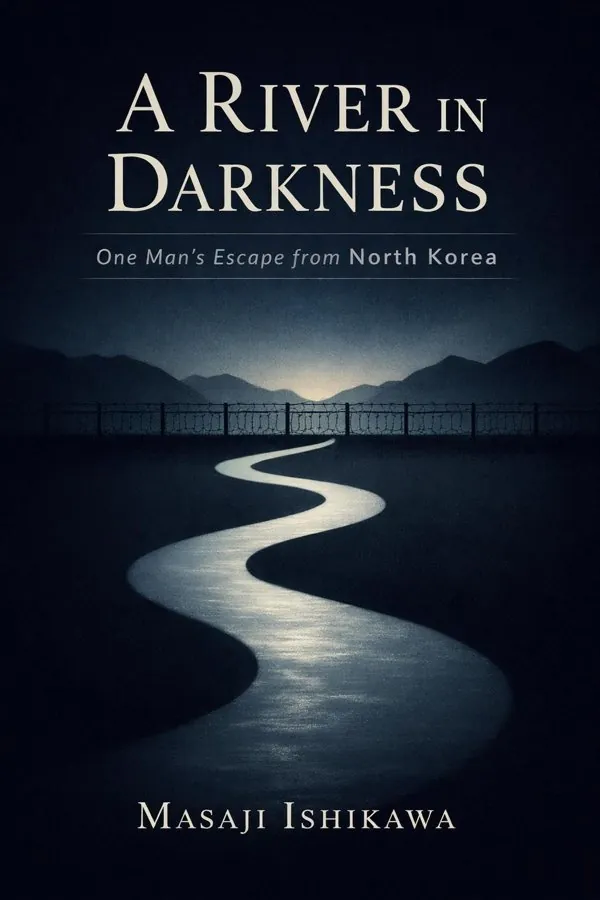
A River in Darkness: One Man’s Escape from North Korea: Summary & Key Insights
 10 min4 chapters
What Is A River in Darkness: One Man’s Escape from North Korea About?
A River in Darkness: One Man’s Escape from North Korea by Masaji Ishikawa is a biographies book spanning 4 pages. A River in Darkness is the harrowing memoir of Masaji Ishikawa, who was born in Japan to a Korean father and Japanese mother and was taken to North Korea as a child under a repatriation program. The book recounts his life under the brutal North Korean regime, his struggle to survive famine and oppression, and his desperate escape back to Japan after decades of hardship. It offers a rare firsthand account of life inside one of the world’s most secretive and repressive states.
This FizzRead summary covers all 4 key chapters of A River in Darkness: One Man’s Escape from North Korea in approximately 10 minutes, distilling the most important ideas, arguments, and takeaways from Masaji Ishikawa's work.
A River in Darkness: One Man’s Escape from North Korea
A River in Darkness is the harrowing memoir of Masaji Ishikawa, who was born in Japan to a Korean father and Japanese mother and was taken to North Korea as a child under a repatriation program. The book recounts his life under the brutal North Korean regime, his struggle to survive famine and oppression, and his desperate escape back to Japan after decades of hardship. It offers a rare firsthand account of life inside one of the world’s most secretive and repressive states.
Who Should Read A River in Darkness: One Man’s Escape from North Korea?
This book is perfect for anyone interested in biographies and looking to gain actionable insights in a short read. Whether you're a student, professional, or lifelong learner, the key ideas from A River in Darkness: One Man’s Escape from North Korea by Masaji Ishikawa will help you think differently.
- ✓Readers who enjoy biographies and want practical takeaways
- ✓Professionals looking to apply new ideas to their work and life
- ✓Anyone who wants the core insights of A River in Darkness: One Man’s Escape from North Korea in just 10 minutes
Want the full summary?
Get instant access to this book summary and 100K+ more with Fizz Moment.
Get Free SummaryAvailable on App Store • Free to download
Key Chapters
I was born in 1947 in Japan, into a family that never fit neatly into any corner of that nation’s postwar identity. My father was Korean, among those who had come to Japan seeking work before the war, only to find themselves the target of bitter prejudice afterward. My mother was Japanese, a woman whose marriage to a foreigner marked her as suspect even among her own people. We lived in poverty—decades defined by the shame of discrimination and the hollow promises of recovery.
For my father, pride became a weapon against despair. He clutched at the idea of North Korea as one might clutch at salvation: a land where nobody went hungry, where all were equal, where Koreans could stand tall. When the repatriation program began in the late 1950s, thousands were seduced by propaganda brochures showing clean schools, modern apartments, smiling children—all carefully arranged illusions. My father believed them; he thought this would free his family from humiliation and want. My mother, weary and frightened, obeyed his will. I was just thirteen when we boarded the ship, carrying dreams that would soon rot in our hands.
The journey to the so-called homeland was filled with anticipation. We were told we would find pride, respect, community. But the first scent that greeted us in Chongjin was decay. The buildings were cracked, the faces wary, the air heavy with crop dust and suspicion. It did not take long to understand: we had not arrived in paradise—we had stepped into a prison without walls.
Soon, the machinery of control closed around us. Every household was assigned to work units; every mouth was counted and measured against quotas we could never meet. My family was sent to a collective farm. I still remember the numb exhaustion in my arms, the endless bent posture as I worked the fields under the gaze of Party officers. There was no freedom, no merit—only the hierarchy of belief reinforced by fear.
It was then that I began to understand the cruel genius of the system: songbun. In North Korea, this invisible classification dictated everything—where you lived, what you ate, whom you could marry, whether your children could study. Because we came from Japan, we were placed among the lowest groups, branded as ideologically impure, tainted by foreign influence. No labor could redeem that stain. We were always watched, always doubted, always denied basic rights. Even the words spoken at home had to be guarded. A misplaced sigh could be treacherous.
Over the years, hunger became a constant companion. Rations dwindled, harvests failed, and slogans replaced sustenance. We applauded speeches about strength while our stomachs clawed in emptiness. Those with better songbun lived visibly fuller lives, their children in better schools, their homes filled with grain. For us, there was only endurance.
In that suffocating reality, the boundary between human and animal grew thin. I saw people steal, betray, and eventually die just to survive. I learned silence—not as virtue but as survival instinct. To speak, even in truth, was to invite destruction. It was then I started to question what life meant in a society that demanded faith but offered only starvation. I no longer believed. But disbelief itself was fatal, so it remained buried inside.
+ 2 more chapters — available in the FizzRead app
All Chapters in A River in Darkness: One Man’s Escape from North Korea
About the Author
Masaji Ishikawa (born 1947) is a Japanese-Korean author who spent more than 30 years in North Korea after being taken there as a child. After escaping in 1996, he published his memoir detailing his experiences under the North Korean regime. His testimony has been widely cited in human rights discussions about North Korea.
Get This Summary in Your Preferred Format
Read or listen to the A River in Darkness: One Man’s Escape from North Korea summary by Masaji Ishikawa anytime, anywhere. FizzRead offers multiple formats so you can learn on your terms — all free.
Available formats: App · Audio · PDF · EPUB — All included free with FizzRead
Download A River in Darkness: One Man’s Escape from North Korea PDF and EPUB Summary
Key Quotes from A River in Darkness: One Man’s Escape from North Korea
“I was born in 1947 in Japan, into a family that never fit neatly into any corner of that nation’s postwar identity.”
“Soon, the machinery of control closed around us.”
Frequently Asked Questions about A River in Darkness: One Man’s Escape from North Korea
A River in Darkness: One Man’s Escape from North Korea by Masaji Ishikawa is a biographies book that explores key ideas across 4 chapters. A River in Darkness is the harrowing memoir of Masaji Ishikawa, who was born in Japan to a Korean father and Japanese mother and was taken to North Korea as a child under a repatriation program. The book recounts his life under the brutal North Korean regime, his struggle to survive famine and oppression, and his desperate escape back to Japan after decades of hardship. It offers a rare firsthand account of life inside one of the world’s most secretive and repressive states.
You Might Also Like

An American Marriage
Tayari Jones
10 min
Benjamin Franklin: An American Life
Walter Isaacson
10 min
I Know Why The Caged Bird Sings
Maya Angelou
10 min
Long Walk to Freedom
Nelson Mandela
10 min
Persepolis
Marjane Satrapi
10 min
Surely You're Joking, Mr. Feynman!
Richard P. Feynman
10 minBrowse by Category
Ready to read A River in Darkness: One Man’s Escape from North Korea?
Get the full summary and 100K+ more books with Fizz Moment.