
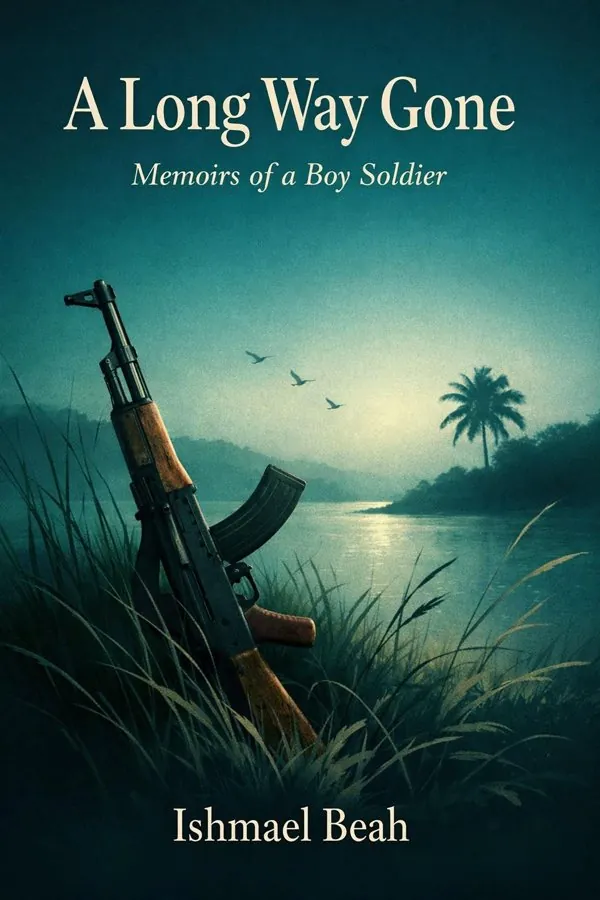
A Long Way Gone: Memoirs of a Boy Soldier: Summary & Key Insights
by Ishmael Beah
 10 min7 chaptersAudio available
What Is A Long Way Gone: Memoirs of a Boy Soldier About?
A Long Way Gone: Memoirs of a Boy Soldier by Ishmael Beah is a biographies book spanning 7 pages. A Long Way Gone: Memoirs of a Boy Soldier es una obra autobiográfica escrita por Ishmael Beah, que narra su experiencia como niño soldado durante la guerra civil de Sierra Leona. El libro describe su infancia interrumpida por el conflicto, su reclutamiento forzado, la violencia que presenció y cometió, y su posterior proceso de rehabilitación y reintegración en la sociedad. Es un testimonio poderoso sobre la pérdida de la inocencia y la resiliencia humana frente a la guerra.
This FizzRead summary covers all 7 key chapters of A Long Way Gone: Memoirs of a Boy Soldier in approximately 10 minutes, distilling the most important ideas, arguments, and takeaways from Ishmael Beah's work. Also available as an audio summary and Key Quotes Podcast.
A Long Way Gone: Memoirs of a Boy Soldier
A Long Way Gone: Memoirs of a Boy Soldier es una obra autobiográfica escrita por Ishmael Beah, que narra su experiencia como niño soldado durante la guerra civil de Sierra Leona. El libro describe su infancia interrumpida por el conflicto, su reclutamiento forzado, la violencia que presenció y cometió, y su posterior proceso de rehabilitación y reintegración en la sociedad. Es un testimonio poderoso sobre la pérdida de la inocencia y la resiliencia humana frente a la guerra.
Who Should Read A Long Way Gone: Memoirs of a Boy Soldier?
This book is perfect for anyone interested in biographies and looking to gain actionable insights in a short read. Whether you're a student, professional, or lifelong learner, the key ideas from A Long Way Gone: Memoirs of a Boy Soldier by Ishmael Beah will help you think differently.
- ✓Readers who enjoy biographies and want practical takeaways
- ✓Professionals looking to apply new ideas to their work and life
- ✓Anyone who wants the core insights of A Long Way Gone: Memoirs of a Boy Soldier in just 10 minutes
Want the full summary?
Get instant access to this book summary and 100K+ more with Fizz Moment.
Get Free SummaryAvailable on App Store • Free to download
Key Chapters
Before the war reached Mogbwemo, my days were shaped by warmth and familiarity. I lived with my father, mother, and brothers in a small but lively town surrounded by rivers and dense green forest. My greatest joy was music; I spent hours memorizing rap lyrics from cassette tapes with friends like Junior and Talloi. We dreamed of performing in talent shows, carrying the rhythms of distant worlds to our own small stage. School was another anchor, offering us glimpses of possibility beyond village life. In those early years, childhood felt limitless.
But war has a way of transforming simplicity into fragility. Rumors of rebel attacks spread slowly at first and were easy to dismiss, the way distant thunder does before the storm. We thought violence was something that happened elsewhere. When the rebels finally struck our region, the familiar sound of laughter and song was replaced by screams and gunfire. I did not yet understand what war truly meant—it arrived not with a warning but with chaos. In one day, the ordinary became unimaginable, and my identity began to fracture.
Looking back, what hurts most is not just how quickly innocence vanished, but how completely it was taken. That time before the war stands as a contrast to all that followed—a reminder of what ordinary childhood could have been if life had been allowed to unfold naturally. My memories of Mogbwemo became more than nostalgia; they became a compass, guiding me through the confusion that would define the years to come.
When the rebels invaded, fleeing became instinct. Alongside Junior and Talloi, I left behind not just possessions but my entire sense of safety. We moved from village to village under constant threat. Hunger gnawed, exhaustion blurred day into night, and every stranger’s gaze carried suspicion. Too many civilians had been betrayed by boys who turned out to be rebels; even our youth had become a mark against us.
Survival took on raw simplicity: finding water, avoiding gunfire, hiding in the bush. Yet beneath the physical struggle was the erosion of identity. The longer we wandered, the more fear consumed thought. The world around us narrowed to two emotions—terror and longing. I longed to find my family, to understand whether they had escaped, and this hope became a fragile engine keeping me moving forward.
Those months taught me the rituals of endurance. I learned to listen for danger in silence, to sleep with one eye open, to distinguish the smell of death from that of burning wood. We were children forced to become creatures of instinct, and though our bodies survived, something of our innocence died each day. Even in moments of hope—finding a temporary refuge or sharing food with sympathetic villagers—our reality remained threaded with uncertainty. This wandering phase of my life marked the beginning of transformation, a slow descent from boyhood into an existence ruled by fear.
+ 5 more chapters — available in the FizzRead app
All Chapters in A Long Way Gone: Memoirs of a Boy Soldier
About the Author
Ishmael Beah nació en Sierra Leona en 1980. Tras sobrevivir a la guerra civil como niño soldado, fue adoptado y se trasladó a Estados Unidos, donde estudió en Oberlin College. Se ha convertido en un activista por los derechos de los niños afectados por conflictos armados y ha trabajado con Naciones Unidas y diversas organizaciones humanitarias. Además de A Long Way Gone, ha publicado otras obras sobre la guerra y la infancia.
Get This Summary in Your Preferred Format
Read or listen to the A Long Way Gone: Memoirs of a Boy Soldier summary by Ishmael Beah anytime, anywhere. FizzRead offers multiple formats so you can learn on your terms — all free.
Available formats: App · Audio · PDF · EPUB — All included free with FizzRead
Download A Long Way Gone: Memoirs of a Boy Soldier PDF and EPUB Summary
Key Quotes from A Long Way Gone: Memoirs of a Boy Soldier
“Before the war reached Mogbwemo, my days were shaped by warmth and familiarity.”
“When the rebels invaded, fleeing became instinct.”
Frequently Asked Questions about A Long Way Gone: Memoirs of a Boy Soldier
A Long Way Gone: Memoirs of a Boy Soldier by Ishmael Beah is a biographies book that explores key ideas across 7 chapters. A Long Way Gone: Memoirs of a Boy Soldier es una obra autobiográfica escrita por Ishmael Beah, que narra su experiencia como niño soldado durante la guerra civil de Sierra Leona. El libro describe su infancia interrumpida por el conflicto, su reclutamiento forzado, la violencia que presenció y cometió, y su posterior proceso de rehabilitación y reintegración en la sociedad. Es un testimonio poderoso sobre la pérdida de la inocencia y la resiliencia humana frente a la guerra.
You Might Also Like
An American Marriage
Tayari Jones
10 min
Benjamin Franklin: An American Life
Walter Isaacson
10 min
I Know Why The Caged Bird Sings
Maya Angelou
10 min
Long Walk to Freedom
Nelson Mandela
10 min
Persepolis
Marjane Satrapi
10 min
Surely You're Joking, Mr. Feynman!
Richard P. Feynman
10 minBrowse by Category
Ready to read A Long Way Gone: Memoirs of a Boy Soldier?
Get the full summary and 100K+ more books with Fizz Moment.