
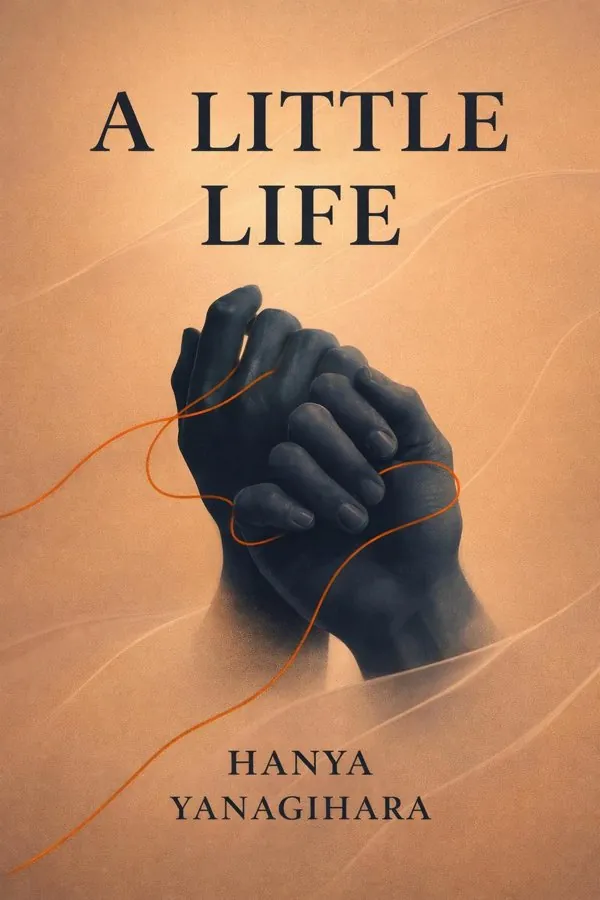
A Little Life: Summary & Key Insights
 10 min9 chaptersAudio available
Key Takeaways from A Little Life
A city can magnify both possibility and loneliness, and A Little Life begins by showing how friendship becomes a form of shelter within that vastness.
Some people organize their lives around concealment, and Jude St.
Love is often imagined as a cure, but A Little Life asks a far harder question: what if love cannot save someone from suffering, yet remains meaningful anyway?
The past is never truly past in A Little Life; it is a force that keeps arriving in the present.
Not all families are safe, and one of the novel’s most moving contributions is its portrayal of chosen family as a structure of survival.
What Is A Little Life About?
A Little Life by Hanya Yanagihara is a fiction book published in 2015 spanning 4 pages. Some novels tell a story; A Little Life creates an emotional atmosphere so intense that it can feel like a life lived alongside its characters. Hanya Yanagihara’s 2015 novel follows four friends—Jude St. Francis, Willem Ragnarsson, JB Marion, and Malcolm Irvine—from their college years into adulthood in New York City. Though the book begins as a portrait of ambition, friendship, and urban reinvention, it gradually narrows around Jude, a brilliant litigator whose physical pain and emotional reserve conceal a history of extreme trauma. What emerges is a deeply searching work about love, endurance, damage, dependence, and the limits of healing. The novel matters because it refuses easy answers: it asks whether care can coexist with irreparable suffering, and whether a person can be cherished even when they cannot believe in their own worth. Yanagihara, acclaimed for her fearless emotional range and exacting psychological detail, writes with unusual intensity about vulnerability and attachment. The result is a modern epic of friendship and pain that continues to provoke admiration, debate, and profound feeling.
This FizzRead summary covers all 9 key chapters of A Little Life in approximately 10 minutes, distilling the most important ideas, arguments, and takeaways from Hanya Yanagihara's work. Also available as an audio summary and Key Quotes Podcast.
A Little Life
Some novels tell a story; A Little Life creates an emotional atmosphere so intense that it can feel like a life lived alongside its characters. Hanya Yanagihara’s 2015 novel follows four friends—Jude St. Francis, Willem Ragnarsson, JB Marion, and Malcolm Irvine—from their college years into adulthood in New York City. Though the book begins as a portrait of ambition, friendship, and urban reinvention, it gradually narrows around Jude, a brilliant litigator whose physical pain and emotional reserve conceal a history of extreme trauma. What emerges is a deeply searching work about love, endurance, damage, dependence, and the limits of healing. The novel matters because it refuses easy answers: it asks whether care can coexist with irreparable suffering, and whether a person can be cherished even when they cannot believe in their own worth. Yanagihara, acclaimed for her fearless emotional range and exacting psychological detail, writes with unusual intensity about vulnerability and attachment. The result is a modern epic of friendship and pain that continues to provoke admiration, debate, and profound feeling.
Who Should Read A Little Life?
This book is perfect for anyone interested in fiction and looking to gain actionable insights in a short read. Whether you're a student, professional, or lifelong learner, the key ideas from A Little Life by Hanya Yanagihara will help you think differently.
- ✓Readers who enjoy fiction and want practical takeaways
- ✓Professionals looking to apply new ideas to their work and life
- ✓Anyone who wants the core insights of A Little Life in just 10 minutes
Want the full summary?
Get instant access to this book summary and 100K+ more with Fizz Moment.
Get Free SummaryAvailable on App Store • Free to download
Key Chapters
A city can magnify both possibility and loneliness, and A Little Life begins by showing how friendship becomes a form of shelter within that vastness. The novel first introduces four young men—Jude, Willem, JB, and Malcolm—who meet in college and then build their adult lives in New York. They come from very different backgrounds: JB is talented and socially agile, Malcolm comes from wealth and expectation, Willem is kind and searching, and Jude is brilliant, private, and already marked by pain. Together, they create a chosen family that helps them face the uncertainty of early adulthood.
What makes this friendship compelling is not just shared history but unequal need. As the men move into careers in art, architecture, acting, and law, they grow at different speeds and in different directions. The novel captures a truth many readers recognize: friendships formed in youth are tested not only by distance or conflict, but by success, shame, envy, caregiving, and emotional dependence. New York becomes more than a backdrop; it is a pressure chamber where identity is constantly being negotiated.
In real life, this idea applies to anyone building community during periods of transition. Early adulthood often rewards self-invention, but it also exposes how fragile belonging can be. The book reminds us that lasting friendship is not built on similarity alone. It survives through witness, patience, and the willingness to remain present as people change.
Actionable takeaway: Identify the relationships in your life that function as chosen family, and strengthen them through deliberate acts of presence rather than assuming closeness will maintain itself.
Some people organize their lives around concealment, and Jude St. Francis is one of fiction’s most haunting examples. At first, Jude appears to be the quiet genius of the group: academically gifted, professionally successful, disciplined, and self-contained. Yet his body tells another story. He limps, suffers from chronic pain, bears scars he does not explain, and reacts to ordinary care with disproportionate fear. The mystery of Jude is not just what happened to him, but how thoroughly trauma has taught him to erase himself.
As the novel draws closer to Jude, readers learn that silence can be a survival strategy. His reluctance to disclose his past is not mere secrecy; it reflects a deeply internalized belief that he is contaminated, undeserving, and dangerous to love. This gives the novel much of its emotional force. Rather than treating trauma as a single event to be narrated and then resolved, Yanagihara portrays it as a system that reshapes memory, identity, bodily experience, and relationships.
This idea has practical relevance beyond fiction. Many people assume that competence signals wellness, but A Little Life insists that achievement can coexist with extreme suffering. A high-functioning exterior may hide a relentless inner war. The novel invites readers to become more careful interpreters of silence, pain, and self-protective behavior.
Actionable takeaway: Resist the urge to equate outward success with inner stability, and practice approaching other people’s reserve with curiosity, patience, and respect rather than judgment.
Love is often imagined as a cure, but A Little Life asks a far harder question: what if love cannot save someone from suffering, yet remains meaningful anyway? This idea is central to Jude’s relationships, especially with Willem, Harold, and others who attempt to care for him across years of visible pain and invisible damage. Their love is sincere, sacrificial, and often tender. Yet Jude’s self-hatred and traumatic past prevent him from receiving that love in a way that transforms him completely.
The novel therefore challenges a common emotional fantasy. In many stories, enough devotion leads to healing. Yanagihara rejects that simplicity. She portrays love not as magical redemption, but as endurance, witness, routine, and repeated return. Loving Jude means learning his triggers, accommodating his injuries, celebrating his strengths, and accepting that setbacks will recur. This vision of care is exhausting but also dignified. It suggests that the value of love lies not only in what it fixes, but in what it steadfastly accompanies.
Readers can apply this insight to relationships with friends, partners, or family members who carry grief, illness, or trauma. Care is often less dramatic than people expect. It may involve consistency, listening without prying, practical help, and accepting that improvement is nonlinear. At the same time, the novel also shows that love alone cannot replace professional support or undo severe damage.
Actionable takeaway: Redefine love in your own life as sustained presence and compassionate realism, not just emotional intensity or the expectation that devotion will solve every wound.
The past is never truly past in A Little Life; it is a force that keeps arriving in the present. One of the novel’s deepest concerns is how memory works when it is tied to trauma. Jude does not simply remember what happened to him—he relives it through physical pain, shame, fear, and compulsive self-punishment. As years pass and external circumstances improve, his internal life remains governed by earlier violations. The result is a devastating portrait of how suffering can outlast the conditions that first produced it.
Yanagihara also connects memory to grief. The characters lose people, versions of themselves, and imagined futures. These losses accumulate, and the novel suggests that adulthood is partly the management of what cannot be restored. Memory becomes double-edged: it preserves love and meaning, but it can also trap people inside narratives of injury. Jude’s tragedy lies partly in his inability to revise the story he tells about himself. He remains fixed in an identity assigned to him by abuse.
In practical terms, the book encourages readers to think carefully about the stories they inherit from their past. Memory is not neutral. It shapes what we believe we deserve, what we fear, and what kinds of care we can accept. While the novel is intentionally extreme, it captures a widely recognizable truth: unresolved pain often resurfaces in the present unless it is named, examined, and supported.
Actionable takeaway: Reflect on the memories that still govern your reactions today, and consider what support, language, or perspective might help loosen the grip of those older narratives.
Not all families are safe, and one of the novel’s most moving contributions is its portrayal of chosen family as a structure of survival. For Jude especially, biological kinship offers no refuge. Instead, the people who sustain him are those who elect to love him: friends, mentors, and guardians who create forms of home he was never given. Harold, in particular, becomes crucial as a paternal figure whose patience and reverence offer Jude a radically different model of attachment.
This matters because the novel shows that family is not merely a legal or biological category. It is an emotional architecture built through trust, reliability, and the repeated communication of worth. The friendships among the four men evolve over time, but their bond remains foundational because it gives shape to adulthood. They celebrate each other’s milestones, absorb each other’s failures, and create continuity in a city and culture that often prizes independence over interdependence.
Outside the novel, many readers will recognize the importance of chosen family in contexts of migration, estrangement, queerness, trauma, or simple emotional mismatch with one’s origins. The book validates the idea that people can assemble belonging through mutual care. But it also cautions that chosen family, though powerful, cannot erase early injury. It can offer safety without guaranteeing repair.
Actionable takeaway: Treat your chosen family with the seriousness usually reserved for blood ties by naming the relationship, showing up consistently, and building rituals of care that make belonging visible.
One of the novel’s most unsettling insights is that external success can coexist with profound internal devastation. Jude becomes an exceptional lawyer. Willem builds a career as an actor. JB gains artistic recognition. Malcolm achieves professional prestige. From the outside, theirs is a story of urban accomplishment: talent rewarded, careers established, beautiful homes, cultural access, and social admiration. Yet A Little Life persistently undermines the idea that success equals wholeness.
Jude is the clearest example. His competence is extraordinary, but it is partly fueled by self-denial, discipline, and dissociation. Achievement becomes camouflage. It allows others to believe he is stronger than he feels and gives him a socially acceptable way to avoid confronting deeper wounds. The novel therefore critiques a modern tendency to confuse performance with well-being. A polished life can hide private collapse.
This has obvious relevance in contemporary work culture, where people are often praised for resilience when they are actually overfunctioning under distress. Promotions, productivity, and perfection can become ways of avoiding vulnerability. The book does not dismiss ambition, but it asks readers to separate visible function from invisible suffering.
Actionable takeaway: When evaluating your own life or someone else’s, look beyond markers of achievement and ask whether success is being supported by genuine well-being, honest connection, and sustainable self-regard.
A Little Life insists that trauma is not only psychological; it is bodily. Jude’s pain is chronic, his injuries persistent, and his physical limitations impossible to ignore. His body carries the evidence of past harm even when he refuses to speak about it. This creates one of the novel’s most important themes: when language fails or feels unsafe, the body continues telling the story.
Yanagihara uses pain not just as description but as structure. Jude’s body shapes his routines, his intimacy, his work, his friendships, and his sense of what he can ask from others. The novel thereby resists the comforting idea that trauma can be left behind through willpower alone. Instead, it shows how injury can alter posture, appetite, sleep, touch, movement, and self-perception. The body becomes both a site of survival and a prison of memory.
For readers, this theme offers a broader understanding of suffering. Emotional pain often appears through physical patterns: exhaustion, tension, shutdown, hypervigilance, avoidance of touch, or compulsive control. While the novel is not a clinical guide, it powerfully illustrates that compassion requires attention to embodied experience, not just spoken explanation.
Actionable takeaway: Pay attention to how stress and unresolved pain show up physically in your life, and treat bodily signals—fatigue, tension, chronic discomfort, withdrawal—as meaningful information rather than mere inconvenience.
We often assume that love requires complete understanding, but A Little Life suggests something both humbler and more difficult: sometimes care means staying close even when another person remains partly unknowable. Jude’s friends and loved ones never fully comprehend the scale of his inner suffering, at least not all at once. They receive fragments, clues, and disclosures, and they spend years trying to respond to pain they cannot completely map.
This is one reason the novel feels so emotionally true. In real relationships, people rarely gain total access to one another’s histories or thoughts. Even intimacy has limits. What matters, the book argues, is not perfect insight but ethical witness: noticing distress, taking it seriously, refusing to reduce someone to a puzzle, and continuing to offer dignity. Harold’s care exemplifies this. He does not heal Jude by understanding everything. He helps by honoring Jude’s humanity beyond the wounds.
This idea is useful in everyday life, especially when supporting people whose suffering feels opaque. Friends struggling with depression, grief, trauma, or shame may not be able to explain themselves neatly. The pressure to “get to the bottom of it” can be less helpful than consistent presence and noninvasive support.
Actionable takeaway: Practice being a steady witness rather than an impatient solver—listen carefully, respect what is not said, and let compassion matter even when understanding remains incomplete.
At its core, A Little Life is a meditation on what endurance costs. The novel asks whether survival is always a victory, and whether continuing to live through pain necessarily produces wisdom, healing, or liberation. Jude endures more than seems possible, yet endurance itself becomes morally complicated. He survives, succeeds, and is loved, but he remains trapped in patterns of shame and self-destruction that make mere continuation feel unbearably fragile.
This is why the book has generated such intense reactions. Some readers experience it as compassionate and profound; others see it as overwhelming in its accumulation of suffering. Both responses come from the same source: Yanagihara refuses to sentimentalize resilience. She presents endurance as ambiguous. To keep going may be heroic, but it can also be lonely, exhausting, and invisible. The novel asks readers to consider what they celebrate when they praise someone for strength.
In practical terms, this theme can reshape how we speak about hardship. People are often admired for surviving difficult circumstances, but that admiration can mask a failure to ask what survival has demanded of them. Endurance should not become an excuse to ignore pain.
Actionable takeaway: Reconsider your assumptions about resilience, and when someone seems strong, ask not only how they have endured but also what support they still need in order to live, not merely persist.
All Chapters in A Little Life
About the Author
Hanya Yanagihara is an American novelist, editor, and journalist known for her emotionally powerful and psychologically probing fiction. Born in Los Angeles in 1974, she spent parts of her childhood in Hawaii and other locations as her family moved for her father’s work. She studied at Smith College and later built a notable editorial career in New York media. Yanagihara is the author of The People in the Trees, A Little Life, and To Paradise. A Little Life brought her international recognition and established her as one of the most discussed contemporary literary writers of her generation. In addition to her fiction, she serves as editor-in-chief of T Magazine at The New York Times. Her work is distinguished by its intensity, moral seriousness, and deep interest in suffering, intimacy, memory, and human vulnerability.
Get This Summary in Your Preferred Format
Read or listen to the A Little Life summary by Hanya Yanagihara anytime, anywhere. FizzRead offers multiple formats so you can learn on your terms — all free.
Available formats: App · Audio · PDF · EPUB — All included free with FizzRead
Download A Little Life PDF and EPUB Summary
Key Quotes from A Little Life
“A city can magnify both possibility and loneliness, and A Little Life begins by showing how friendship becomes a form of shelter within that vastness.”
“Some people organize their lives around concealment, and Jude St.”
“Love is often imagined as a cure, but A Little Life asks a far harder question: what if love cannot save someone from suffering, yet remains meaningful anyway?”
“The past is never truly past in A Little Life; it is a force that keeps arriving in the present.”
“Not all families are safe, and one of the novel’s most moving contributions is its portrayal of chosen family as a structure of survival.”
Frequently Asked Questions about A Little Life
A Little Life by Hanya Yanagihara is a fiction book that explores key ideas across 9 chapters. Some novels tell a story; A Little Life creates an emotional atmosphere so intense that it can feel like a life lived alongside its characters. Hanya Yanagihara’s 2015 novel follows four friends—Jude St. Francis, Willem Ragnarsson, JB Marion, and Malcolm Irvine—from their college years into adulthood in New York City. Though the book begins as a portrait of ambition, friendship, and urban reinvention, it gradually narrows around Jude, a brilliant litigator whose physical pain and emotional reserve conceal a history of extreme trauma. What emerges is a deeply searching work about love, endurance, damage, dependence, and the limits of healing. The novel matters because it refuses easy answers: it asks whether care can coexist with irreparable suffering, and whether a person can be cherished even when they cannot believe in their own worth. Yanagihara, acclaimed for her fearless emotional range and exacting psychological detail, writes with unusual intensity about vulnerability and attachment. The result is a modern epic of friendship and pain that continues to provoke admiration, debate, and profound feeling.
More by Hanya Yanagihara

You Might Also Like




Featured In
Browse by Category
Ready to read A Little Life?
Get the full summary and 100K+ more books with Fizz Moment.