
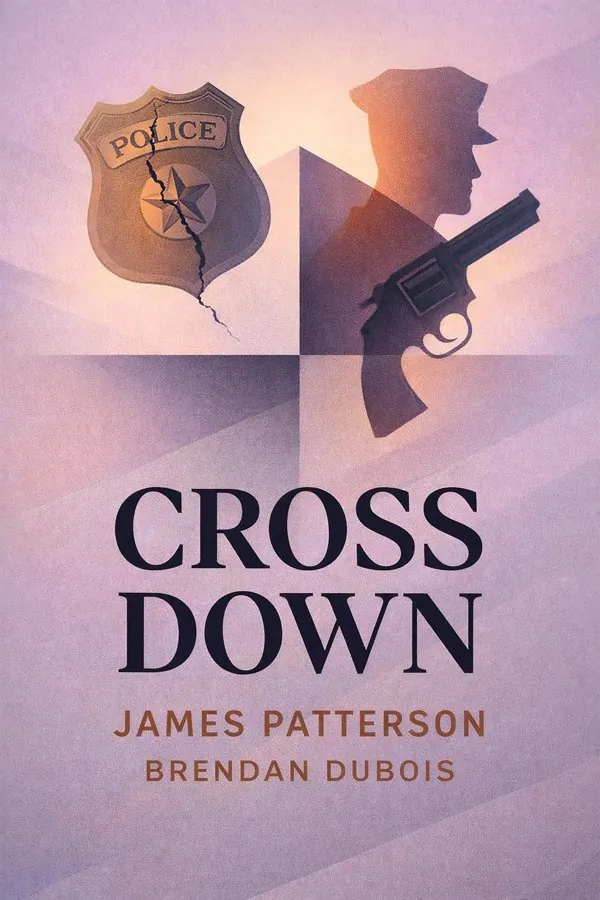
Cross Down: Summary & Key Insights
by James Patterson, Brendan DuBois
 10 min9 chaptersAudio available
Key Takeaways from Cross Down
Disaster reveals character faster than success ever can.
Betrayal often announces itself not with proof, but with pattern.
Loyalty is noble until it starts demanding silence, blindness, or self-destruction.
The hardest truths are usually the ones that damage our sense of order.
In violent worlds, friendship is not softness; it is survival.
What Is Cross Down About?
Cross Down by James Patterson, Brendan DuBois is a mystery book spanning 4 pages. Cross Down is a fast-moving Alex Cross thriller that turns a police investigation into something far more intimate: a reckoning with loyalty, corruption, and the devastating cost of violence. When a law-enforcement operation collapses and John Sampson, Alex Cross’s closest friend and longtime partner, is left fighting for his life, the case stops being just another pursuit of dangerous criminals. It becomes personal. As Cross searches for those responsible, he uncovers a web of hidden agendas, compromised institutions, and betrayals that strike at the core of the justice system he has spent his life trying to protect. What makes this novel matter is not only its suspense, but its emotional stakes. Patterson and Brendan DuBois use the familiar mechanics of a crime thriller—raids, clues, conspiracies, and sudden reversals—to explore deeper questions: What do you do when the system itself cannot be trusted? How far should loyalty go? And how do you keep your moral center when grief and rage threaten to take over? With Patterson’s trademark pacing and DuBois’s atmospheric suspense, Cross Down delivers both high-stakes entertainment and a sharp portrait of friendship under fire.
This FizzRead summary covers all 9 key chapters of Cross Down in approximately 10 minutes, distilling the most important ideas, arguments, and takeaways from James Patterson, Brendan DuBois's work. Also available as an audio summary and Key Quotes Podcast.
Cross Down
Cross Down is a fast-moving Alex Cross thriller that turns a police investigation into something far more intimate: a reckoning with loyalty, corruption, and the devastating cost of violence. When a law-enforcement operation collapses and John Sampson, Alex Cross’s closest friend and longtime partner, is left fighting for his life, the case stops being just another pursuit of dangerous criminals. It becomes personal. As Cross searches for those responsible, he uncovers a web of hidden agendas, compromised institutions, and betrayals that strike at the core of the justice system he has spent his life trying to protect.
What makes this novel matter is not only its suspense, but its emotional stakes. Patterson and Brendan DuBois use the familiar mechanics of a crime thriller—raids, clues, conspiracies, and sudden reversals—to explore deeper questions: What do you do when the system itself cannot be trusted? How far should loyalty go? And how do you keep your moral center when grief and rage threaten to take over? With Patterson’s trademark pacing and DuBois’s atmospheric suspense, Cross Down delivers both high-stakes entertainment and a sharp portrait of friendship under fire.
Who Should Read Cross Down?
This book is perfect for anyone interested in mystery and looking to gain actionable insights in a short read. Whether you're a student, professional, or lifelong learner, the key ideas from Cross Down by James Patterson, Brendan DuBois will help you think differently.
- ✓Readers who enjoy mystery and want practical takeaways
- ✓Professionals looking to apply new ideas to their work and life
- ✓Anyone who wants the core insights of Cross Down in just 10 minutes
Want the full summary?
Get instant access to this book summary and 100K+ more with Fizz Moment.
Get Free SummaryAvailable on App Store • Free to download
Key Chapters
Disaster reveals character faster than success ever can. At the start of Cross Down, what should have been a controlled law-enforcement operation turns into catastrophe, leaving John Sampson critically injured and Alex Cross reeling. This opening is more than a dramatic hook. It establishes the emotional engine of the novel: a case that is no longer abstract, procedural, or professionally distant. Once Sampson goes down, every decision carries the weight of history, brotherhood, and fear.
The failed operation also shows how fragile confidence can be inside institutions built on planning and discipline. Police work often depends on the belief that intelligence is sound, roles are clear, and fellow officers are acting in good faith. When that structure collapses in an instant, Cross must confront a terrifying possibility: the danger did not come only from criminals outside the system, but from weakness or malice within it.
This idea reaches beyond the novel. In real life, many crises begin with assumptions nobody thought to question. A business launch fails because the team trusted incomplete data. A family conflict explodes because no one addressed a simmering tension. A medical emergency becomes worse because warning signs were minimized. In each case, the event itself matters, but so does what it exposes about preparation, communication, and trust.
Patterson and DuBois use the botched operation to remind us that trauma often strips away illusion. Under pressure, people reveal what they fear, what they value, and what they are willing to sacrifice. For Cross, this failure is the point where duty becomes obsession—but also where his moral discipline is tested most severely.
Actionable takeaway: when a plan fails, do not focus only on the visible mistake. Ask what hidden assumptions, weak links, or misplaced trust made the failure possible in the first place.
Betrayal often announces itself not with proof, but with pattern. As Alex Cross digs deeper into the attack that nearly killed Sampson, he senses that too many details are wrong to be accidental. Files have been altered, leads collapse too quickly, witnesses become unavailable, and official explanations feel designed to close inquiry rather than advance it. The result is a suffocating atmosphere in which Cross must investigate not only criminals, but the machinery meant to help him catch them.
What gives this part of the story its force is the way suspicion builds gradually. Cross is not a reckless conspiracy theorist; he is a seasoned detective trained to notice inconsistencies. The novel shows how betrayal often appears first as friction: information that arrives too neatly, people who avoid direct answers, procedures that suddenly become obstacles. In a thriller, these clues create suspense. In life, they reflect a broader truth: trust erodes long before it fully breaks.
This idea has practical relevance beyond crime fiction. In organizations, betrayal may look like selective communication, changing narratives, or accountability that never reaches the right people. In personal relationships, it may show up as evasiveness, missing context, or repeated small lies. The lesson is not to become paranoid, but to respect your instincts when facts stop aligning.
Cross’s challenge is especially difficult because institutions rely on confidence. To question the people around him means risking professional isolation at the exact moment he most needs support. Yet the novel argues that integrity sometimes requires discomfort. False peace is not the same as truth.
Actionable takeaway: when events repeatedly fail to make sense, document patterns rather than dismissing them. Betrayal is easier to confront when you can separate intuition from evidence and name exactly what is inconsistent.
Loyalty is noble until it starts demanding silence, blindness, or self-destruction. One of the strongest themes in Cross Down is the tension between standing by the people you love and preserving your larger moral obligations. Alex Cross’s bond with John Sampson is one of the defining relationships in the series, and here it is pushed to an extreme. Sampson’s injury turns Cross’s investigation into an act of devotion, but that devotion comes with danger: grief and anger can narrow judgment.
The novel treats loyalty as both strength and burden. On one hand, Cross’s determination is admirable. He refuses to let bureaucracy, fear, or corruption bury the truth. His commitment to Sampson gives him courage and focus. On the other hand, the story quietly asks whether personal loyalty can pull even good people toward obsession. When a case becomes personal, justice and vengeance begin to resemble each other from a distance.
This is a useful distinction in everyday life. We all navigate competing loyalties—to friends, family, employers, teams, and principles. A manager may want to protect a longtime employee but still need to address misconduct. A friend may feel pressure to defend someone publicly even when that person acted badly. A family member may confuse support with enabling. The novel suggests that real loyalty is not cover; it is honest commitment paired with moral clarity.
Cross’s struggle matters because he is not choosing between love and indifference. He is choosing how to honor love without betraying justice. That is a much harder and more realistic conflict. The emotional force of the story comes from watching him carry both responsibility and pain at once.
Actionable takeaway: when loyalty is tested, ask yourself one question: am I helping this person face the truth, or am I protecting them from it? The answer reveals whether your loyalty is principled or merely reactive.
The hardest truths are usually the ones that damage our sense of order. As Cross closes in on what happened, the novel shifts from procedural puzzle to moral confrontation. Solving the case is no longer just about identifying culprits; it is about accepting that corruption can live inside respected structures and familiar faces. The truth, when it comes, is painful not only because of the crime itself but because of what it says about power, trust, and institutional failure.
This is a classic thriller payoff, but Cross Down gives it emotional weight by tying revelation to consequence. Truth does not arrive cleanly. It fractures relationships, forces reevaluation, and leaves survivors with uncomfortable knowledge. The story resists the fantasy that exposing wrongdoing automatically restores justice. Sometimes truth is the beginning of accountability, not the end of suffering.
In practical terms, this theme applies to any difficult reckoning. A company may uncover internal misconduct and realize the issue was cultural, not isolated. A family may finally discuss a long-hidden event and discover that silence shaped everyone’s behavior for years. A community may confront abuse of authority and find that repair requires more than replacing one person. The truth matters, but only if people are willing to live differently because of it.
Cross stands out as a protagonist because he does not seek truth for intellectual satisfaction alone. He seeks it because reality, however ugly, is the only foundation for justice. That commitment separates him from the forces in the novel that thrive on confusion, fear, and manipulated perception.
Actionable takeaway: when you uncover a difficult truth, resist the urge to treat discovery as closure. Ask what changes in behavior, structure, or accountability must follow if the truth is to mean anything.
In violent worlds, friendship is not softness; it is survival. One reason Cross Down feels more emotionally resonant than a standard procedural is that the central relationship between Alex Cross and John Sampson is not decorative. It is the moral spine of the story. Their history gives the novel stakes that no anonymous victim or abstract mission could fully create. Sampson is not merely a colleague in danger—he is family by choice, a witness to Cross’s life, and a reminder of who Cross is when the chaos of the job threatens to consume him.
The novel suggests that deep friendship does more than provide comfort. It preserves identity. Cross’s desire to save Sampson and uncover the truth is rooted not just in affection, but in the shared code they have built over years of work and trust. That code—courage, loyalty, honesty, and endurance—helps Cross resist the temptation to become purely punitive. In that sense, friendship acts as an ethical boundary.
This matters outside fiction. People often think of support systems as emotional luxuries, but strong relationships are practical forms of resilience. A trustworthy friend can challenge your blind spots, keep you grounded during crisis, and remind you of your values when stress distorts your judgment. In leadership, parenting, and professional life, having one person who knows your character deeply can prevent bad decisions made in isolation.
Cross Down also acknowledges the vulnerability built into meaningful bonds. The closer someone is to you, the more devastating their injury or loss becomes. Yet the novel argues that this vulnerability is still worth embracing. To care deeply is to risk pain, but it is also to gain purpose.
Actionable takeaway: invest intentionally in a few relationships built on honesty and shared values. In moments of crisis, those bonds often become the clearest guide back to who you are.
Corruption becomes most dangerous when it hides behind legitimacy. A major thread in Cross Down is the way power protects itself through procedure, silence, and institutional complexity. The novel does not present corruption simply as villainy by a few bad actors. Instead, it shows how compromised systems can absorb wrongdoing, redirect scrutiny, and exhaust anyone trying to challenge them. That is what makes Cross’s task so difficult: he is not just tracking suspects, but navigating a structure built to resist exposure.
This theme is especially effective because it reflects a recognizable reality. In many organizations, harmful behavior survives not because everyone approves of it, but because responsibility is diffuse. One person alters a document, another avoids asking questions, a supervisor prioritizes reputation over transparency, and soon no one feels individually accountable. The system itself becomes a shield.
The novel’s insight is that corruption rarely advertises itself. It often speaks in bureaucratic language: this is standard procedure, this matter is already resolved, this is not your jurisdiction, this would damage morale. Such phrases can be legitimate, but they can also be tools for delay and control. Cross’s persistence matters because he refuses to confuse official framing with factual truth.
This idea has broad application in workplaces, institutions, and even social groups. When decisions are opaque, dissent is punished, and reputation matters more than reality, problems tend to deepen. Healthy systems invite scrutiny; unhealthy ones label scrutiny as betrayal.
Actionable takeaway: if you want to assess whether a system is trustworthy, look at how it handles uncomfortable questions. Transparency, independent review, and documented accountability are better indicators of integrity than confident messaging.
Every pursuit of justice extracts something from the person who leads it. In Cross Down, Alex Cross is not portrayed as an invulnerable hero who moves from crisis to crisis without emotional cost. He is a detective, a psychologist, a father, a husband, and a friend, and those identities collide under pressure. The case forces him to manage grief, anger, fear, and exhaustion while still functioning as the person everyone expects to remain clearheaded.
This is one of the novel’s most human elements. Justice is often romanticized as a clean moral mission, but in reality it can be draining, isolating, and psychologically corrosive. Investigating violence means living close to violence. Seeking accountability means facing denial, delay, and resistance. Caring deeply about outcomes means suffering when outcomes are uncertain. Cross carries all of that, and the tension gives the novel emotional density beyond its action scenes.
The broader lesson is relevant to anyone in caregiving, leadership, advocacy, or crisis-driven work. Teachers, medical professionals, attorneys, managers, journalists, and parents all know versions of this burden. When responsibility is high, it is easy to focus only on the mission and ignore the toll. But neglected stress often returns as irritability, numbness, poor decisions, or burnout.
Cross’s endurance is admirable partly because it is not effortless. He continues despite the pressure, not because he is untouched by it. The novel quietly suggests that strength includes acknowledging strain rather than denying it.
Actionable takeaway: if you are carrying a heavy responsibility, treat emotional maintenance as part of the job. Build recovery into your routine—through trusted conversation, rest, reflection, or professional support—before stress begins making choices for you.
When someone you love is hurt, revenge can feel like the most honest form of justice. Cross Down gains much of its intensity from this emotional truth. Alex Cross has every reason to be furious, and the reader understands that fury. Yet the novel repeatedly shows that courage is not the absence of rage—it is the discipline to keep rage from becoming your method.
This distinction matters because thrillers often blur justice and payback. Patterson and DuBois use that tension effectively. Cross is motivated by personal pain, but his best qualities emerge when he refuses to let pain erase due process, evidence, and moral restraint. The book does not deny the emotional appeal of retaliation; instead, it asks whether acting on that appeal would ultimately dishonor the very values Cross is trying to defend.
This theme applies broadly. In everyday conflicts, people often escalate because injury creates certainty. A betrayal at work leads to sabotage. A breakup leads to public humiliation. A family wound turns into years of punishing silence. In each case, the desire to strike back feels justified, but the result usually deepens damage rather than resolving it. Real courage often looks less dramatic: pausing, gathering facts, choosing proportion, and acting in ways that you can still respect later.
Cross’s struggle is compelling because the temptation is credible. He is not above vengeance by nature; he must actively resist it. That makes his restraint meaningful rather than automatic.
Actionable takeaway: when anger is strongest, delay any irreversible response. Write down what happened, what outcome you actually want, and what action would still align with your values a week from now.
A character lasts for decades only if he offers more than competence. Cross Down reinforces why Alex Cross remains one of crime fiction’s most durable protagonists. He is intelligent and relentless, but those qualities alone do not explain his appeal. What sets him apart is the combination of empathy and resolve. He can read trauma, understand motive, and care deeply about victims while still confronting danger with determination. In this novel, that combination is tested under the harshest conditions because the victimization strikes close to home.
The book also highlights the design of the Alex Cross series itself. Readers return not just for puzzles or action, but for a familiar moral universe embodied by a protagonist who still believes truth matters. Even when institutions fail, Cross keeps searching. Even when cases become personal, he keeps reaching for justice rather than surrendering entirely to violence. That consistency gives the series its emotional contract with readers: the world may be chaotic, but conscience will not disappear from the page.
There is a practical lesson in this kind of enduring character. People trust leaders, colleagues, and friends not because they are flawless, but because their values remain legible under stress. Reliability is moral as much as technical. Cross makes mistakes, doubts himself, and suffers deeply, but readers believe in him because they understand the principles he keeps returning to.
That is why Cross Down works both as a thriller and as a continuation of a long-running series. It offers suspense, but it also renews the central promise of Alex Cross: intelligence guided by humanity.
Actionable takeaway: if you want lasting trust, make your values visible in difficult moments. Competence may earn admiration, but consistent character is what earns loyalty over time.
All Chapters in Cross Down
About the Authors
James Patterson is a bestselling American author whose name has become nearly synonymous with modern commercial suspense. He is the creator of multiple blockbuster series, including Alex Cross, Women’s Murder Club, and Michael Bennett, and is known for his rapid pacing, short chapters, and wide popular appeal. His books have sold in the hundreds of millions worldwide. Brendan DuBois is an award-winning mystery and suspense writer celebrated for his tightly constructed plots and psychological tension. He has written novels, short stories, and collaborations across crime and thriller fiction. Together, Patterson and DuBois combine mass-market momentum with dark investigative atmosphere, making Cross Down a strong example of fast, emotionally charged mystery storytelling.
Get This Summary in Your Preferred Format
Read or listen to the Cross Down summary by James Patterson, Brendan DuBois anytime, anywhere. FizzRead offers multiple formats so you can learn on your terms — all free.
Available formats: App · Audio · PDF · EPUB — All included free with FizzRead
Download Cross Down PDF and EPUB Summary
Key Quotes from Cross Down
“Disaster reveals character faster than success ever can.”
“Betrayal often announces itself not with proof, but with pattern.”
“Loyalty is noble until it starts demanding silence, blindness, or self-destruction.”
“The hardest truths are usually the ones that damage our sense of order.”
“In violent worlds, friendship is not softness; it is survival.”
Frequently Asked Questions about Cross Down
Cross Down by James Patterson, Brendan DuBois is a mystery book that explores key ideas across 9 chapters. Cross Down is a fast-moving Alex Cross thriller that turns a police investigation into something far more intimate: a reckoning with loyalty, corruption, and the devastating cost of violence. When a law-enforcement operation collapses and John Sampson, Alex Cross’s closest friend and longtime partner, is left fighting for his life, the case stops being just another pursuit of dangerous criminals. It becomes personal. As Cross searches for those responsible, he uncovers a web of hidden agendas, compromised institutions, and betrayals that strike at the core of the justice system he has spent his life trying to protect. What makes this novel matter is not only its suspense, but its emotional stakes. Patterson and Brendan DuBois use the familiar mechanics of a crime thriller—raids, clues, conspiracies, and sudden reversals—to explore deeper questions: What do you do when the system itself cannot be trusted? How far should loyalty go? And how do you keep your moral center when grief and rage threaten to take over? With Patterson’s trademark pacing and DuBois’s atmospheric suspense, Cross Down delivers both high-stakes entertainment and a sharp portrait of friendship under fire.
You Might Also Like




Browse by Category
Ready to read Cross Down?
Get the full summary and 100K+ more books with Fizz Moment.