
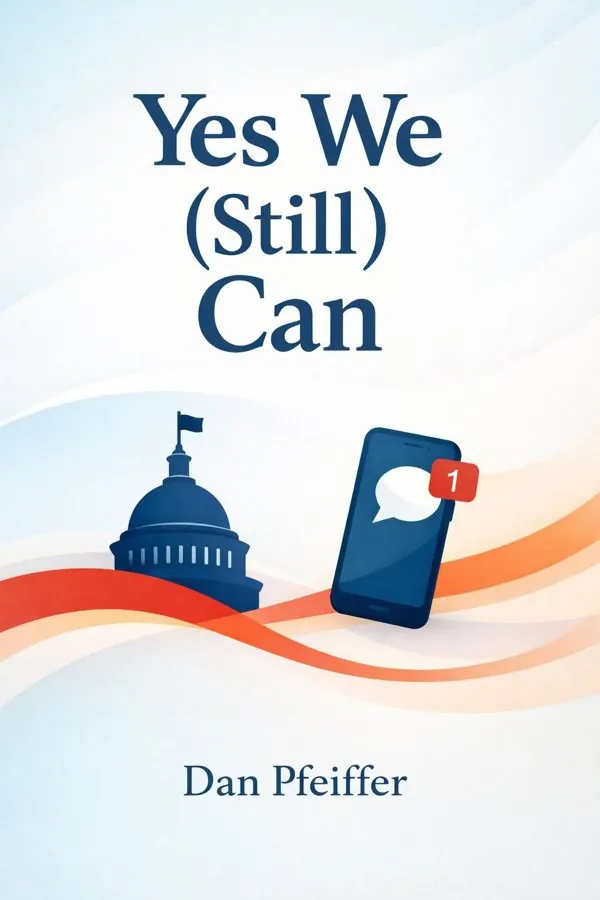
Yes We (Still) Can: Politics in the Age of Obama, Twitter, and Trump: Summary & Key Insights
by Dan Pfeiffer
 10 min10 chaptersAudio available
What Is Yes We (Still) Can: Politics in the Age of Obama, Twitter, and Trump About?
Yes We (Still) Can: Politics in the Age of Obama, Twitter, and Trump by Dan Pfeiffer is a politics book spanning 10 pages. A memoir and political commentary by Dan Pfeiffer, former White House communications director under President Barack Obama. The book reflects on the Obama years, the rise of digital media in politics, and strategies for progressives in the Trump era. Pfeiffer combines personal anecdotes with insights into modern political communication and activism.
This FizzRead summary covers all 10 key chapters of Yes We (Still) Can: Politics in the Age of Obama, Twitter, and Trump in approximately 10 minutes, distilling the most important ideas, arguments, and takeaways from Dan Pfeiffer's work. Also available as an audio summary and Key Quotes Podcast.
Yes We (Still) Can: Politics in the Age of Obama, Twitter, and Trump
A memoir and political commentary by Dan Pfeiffer, former White House communications director under President Barack Obama. The book reflects on the Obama years, the rise of digital media in politics, and strategies for progressives in the Trump era. Pfeiffer combines personal anecdotes with insights into modern political communication and activism.
Who Should Read Yes We (Still) Can: Politics in the Age of Obama, Twitter, and Trump?
This book is perfect for anyone interested in politics and looking to gain actionable insights in a short read. Whether you're a student, professional, or lifelong learner, the key ideas from Yes We (Still) Can: Politics in the Age of Obama, Twitter, and Trump by Dan Pfeiffer will help you think differently.
- ✓Readers who enjoy politics and want practical takeaways
- ✓Professionals looking to apply new ideas to their work and life
- ✓Anyone who wants the core insights of Yes We (Still) Can: Politics in the Age of Obama, Twitter, and Trump in just 10 minutes
Want the full summary?
Get instant access to this book summary and 100K+ more with Fizz Moment.
Get Free SummaryAvailable on App Store • Free to download
Key Chapters
My journey into politics didn’t begin in the corridors of power; it started in the messy, exhausting trenches of campaign life. I was young and a bit idealistic, drawn less by ambition for position and more by curiosity about how things worked. Over the years, working on campaigns taught me two fundamental truths: politics is storytelling, and people respond to authenticity more deeply than to strategy.
By the time I crossed paths with Barack Obama’s team, I recognized something unique about their approach. It wasn’t centered on tearing opponents down or manipulating data—it was about building a narrative that reflected who people truly wanted to be. Obama’s rhetoric of hope resonated because it was grounded in a real story—the story of someone who believed the system could work better for everyone. As part of his early communications crew, I felt we were helping write the next chapter in that story, one tweet, one speech, one headline at a time.
The 2008 campaign became a laboratory for innovation. We understood early that the old rules of press releases and traditional media couldn’t reach the new generation of voters who lived online. That insight changed everything for my career. For me, politics became the art of connecting—not via newspaper columns, but through digital conversations that could spark civic energy and optimism.
+ 8 more chapters — available in the FizzRead app
All Chapters in Yes We (Still) Can: Politics in the Age of Obama, Twitter, and Trump
About the Author
Dan Pfeiffer is an American political strategist and commentator who served as White House Communications Director and Senior Advisor to President Barack Obama. He is a co-host of the political podcast 'Pod Save America' and a leading voice in progressive media.
Get This Summary in Your Preferred Format
Read or listen to the Yes We (Still) Can: Politics in the Age of Obama, Twitter, and Trump summary by Dan Pfeiffer anytime, anywhere. FizzRead offers multiple formats so you can learn on your terms — all free.
Available formats: App · Audio · PDF · EPUB — All included free with FizzRead
Download Yes We (Still) Can: Politics in the Age of Obama, Twitter, and Trump PDF and EPUB Summary
Key Quotes from Yes We (Still) Can: Politics in the Age of Obama, Twitter, and Trump
“My journey into politics didn’t begin in the corridors of power; it started in the messy, exhausting trenches of campaign life.”
“The Obama campaign wasn’t just an election; it was a movement powered by connectivity.”
Frequently Asked Questions about Yes We (Still) Can: Politics in the Age of Obama, Twitter, and Trump
Yes We (Still) Can: Politics in the Age of Obama, Twitter, and Trump by Dan Pfeiffer is a politics book that explores key ideas across 10 chapters. A memoir and political commentary by Dan Pfeiffer, former White House communications director under President Barack Obama. The book reflects on the Obama years, the rise of digital media in politics, and strategies for progressives in the Trump era. Pfeiffer combines personal anecdotes with insights into modern political communication and activism.
More by Dan Pfeiffer
You Might Also Like
Antifa: The Anti-Fascist Handbook
Mark Bray
10 min
Attack from Within: How Disinformation Is Sabotaging America
Barbara McQuade
10 min
Coercion, Capital, and European States, AD 990–1992
Charles Tilly
10 min
Digital Democracy: Concepts, Methodologies, Tools, and Applications
Various Authors
10 min
Fascism
Stanley G. Payne
10 min
Fire And Fury: Inside The Trump White House
Michael Wolff
10 minBrowse by Category
Ready to read Yes We (Still) Can: Politics in the Age of Obama, Twitter, and Trump?
Get the full summary and 100K+ more books with Fizz Moment.