
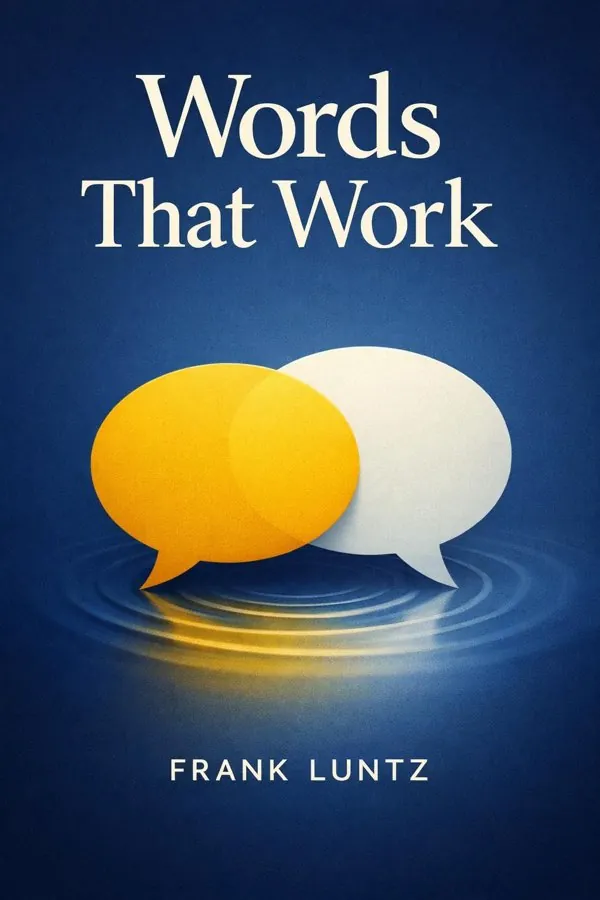
Words That Work: It's Not What You Say, It's What People Hear: Summary & Key Insights
by Frank Luntz
 10 min12 chaptersAudio available
What Is Words That Work: It's Not What You Say, It's What People Hear About?
Words That Work: It's Not What You Say, It's What People Hear by Frank Luntz is a communication book spanning 12 pages. In this influential book, political consultant and communication expert Frank Luntz explores how language shapes perception and persuasion. Drawing from his experience in politics, business, and media, Luntz demonstrates how specific words and phrases can dramatically alter public opinion and emotional response. The book provides practical insights into crafting messages that resonate with audiences, emphasizing clarity, empathy, and emotional connection.
This FizzRead summary covers all 12 key chapters of Words That Work: It's Not What You Say, It's What People Hear in approximately 10 minutes, distilling the most important ideas, arguments, and takeaways from Frank Luntz's work. Also available as an audio summary and Key Quotes Podcast.
Words That Work: It's Not What You Say, It's What People Hear
In this influential book, political consultant and communication expert Frank Luntz explores how language shapes perception and persuasion. Drawing from his experience in politics, business, and media, Luntz demonstrates how specific words and phrases can dramatically alter public opinion and emotional response. The book provides practical insights into crafting messages that resonate with audiences, emphasizing clarity, empathy, and emotional connection.
Who Should Read Words That Work: It's Not What You Say, It's What People Hear?
This book is perfect for anyone interested in communication and looking to gain actionable insights in a short read. Whether you're a student, professional, or lifelong learner, the key ideas from Words That Work: It's Not What You Say, It's What People Hear by Frank Luntz will help you think differently.
- ✓Readers who enjoy communication and want practical takeaways
- ✓Professionals looking to apply new ideas to their work and life
- ✓Anyone who wants the core insights of Words That Work: It's Not What You Say, It's What People Hear in just 10 minutes
Want the full summary?
Get instant access to this book summary and 100K+ more with Fizz Moment.
Get Free SummaryAvailable on App Store • Free to download
Key Chapters
Over the years, I distilled communication into ten guiding principles—simple, memorable, and universally applicable. The first is simplicity. If people have to think too hard, they’ll stop listening. The most powerful words are clear, short, and relatable. Think of the contrast between “tax relief” and “tax cuts.” The former implies a burden lifted; the latter suggests a mere adjustment to numbers. The ear, not the intellect, decides which word wins.
Second, brevity. In an age of information overload, fewer words mean greater impact. Consider how slogans like “Just Do It” or “Think Different” carve themselves into public consciousness—not because they explain, but because they evoke.
Third, credibility. Audiences can sense insincerity instantly. If your words don’t align with reality, you’ll lose them no matter how artfully you speak. Credible language is precise, grounded, and respectful.
Every rule flows from the fundamental insight that people respond emotionally before they reason analytically. It is not about manipulating sentiment but about finding linguistic harmony with the values your audience already holds. I advise communicators to use language that paints pictures—metaphors, stories, sensory detail—because people remember what they visualize, not what they summarize.
These ten rules are not constraints; they are tools. They help you earn attention, trust, and ultimately, action.
My work began in political circles, where every phrase can tilt public opinion. It’s astonishing how slight changes reshape perception. When I tested phrases like “death tax” versus “estate tax,” the emotional landscape shifted dramatically. The former evokes a penalty on life’s end; the latter sounds administrative. This is the essence of linguistic framing—aligning words with emotion.
Politics is a theater of perception, not policy sheets. Successful leaders understand that the language of values—security, freedom, responsibility—resonates more deeply than the language of logistics. Ronald Reagan, Bill Clinton, Barack Obama—all mastered tone before text. Their words appealed not just to ideas but identities.
Every campaign I’ve studied teaches the same lesson: people don’t vote based on data alone. They vote based on whose words reflect their values. The communicator’s task is not to dictate meaning but to evoke belonging. Craft language that resonates with lived experience—call people to something they already believe, and your message will feel like truth rather than persuasion.
+ 10 more chapters — available in the FizzRead app
All Chapters in Words That Work: It's Not What You Say, It's What People Hear
About the Author
Frank Luntz is an American political consultant, pollster, and communication strategist known for his expertise in public opinion and messaging. He has advised numerous political campaigns and corporations on effective language use and is recognized for his research on how words influence thought and behavior.
Get This Summary in Your Preferred Format
Read or listen to the Words That Work: It's Not What You Say, It's What People Hear summary by Frank Luntz anytime, anywhere. FizzRead offers multiple formats so you can learn on your terms — all free.
Available formats: App · Audio · PDF · EPUB — All included free with FizzRead
Download Words That Work: It's Not What You Say, It's What People Hear PDF and EPUB Summary
Key Quotes from Words That Work: It's Not What You Say, It's What People Hear
“Over the years, I distilled communication into ten guiding principles—simple, memorable, and universally applicable.”
“My work began in political circles, where every phrase can tilt public opinion.”
Frequently Asked Questions about Words That Work: It's Not What You Say, It's What People Hear
Words That Work: It's Not What You Say, It's What People Hear by Frank Luntz is a communication book that explores key ideas across 12 chapters. In this influential book, political consultant and communication expert Frank Luntz explores how language shapes perception and persuasion. Drawing from his experience in politics, business, and media, Luntz demonstrates how specific words and phrases can dramatically alter public opinion and emotional response. The book provides practical insights into crafting messages that resonate with audiences, emphasizing clarity, empathy, and emotional connection.
You Might Also Like
Magic Words: The Science and Secrets Behind Seven Words That Motivate, Engage, and Influence
Tim David
10 min
Talking Across The Divide: How to Communicate with People You Disagree with and Maybe Even Change the World
Justin Lee
10 min
The Exceptional Presenter: A Proven Formula to Open Up! and Own the Room
Timothy J. Koegel
10 min
4 Essential Keys to Effective Communication in Love, Life, Work--Anywhere!: Including the 12-Day Communication Challenge!
Bento C. Leal III
10 min
Active Listening Techniques: 30 Practical Tools to Hone Your Communication Skills
Nisha Gupta
10 min
Bargaining for Advantage: Negotiation Strategies for Reasonable People
G. Richard Shell
10 minBrowse by Category
Ready to read Words That Work: It's Not What You Say, It's What People Hear?
Get the full summary and 100K+ more books with Fizz Moment.