
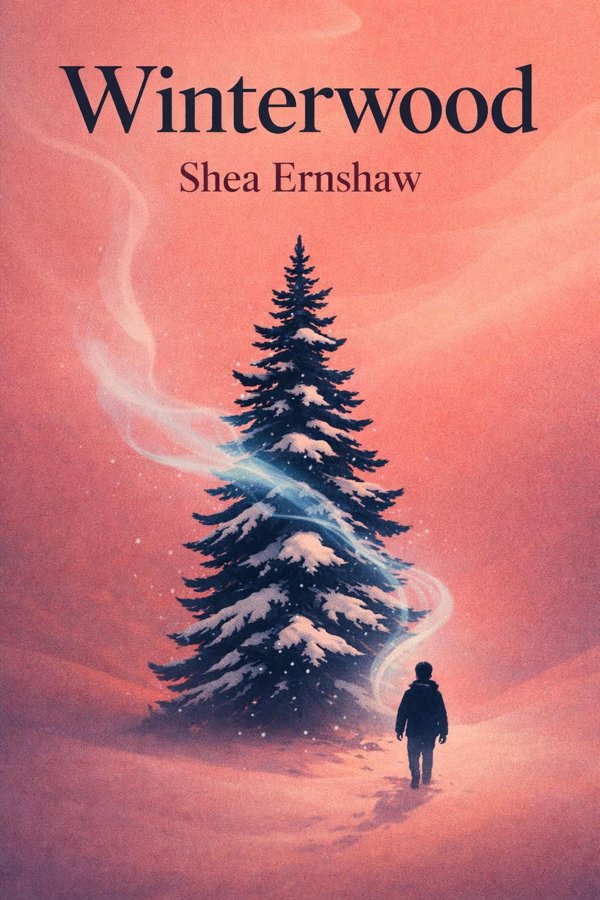
Winterwood: Summary & Key Insights
by Shea Ernshaw
 10 min9 chaptersAudio available
Key Takeaways from Winterwood
Some places do not merely surround us; they shape the people we become.
Survival is not always proof of innocence; sometimes it is the beginning of deeper questions.
What is buried does not stay buried forever, especially when fear has frozen a truth in place.
Inheritance can feel like destiny, but Winterwood insists that legacy is also something we choose how to carry.
The most memorable fantasy often works because its magic reveals emotions that ordinary realism cannot fully express.
What Is Winterwood About?
Winterwood by Shea Ernshaw is a bestsellers book spanning 4 pages. Shea Ernshaw’s Winterwood is a chilling young adult fantasy that blends folklore, suspense, romance, and psychological mystery into a story that feels as cold and mesmerizing as a snow-covered forest at dusk. Set around the eerie Wicker Woods and a lake that seems to guard its own secrets, the novel follows Nora Walker, a girl descended from a line of women tied to the woods by old magic. When she discovers Oliver Huntsman, a missing boy who should not have survived the freezing wilderness, Nora is drawn into a mystery that reaches beyond ordinary danger and into curses, hidden violence, and inherited darkness. What makes Winterwood so compelling is not just its gothic atmosphere, but the way it explores identity, fate, memory, and the stories families tell to survive. Ernshaw has built a reputation for immersive, atmospheric fiction that combines the emotional intensity of young adult storytelling with the haunting pull of myth and legend. In Winterwood, she delivers a novel that is both a page-turning mystery and a meditation on what happens when love, fear, and ancient power begin to overlap.
This FizzRead summary covers all 9 key chapters of Winterwood in approximately 10 minutes, distilling the most important ideas, arguments, and takeaways from Shea Ernshaw's work. Also available as an audio summary and Key Quotes Podcast.
Winterwood
Shea Ernshaw’s Winterwood is a chilling young adult fantasy that blends folklore, suspense, romance, and psychological mystery into a story that feels as cold and mesmerizing as a snow-covered forest at dusk. Set around the eerie Wicker Woods and a lake that seems to guard its own secrets, the novel follows Nora Walker, a girl descended from a line of women tied to the woods by old magic. When she discovers Oliver Huntsman, a missing boy who should not have survived the freezing wilderness, Nora is drawn into a mystery that reaches beyond ordinary danger and into curses, hidden violence, and inherited darkness. What makes Winterwood so compelling is not just its gothic atmosphere, but the way it explores identity, fate, memory, and the stories families tell to survive. Ernshaw has built a reputation for immersive, atmospheric fiction that combines the emotional intensity of young adult storytelling with the haunting pull of myth and legend. In Winterwood, she delivers a novel that is both a page-turning mystery and a meditation on what happens when love, fear, and ancient power begin to overlap.
Who Should Read Winterwood?
This book is perfect for anyone interested in bestsellers and looking to gain actionable insights in a short read. Whether you're a student, professional, or lifelong learner, the key ideas from Winterwood by Shea Ernshaw will help you think differently.
- ✓Readers who enjoy bestsellers and want practical takeaways
- ✓Professionals looking to apply new ideas to their work and life
- ✓Anyone who wants the core insights of Winterwood in just 10 minutes
Want the full summary?
Get instant access to this book summary and 100K+ more with Fizz Moment.
Get Free SummaryAvailable on App Store • Free to download
Key Chapters
Some places do not merely surround us; they shape the people we become. That idea lies at the heart of Winterwood through Nora Walker, a girl whose identity is inseparable from the Wicker Woods. She comes from a line of women marked by rumor, fear, and power, and her connection to the forest is not symbolic alone. The woods speak to her in signs, gifts, and instincts, making nature feel less like a backdrop and more like a living force with memory and intention.
This idea matters because Nora’s relationship with the woods reflects a larger human truth: we are often formed by the environments we inherit. Family history, local legends, and private rituals all influence how we understand ourselves. For Nora, magic is not flashy or theatrical. It is quiet, intimate, and woven into survival. She knows how to read the forest, how to gather what it offers, and how to sense when something is wrong. That grounded portrayal of magic makes the novel feel emotionally believable even when it moves into the uncanny.
In everyday life, readers can recognize a version of this dynamic in their own attachments to place. A childhood neighborhood, a family home, a coastline, or even a city park can become part of personal identity. These places hold memory and can make us feel safe, trapped, or called back. Winterwood invites readers to ask which spaces know them best and which inherited narratives they still carry.
Actionable takeaway: Reflect on one place that has shaped your identity, and write down what it taught you about fear, belonging, and who you are becoming.
Survival is not always proof of innocence; sometimes it is the beginning of deeper questions. When Nora finds Oliver Huntsman alive in the snow after he has been missing for days, his survival feels miraculous, but also deeply unsettling. He emerges from the wilderness like someone returned from another world, carrying not just mystery but the sense that something invisible came back with him.
Oliver’s reappearance drives the novel’s tension because it challenges what the community thinks it knows. He comes from Camp for Wayward Boys, a place already shadowed by rumors, discipline, and emotional damage. His presence beside Nora’s mystical inheritance creates a compelling contrast between seen and unseen wounds. On one level, he is a love interest and a catalyst. On another, he represents how little we understand about other people’s histories. A person can appear rescued while still being haunted, fractured, or dangerous.
This idea has practical relevance beyond fiction. People often assume that if someone looks calm, charming, or composed, then they must be trustworthy or healed. Winterwood pushes against that assumption. Trauma can distort memory, behavior, and self-understanding. Likewise, charisma can hide guilt, fear, or manipulation. Readers can apply this insight by becoming more attentive to complexity instead of rushing to simple labels such as victim, villain, or savior.
The novel also asks what survival costs. If someone makes it through an ordeal, what did they lose along the way? Certainty? Innocence? Truth? Oliver’s role reminds us that survival stories are rarely complete when they begin.
Actionable takeaway: The next time you form a quick judgment about someone’s strength or innocence, pause and ask what hidden story might still be shaping what you see.
What is buried does not stay buried forever, especially when fear has frozen a truth in place. One of Winterwood’s most powerful ideas is that secrets accumulate beneath the surface, much like dark water trapped under winter ice. The novel uses its setting brilliantly to mirror hidden guilt, repressed memory, and the danger of pretending the past no longer matters.
As Nora investigates Oliver and the strange events surrounding the camp and the woods, she uncovers layers of concealment that stretch across families and institutions. These are not simply plot twists designed for suspense. They reveal how communities protect themselves through silence. People ignore warning signs, reshape stories, and choose comforting explanations over disturbing truths. The frozen landscape becomes a metaphor for emotional paralysis: everyone senses something is wrong, but few are willing to break the surface and confront it.
In real life, this concept appears anywhere silence is rewarded. Families may avoid painful histories. Schools and organizations may protect reputations instead of people. Individuals may hide what happened to them because speaking feels too risky. Winterwood shows that secrecy can feel stabilizing in the short term, but it always creates pressure. Eventually, concealed truths distort relationships, poison trust, and return with greater force.
Readers can apply this lesson by noticing where silence functions as self-protection and where it becomes self-betrayal. Not every truth must be exposed publicly, but unresolved realities need some form of acknowledgment if healing is possible. Journaling, therapy, honest conversation, or setting boundaries can all be ways of cracking the ice safely.
Actionable takeaway: Identify one unresolved truth in your life and choose a small, concrete step toward facing it instead of letting silence define the story.
Inheritance can feel like destiny, but Winterwood insists that legacy is also something we choose how to carry. Nora is born into the Walker line, a family bound to old magic and burdened by community suspicion. She does not get to choose the existence of that legacy, yet she must decide what it means and how much power it will have over her future.
This tension between inheritance and agency gives the novel much of its emotional depth. Nora is surrounded by stories about who she is supposed to be: a Walker woman, a keeper of secrets, a girl tied to dangerous woods. At the same time, she is still forming her own moral compass. As the mystery unfolds, she is forced to decide whether bloodline excuses certain acts, whether love justifies denial, and whether tradition should be obeyed when it conflicts with truth.
That dilemma feels deeply relevant because most readers inherit something they did not choose. It may be a family pattern, cultural expectation, religious identity, or emotional script. We often begin life inside systems of meaning already built by others. Winterwood’s insight is that our origins matter, but they do not have to become our prison. Legacy can be honored without being obeyed blindly.
A practical application is to separate inheritance into categories: what should be preserved, what should be questioned, and what should be ended. For example, a family may pass down resilience and care alongside secrecy or emotional avoidance. Maturity often means recognizing both.
Actionable takeaway: Make a short list of what you have inherited from your family or background, then decide consciously what you want to keep, revise, or leave behind.
The most memorable fantasy often works because its magic reveals emotions that ordinary realism cannot fully express. In Winterwood, magic is not just an aesthetic feature. It serves as a language for intuition, grief, longing, and fear. The forest gives, warns, withholds, and watches, much like the unconscious mind. Nora’s gifts allow the novel to dramatize what many readers already know inwardly: we often sense danger, attachment, or change before we can explain it.
This makes the book especially effective as psychological fantasy. Rather than using magic to escape human complexity, Ernshaw uses it to sharpen that complexity. The rituals, signs, and uncanny occurrences amplify questions about trust and desire. Is Nora seeing clearly, or is she being led by wanting? Is the woods’ guidance wisdom, manipulation, or projection? These ambiguities are central to the story’s power because they mirror how people actually experience intense emotion. We rarely know where instinct ends and hope begins.
Readers can apply this concept by taking intuition seriously without treating it as infallible. In everyday decision-making, a strong emotional response can be valuable data, but it still benefits from reflection. If a relationship feels off, if a place creates dread, or if a repeated pattern keeps emerging, those feelings deserve attention. But they should be tested with evidence and conversation rather than romanticized automatically.
Winterwood shows that symbolic thinking can illuminate reality. We do not need literal magic to understand that dreams, environments, habits, and recurring fears often point toward truths we have not yet named.
Actionable takeaway: The next time you have a strong intuitive reaction, write down both the feeling and the observable facts, then use both to guide your next step.
Sometimes the mood of a story teaches as much as its plot. Winterwood is a masterclass in atmospheric storytelling, using cold, silence, snow, and shadow not merely for decoration but to shape how readers think and feel. The setting creates emotional conditions: isolation intensifies suspicion, the winter landscape slows action into careful observation, and the woods make every choice seem older and more consequential.
This matters because atmosphere in fiction is often underestimated. A strong setting can do narrative work that exposition cannot. In Winterwood, the freezing environment externalizes emotional states such as numbness, repression, and loneliness. The lake and forest are never neutral. They seem to hold memory, which makes each scene feel charged. As a result, the novel becomes immersive in a way that invites readers not just to follow events, but to inhabit uncertainty.
There is also a practical reading lesson here. Readers can become more attentive to how setting influences interpretation. If a conversation happens in a brightly lit café, it feels different from the same words spoken in a dark forest at twilight. Writers, students, and creative professionals can use this insight by asking how environment changes emotional impact. A presentation room, a home office, or a classroom all shape communication before anyone speaks.
Winterwood demonstrates that mood is not secondary to meaning. It is part of meaning. The novel’s haunting tone helps readers understand its themes of hidden danger, inherited fear, and the seduction of mystery.
Actionable takeaway: In your own writing, reading, or communication, pay attention to how environment affects emotion, and deliberately choose settings that reinforce the message you want to convey.
Attraction becomes risky when desire outruns discernment. One of Winterwood’s most compelling tensions lies in Nora’s growing bond with Oliver, a relationship shaped as much by mystery as by tenderness. Their connection feels intense partly because it develops under pressure: isolation, fear, secrecy, and the sense that both are entangled in forces larger than themselves. The novel asks whether intimacy can flourish where truth is unstable.
This is more than a romantic subplot. It explores how people are often drawn most strongly to what they do not fully understand. Oliver’s vulnerability, beauty, and strangeness make him magnetic, but they also make him difficult to read. Nora’s feelings become interwoven with her need to solve the mystery, which creates emotional confusion. She wants to protect him, know him, and believe in him, even when evidence suggests caution.
That dynamic has clear real-world parallels. People can be drawn to partners who seem wounded, enigmatic, or in need of saving. While compassion is valuable, Winterwood warns against mistaking intensity for trustworthiness. High emotion can create false certainty. The desire to feel chosen, needed, or understood may lead someone to ignore inconsistencies that later prove important.
A healthier application is to distinguish chemistry from trust. Trust is built through patterns: honesty, accountability, and congruence between words and actions. Attraction may be immediate, but character is revealed over time. The novel’s emotional suspense works because Nora must learn this distinction under dangerous circumstances.
Actionable takeaway: If a relationship feels compelling but confusing, focus less on how intense it feels and more on whether the other person’s behavior consistently earns your trust.
Communities survive by telling stories, but those stories can also become tools of denial. In Winterwood, the town surrounding the Wicker Woods lives with folklore, gossip, superstition, and selective memory. The Walker women are feared, the boys’ camp carries its own reputation, and everyone seems to know a version of the truth that protects their worldview. This reveals an essential theme: people often prefer coherent myths to uncomfortable realities.
The book shows how group narratives shape justice and belonging. Once a person or family has been cast in a certain role, every event gets interpreted through that role. If someone is already seen as strange, dangerous, or cursed, evidence is filtered accordingly. Likewise, if an institution appears respectable, warning signs may be minimized. Winterwood uses this tension to expose how social judgment works. Reputation can become a spell of its own.
This idea is highly applicable today. Public opinion, workplace culture, family lore, and online discourse all rely on simplifying narratives. A person becomes the difficult one, the gifted one, the unstable one, the good family, the troubled school, the trusted leader. These labels help groups maintain order, but they often erase complexity. The cost is empathy and accuracy.
Readers can use this insight by questioning inherited social scripts. When you hear a repeated story about a person or place, ask who benefits from that version and what facts are missing. Curiosity is not disloyalty. It is a safeguard against becoming captive to other people’s myths.
Actionable takeaway: The next time you encounter a strong group opinion, pause to ask what evidence supports it, what it leaves out, and whether a more nuanced story might be true.
We like to believe that memory gives us truth, but Winterwood suggests that memory is often fractured, emotional, and incomplete. As the novel unfolds, questions of what happened, who is responsible, and what can be trusted are complicated by perception itself. Characters do not simply hide information from each other; they also struggle to interpret their own experiences accurately.
This idea gives the story psychological sophistication. Fear reshapes what people notice. Desire edits what they remember. Trauma can obscure cause and sequence. In Winterwood, uncertainty is not just a narrative trick. It reflects a reality readers may recognize in their own lives: people build identity from remembered stories, and those stories are not always stable. Nora’s journey involves not only uncovering facts but learning how easily emotion can distort understanding.
In practical terms, this theme encourages humility about certainty. When conflict arises, two people may sincerely hold different versions of the same event. That does not mean truth is impossible, only that getting closer to it requires patience, corroboration, and self-questioning. In relationships and professional life alike, it helps to distinguish between what you know, what you assume, and what you feel.
Winterwood also implies that identity is partly narrative. If you keep telling yourself you are the cursed one, the responsible one, the abandoned one, or the rescuer, your choices may begin to serve that script. Growth sometimes begins by revising the story without denying the pain.
Actionable takeaway: When recalling a difficult event, separate the memory into facts, interpretations, and emotions so you can see more clearly what is true, what is assumed, and what still needs understanding.
All Chapters in Winterwood
About the Author
Shea Ernshaw is an American novelist known for writing atmospheric young adult fiction that blends fantasy, mystery, romance, and folklore. She rose to prominence with The Wicked Deep, a haunting tale that established her signature style: lyrical prose, eerie natural settings, and emotionally charged stories shaped by secrets and legend. Winterwood continued that reputation, offering readers another immersive world where magic and psychological tension intertwine. Ernshaw’s books often center on girls navigating inherited power, community suspicion, and the hidden pull of the natural world. Her storytelling appeals to readers who love dark fairy-tale energy, gothic mood, and mysteries that unfold slowly through image, feeling, and revelation. With a distinctive talent for creating place-driven fiction, Ernshaw has become a notable voice in contemporary YA fantasy.
Get This Summary in Your Preferred Format
Read or listen to the Winterwood summary by Shea Ernshaw anytime, anywhere. FizzRead offers multiple formats so you can learn on your terms — all free.
Available formats: App · Audio · PDF · EPUB — All included free with FizzRead
Download Winterwood PDF and EPUB Summary
Key Quotes from Winterwood
“Some places do not merely surround us; they shape the people we become.”
“Survival is not always proof of innocence; sometimes it is the beginning of deeper questions.”
“What is buried does not stay buried forever, especially when fear has frozen a truth in place.”
“Inheritance can feel like destiny, but Winterwood insists that legacy is also something we choose how to carry.”
“The most memorable fantasy often works because its magic reveals emotions that ordinary realism cannot fully express.”
Frequently Asked Questions about Winterwood
Winterwood by Shea Ernshaw is a bestsellers book that explores key ideas across 9 chapters. Shea Ernshaw’s Winterwood is a chilling young adult fantasy that blends folklore, suspense, romance, and psychological mystery into a story that feels as cold and mesmerizing as a snow-covered forest at dusk. Set around the eerie Wicker Woods and a lake that seems to guard its own secrets, the novel follows Nora Walker, a girl descended from a line of women tied to the woods by old magic. When she discovers Oliver Huntsman, a missing boy who should not have survived the freezing wilderness, Nora is drawn into a mystery that reaches beyond ordinary danger and into curses, hidden violence, and inherited darkness. What makes Winterwood so compelling is not just its gothic atmosphere, but the way it explores identity, fate, memory, and the stories families tell to survive. Ernshaw has built a reputation for immersive, atmospheric fiction that combines the emotional intensity of young adult storytelling with the haunting pull of myth and legend. In Winterwood, she delivers a novel that is both a page-turning mystery and a meditation on what happens when love, fear, and ancient power begin to overlap.
More by Shea Ernshaw
You Might Also Like

The Godfather
Mario Puzo
10 min
The Handmaid's Tale
Margaret Atwood
10 min
The Hunger Games
Suzanne Collins
10 min
The Nightingale
Kristin Hannah
10 min
The Seven Husbands of Evelyn Hugo
Taylor Jenkins Reid
10 min
Backwater Justice
Fern Michaels
10 minBrowse by Category
Ready to read Winterwood?
Get the full summary and 100K+ more books with Fizz Moment.