
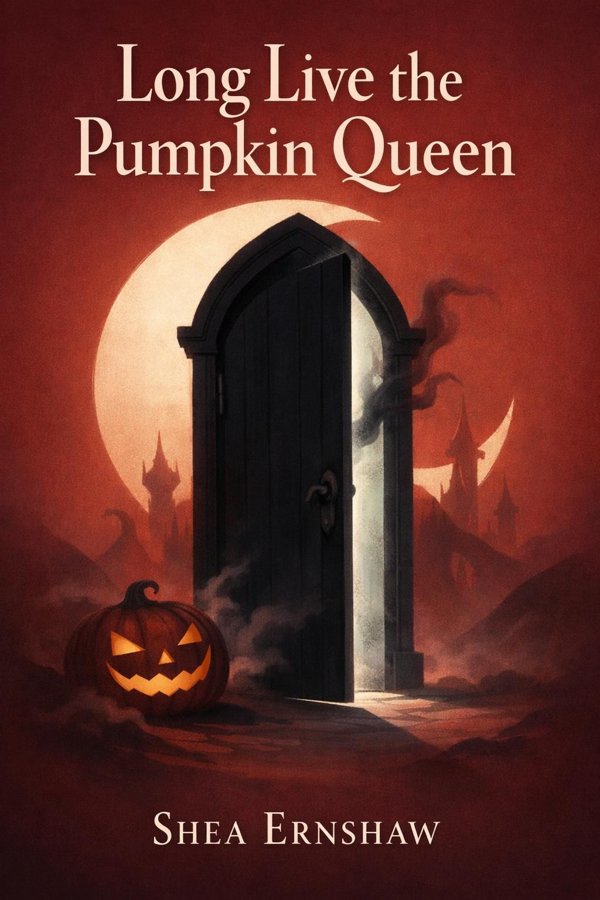
Long Live the Pumpkin Queen: Summary & Key Insights
by Shea Ernshaw
 10 min8 chaptersAudio available
Key Takeaways from Long Live the Pumpkin Queen
A crown often reveals insecurity before it creates confidence.
Curiosity is powerful because it can be both a path to freedom and a doorway to danger.
Travel in fantasy stories often mirrors the emotional distance a character must cross within themselves.
Some enemies are frightening not because they are stronger than us, but because they know how to use our forgotten selves against us.
Home feels different once you return with clearer eyes.
What Is Long Live the Pumpkin Queen About?
Long Live the Pumpkin Queen by Shea Ernshaw is a bestsellers book spanning 5 pages. What happens after the fairy-tale ending, when the wedding is over and the crown begins to feel heavy? In Long Live the Pumpkin Queen, Shea Ernshaw revisits the beloved world of The Nightmare Before Christmas and shifts the spotlight to Sally Skellington, who has just become the Pumpkin Queen. Instead of settling easily into her new life with Jack, Sally finds herself wrestling with self-doubt, loneliness, and the fear that she may have stepped into a role she does not know how to fill. When her curiosity draws her toward a hidden doorway beyond the familiar holiday trees, she unleashes a dark force tied to memory, sleep, and buried identity. What follows is both a fantastical adventure across magical realms and a deeply personal journey of self-discovery. Ernshaw is especially well suited to this story: she is known for lyrical, atmospheric young adult fiction that blends haunting imagery with emotional depth. The result is a gothic fantasy that honors a classic world while giving Sally a richer, more independent voice—making this novel resonate with readers who have ever wondered whether love and belonging are enough if you have not yet learned who you are.
This FizzRead summary covers all 8 key chapters of Long Live the Pumpkin Queen in approximately 10 minutes, distilling the most important ideas, arguments, and takeaways from Shea Ernshaw's work. Also available as an audio summary and Key Quotes Podcast.
Long Live the Pumpkin Queen
What happens after the fairy-tale ending, when the wedding is over and the crown begins to feel heavy? In Long Live the Pumpkin Queen, Shea Ernshaw revisits the beloved world of The Nightmare Before Christmas and shifts the spotlight to Sally Skellington, who has just become the Pumpkin Queen. Instead of settling easily into her new life with Jack, Sally finds herself wrestling with self-doubt, loneliness, and the fear that she may have stepped into a role she does not know how to fill. When her curiosity draws her toward a hidden doorway beyond the familiar holiday trees, she unleashes a dark force tied to memory, sleep, and buried identity. What follows is both a fantastical adventure across magical realms and a deeply personal journey of self-discovery. Ernshaw is especially well suited to this story: she is known for lyrical, atmospheric young adult fiction that blends haunting imagery with emotional depth. The result is a gothic fantasy that honors a classic world while giving Sally a richer, more independent voice—making this novel resonate with readers who have ever wondered whether love and belonging are enough if you have not yet learned who you are.
Who Should Read Long Live the Pumpkin Queen?
This book is perfect for anyone interested in bestsellers and looking to gain actionable insights in a short read. Whether you're a student, professional, or lifelong learner, the key ideas from Long Live the Pumpkin Queen by Shea Ernshaw will help you think differently.
- ✓Readers who enjoy bestsellers and want practical takeaways
- ✓Professionals looking to apply new ideas to their work and life
- ✓Anyone who wants the core insights of Long Live the Pumpkin Queen in just 10 minutes
Want the full summary?
Get instant access to this book summary and 100K+ more with Fizz Moment.
Get Free SummaryAvailable on App Store • Free to download
Key Chapters
A crown often reveals insecurity before it creates confidence. At the start of the novel, Sally Skellington is no longer simply the clever outsider who watched Jack from afar; she is now the Pumpkin Queen, expected to stand beside Halloween Town’s most iconic figure. Yet instead of feeling triumphant, she feels misplaced. Jack belongs naturally to the rhythm of the town—its scares, celebrations, and dramatic rituals seem to answer to him instinctively. Sally, by contrast, moves through this new role with hesitation, unsure whether she is truly seen as queen or merely as Jack’s companion.
This emotional tension is one of the novel’s strongest foundations. Sally’s struggle is not only about leadership but about identity after major life change. She has escaped Dr. Finkelstein, married the person she loves, and stepped into a grand title, but these accomplishments do not automatically produce inner certainty. Ernshaw uses Halloween Town to explore a universal truth: external milestones rarely solve internal confusion. Many readers will recognize this feeling from real life—starting a new job, entering a marriage, moving to a new city, or receiving an opportunity that seems exciting from the outside but feels unsettling within.
Sally’s discomfort also shows how belonging cannot be handed down like a title. It must be built through self-trust. She cannot become a confident queen by mimicking Jack or by waiting for others to reassure her. Her journey begins the moment she admits, even quietly, that she feels out of place.
A useful way to apply this idea is to notice where in your own life you are performing confidence instead of developing it. Rather than asking, “How do I fit this role perfectly?” ask, “How do I grow into it honestly?” Actionable takeaway: when entering a new chapter, give yourself permission to be a beginner instead of expecting instant belonging.
Curiosity is powerful because it can be both a path to freedom and a doorway to danger. Sally’s restless uncertainty leads her beyond the boundaries of ordinary Halloween Town life and into the forest of holiday doors, a place already charged with mystery in the larger mythology of the story world. Surrounded by portals to Christmas Town, Easter Town, and other seasonal realms, she senses that there may be more to existence than the part she has been assigned. Her discovery of a hidden door not meant to be opened becomes the turning point of the novel.
This moment is important not simply because it launches the plot, but because it represents Sally’s emotional state. She is drawn to the unknown because the known no longer feels sufficient. The secret door reflects a hidden part of herself—questions she has not answered, instincts she has not trusted, desires she has not named. In this way, the fantasy element works symbolically. The forbidden realm is not just elsewhere; it is an expression of Sally’s inner life.
Ernshaw also captures the cost of acting from longing without full understanding. Sally does not open the door out of cruelty or recklessness alone. She opens it because she is searching—for purpose, for agency, for something that belongs to her rather than to Jack or Halloween Town. Readers can connect this to many real experiences: pursuing a new relationship before healing, making a drastic decision out of dissatisfaction, or chasing mystery because clarity feels unbearable.
The lesson is not that curiosity is wrong. It is that curiosity needs grounding. Exploration can be transformative, but only when paired with awareness of consequence. Actionable takeaway: when you feel compelled to make a dramatic change, pause long enough to ask whether you are moving toward truth or merely away from discomfort.
Travel in fantasy stories often mirrors the emotional distance a character must cross within themselves. As Sally moves beyond Halloween Town and into other holiday worlds, the novel expands in scope, but it also deepens in meaning. Each realm offers more than visual wonder; it presents a different atmosphere, value system, and relationship to memory, emotion, and identity. The journey becomes a way of testing Sally outside the familiar structures that once defined her.
These settings matter because they contrast sharply with Halloween Town’s theatrical darkness. In moving through other worlds, Sally is forced to observe herself from new angles. She is no longer protected by routine or by Jack’s presence. She must make decisions, assess danger, interpret unfamiliar customs, and continue forward without certainty. This is where her growth accelerates. Removed from the expectations of queenhood, she begins to discover what kind of person she is when no one is telling her who to be.
There is also an important idea here about perspective. We often understand our own lives more clearly when we step outside our usual environment. A temporary change—travel, distance, new communities, even new books—can expose assumptions we did not realize we were carrying. Sally’s encounters across the holiday worlds work in this way. They show her that her home is not the entire universe and that her fears, while real, are not the only forces shaping her future.
For readers, this part of the novel offers a practical reflection: growth sometimes requires leaving the emotional landscape where your current identity was formed. You do not always need to abandon home, but you may need enough distance to see it honestly. Actionable takeaway: if you feel stuck in a role, seek out a new environment, conversation, or experience that lets you encounter yourself without the usual expectations.
Some enemies are frightening not because they are stronger than us, but because they know how to use our forgotten selves against us. The Sandman emerges in the novel as a deeply unsettling force tied to dreams, sleep, and memory. More than a conventional villain, this figure represents what happens when the past is buried rather than integrated. The threat is psychological as much as magical, pushing Sally toward hidden truths she has not fully understood about her own origins and identity.
This conflict gives the novel its emotional center. Sally cannot defeat the darkness through force alone because the darkness is bound up with memory, denial, and self-knowledge. In many fantasy stories, the hero wins by finding a weapon or mastering power. Here, victory requires recognition. Sally must understand herself more completely, including the parts of her story that are painful or disorienting. Ernshaw turns confrontation into revelation, and in doing so she makes the climax feel personal rather than merely spectacular.
The idea resonates beyond the novel. In real life, people are often shaped by old narratives they have never examined: childhood wounds, inherited expectations, moments of rejection, or identities built around survival. These experiences do not disappear simply because we move on externally. Like the Sandman’s influence, they can return in disguised forms—anxiety, avoidance, perfectionism, fear of intimacy, or self-sabotage.
Sally’s battle suggests that healing begins when we stop treating memory as an enemy and start treating it as information. This does not mean reliving pain endlessly. It means acknowledging what formed us so we are no longer ruled by what we refuse to name. Actionable takeaway: identify one recurring fear or pattern in your life and ask what earlier story it may be connected to; understanding the source is often the first step toward loosening its power.
Home feels different once you return with clearer eyes. By the time Sally comes back to Halloween Town, the place itself has not entirely changed—but she has. That shift matters. Earlier, the town felt overwhelming, almost like a stage built for Jack where Sally was trying to improvise her lines. After her journey, conflict, and awakening, she returns not as someone seeking permission to belong but as someone ready to define belonging on her own terms.
This resolution avoids a simplistic ending. Sally does not suddenly become fearless, and Halloween Town does not transform into a perfect space. Instead, the novel suggests that harmony comes from integration, not ideal conditions. Sally’s identity as queen becomes possible when she stops measuring herself against Jack’s charisma and starts understanding the unique strength she brings: intuition, compassion, resilience, and a willingness to face uncomfortable truths. Her role no longer depends on imitation.
The return also highlights an important relationship lesson. Love is not diminished when one partner develops an independent sense of self; it is strengthened by it. Sally and Jack function better when Sally is not disappearing into his orbit. This is a valuable message for readers of any age, especially those navigating relationships while still discovering who they are. Partnership should create room for identity, not erase it.
In practical terms, the end of Sally’s arc encourages readers to revisit their own homes, communities, and commitments after personal growth. Sometimes the place you once felt trapped by becomes livable once you stop seeking validation and start acting from self-knowledge. Actionable takeaway: return to one role or relationship that has made you feel small, and ask what would change if you showed up as yourself rather than as the version you think others expect.
It is possible to be deeply loved and still not fully know who you are. One of the most meaningful ideas in Long Live the Pumpkin Queen is that romance, status, and even destiny are not substitutes for identity. Sally loves Jack, and Jack loves her. She is also crowned queen. Yet those two facts, powerful as they are, do not answer her inner questions. Ernshaw resists the comforting but shallow idea that being chosen by someone extraordinary automatically resolves insecurity.
This makes the novel more emotionally honest than many post-romance fantasies. Sally’s struggle shows that identity cannot be borrowed from a relationship. She cannot define herself only as Jack’s wife any more than she can define herself only by her title. When she tries to fit those external labels without understanding her own inner life, she feels fragmented. The more she investigates the mystery surrounding her and the realm she opens, the more she is forced to ask who she is apart from what others call her.
Readers often face a similar challenge in quieter forms. A person may identify entirely through career, family role, romantic attachment, or public image. These identities can be meaningful, but they become fragile when they are the whole story. If one role changes, the self can feel lost. Sally’s journey argues for a more rooted identity—one built from values, choices, memory, and self-recognition.
A practical application is to separate your roles from your core. For example, instead of saying, “I am only successful when I am needed by others,” ask, “What qualities do I possess regardless of who is around me?” The answer may include creativity, loyalty, curiosity, courage, or empathy. Actionable takeaway: write down the roles you play in life, then list three traits that belong to you even if every role disappeared; that is where stronger identity begins.
Growing up often begins when we realize that good intentions do not cancel harmful outcomes. Sally does not set out to endanger Halloween Town or unleash a force that threatens multiple worlds. Her motives are tangled with loneliness, wonder, and a desire for agency. Yet once the consequences unfold, she cannot hide behind innocence. This is a crucial stage in her development: she must move from regret into responsibility.
The novel handles this progression well. Sally is not condemned as irredeemable for making a mistake, but neither is she excused from the damage her choice causes. Instead, she is asked to respond. That distinction matters. Mature responsibility is not endless self-punishment; it is the willingness to face the results of one’s actions and participate in repair. Sally’s courage is shown not in never failing, but in refusing to abandon the situation once she understands her role in it.
This idea has broad real-world relevance. People often make choices from understandable emotional states—fear, longing, resentment, exhaustion—then feel overwhelmed when the results become messy. The temptation is either denial or self-destruction: pretending nothing happened, or deciding one mistake defines the entire self. Sally’s arc offers a healthier model. Accountability and self-worth can coexist. You can admit, “I caused this,” without concluding, “Therefore I am beyond repair.”
In everyday life, this might look like apologizing sincerely, correcting a poor decision at work, rebuilding trust after secrecy, or simply acknowledging how your actions affected others. Responsibility becomes transformative when it leads to changed behavior. Actionable takeaway: the next time you make a mistake, resist the urge to defend or collapse; name the impact clearly, ask what repair is possible, and take one concrete step toward making it right.
Sometimes the darkest settings hold the clearest emotional truths. Although Long Live the Pumpkin Queen is rooted in a whimsical gothic universe of skeletons, shadows, and holiday portals, its structure is that of a classic coming-of-age story. The difference is that Sally’s growth is not about entering adulthood for the first time; it is about discovering selfhood after a life already shaped by survival, longing, and sudden change. That gives the novel a mature emotional texture beneath its YA fantasy frame.
Ernshaw’s gothic style is central to this effect. The eerie landscapes, dreamlike threats, and strange beauty of the world create more than atmosphere—they externalize Sally’s inner uncertainty. Darkness in the novel is not only frightening; it is revealing. It brings hidden things to the surface. The tone therefore supports the theme: to become fully herself, Sally must move through shadow rather than avoid it.
This makes the book appealing not only to fans of fantasy but also to readers interested in stories about reinvention. Sally’s arc is about claiming authorship over her own life. She begins as someone reacting to roles and circumstances. She ends as someone with a more conscious relationship to her power, her past, and her place in the world. That is the essence of a coming-of-self narrative.
Readers can apply this framework to their own development by rethinking periods of uncertainty. Instead of seeing confusion as proof of failure, it can be viewed as evidence that an older identity no longer fits. Disorientation often comes before definition. Actionable takeaway: when life feels murky, ask not only “What am I losing?” but also “What self is trying to emerge that my old life can no longer contain?”
All Chapters in Long Live the Pumpkin Queen
About the Author
Shea Ernshaw is an American novelist known for writing atmospheric young adult fiction infused with mystery, romance, and magical realism. She earned a wide readership with bestselling novels such as The Wicked Deep and Winterwood, which established her reputation for lyrical prose, haunting settings, and emotionally layered storytelling. Her books often feature isolated worlds, hidden histories, and young women confronting secrets about themselves and the people around them. Ernshaw has a distinctive ability to blend eerie beauty with intimate character development, making her work especially appealing to readers who enjoy dark fairy-tale energy. In Long Live the Pumpkin Queen, she brings those strengths to a beloved gothic universe, expanding Sally Skellington into a richer, more self-aware heroine while preserving the story’s dreamlike, unsettling charm.
Get This Summary in Your Preferred Format
Read or listen to the Long Live the Pumpkin Queen summary by Shea Ernshaw anytime, anywhere. FizzRead offers multiple formats so you can learn on your terms — all free.
Available formats: App · Audio · PDF · EPUB — All included free with FizzRead
Download Long Live the Pumpkin Queen PDF and EPUB Summary
Key Quotes from Long Live the Pumpkin Queen
“A crown often reveals insecurity before it creates confidence.”
“Curiosity is powerful because it can be both a path to freedom and a doorway to danger.”
“Travel in fantasy stories often mirrors the emotional distance a character must cross within themselves.”
“Some enemies are frightening not because they are stronger than us, but because they know how to use our forgotten selves against us.”
“Home feels different once you return with clearer eyes.”
Frequently Asked Questions about Long Live the Pumpkin Queen
Long Live the Pumpkin Queen by Shea Ernshaw is a bestsellers book that explores key ideas across 8 chapters. What happens after the fairy-tale ending, when the wedding is over and the crown begins to feel heavy? In Long Live the Pumpkin Queen, Shea Ernshaw revisits the beloved world of The Nightmare Before Christmas and shifts the spotlight to Sally Skellington, who has just become the Pumpkin Queen. Instead of settling easily into her new life with Jack, Sally finds herself wrestling with self-doubt, loneliness, and the fear that she may have stepped into a role she does not know how to fill. When her curiosity draws her toward a hidden doorway beyond the familiar holiday trees, she unleashes a dark force tied to memory, sleep, and buried identity. What follows is both a fantastical adventure across magical realms and a deeply personal journey of self-discovery. Ernshaw is especially well suited to this story: she is known for lyrical, atmospheric young adult fiction that blends haunting imagery with emotional depth. The result is a gothic fantasy that honors a classic world while giving Sally a richer, more independent voice—making this novel resonate with readers who have ever wondered whether love and belonging are enough if you have not yet learned who you are.
More by Shea Ernshaw

You Might Also Like
The Godfather
Mario Puzo
10 min
The Handmaid's Tale
Margaret Atwood
10 min
The Hunger Games
Suzanne Collins
10 min
The Nightingale
Kristin Hannah
10 min
The Seven Husbands of Evelyn Hugo
Taylor Jenkins Reid
10 min
Backwater Justice
Fern Michaels
10 minBrowse by Category
Ready to read Long Live the Pumpkin Queen?
Get the full summary and 100K+ more books with Fizz Moment.