
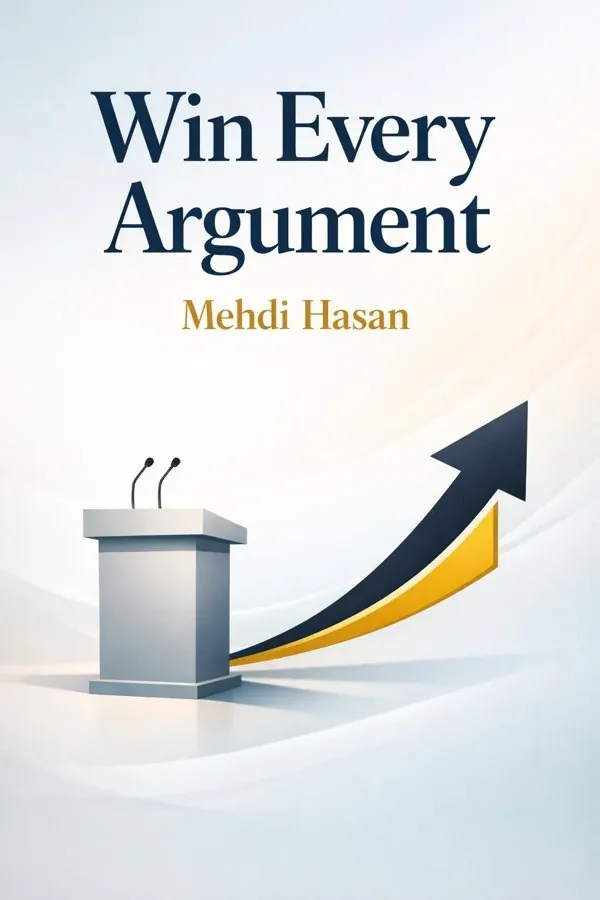
Win Every Argument: The Art of Debating, Persuading, and Public Speaking: Summary & Key Insights
by Mehdi Hasan
 10 min6 chaptersAudio available
What Is Win Every Argument: The Art of Debating, Persuading, and Public Speaking About?
Win Every Argument: The Art of Debating, Persuading, and Public Speaking by Mehdi Hasan is a communication book spanning 6 pages. In this book, journalist and broadcaster Mehdi Hasan shares his insights on how to argue effectively, persuasively, and ethically. Drawing from his experience in political interviews and public debates, Hasan provides practical techniques for constructing logical arguments, handling difficult opponents, and communicating with clarity and confidence. The book emphasizes the importance of truth, empathy, and preparation in winning arguments both in public and private life.
This FizzRead summary covers all 6 key chapters of Win Every Argument: The Art of Debating, Persuading, and Public Speaking in approximately 10 minutes, distilling the most important ideas, arguments, and takeaways from Mehdi Hasan's work. Also available as an audio summary and Key Quotes Podcast.
Win Every Argument: The Art of Debating, Persuading, and Public Speaking
In this book, journalist and broadcaster Mehdi Hasan shares his insights on how to argue effectively, persuasively, and ethically. Drawing from his experience in political interviews and public debates, Hasan provides practical techniques for constructing logical arguments, handling difficult opponents, and communicating with clarity and confidence. The book emphasizes the importance of truth, empathy, and preparation in winning arguments both in public and private life.
Who Should Read Win Every Argument: The Art of Debating, Persuading, and Public Speaking?
This book is perfect for anyone interested in communication and looking to gain actionable insights in a short read. Whether you're a student, professional, or lifelong learner, the key ideas from Win Every Argument: The Art of Debating, Persuading, and Public Speaking by Mehdi Hasan will help you think differently.
- ✓Readers who enjoy communication and want practical takeaways
- ✓Professionals looking to apply new ideas to their work and life
- ✓Anyone who wants the core insights of Win Every Argument: The Art of Debating, Persuading, and Public Speaking in just 10 minutes
Want the full summary?
Get instant access to this book summary and 100K+ more with Fizz Moment.
Get Free SummaryAvailable on App Store • Free to download
Key Chapters
Persuasion is the invisible force shaping our societies and personal lives. When I talk about persuasion, I mean the art of moving hearts and minds not through domination but through connection. Every time you convince a friend to see a different perspective, every time a politician wins support for a policy, and every time an advocate raises awareness of injustice—that is persuasion at work.
In my interviews with world leaders and public figures, I’ve seen how effective persuasion depends not on clever soundbites but on authenticity. People don’t follow the loudest voice; they follow the most coherent, credible, and empathetic one. Persuasion, therefore, is a moral act—it requires respect for your audience’s intelligence and emotions. The ability to influence doesn’t mean to deceive; it means to clarify, to illuminate, and to connect truth with human experience.
When you speak persuasively, you recognize the human behind the argument. You appeal to shared values rather than abstract logic alone. Aristotle called this ethos, pathos, and logos—the balance of credibility, emotion, and reason. Modern psychology echoes the same principle: we trust people whose sincerity matches their message. In a polarized age, persuasion is not a weapon; it’s a healing instrument. To wield it well is to reaffirm your belief in dialogue and democracy.
If you want to persuade effectively, remember: people rarely change their minds in front of an audience. What matters is planting a seed of doubt or curiosity. Persuasion’s real victory happens quietly later, when your listener rethinks their position because you’ve made them feel heard rather than attacked. That subtle power—that mix of logic and empathy—is the essence of winning every argument.
Before a debate, before an interview, before any persuasive encounter, there is one truth I repeat: preparation is everything. Every moment I spend in research saves me from panic in live questioning. Every fact I verify becomes an anchor against manipulation. When you prepare well, you don’t just arm yourself with information; you build confidence. It’s the quiet discipline that turns ordinary speakers into formidable debaters.
Preparation begins with understanding both sides of the issue. To argue effectively, you must know your opponent’s case even better than they do. This isn’t about arrogance—it’s about empathy through knowledge. If you grasp their motivations and logic, you can anticipate their moves and respond with precision. It’s why I read extensively before every interview, not only about the topics but also about the person I’m speaking to. Facts matter, but context matters even more.
Preparation also protects you from misinformation. In today’s world, claims fly faster than truth-checking can follow. When you’re armed with verifiable facts, you force debates onto the terrain of reality. And let me be clear—preparation is not reading talking points; it’s an intellectual habit. You research your sources, check for credibility, analyze counterarguments, and build a narrative sequence that feels natural in delivery. You rehearse not to memorize, but to internalize clarity.
When you step into any argumentative situation, your preparation speaks before you do. It radiates confidence in tone and posture. You’re no longer panicked by aggressive questioning because you’ve already walked those mental roads in advance. Research gives you calm, and calm wins arguments.
+ 4 more chapters — available in the FizzRead app
All Chapters in Win Every Argument: The Art of Debating, Persuading, and Public Speaking
About the Author
Mehdi Hasan is a British-American journalist, broadcaster, and author known for his incisive interviews and political commentary. He has worked with Al Jazeera English, The Intercept, and MSNBC, and is recognized for his ability to challenge public figures with rigorous questioning and articulate debate.
Get This Summary in Your Preferred Format
Read or listen to the Win Every Argument: The Art of Debating, Persuading, and Public Speaking summary by Mehdi Hasan anytime, anywhere. FizzRead offers multiple formats so you can learn on your terms — all free.
Available formats: App · Audio · PDF · EPUB — All included free with FizzRead
Download Win Every Argument: The Art of Debating, Persuading, and Public Speaking PDF and EPUB Summary
Key Quotes from Win Every Argument: The Art of Debating, Persuading, and Public Speaking
“Persuasion is the invisible force shaping our societies and personal lives.”
“Before a debate, before an interview, before any persuasive encounter, there is one truth I repeat: preparation is everything.”
Frequently Asked Questions about Win Every Argument: The Art of Debating, Persuading, and Public Speaking
Win Every Argument: The Art of Debating, Persuading, and Public Speaking by Mehdi Hasan is a communication book that explores key ideas across 6 chapters. In this book, journalist and broadcaster Mehdi Hasan shares his insights on how to argue effectively, persuasively, and ethically. Drawing from his experience in political interviews and public debates, Hasan provides practical techniques for constructing logical arguments, handling difficult opponents, and communicating with clarity and confidence. The book emphasizes the importance of truth, empathy, and preparation in winning arguments both in public and private life.
You Might Also Like

Magic Words: The Science and Secrets Behind Seven Words That Motivate, Engage, and Influence
Tim David
10 min
Talking Across The Divide: How to Communicate with People You Disagree with and Maybe Even Change the World
Justin Lee
10 min
The Exceptional Presenter: A Proven Formula to Open Up! and Own the Room
Timothy J. Koegel
10 min
4 Essential Keys to Effective Communication in Love, Life, Work--Anywhere!: Including the 12-Day Communication Challenge!
Bento C. Leal III
10 min
Active Listening Techniques: 30 Practical Tools to Hone Your Communication Skills
Nisha Gupta
10 min
Bargaining for Advantage: Negotiation Strategies for Reasonable People
G. Richard Shell
10 minBrowse by Category
Ready to read Win Every Argument: The Art of Debating, Persuading, and Public Speaking?
Get the full summary and 100K+ more books with Fizz Moment.