
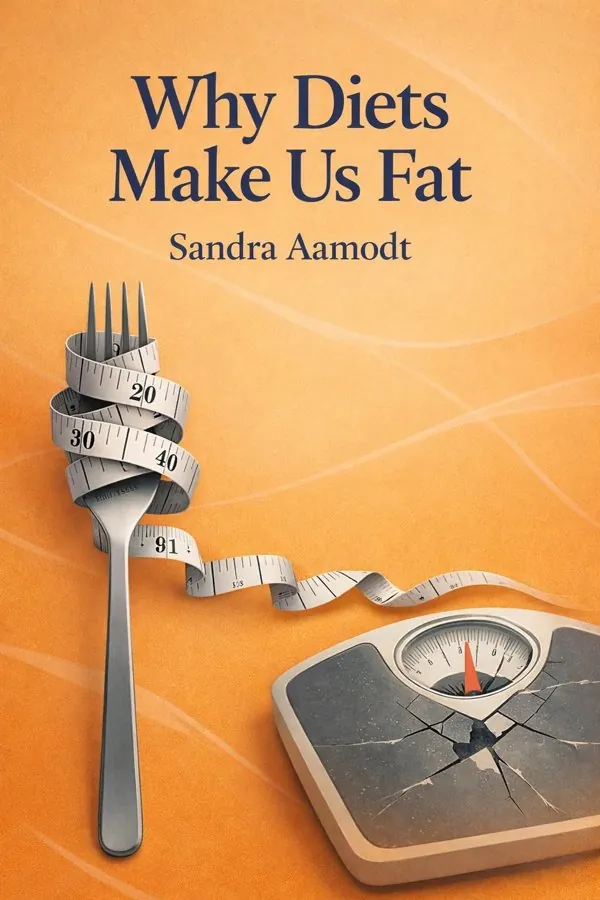
Why Diets Make Us Fat: The Unintended Consequences of Our Obsession with Weight Loss: Summary & Key Insights
 10 min10 chaptersAudio available
What Is Why Diets Make Us Fat: The Unintended Consequences of Our Obsession with Weight Loss About?
Why Diets Make Us Fat: The Unintended Consequences of Our Obsession with Weight Loss by Sandra Aamodt is a health_med book spanning 10 pages. In this book, neuroscientist Sandra Aamodt explores how dieting can paradoxically lead to weight gain and metabolic disruption. Drawing on scientific research, she explains how the brain regulates body weight and why restrictive diets often fail. Aamodt advocates for mindful eating and a healthier relationship with food rather than calorie restriction.
This FizzRead summary covers all 10 key chapters of Why Diets Make Us Fat: The Unintended Consequences of Our Obsession with Weight Loss in approximately 10 minutes, distilling the most important ideas, arguments, and takeaways from Sandra Aamodt's work. Also available as an audio summary and Key Quotes Podcast.
Why Diets Make Us Fat: The Unintended Consequences of Our Obsession with Weight Loss
In this book, neuroscientist Sandra Aamodt explores how dieting can paradoxically lead to weight gain and metabolic disruption. Drawing on scientific research, she explains how the brain regulates body weight and why restrictive diets often fail. Aamodt advocates for mindful eating and a healthier relationship with food rather than calorie restriction.
Who Should Read Why Diets Make Us Fat: The Unintended Consequences of Our Obsession with Weight Loss?
This book is perfect for anyone interested in health_med and looking to gain actionable insights in a short read. Whether you're a student, professional, or lifelong learner, the key ideas from Why Diets Make Us Fat: The Unintended Consequences of Our Obsession with Weight Loss by Sandra Aamodt will help you think differently.
- ✓Readers who enjoy health_med and want practical takeaways
- ✓Professionals looking to apply new ideas to their work and life
- ✓Anyone who wants the core insights of Why Diets Make Us Fat: The Unintended Consequences of Our Obsession with Weight Loss in just 10 minutes
Want the full summary?
Get instant access to this book summary and 100K+ more with Fizz Moment.
Get Free SummaryAvailable on App Store • Free to download
Key Chapters
To understand why diets often fail, we must start with the brain’s command center—the hypothalamus. This small area deep inside the brain orchestrates energy balance. It receives signals from hormones like leptin, which indicates fat stores, and ghrelin, which stimulates hunger. Based on these inputs, the brain maintains weight within a relatively narrow biological range known as the ‘set point.’ When we attempt to lose weight by cutting calories, the hypothalamus interprets this as a threat to survival rather than a voluntary aesthetic choice.
Imagine your body as a thermostat. When it senses a drop below its set temperature, it activates mechanisms to restore balance. Similarly, when your weight dips below your brain’s target range, physiological and behavioral processes kick in to defend that range. Hunger signals intensify, metabolism slows, and the allure of high-calorie foods increases. This isn’t weakness—it’s biology. Your brain evolved over millennia to protect against starvation, not to help you fit into a smaller jeans size.
This internal regulation means that while short-term weight loss is common on any given diet, long-term maintenance is rare. The brain persists in restoring what it perceives as the ‘correct’ weight. Recognizing this offers a radical shift in perspective: instead of blaming ourselves for failure, we can acknowledge that we have been fighting our biology. Once we make peace with that truth, real, sustainable health begins to feel possible.
When people restrict calories, the body engages a complex suite of adaptations to conserve energy. Metabolism slows, muscle becomes more efficient at using fuel, and hormones that stimulate hunger surge. These changes are not moral failings—they are emergency responses. Studies show that even years after dieters return to normal eating, their bodies remain metabolically altered, burning fewer calories than expected for their weight.
I often describe metabolism as a careful accountant: it keeps strict track of every calorie in and out. When you cut intake, it adjusts spending. That’s why many dieters find themselves plateauing even while maintaining strict discipline. The brain, through hormonal messengers, communicates to every organ that resources must be conserved. Leptin decreases, signaling low fat stores; ghrelin rises, making hunger more intense and persistent; thyroid hormones dip, reducing metabolic rate. The net result: you feel hungrier and burn fewer calories than someone of the same weight who hasn’t recently dieted.
Ironically, these protective mechanisms make future weight gain more likely. After the diet ends, the body’s efficiency ensures that any excess calories are stored readily. This is the physiological basis of the yo-yo effect. By understanding metabolic adaptation, we realize that dieting not only fails to produce lasting weight loss but can actually predispose us to future weight gain.
+ 8 more chapters — available in the FizzRead app
All Chapters in Why Diets Make Us Fat: The Unintended Consequences of Our Obsession with Weight Loss
About the Author
Sandra Aamodt is an American neuroscientist and science writer. She earned her Ph.D. in neuroscience from the University of Rochester and served as editor-in-chief of the journal Nature Neuroscience. Her work focuses on the intersection of brain science, behavior, and health.
Get This Summary in Your Preferred Format
Read or listen to the Why Diets Make Us Fat: The Unintended Consequences of Our Obsession with Weight Loss summary by Sandra Aamodt anytime, anywhere. FizzRead offers multiple formats so you can learn on your terms — all free.
Available formats: App · Audio · PDF · EPUB — All included free with FizzRead
Download Why Diets Make Us Fat: The Unintended Consequences of Our Obsession with Weight Loss PDF and EPUB Summary
Key Quotes from Why Diets Make Us Fat: The Unintended Consequences of Our Obsession with Weight Loss
“To understand why diets often fail, we must start with the brain’s command center—the hypothalamus.”
“When people restrict calories, the body engages a complex suite of adaptations to conserve energy.”
Frequently Asked Questions about Why Diets Make Us Fat: The Unintended Consequences of Our Obsession with Weight Loss
Why Diets Make Us Fat: The Unintended Consequences of Our Obsession with Weight Loss by Sandra Aamodt is a health_med book that explores key ideas across 10 chapters. In this book, neuroscientist Sandra Aamodt explores how dieting can paradoxically lead to weight gain and metabolic disruption. Drawing on scientific research, she explains how the brain regulates body weight and why restrictive diets often fail. Aamodt advocates for mindful eating and a healthier relationship with food rather than calorie restriction.
You Might Also Like

On Immunity
Eula Biss
10 min
The Three-Body Problem
Liu Cixin
10 min
Community Health Volunteer Toolkit: Training and Practical Activities
World Health Organization
10 min
Healing Back Pain: The Mind-Body Connection
John E. Sarno
10 min
Health Literacy for All: Practical Guides to Communicate Health Information (Compilations)
World Health Organization
10 min
The Complete Guide to Sports Supplements: An Evidence-Based Review
Anita Bean
10 minBrowse by Category
Ready to read Why Diets Make Us Fat: The Unintended Consequences of Our Obsession with Weight Loss?
Get the full summary and 100K+ more books with Fizz Moment.