
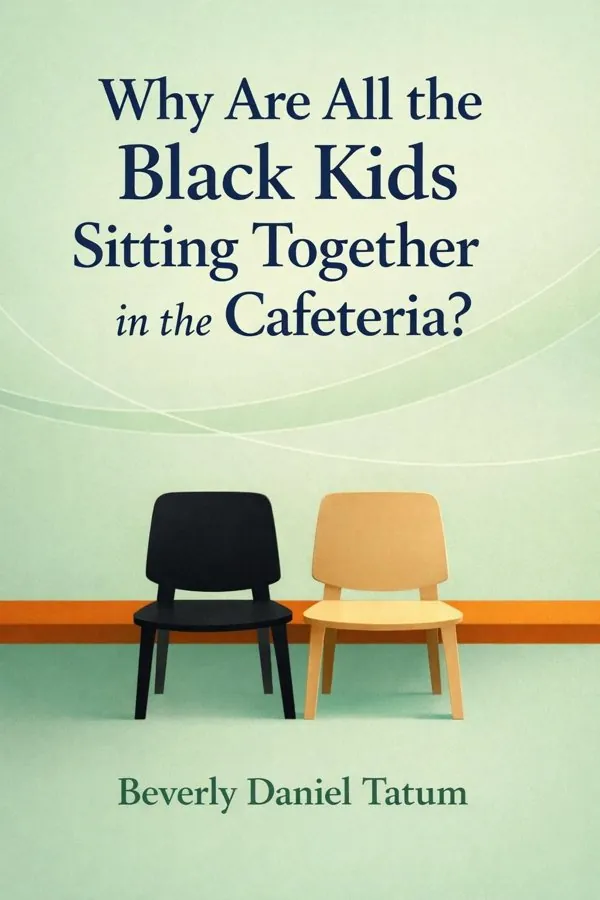
Why Are All the Black Kids Sitting Together in the Cafeteria?: And Other Conversations About Race: Summary & Key Insights
 10 min10 chaptersAudio available
What Is Why Are All the Black Kids Sitting Together in the Cafeteria?: And Other Conversations About Race About?
Why Are All the Black Kids Sitting Together in the Cafeteria?: And Other Conversations About Race by Beverly Daniel Tatum is a sociology book spanning 10 pages. In this influential work, psychologist Beverly Daniel Tatum explores the dynamics of racial identity development and the social realities of race relations in the United States. Through accessible analysis and real-world examples, Tatum explains why racial grouping among adolescents is a natural part of identity formation and how open dialogue about race can foster understanding and equity.
This FizzRead summary covers all 10 key chapters of Why Are All the Black Kids Sitting Together in the Cafeteria?: And Other Conversations About Race in approximately 10 minutes, distilling the most important ideas, arguments, and takeaways from Beverly Daniel Tatum's work. Also available as an audio summary and Key Quotes Podcast.
Why Are All the Black Kids Sitting Together in the Cafeteria?: And Other Conversations About Race
In this influential work, psychologist Beverly Daniel Tatum explores the dynamics of racial identity development and the social realities of race relations in the United States. Through accessible analysis and real-world examples, Tatum explains why racial grouping among adolescents is a natural part of identity formation and how open dialogue about race can foster understanding and equity.
Who Should Read Why Are All the Black Kids Sitting Together in the Cafeteria?: And Other Conversations About Race?
This book is perfect for anyone interested in sociology and looking to gain actionable insights in a short read. Whether you're a student, professional, or lifelong learner, the key ideas from Why Are All the Black Kids Sitting Together in the Cafeteria?: And Other Conversations About Race by Beverly Daniel Tatum will help you think differently.
- ✓Readers who enjoy sociology and want practical takeaways
- ✓Professionals looking to apply new ideas to their work and life
- ✓Anyone who wants the core insights of Why Are All the Black Kids Sitting Together in the Cafeteria?: And Other Conversations About Race in just 10 minutes
Want the full summary?
Get instant access to this book summary and 100K+ more with Fizz Moment.
Get Free SummaryAvailable on App Store • Free to download
Key Chapters
Before we can talk about racial identity, we must have a common language about racism itself. Many people assume that racism equals individual prejudice—a matter of personal attitudes or morality. But I argue that racism is a systemic construct, an array of institutional practices that confer advantages on some groups while denying them to others. Prejudice, as I explain, is an incongruent bias—an individual’s set of preconceptions. Racism is prejudice backed by power.
Understanding that distinction is essential. When we see racism only as an emotional flaw, we deny its structural roots. Schools, housing policies, employment practices, and media representations all reinforce racial hierarchies, often without anyone consciously intending harm. These systems form the scaffolding of social opportunity. Within them, people of color constantly negotiate spaces where bias is normalized.
Many White readers initially resist this idea, asking: 'But I’m not racist.' My answer is simple: racism is not simply about individual intentions; it is about outcomes and impact. Awareness begins when we recognize how the ordinary operations of institutions—grading, hiring, suburban zoning—can reflect unacknowledged racial bias. Once we grasp this systemic dimension, we can move beyond defensiveness toward responsibility. The intent is not to provoke guilt, but to awaken awareness—because awareness is the first gateway to action.
Racial identity formation does not occur in isolation. We all develop our sense of self in dialogue with social messages and lived experiences. In the case of African Americans, psychologist William Cross’s model provides a critical framework: the five-stage process from Pre-Encounter to Internalization-Commitment. This process reflects a journey from unaware assimilation into dominant culture toward a confident sense of Black identity integrated with broader human connection.
I apply Cross’s insights to schools and communities to reveal how environment shapes racial awareness. In classrooms, Black children often internalize negative stereotypes long before they consciously identify as Black. As they grow older, experiences of marginalization or discrimination can trigger the Encounter stage—a moment when racial meaning becomes personal. From there, exploration deepens, leading toward greater affirmation.
For White individuals, identity formation follows a different trajectory, often involving the disorienting realization that race also defines their experience. For many White people, recognizing themselves as racial beings is the first counterintuitive step—because they have been socialized to see their racial position as neutral or invisible.
Healthy identity development matters because it influences relationships, achievement, and psychological well-being. When educators, parents, and community leaders recognize these stages, they can support growth rather than suppress it. Identity is not a fixed destination; it is a process shaped by experience, reflection, and engagement.
+ 8 more chapters — available in the FizzRead app
All Chapters in Why Are All the Black Kids Sitting Together in the Cafeteria?: And Other Conversations About Race
About the Author
Beverly Daniel Tatum is an American psychologist, educator, and former president of Spelman College. She is widely recognized for her scholarship on racial identity development and the psychology of racism, and her work has shaped national conversations on race and education.
Get This Summary in Your Preferred Format
Read or listen to the Why Are All the Black Kids Sitting Together in the Cafeteria?: And Other Conversations About Race summary by Beverly Daniel Tatum anytime, anywhere. FizzRead offers multiple formats so you can learn on your terms — all free.
Available formats: App · Audio · PDF · EPUB — All included free with FizzRead
Download Why Are All the Black Kids Sitting Together in the Cafeteria?: And Other Conversations About Race PDF and EPUB Summary
Key Quotes from Why Are All the Black Kids Sitting Together in the Cafeteria?: And Other Conversations About Race
“Before we can talk about racial identity, we must have a common language about racism itself.”
“Racial identity formation does not occur in isolation.”
Frequently Asked Questions about Why Are All the Black Kids Sitting Together in the Cafeteria?: And Other Conversations About Race
Why Are All the Black Kids Sitting Together in the Cafeteria?: And Other Conversations About Race by Beverly Daniel Tatum is a sociology book that explores key ideas across 10 chapters. In this influential work, psychologist Beverly Daniel Tatum explores the dynamics of racial identity development and the social realities of race relations in the United States. Through accessible analysis and real-world examples, Tatum explains why racial grouping among adolescents is a natural part of identity formation and how open dialogue about race can foster understanding and equity.
You Might Also Like

Between the World and Me
Ta-Nehisi Coates
10 min
Half the Sky
Nicholas D. Kristof, Sheryl WuDunn
10 min
Men Explain Things To Me
Rebecca Solnit
10 min
Rational Ritual
Michael Suk-Young Chwe
10 min
The New Jim Crow
Michelle Alexander
10 min
Beyond Culture
Edward T. Hall
10 minBrowse by Category
Ready to read Why Are All the Black Kids Sitting Together in the Cafeteria?: And Other Conversations About Race?
Get the full summary and 100K+ more books with Fizz Moment.