
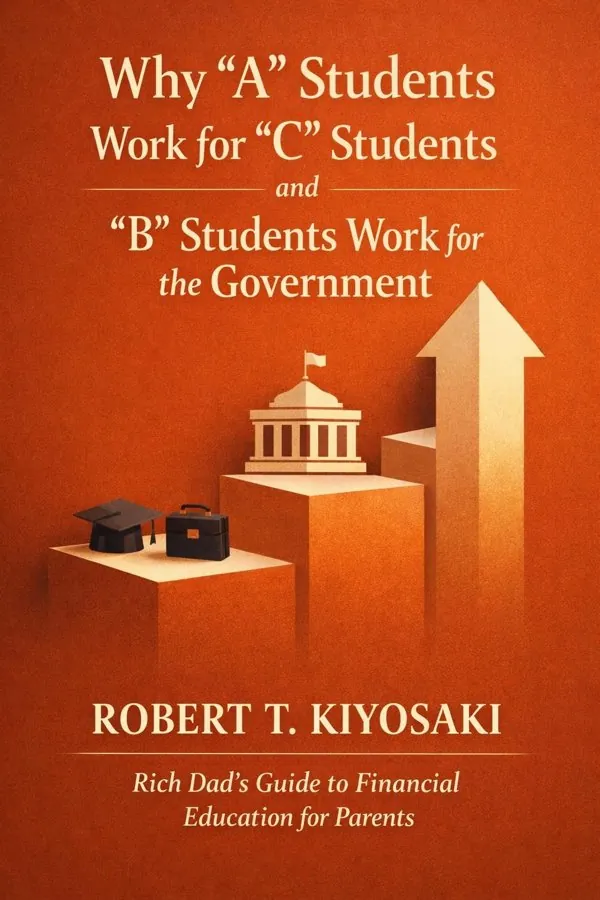
Why "A" Students Work for "C" Students and "B" Students Work for the Government: Rich Dad's Guide to Financial Education for Parents: Summary & Key Insights
 10 min10 chaptersAudio available
What Is Why "A" Students Work for "C" Students and "B" Students Work for the Government: Rich Dad's Guide to Financial Education for Parents About?
Why "A" Students Work for "C" Students and "B" Students Work for the Government: Rich Dad's Guide to Financial Education for Parents by Robert T. Kiyosaki is a finance book spanning 10 pages. This book by Robert T. Kiyosaki challenges the conventional belief that academic success guarantees professional success. It explores how 'A' students often become employees, 'B' students work for the government, and 'C' students become entrepreneurs who hire the others. Kiyosaki emphasizes the importance of financial education and encourages parents to teach their children about money, investing, and entrepreneurship beyond traditional schooling.
This FizzRead summary covers all 10 key chapters of Why "A" Students Work for "C" Students and "B" Students Work for the Government: Rich Dad's Guide to Financial Education for Parents in approximately 10 minutes, distilling the most important ideas, arguments, and takeaways from Robert T. Kiyosaki's work. Also available as an audio summary and Key Quotes Podcast.
Why "A" Students Work for "C" Students and "B" Students Work for the Government: Rich Dad's Guide to Financial Education for Parents
This book by Robert T. Kiyosaki challenges the conventional belief that academic success guarantees professional success. It explores how 'A' students often become employees, 'B' students work for the government, and 'C' students become entrepreneurs who hire the others. Kiyosaki emphasizes the importance of financial education and encourages parents to teach their children about money, investing, and entrepreneurship beyond traditional schooling.
Who Should Read Why "A" Students Work for "C" Students and "B" Students Work for the Government: Rich Dad's Guide to Financial Education for Parents?
This book is perfect for anyone interested in finance and looking to gain actionable insights in a short read. Whether you're a student, professional, or lifelong learner, the key ideas from Why "A" Students Work for "C" Students and "B" Students Work for the Government: Rich Dad's Guide to Financial Education for Parents by Robert T. Kiyosaki will help you think differently.
- ✓Readers who enjoy finance and want practical takeaways
- ✓Professionals looking to apply new ideas to their work and life
- ✓Anyone who wants the core insights of Why "A" Students Work for "C" Students and "B" Students Work for the Government: Rich Dad's Guide to Financial Education for Parents in just 10 minutes
Want the full summary?
Get instant access to this book summary and 100K+ more with Fizz Moment.
Get Free SummaryAvailable on App Store • Free to download
Key Chapters
Whenever people hear this title, they often laugh, because it sounds like a joke. But behind it lies a serious truth about our economic reality. The 'A' student is trained to memorize and repeat facts, following a system designed for the industrial age—where perfection and obedience were rewarded. These students often grow up to become corporate employees, excelling at tasks but rarely owning the game they play. The 'B' student, striving for safety, often finds comfort in government or institutional roles, trading freedom for predictability. And then there are the 'C' students, who may have resisted the structure of school, disliked authority, or preferred to learn by doing. These individuals—though often written off as 'underachievers'—tend to become entrepreneurs, hiring both the 'A' and 'B' students to work for them.
I am not saying that bad grades guarantee success or that good grades doom one to mediocrity. What I’m saying is that our measurements of success are too narrow. Schools measure academic performance, not financial wisdom. The world measures results, not report cards. The educational system trains employees, but life rewards those who can think differently, take risks, and manage money. In the real world, the letter grade that matters most is not found on a school paper—it’s found on your financial statement.
As parents, we must guide our children to balance both worlds. Encourage them to value learning—but also to question what and why they are learning. 'C' students succeed not because they reject learning, but because they learn differently: through curiosity, experimentation, and an acceptance of failure as a stepping stone to mastery.
Most schools don’t teach money. They teach math, but not how to manage a paycheck. They teach history, but not how to make financial history. That’s why parents must step in as their children’s first and most influential financial teachers.
In my childhood, I had two fathers—one poor and one rich. My poor dad, my biological father, was a well-educated man who believed in the traditional path: study hard, get a good job, and retire with a pension. My rich dad, my friend’s father, taught me something entirely different: to make money work for me. He made me understand business, investing, and the importance of financial vocabulary long before any teacher did. You, too, can be a 'rich dad' to your child, even if you were raised by a 'poor dad.' You just have to be willing to learn alongside them.
Children absorb their parents’ attitudes about money early—through how we talk about bills, how we respond to job loss, how we handle credit cards, and whether we treat money as a tool or a threat. The most powerful lessons come not from lectures, but from what we model. When you discuss how to invest, when you let your child see you make mistakes and recover from them, when you involve them in household financial decisions—you are building their financial intelligence.
Financial education begins at home because life itself is the classroom. Don’t wait for schools to teach what they won’t. Take small steps: show your child how to differentiate between an asset and a liability, how to save to invest, and how to think like an owner rather than a consumer.
+ 8 more chapters — available in the FizzRead app
All Chapters in Why "A" Students Work for "C" Students and "B" Students Work for the Government: Rich Dad's Guide to Financial Education for Parents
About the Author
Robert T. Kiyosaki is an American entrepreneur, educator, and investor best known for his 'Rich Dad' series of books. He advocates for financial literacy and independence through investing, real estate, and business ownership. His works have sold millions of copies worldwide and have influenced modern personal finance education.
Get This Summary in Your Preferred Format
Read or listen to the Why "A" Students Work for "C" Students and "B" Students Work for the Government: Rich Dad's Guide to Financial Education for Parents summary by Robert T. Kiyosaki anytime, anywhere. FizzRead offers multiple formats so you can learn on your terms — all free.
Available formats: App · Audio · PDF · EPUB — All included free with FizzRead
Download Why "A" Students Work for "C" Students and "B" Students Work for the Government: Rich Dad's Guide to Financial Education for Parents PDF and EPUB Summary
Key Quotes from Why "A" Students Work for "C" Students and "B" Students Work for the Government: Rich Dad's Guide to Financial Education for Parents
“Whenever people hear this title, they often laugh, because it sounds like a joke.”
“They teach math, but not how to manage a paycheck.”
Frequently Asked Questions about Why "A" Students Work for "C" Students and "B" Students Work for the Government: Rich Dad's Guide to Financial Education for Parents
Why "A" Students Work for "C" Students and "B" Students Work for the Government: Rich Dad's Guide to Financial Education for Parents by Robert T. Kiyosaki is a finance book that explores key ideas across 10 chapters. This book by Robert T. Kiyosaki challenges the conventional belief that academic success guarantees professional success. It explores how 'A' students often become employees, 'B' students work for the government, and 'C' students become entrepreneurs who hire the others. Kiyosaki emphasizes the importance of financial education and encourages parents to teach their children about money, investing, and entrepreneurship beyond traditional schooling.
More by Robert T. Kiyosaki

Rich Dad's Who Took My Money?: Why Slow Investors Lose and Fast Money Wins!
Robert T. Kiyosaki
10 min
Rich Dad's Cashflow Quadrant: Rich Dad's Guide to Financial Freedom
Robert T. Kiyosaki
10 min
Rich Dad's Guide to Investing: What the Rich Invest in, That the Poor and the Middle Class Do Not!
Robert T. Kiyosaki
10 min
Rich Dad's Retire Young Retire Rich: How to Get Rich Quickly and Stay Rich Forever!
Robert T. Kiyosaki
10 minYou Might Also Like


Browse by Category
Ready to read Why "A" Students Work for "C" Students and "B" Students Work for the Government: Rich Dad's Guide to Financial Education for Parents?
Get the full summary and 100K+ more books with Fizz Moment.