
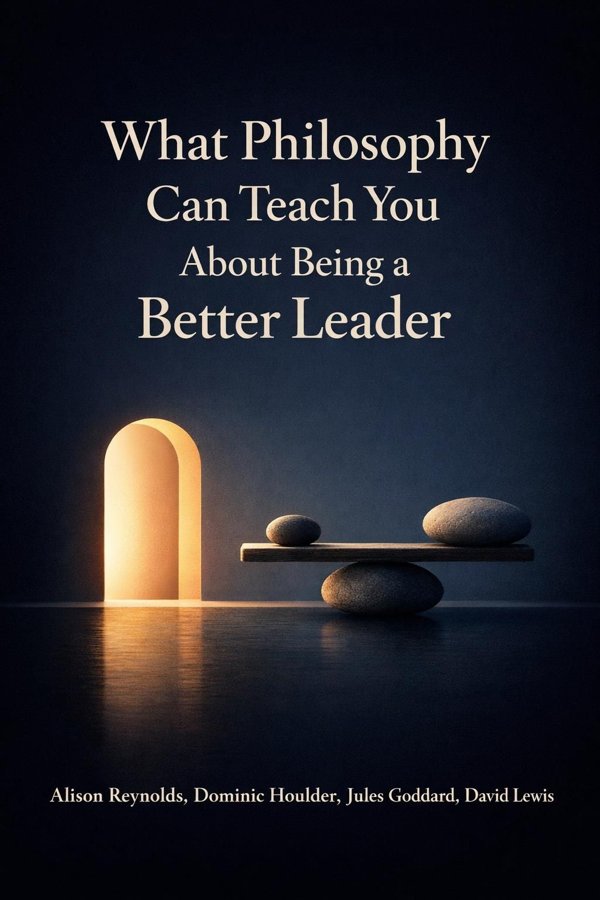
What Philosophy Can Teach You About Being a Better Leader: Summary & Key Insights
by Alison Reynolds, Dominic Houlder, Jules Goddard, David Lewis
 10 min10 chaptersAudio available
What Is What Philosophy Can Teach You About Being a Better Leader About?
What Philosophy Can Teach You About Being a Better Leader by Alison Reynolds, Dominic Houlder, Jules Goddard, David Lewis is a leadership book spanning 10 pages. This book explores how philosophical thinking can enhance leadership effectiveness. Drawing on ideas from great philosophers, the authors show how leaders can cultivate wisdom, ethical clarity, and critical reflection to navigate complex organizational challenges. It encourages readers to question assumptions, embrace paradoxes, and lead with authenticity and purpose.
This FizzRead summary covers all 10 key chapters of What Philosophy Can Teach You About Being a Better Leader in approximately 10 minutes, distilling the most important ideas, arguments, and takeaways from Alison Reynolds, Dominic Houlder, Jules Goddard, David Lewis's work. Also available as an audio summary and Key Quotes Podcast.
What Philosophy Can Teach You About Being a Better Leader
This book explores how philosophical thinking can enhance leadership effectiveness. Drawing on ideas from great philosophers, the authors show how leaders can cultivate wisdom, ethical clarity, and critical reflection to navigate complex organizational challenges. It encourages readers to question assumptions, embrace paradoxes, and lead with authenticity and purpose.
Who Should Read What Philosophy Can Teach You About Being a Better Leader?
This book is perfect for anyone interested in leadership and looking to gain actionable insights in a short read. Whether you're a student, professional, or lifelong learner, the key ideas from What Philosophy Can Teach You About Being a Better Leader by Alison Reynolds, Dominic Houlder, Jules Goddard, David Lewis will help you think differently.
- ✓Readers who enjoy leadership and want practical takeaways
- ✓Professionals looking to apply new ideas to their work and life
- ✓Anyone who wants the core insights of What Philosophy Can Teach You About Being a Better Leader in just 10 minutes
Want the full summary?
Get instant access to this book summary and 100K+ more with Fizz Moment.
Get Free SummaryAvailable on App Store • Free to download
Key Chapters
Before examining what philosophy offers, we must ask: what is leadership? Too often leadership is conflated with management—the skills of planning, organizing, and controlling. But management is about systems; leadership is about meaning. It is a relational act that requires moral courage and vision. True leadership is not a position but a practice: a way of being in the world.
In our teaching at London Business School, we have noticed that many executives treat leadership as a set of competencies or behaviors to master. Yet history’s most consequential leaders—from Socrates to Nelson Mandela—were defined by their clarity of purpose and ethical judgment, not their technical skills. Leadership begins when an individual asks, Why are we here? What is worth striving for? What kind of life—individually or collectively—should we be building?
Philosophers have always asked these same questions. Aristotle viewed leadership as a form of ethical character. Kant demanded that leaders act only in ways that could be universalized—a call to integrity. Kierkegaard explored the loneliness of making decisions in uncertainty. In the reflection of these thinkers, we find that leadership is an ongoing moral inquiry. It is about influence, yes, but influence grounded in authenticity and moral responsibility.
This understanding transforms the workplace. Instead of focusing on control, philosophical leadership seeks to cultivate freedom, creativity, and trust. It sees people not as resources but as reasoning beings capable of contribution and growth. Such leadership does not eliminate authority—it reframes it. Authority becomes the responsibility to create conditions under which others can flourish.
Philosophical thinking is not abstract speculation; it is the disciplined pursuit of clarity. Leaders who can think philosophically stand apart because they dare to interrogate both their assumptions and the narratives of their organizations. Every company has its collective mythology—stories that justify how things are done. Philosophy invites leaders to pierce these narratives and ask: is this truly right? Is it still serving us?
Philosophical inquiry cultivates what we might call mental agility. It teaches leaders to examine issues from multiple perspectives, to tolerate ambiguity, and to find coherence without becoming simplistic. In volatile times—politically, economically, ethically—such thinking is not a luxury but essential survival equipment. When faced with a dilemma, philosophical leaders do not rush toward resolution; they dwell within the question until a wiser path emerges.
To practice this skill, a leader must learn three habits: curiosity, critical thought, and reflective pause. Imagine you’re making a strategic decision—entering a new market, restructuring a team, redefining culture. These are not merely technical exercises; they are moral choices that affect lives. Philosophy encourages you to pause and ask: what assumptions are shaping this decision? Do I understand my own reasoning? What might others see that I don’t?
Through such reflection, you become not only a more insightful leader but also a more ethical one. You lead not out of certainty but out of considered conviction.
+ 8 more chapters — available in the FizzRead app
All Chapters in What Philosophy Can Teach You About Being a Better Leader
About the Authors
Alison Reynolds, Dominic Houlder, Jules Goddard, and David Lewis are faculty members at London Business School. They specialize in leadership, strategy, and organizational behavior, and have collaborated on research and executive education programs focused on developing reflective and effective leaders.
Get This Summary in Your Preferred Format
Read or listen to the What Philosophy Can Teach You About Being a Better Leader summary by Alison Reynolds, Dominic Houlder, Jules Goddard, David Lewis anytime, anywhere. FizzRead offers multiple formats so you can learn on your terms — all free.
Available formats: App · Audio · PDF · EPUB — All included free with FizzRead
Download What Philosophy Can Teach You About Being a Better Leader PDF and EPUB Summary
Key Quotes from What Philosophy Can Teach You About Being a Better Leader
“Before examining what philosophy offers, we must ask: what is leadership?”
“Philosophical thinking is not abstract speculation; it is the disciplined pursuit of clarity.”
Frequently Asked Questions about What Philosophy Can Teach You About Being a Better Leader
What Philosophy Can Teach You About Being a Better Leader by Alison Reynolds, Dominic Houlder, Jules Goddard, David Lewis is a leadership book that explores key ideas across 10 chapters. This book explores how philosophical thinking can enhance leadership effectiveness. Drawing on ideas from great philosophers, the authors show how leaders can cultivate wisdom, ethical clarity, and critical reflection to navigate complex organizational challenges. It encourages readers to question assumptions, embrace paradoxes, and lead with authenticity and purpose.
You Might Also Like

Extreme Ownership
Jocko Willink
10 min
Dare to Lead
Brene Brown
10 min
Leaders Eat Last
Simon Sinek
10 min
The 21 Irrefutable Laws of Leadership
John Maxwell
10 min
Start With Why
Simon Sinek
10 min
How to Lead When You're Not in Charge
Clay Scroggins
10 minBrowse by Category
Ready to read What Philosophy Can Teach You About Being a Better Leader?
Get the full summary and 100K+ more books with Fizz Moment.