
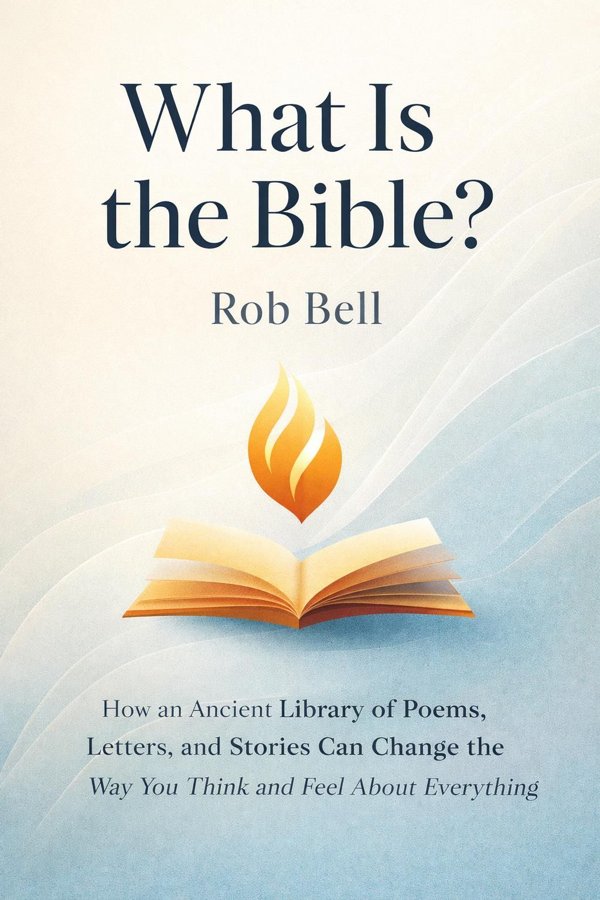
What Is the Bible?: How an Ancient Library of Poems, Letters, and Stories Can Change the Way You Think and Feel About Everything: Summary & Key Insights
by Rob Bell
 10 min9 chaptersAudio available
What Is What Is the Bible?: How an Ancient Library of Poems, Letters, and Stories Can Change the Way You Think and Feel About Everything About?
What Is the Bible?: How an Ancient Library of Poems, Letters, and Stories Can Change the Way You Think and Feel About Everything by Rob Bell is a western_phil book spanning 9 pages. In this book, Rob Bell explores the Bible as a dynamic collection of writings that reveal the human experience of the divine. He encourages readers to see the Bible not as a static rulebook but as a living conversation about what it means to be human. Through historical context and literary insight, Bell reinterprets familiar passages to uncover their relevance for modern life, addressing themes of love, justice, and transformation.
This FizzRead summary covers all 9 key chapters of What Is the Bible?: How an Ancient Library of Poems, Letters, and Stories Can Change the Way You Think and Feel About Everything in approximately 10 minutes, distilling the most important ideas, arguments, and takeaways from Rob Bell's work. Also available as an audio summary and Key Quotes Podcast.
What Is the Bible?: How an Ancient Library of Poems, Letters, and Stories Can Change the Way You Think and Feel About Everything
In this book, Rob Bell explores the Bible as a dynamic collection of writings that reveal the human experience of the divine. He encourages readers to see the Bible not as a static rulebook but as a living conversation about what it means to be human. Through historical context and literary insight, Bell reinterprets familiar passages to uncover their relevance for modern life, addressing themes of love, justice, and transformation.
Who Should Read What Is the Bible?: How an Ancient Library of Poems, Letters, and Stories Can Change the Way You Think and Feel About Everything?
This book is perfect for anyone interested in western_phil and looking to gain actionable insights in a short read. Whether you're a student, professional, or lifelong learner, the key ideas from What Is the Bible?: How an Ancient Library of Poems, Letters, and Stories Can Change the Way You Think and Feel About Everything by Rob Bell will help you think differently.
- ✓Readers who enjoy western_phil and want practical takeaways
- ✓Professionals looking to apply new ideas to their work and life
- ✓Anyone who wants the core insights of What Is the Bible?: How an Ancient Library of Poems, Letters, and Stories Can Change the Way You Think and Feel About Everything in just 10 minutes
Want the full summary?
Get instant access to this book summary and 100K+ more with Fizz Moment.
Get Free SummaryAvailable on App Store • Free to download
Key Chapters
The Bible didn’t fall from the sky; it came from the ground—from communities living under empires, facing injustice, asking burning questions about who they were and who God might be amid it all. To read the Bible intelligently, you have to remember where it came from. These texts were not written in a vacuum but in the winds of political and cultural turbulence. Think about the Israelites under Pharaoh, the exiles in Babylon, or the first-century Jews under Rome. Every scroll, every psalm, every prophet’s cry echoes through that social reality.
I want you to see how deeply human the whole process was. When you read Genesis, you’re encountering an ancient people trying to articulate their identity and hope through story. When you read the prophets, you hear voices demanding social justice in the face of institutional corruption. When you read the Gospels, you find a community trying to describe what they experienced in Jesus, a man who reimagined their tradition with radical compassion. Behind all these writings is a living, breathing context that forms part of their meaning. Once you recognize this, the Bible comes alive not as a relic of divine decree but as a record of human God-consciousness in motion.
Words matter deeply. Entire theologies are built—or lost—on a single translation. The Bible wasn’t written in English, and every translation introduces layers of interpretation. Ancient Hebrew and Greek are dynamic, poetic languages full of metaphor and movement. When we read those words today, we’re stepping into an ancient linguistic world that saw language itself as sacred art.
Take the Hebrew word *ruach*, for instance—it means spirit, breath, or wind. The ancients didn’t distinguish between spiritual and physical the way we do; to them, breath was life and life was of the divine. When you recover that imagination, reading Scripture becomes less about decoding commandments and more about entering poetry.
Through language, the Bible keeps revealing dimensions of reality that can’t be grasped by literalism. Its phrases bend, stretch, and shimmer with meaning. To respect Scripture is to read it humbly, open to the possibility that its metaphors might rewrite our own assumptions about the world. Interpretation, then, isn’t a problem to solve—it’s the doorway through which revelation continues to unfold.
+ 7 more chapters — available in the FizzRead app
All Chapters in What Is the Bible?: How an Ancient Library of Poems, Letters, and Stories Can Change the Way You Think and Feel About Everything
About the Author
Rob Bell is an American author, speaker, and former pastor known for his progressive Christian thought and bestselling books such as Love Wins and What We Talk About When We Talk About God. His work often challenges traditional interpretations of scripture and invites readers to engage faith with curiosity and openness.
Get This Summary in Your Preferred Format
Read or listen to the What Is the Bible?: How an Ancient Library of Poems, Letters, and Stories Can Change the Way You Think and Feel About Everything summary by Rob Bell anytime, anywhere. FizzRead offers multiple formats so you can learn on your terms — all free.
Available formats: App · Audio · PDF · EPUB — All included free with FizzRead
Download What Is the Bible?: How an Ancient Library of Poems, Letters, and Stories Can Change the Way You Think and Feel About Everything PDF and EPUB Summary
Key Quotes from What Is the Bible?: How an Ancient Library of Poems, Letters, and Stories Can Change the Way You Think and Feel About Everything
“The Bible didn’t fall from the sky; it came from the ground—from communities living under empires, facing injustice, asking burning questions about who they were and who God might be amid it all.”
“Entire theologies are built—or lost—on a single translation.”
Frequently Asked Questions about What Is the Bible?: How an Ancient Library of Poems, Letters, and Stories Can Change the Way You Think and Feel About Everything
What Is the Bible?: How an Ancient Library of Poems, Letters, and Stories Can Change the Way You Think and Feel About Everything by Rob Bell is a western_phil book that explores key ideas across 9 chapters. In this book, Rob Bell explores the Bible as a dynamic collection of writings that reveal the human experience of the divine. He encourages readers to see the Bible not as a static rulebook but as a living conversation about what it means to be human. Through historical context and literary insight, Bell reinterprets familiar passages to uncover their relevance for modern life, addressing themes of love, justice, and transformation.
You Might Also Like
A Little History of Philosophy
Nigel Warburton
10 min
Areopagitica
John Milton
10 min
How To Think Like A Philosopher: Essential Principles For Clear Thinking
Peter Cave
10 min
Language, Truth and Logic
A. J. Ayer
10 min
The Age of Reason
Thomas Paine
10 min
The Essays
Michel De Montaigne
10 minBrowse by Category
Ready to read What Is the Bible?: How an Ancient Library of Poems, Letters, and Stories Can Change the Way You Think and Feel About Everything?
Get the full summary and 100K+ more books with Fizz Moment.