
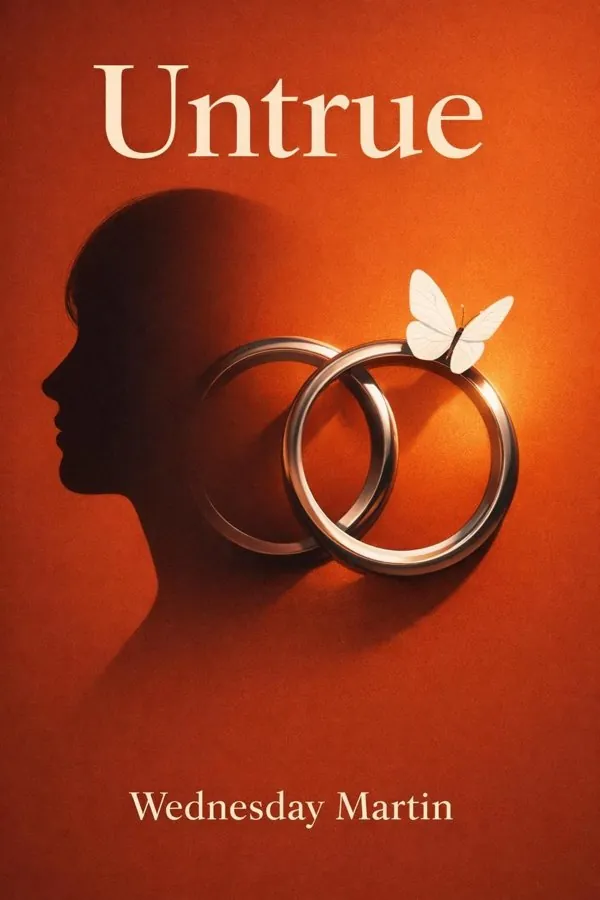
Untrue: Why Nearly Everything We Believe About Women, Lust, and Infidelity Is Wrong and How the New Science Can Set Us Free: Summary & Key Insights
 10 min10 chaptersAudio available
What Is Untrue: Why Nearly Everything We Believe About Women, Lust, and Infidelity Is Wrong and How the New Science Can Set Us Free About?
Untrue: Why Nearly Everything We Believe About Women, Lust, and Infidelity Is Wrong and How the New Science Can Set Us Free by Wednesday Martin is a sociology book spanning 10 pages. In Untrue, social researcher and cultural critic Wednesday Martin explores the myths and realities surrounding female desire, fidelity, and sexuality. Drawing on anthropology, sociology, and neuroscience, she challenges long-held assumptions about women’s sexual behavior and argues that female desire is far more complex, dynamic, and powerful than traditional narratives suggest. The book examines how cultural norms and evolutionary psychology have shaped our understanding of women’s sexuality and calls for a more liberated and evidence-based view.
This FizzRead summary covers all 10 key chapters of Untrue: Why Nearly Everything We Believe About Women, Lust, and Infidelity Is Wrong and How the New Science Can Set Us Free in approximately 10 minutes, distilling the most important ideas, arguments, and takeaways from Wednesday Martin's work. Also available as an audio summary and Key Quotes Podcast.
Untrue: Why Nearly Everything We Believe About Women, Lust, and Infidelity Is Wrong and How the New Science Can Set Us Free
In Untrue, social researcher and cultural critic Wednesday Martin explores the myths and realities surrounding female desire, fidelity, and sexuality. Drawing on anthropology, sociology, and neuroscience, she challenges long-held assumptions about women’s sexual behavior and argues that female desire is far more complex, dynamic, and powerful than traditional narratives suggest. The book examines how cultural norms and evolutionary psychology have shaped our understanding of women’s sexuality and calls for a more liberated and evidence-based view.
Who Should Read Untrue: Why Nearly Everything We Believe About Women, Lust, and Infidelity Is Wrong and How the New Science Can Set Us Free?
This book is perfect for anyone interested in sociology and looking to gain actionable insights in a short read. Whether you're a student, professional, or lifelong learner, the key ideas from Untrue: Why Nearly Everything We Believe About Women, Lust, and Infidelity Is Wrong and How the New Science Can Set Us Free by Wednesday Martin will help you think differently.
- ✓Readers who enjoy sociology and want practical takeaways
- ✓Professionals looking to apply new ideas to their work and life
- ✓Anyone who wants the core insights of Untrue: Why Nearly Everything We Believe About Women, Lust, and Infidelity Is Wrong and How the New Science Can Set Us Free in just 10 minutes
Want the full summary?
Get instant access to this book summary and 100K+ more with Fizz Moment.
Get Free SummaryAvailable on App Store • Free to download
Key Chapters
The first place we must look, before we can even begin to understand women’s desire, is history — not the sanitized version, but the moral and patriarchal scaffolding that has shaped how we talk about sex for centuries. Across most societies that recorded their sexual codes, from early Western religious texts to Confucian ethics, female sexuality was treated not as an intrinsic part of womanhood but as something to be controlled or contained. The female body was seen as property, its purity as currency. And so, the myths began: that women were naturally virtuous, that fidelity was their moral duty, that chastity was a feminine virtue born of biology rather than culture.
Religious authorities reinforced these myths as a form of social control. Christianity’s veneration of the virgin, paired with its condemnation of lustful women, has tainted Western thought for millennia. In much of world history, the threat of female sexual autonomy meant danger — to lineage, property, and male status. It was safer to claim that women didn’t want sex as much. By convincing everyone, including women themselves, of this falsehood, patriarchy ensured the social order remained intact.
Yet beneath that surface, evidence was always accumulating: from ancient poetry to private diaries, women’s voices revealing the tension between desire and duty. Over time, those voices proliferated until modern research could finally listen. By retracing this lineage of repression, we begin to understand how deeply cultural moralism has distorted the image of female sexuality. This isn’t just history — it’s the shadow under which we still live.
Once we look outside our own cultural lens, the story of women’s sexuality transforms entirely. Anthropology offers one of the most powerful correctives to mainstream Western assumptions. In societies ranging from the Mosuo of China, where women traditionally choose lovers freely and nonexclusive relationships are accepted, to the Trobriand Islanders and the Himba of Namibia, female sexual behavior is not uniformly repressed — in fact, in many such cultures, it is celebrated.
These ethnographies reveal striking patterns: women initiating relationships, setting their own sexual terms, and engaging in multiple partnerships. Female desire, instead of being tamed or denied, is permitted to find expression. What Western societies interpret as infidelity, others see as flexibility. This global context demolishes the myth that female monogamy is natural.
What’s fascinating is how dynamic female desire becomes in different social settings. When women have equality, autonomy, and safety, their erotic agency flourishes. When they are embedded in patriarchal systems, their sexuality is constricted and often hidden, sometimes emerging through secrecy or rebellion. Anthropology uncovers the possibility that the suppression we attribute to biology is, in fact, cultural engineering.
And this reframing challenges every moral assumption of the West. If women’s sexual behavior can vary so widely across societies, then biology cannot be destiny. It means our moral narratives are not truths — they’re traditions masquerading as science.
+ 8 more chapters — available in the FizzRead app
All Chapters in Untrue: Why Nearly Everything We Believe About Women, Lust, and Infidelity Is Wrong and How the New Science Can Set Us Free
About the Author
Wednesday Martin is an American social researcher, writer, and cultural critic known for her work on gender, sexuality, and social class. She holds a Ph.D. in comparative literature and cultural studies from Yale University and has written for major publications including The New York Times and The Atlantic. Her previous book, Primates of Park Avenue, was a New York Times bestseller.
Get This Summary in Your Preferred Format
Read or listen to the Untrue: Why Nearly Everything We Believe About Women, Lust, and Infidelity Is Wrong and How the New Science Can Set Us Free summary by Wednesday Martin anytime, anywhere. FizzRead offers multiple formats so you can learn on your terms — all free.
Available formats: App · Audio · PDF · EPUB — All included free with FizzRead
Download Untrue: Why Nearly Everything We Believe About Women, Lust, and Infidelity Is Wrong and How the New Science Can Set Us Free PDF and EPUB Summary
Key Quotes from Untrue: Why Nearly Everything We Believe About Women, Lust, and Infidelity Is Wrong and How the New Science Can Set Us Free
“Once we look outside our own cultural lens, the story of women’s sexuality transforms entirely.”
Frequently Asked Questions about Untrue: Why Nearly Everything We Believe About Women, Lust, and Infidelity Is Wrong and How the New Science Can Set Us Free
Untrue: Why Nearly Everything We Believe About Women, Lust, and Infidelity Is Wrong and How the New Science Can Set Us Free by Wednesday Martin is a sociology book that explores key ideas across 10 chapters. In Untrue, social researcher and cultural critic Wednesday Martin explores the myths and realities surrounding female desire, fidelity, and sexuality. Drawing on anthropology, sociology, and neuroscience, she challenges long-held assumptions about women’s sexual behavior and argues that female desire is far more complex, dynamic, and powerful than traditional narratives suggest. The book examines how cultural norms and evolutionary psychology have shaped our understanding of women’s sexuality and calls for a more liberated and evidence-based view.
You Might Also Like

Between the World and Me
Ta-Nehisi Coates
10 min
Half the Sky
Nicholas D. Kristof, Sheryl WuDunn
10 min
Men Explain Things To Me
Rebecca Solnit
10 min
Rational Ritual
Michael Suk-Young Chwe
10 min
The New Jim Crow
Michelle Alexander
10 min
Beyond Culture
Edward T. Hall
10 minBrowse by Category
Ready to read Untrue: Why Nearly Everything We Believe About Women, Lust, and Infidelity Is Wrong and How the New Science Can Set Us Free?
Get the full summary and 100K+ more books with Fizz Moment.