
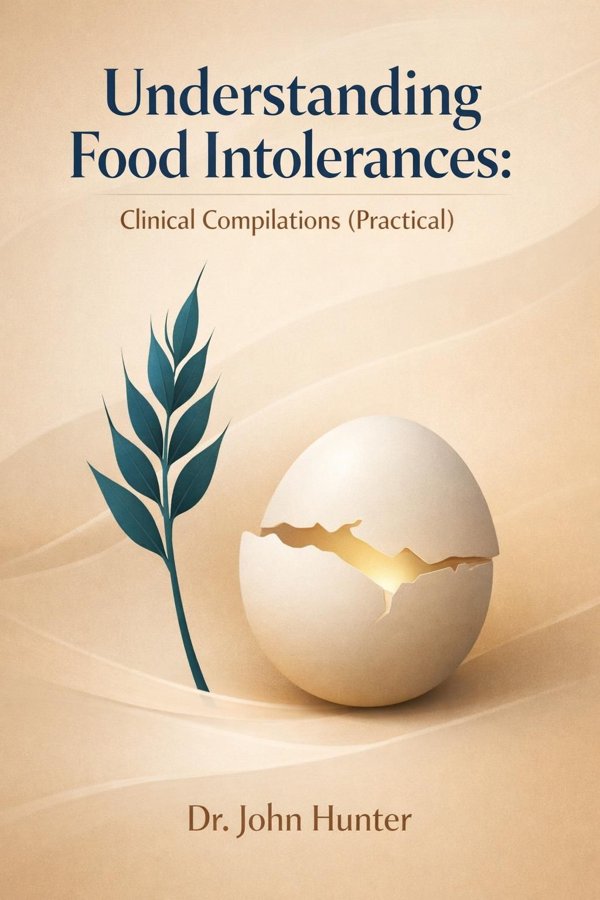
Understanding Food Intolerances: Clinical Compilations (Practical): Summary & Key Insights
 10 min6 chaptersAudio available
What Is Understanding Food Intolerances: Clinical Compilations (Practical) About?
Understanding Food Intolerances: Clinical Compilations (Practical) by Dr. John Hunter is a health_med book spanning 6 pages. This book provides a comprehensive overview of food intolerances, their clinical manifestations, diagnostic approaches, and management strategies. It compiles practical insights from clinical experience and research, aiming to help healthcare professionals and patients understand the mechanisms and treatment of food-related sensitivities.
This FizzRead summary covers all 6 key chapters of Understanding Food Intolerances: Clinical Compilations (Practical) in approximately 10 minutes, distilling the most important ideas, arguments, and takeaways from Dr. John Hunter's work. Also available as an audio summary and Key Quotes Podcast.
Understanding Food Intolerances: Clinical Compilations (Practical)
This book provides a comprehensive overview of food intolerances, their clinical manifestations, diagnostic approaches, and management strategies. It compiles practical insights from clinical experience and research, aiming to help healthcare professionals and patients understand the mechanisms and treatment of food-related sensitivities.
Who Should Read Understanding Food Intolerances: Clinical Compilations (Practical)?
This book is perfect for anyone interested in health_med and looking to gain actionable insights in a short read. Whether you're a student, professional, or lifelong learner, the key ideas from Understanding Food Intolerances: Clinical Compilations (Practical) by Dr. John Hunter will help you think differently.
- ✓Readers who enjoy health_med and want practical takeaways
- ✓Professionals looking to apply new ideas to their work and life
- ✓Anyone who wants the core insights of Understanding Food Intolerances: Clinical Compilations (Practical) in just 10 minutes
Want the full summary?
Get instant access to this book summary and 100K+ more with Fizz Moment.
Get Free SummaryAvailable on App Store • Free to download
Key Chapters
Throughout my years as a gastroenterologist, the first challenge has often been semantic. Patients arrive describing symptoms that defy easy classification: bloating, abdominal pain, fatigue, skin eruptions. Many have already tried elimination diets or allergy tests, frustrated that the diagnosis remains elusive. The confusion lies in the language—‘intolerance’ is often conflated with ‘allergy’. Yet the difference is foundational.
Allergic reactions are immune-mediated. They arise when the body misidentifies certain proteins as threats, triggering IgE antibodies and subsequent histamine release. The results are acute: rashes, swelling, respiratory distress. Intolerances, by contrast, involve no such immunologic warfare. The culprit may be a missing or deficient enzyme, as in lactose intolerance; an oversensitive gut nervous system reacting to certain chemicals; or a subtle imbalance in how intestinal cells process nutrients.
In clinical practice, understanding this distinction changes everything. It shapes our approach to testing, our therapeutic strategy, and our patient communication. While food allergy demands strict avoidance and emergency readiness, intolerance management focuses on modulation, substitution, and gradual restoration of tolerance. I have witnessed numerous cases where individuals unnecessarily fear foods due to misinterpretation of intolerance symptoms as allergy, leading to nutritional deficiencies and anxiety. Clarity brings relief.
In the chapters that follow, we will see how intolerance operates not as a single condition but as a spectrum of physiological responses. Distinguishing these from allergies is the first step toward rational diagnosis and compassionate care.
The human digestive system is a remarkable biochemical factory, orchestrating the breakdown of diverse food molecules. Yet the system operates on a delicate balance. Food intolerance often arises when one or more components of this machinery falter. Enzyme deficiencies are among the most common culprits. Lactase deficiency, for instance, leads to accumulation of undigested lactose in the bowel, where bacterial fermentation causes gas, bloating, and diarrhea. Similarly, inadequate fructose absorption in the small intestine can produce parallel discomforts.
But enzymatic issues are only part of the story. Some intolerances stem from abnormal interactions with the immune system, though not of the classical allergic type. For example, in gluten sensitivity—distinct from celiac disease—the immune response is less violent yet still disruptive, causing chronic inflammation and mucosal damage over time. The gut becomes hypersensitive to stimuli, making ordinary foods provoke extraordinary symptoms.
In exploring mechanisms, I emphasize the role of intestinal permeability—the so-called ‘leaky gut’ phenomenon. When tight junctions between intestinal cells loosen, incompletely digested molecules can cross into circulation, triggering secondary immune and metabolic disturbances. This process often links to changes in gut microbiota, those trillions of organisms that cohabit within us and profoundly influence tolerance. Dysbiosis, whether from antibiotics or dietary imbalance, alters fermentation patterns and metabolic by-products, amplifying intolerance reactions.
Mechanistic understanding liberates us from guesswork. It enables precise interventions—targeting enzymes with supplementation, supporting barrier function through nutrition, or restoring microbial balance through tailored dietary choices. Each mechanism tells a story about how the gut negotiates with its environment—a negotiation that can be restored with clinical insight and patient partnership.
+ 4 more chapters — available in the FizzRead app
All Chapters in Understanding Food Intolerances: Clinical Compilations (Practical)
About the Author
Dr. John Hunter is a British gastroenterologist known for his research on food intolerance and digestive disorders. He has published extensively on the relationship between diet and gastrointestinal health and has contributed to clinical guidelines in the field.
Get This Summary in Your Preferred Format
Read or listen to the Understanding Food Intolerances: Clinical Compilations (Practical) summary by Dr. John Hunter anytime, anywhere. FizzRead offers multiple formats so you can learn on your terms — all free.
Available formats: App · Audio · PDF · EPUB — All included free with FizzRead
Download Understanding Food Intolerances: Clinical Compilations (Practical) PDF and EPUB Summary
Key Quotes from Understanding Food Intolerances: Clinical Compilations (Practical)
“Throughout my years as a gastroenterologist, the first challenge has often been semantic.”
“The human digestive system is a remarkable biochemical factory, orchestrating the breakdown of diverse food molecules.”
Frequently Asked Questions about Understanding Food Intolerances: Clinical Compilations (Practical)
Understanding Food Intolerances: Clinical Compilations (Practical) by Dr. John Hunter is a health_med book that explores key ideas across 6 chapters. This book provides a comprehensive overview of food intolerances, their clinical manifestations, diagnostic approaches, and management strategies. It compiles practical insights from clinical experience and research, aiming to help healthcare professionals and patients understand the mechanisms and treatment of food-related sensitivities.
You Might Also Like

On Immunity
Eula Biss
10 min
The Three-Body Problem
Liu Cixin
10 min
Community Health Volunteer Toolkit: Training and Practical Activities
World Health Organization
10 min
Healing Back Pain: The Mind-Body Connection
John E. Sarno
10 min
Health Literacy for All: Practical Guides to Communicate Health Information (Compilations)
World Health Organization
10 min
The Complete Guide to Sports Supplements: An Evidence-Based Review
Anita Bean
10 minBrowse by Category
Ready to read Understanding Food Intolerances: Clinical Compilations (Practical)?
Get the full summary and 100K+ more books with Fizz Moment.