
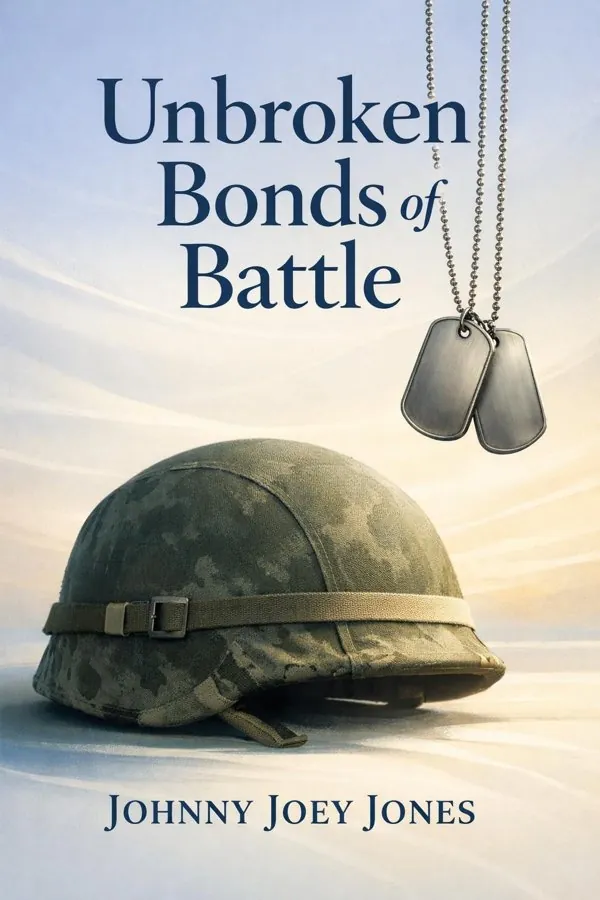
Unbroken Bonds of Battle: A Modern Warriors Book of Heroism, Patriotism, and Friendship: Summary & Key Insights
 10 min9 chaptersAudio available
Key Takeaways from Unbroken Bonds of Battle: A Modern Warriors Book of Heroism, Patriotism, and Friendship
The modern warrior is defined less by firepower than by moral strength.
Heroism is often quieter than we expect.
Few relationships are as intense as friendships built in danger.
Survival is not the end of the battle; sometimes it is the beginning of a new one.
Patriotism is strongest when it is mature, not sentimental.
What Is Unbroken Bonds of Battle: A Modern Warriors Book of Heroism, Patriotism, and Friendship About?
Unbroken Bonds of Battle: A Modern Warriors Book of Heroism, Patriotism, and Friendship by Johnny Joey Jones is a war_military book spanning 8 pages. Unbroken Bonds of Battle is a deeply human portrait of military service that moves beyond headlines, slogans, and battlefield myths to examine what truly sustains warriors in war and after it: character, loyalty, purpose, and love for one another. In this collection, Johnny Joey Jones draws on his own experience as a combat veteran and double amputee, along with the stories of fellow service members, to show that heroism is rarely glamorous and patriotism is rarely simple. Instead, it is found in ordinary people making extraordinary choices under pressure, carrying fear, grief, duty, and hope all at once. The book matters because it helps civilians better understand the lived reality of military life while also offering veterans a language for brotherhood, sacrifice, and healing. Jones writes with unusual authority. As a retired U.S. Marine Corps bomb technician who was severely wounded in Afghanistan, he knows combat, loss, recovery, and reinvention firsthand. That lived credibility gives the book both emotional weight and moral clarity, making it a powerful reflection on service, resilience, and the lifelong bonds forged in battle.
This FizzRead summary covers all 9 key chapters of Unbroken Bonds of Battle: A Modern Warriors Book of Heroism, Patriotism, and Friendship in approximately 10 minutes, distilling the most important ideas, arguments, and takeaways from Johnny Joey Jones's work. Also available as an audio summary and Key Quotes Podcast.
Unbroken Bonds of Battle: A Modern Warriors Book of Heroism, Patriotism, and Friendship
Unbroken Bonds of Battle is a deeply human portrait of military service that moves beyond headlines, slogans, and battlefield myths to examine what truly sustains warriors in war and after it: character, loyalty, purpose, and love for one another. In this collection, Johnny Joey Jones draws on his own experience as a combat veteran and double amputee, along with the stories of fellow service members, to show that heroism is rarely glamorous and patriotism is rarely simple. Instead, it is found in ordinary people making extraordinary choices under pressure, carrying fear, grief, duty, and hope all at once. The book matters because it helps civilians better understand the lived reality of military life while also offering veterans a language for brotherhood, sacrifice, and healing. Jones writes with unusual authority. As a retired U.S. Marine Corps bomb technician who was severely wounded in Afghanistan, he knows combat, loss, recovery, and reinvention firsthand. That lived credibility gives the book both emotional weight and moral clarity, making it a powerful reflection on service, resilience, and the lifelong bonds forged in battle.
Who Should Read Unbroken Bonds of Battle: A Modern Warriors Book of Heroism, Patriotism, and Friendship?
This book is perfect for anyone interested in war_military and looking to gain actionable insights in a short read. Whether you're a student, professional, or lifelong learner, the key ideas from Unbroken Bonds of Battle: A Modern Warriors Book of Heroism, Patriotism, and Friendship by Johnny Joey Jones will help you think differently.
- ✓Readers who enjoy war_military and want practical takeaways
- ✓Professionals looking to apply new ideas to their work and life
- ✓Anyone who wants the core insights of Unbroken Bonds of Battle: A Modern Warriors Book of Heroism, Patriotism, and Friendship in just 10 minutes
Want the full summary?
Get instant access to this book summary and 100K+ more with Fizz Moment.
Get Free SummaryAvailable on App Store • Free to download
Key Chapters
The modern warrior is defined less by firepower than by moral strength. That is one of the book’s central insights. In popular culture, soldiers are often reduced to images of toughness, aggression, and tactical skill. Jones argues for a more complete picture. A modern warrior is someone who accepts responsibility under pressure, protects others, and chooses discipline over ego. The uniform matters, but what matters more is the mindset beneath it: integrity, endurance, humility, and commitment to a mission larger than oneself.
This idea broadens how we understand military service. A warrior may be an infantry Marine in direct combat, but also a medic, bomb technician, pilot, or support specialist whose work saves lives without public recognition. Jones reminds readers that courage is not only about charging forward. It is also about staying calm during chaos, following through on difficult duties, and making ethical choices when no one is watching. In that sense, the warrior identity is rooted in character more than image.
The concept has practical value beyond the military. In civilian life, the same traits define people who lead well in crisis: first responders, teachers, parents, medical staff, and community leaders. Anyone can adopt the warrior’s code by cultivating reliability, self-control, and service. Jones’s message is that strength without values is unstable, but strength guided by duty becomes trustworthy.
A useful way to apply this idea is to ask, in your own role: What do I protect, what do I stand for, and how do I behave when things get hard? Build your answer around character, not appearance. The actionable takeaway: define yourself by the responsibilities you honor, not by the image you project.
Heroism is often quieter than we expect. Jones challenges the cinematic version of bravery by showing that real heroism frequently appears in split-second decisions, private sacrifices, and steady endurance rather than dramatic spectacle. A warrior may be called heroic not because he feels fearless, but because he acts despite fear. Someone may save a life, hold a position, comfort a wounded friend, or continue serving after devastating loss. In each case, courage is not the absence of pain or doubt. It is faithfulness to duty in the middle of them.
The stories in the book emphasize that heroism takes many forms. Some acts are visible, such as risking one’s life in combat. Others are hidden: carrying guilt, returning to difficult work, helping a fellow veteran through trauma, or supporting a military family through long separation and uncertainty. Jones insists that these less celebrated forms of courage deserve attention because they reveal what service truly demands.
This perspective is practical and liberating. It means most people do not need a battlefield to practice bravery. Heroism can appear in everyday life when someone speaks truth in a tense situation, takes responsibility for a mistake, protects a vulnerable person, or keeps going through hardship with dignity. Seen this way, heroism becomes a pattern of conduct rather than a rare title reserved for a few.
To put this into practice, stop asking whether a moment feels big enough to matter. Instead ask whether the choice in front of you requires honesty, sacrifice, or steadiness. Respond well to that moment. The actionable takeaway: look for chances to be quietly brave today, because character is built in ordinary decisions long before history notices.
Few relationships are as intense as friendships built in danger. One of the strongest themes in Unbroken Bonds of Battle is that military friendship is not casual companionship but a form of trust forged through shared hardship, mutual dependence, and the constant possibility of loss. In combat, your life may literally depend on the person next to you. That reality strips away superficiality. What remains is loyalty tested by exhaustion, fear, and responsibility.
Jones explores how these bonds are formed through common sacrifice. Service members train together, deploy together, and endure conditions most civilians never encounter. They learn each other’s strengths, weaknesses, habits, humor, and breaking points. Because they have seen one another at their most vulnerable, their friendships often carry unusual depth. This is why veterans frequently describe their fellow warriors as brothers or sisters rather than colleagues.
The lesson extends beyond the battlefield. Deep friendship anywhere is strengthened by shared trials, honesty, and presence. Teams that endure difficulty together often become more resilient because trust has been proven, not merely promised. Families, workplaces, and communities can learn from this by valuing consistency over convenience. Real bonds are built when people show up in hard seasons, not just easy ones.
Jones also highlights a painful truth: the very depth of military friendship makes loss more devastating. Yet the memory of those bonds also helps survivors keep going. Friendship becomes both a source of grief and a source of strength.
A practical application is to invest in relationships before crisis comes. Be dependable, tell the truth, and make your loyalty visible through action. The actionable takeaway: strengthen one key relationship this week by showing up in a concrete, sacrificial way rather than merely expressing good intentions.
Survival is not the end of the battle; sometimes it is the beginning of a new one. Jones writes with particular credibility about this reality because his own life was permanently altered by catastrophic injury in Afghanistan. He shows that recovery is not a simple arc from tragedy to triumph. It is uneven, exhausting, emotional, and deeply relational. Physical healing requires grit, but emotional healing requires honesty, support, and time.
The book broadens the idea of wounds. Some injuries are visible, such as limb loss or burns. Others are internal: trauma, guilt, grief, moral injury, or a sense of dislocation after combat. Jones refuses to flatten these experiences into inspirational clichés. Healing does not mean erasing what happened. It means learning how to carry it without letting it define the entirety of one’s future. That often involves rehabilitation, counseling, family support, faith, community, and the ongoing encouragement of fellow veterans who understand the cost.
This insight applies widely. People recovering from illness, loss, or personal upheaval often feel pressured to “move on” quickly. Jones offers a better model: acknowledge the wound, accept help, and honor the reality that resilience includes vulnerability. Strength is not pretending to be fine. Strength is doing the hard work of rebuilding while allowing others to walk with you.
For readers, the practical lesson is to rethink both self-reliance and support. If you are hurting, ask for help earlier. If someone you know is recovering, do not rush them with easy optimism. Offer steady presence instead. The actionable takeaway: identify one wound, visible or invisible, that needs attention and take one concrete healing step—make an appointment, start a conversation, or accept support you have been resisting.
Patriotism is strongest when it is mature, not sentimental. Jones presents love of country as a serious commitment grounded in service, gratitude, and responsibility rather than empty symbolism. In the world of the book, patriotism is not about pretending a nation is flawless. It is about believing it is worth defending, improving, and serving alongside fellow citizens. That makes patriotism both emotional and ethical.
This distinction matters because shallow patriotism can become performative. It may focus on slogans, rituals, or public displays while ignoring the burdens carried by those who actually serve. Jones redirects attention to the substance beneath the symbols. The flag matters because of the people and principles it represents: freedom, sacrifice, constitutional order, and the ongoing obligation to protect one another. Real patriotism is expressed through duty, civic participation, and respect for the cost of liberty.
The book also suggests that gratitude is a vital part of patriotic life. Citizens who benefit from military service should strive to understand it, honor it, and support veterans and military families in practical ways. That support might include listening without assumptions, helping with reintegration, advocating for better care, or simply refusing to trivialize war.
For civilians, this idea offers a path toward a more grounded relationship with national identity. You do not need to wear a uniform to practice patriotic responsibility. You can vote thoughtfully, serve your community, learn your country’s history honestly, and show respect for institutions that preserve freedom.
The actionable takeaway: choose one expression of citizenship this month—volunteer, engage in informed civic action, support a veteran organization, or have a serious conversation about service—and let your patriotism take the form of responsibility, not just sentiment.
Leaving the military often means losing more than a job; it can feel like losing a structure of meaning. Jones addresses the difficult transition from service to civilian life with empathy and realism. For many veterans, the challenge is not simply finding employment. It is adjusting to a world with different rhythms, different language, and different measures of purpose. In uniform, expectations are clear, identity is shared, and mission is immediate. Outside that environment, many feel untethered.
This transition can involve practical hurdles such as education, career changes, disability, and healthcare, but it also includes emotional ones: loneliness, restlessness, survivor’s guilt, and the sense that few people truly understand what was experienced in service. Jones emphasizes that veterans do not stop being shaped by the military when they take off the uniform. The habits, losses, bonds, and values of service continue to influence how they see the world.
At the same time, the book is hopeful. Life after service can become a new mission rather than a decline from past significance. Veterans can translate leadership, discipline, teamwork, and resilience into civilian roles in business, education, public service, family life, and advocacy. The key is not abandoning the warrior identity but adapting its strengths to a new context.
This idea has lessons for any major life transition. People leaving a long-held role—athletes, caregivers, executives, parents of grown children—also need to reconstruct identity and purpose. The process works best when it is intentional.
The actionable takeaway: if you are facing a transition, define your next mission in writing. Name the values from your previous season that still belong in your future, and find one practical role where you can put them to work immediately.
Sacrifice should never become abstract. Jones insists that every casualty, every injury, and every family burden carries a personal story that deserves remembrance. War is often discussed in strategic language—objectives, theaters, operations, outcomes—but the human cost can disappear behind those terms. This book pushes back by restoring names, faces, relationships, and consequences to the conversation. Sacrifice is not a concept. It is birthdays missed, futures changed, bodies broken, and loved ones left to carry absence.
The legacy of sacrifice matters because memory shapes values. When a society remembers its fallen well, it becomes harder to treat war lightly or service casually. Remembrance creates moral seriousness. It invites gratitude, but also humility. Jones makes clear that honoring sacrifice does not mean glorifying war. In many ways, it means the opposite: refusing to romanticize something so costly.
He also suggests that the living have a responsibility to carry forward what the fallen stood for. That might include loyalty, courage, duty, and commitment to others. Memory becomes active when it influences how we live. For veterans, that can mean preserving the stories of brothers and sisters who did not come home. For civilians, it may mean listening, learning, and treating national freedom as something purchased at a real price.
In practical terms, remembrance can become a habit. Visit memorials thoughtfully. Learn the story behind a name. Support Gold Star families. Mark national days of remembrance with seriousness rather than routine.
The actionable takeaway: honor one act of sacrifice this week by learning and sharing a real service member’s story, allowing remembrance to move from vague respect to personal recognition.
A mission does not end when the shooting stops. One of Jones’s most constructive themes is that service can continue long after military operations are over. Veterans may no longer carry rifles or wear uniforms, but they can still serve by mentoring, advocating, leading families, strengthening communities, and supporting those who are struggling. This idea reframes post-service life not as retirement from meaning, but as redeployment into a different arena.
Jones models this through his own public life. By speaking, writing, and advocating, he transforms personal experience into service for others. That pattern appears throughout the book: wounds become wisdom, grief becomes responsibility, and memory becomes motivation. Continuing the mission means refusing to let sacrifice end in silence. It means asking, “How can what I have endured now help someone else?”
This principle is especially valuable because it counters the drift that can follow intense seasons of purpose. People who once lived with high stakes often struggle when daily life feels small by comparison. A continuing mission restores direction. It may not replicate the intensity of combat, but it channels the same devotion to others.
Readers in any field can apply this. Former teachers can mentor new ones. Retired leaders can coach younger colleagues. People who have survived hardship can support those just entering it. Experience gains meaning when it is offered, not hoarded.
The actionable takeaway: identify one way your past struggles or skills can serve someone else right now. Make the mission specific—mentor one person, volunteer regularly, advocate for a cause, or tell a story that gives another person courage.
The best military leadership is not about command presence alone; it is about carrying responsibility for other people. Jones’s stories repeatedly suggest that real leaders earn trust by absorbing pressure, making hard choices, and putting the welfare of their people ahead of personal comfort. In dangerous environments, leadership becomes intensely moral. The leader’s decisions affect whether people feel protected, prepared, and valued.
This view differs sharply from ego-driven leadership. Rank may establish authority, but character establishes legitimacy. Jones shows that the leaders who matter most are often those who remain calm in chaos, communicate clearly, share hardship, and never ask others to bear what they themselves refuse to bear. Such leadership creates confidence because it is rooted in service rather than self-importance.
The lesson is widely applicable. In workplaces, families, schools, and communities, people are more likely to follow those who are dependable under stress and generous with responsibility. Effective leaders do not merely issue instructions; they create environments where people can endure difficulty together. They notice who is struggling, confront problems early, and model the discipline they expect from others.
The burden-bearing aspect is especially important. Leadership often means taking criticism, uncertainty, and emotional strain without passing them downward in destructive ways. It means making decisions with incomplete information and still remaining accountable.
To apply this, consider how you show up when others rely on you. Do you reduce fear or spread it? Do you clarify the mission or confuse it? The actionable takeaway: practice one act of burden-bearing leadership this week by taking responsibility for a difficult task, protecting your team from unnecessary chaos, and communicating with steadiness.
All Chapters in Unbroken Bonds of Battle: A Modern Warriors Book of Heroism, Patriotism, and Friendship
About the Author
Johnny Joey Jones is a retired U.S. Marine Corps staff sergeant and former explosive ordnance disposal technician who served in Afghanistan. In 2010, he was critically wounded in an explosion and lost both legs above the knee, an experience that profoundly shaped his public voice and mission. After leaving the military, Jones became a prominent advocate for veterans and military families, using his platform to speak about resilience, sacrifice, patriotism, and the realities of recovery after combat. He is also known as a television contributor and public speaker, bringing firsthand insight to discussions about service and national life. Across his work, Jones emphasizes dignity, gratitude, and the enduring bonds formed among those who serve.
Get This Summary in Your Preferred Format
Read or listen to the Unbroken Bonds of Battle: A Modern Warriors Book of Heroism, Patriotism, and Friendship summary by Johnny Joey Jones anytime, anywhere. FizzRead offers multiple formats so you can learn on your terms — all free.
Available formats: App · Audio · PDF · EPUB — All included free with FizzRead
Download Unbroken Bonds of Battle: A Modern Warriors Book of Heroism, Patriotism, and Friendship PDF and EPUB Summary
Key Quotes from Unbroken Bonds of Battle: A Modern Warriors Book of Heroism, Patriotism, and Friendship
“The modern warrior is defined less by firepower than by moral strength.”
“Heroism is often quieter than we expect.”
“Few relationships are as intense as friendships built in danger.”
“Survival is not the end of the battle; sometimes it is the beginning of a new one.”
“Patriotism is strongest when it is mature, not sentimental.”
Frequently Asked Questions about Unbroken Bonds of Battle: A Modern Warriors Book of Heroism, Patriotism, and Friendship
Unbroken Bonds of Battle: A Modern Warriors Book of Heroism, Patriotism, and Friendship by Johnny Joey Jones is a war_military book that explores key ideas across 9 chapters. Unbroken Bonds of Battle is a deeply human portrait of military service that moves beyond headlines, slogans, and battlefield myths to examine what truly sustains warriors in war and after it: character, loyalty, purpose, and love for one another. In this collection, Johnny Joey Jones draws on his own experience as a combat veteran and double amputee, along with the stories of fellow service members, to show that heroism is rarely glamorous and patriotism is rarely simple. Instead, it is found in ordinary people making extraordinary choices under pressure, carrying fear, grief, duty, and hope all at once. The book matters because it helps civilians better understand the lived reality of military life while also offering veterans a language for brotherhood, sacrifice, and healing. Jones writes with unusual authority. As a retired U.S. Marine Corps bomb technician who was severely wounded in Afghanistan, he knows combat, loss, recovery, and reinvention firsthand. That lived credibility gives the book both emotional weight and moral clarity, making it a powerful reflection on service, resilience, and the lifelong bonds forged in battle.
You Might Also Like
Patriot
Andrew Britton
10 min
War
John Hersey
10 min
An Army at Dawn: The War in North Africa, 1942–1943
Rick Atkinson
10 min
Brave New War: The Next Stage of Terrorism and the End of Globalization
John Robb
10 min
Catch-22
Joseph Heller
10 min
Command and Control: Nuclear Weapons, the Damascus Accident, and the Illusion of Safety
Eric Schlosser
10 minBrowse by Category
Ready to read Unbroken Bonds of Battle: A Modern Warriors Book of Heroism, Patriotism, and Friendship?
Get the full summary and 100K+ more books with Fizz Moment.