
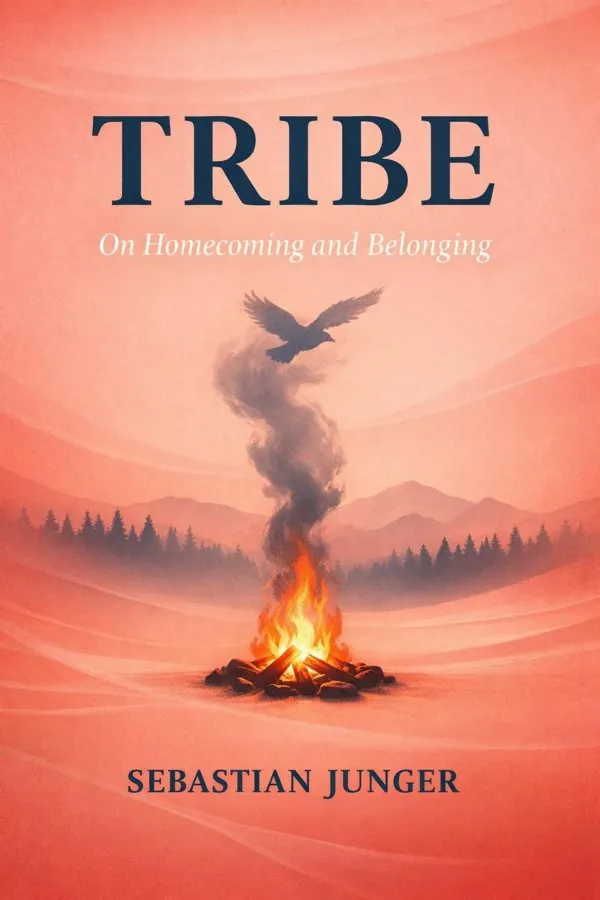
Tribe: Summary & Key Insights
 10 min9 chaptersAudio available
What Is Tribe About?
Tribe by Sebastian Junger is a sociology book published in 2016 spanning 9 pages. In 'Tribe: On Homecoming and Belonging', Sebastian Junger explores the human need for community and belonging, drawing on anthropology, history, and psychology. He examines how modern society’s emphasis on individualism has eroded the sense of solidarity that once defined human groups, and how experiences of war, disaster, and hardship can paradoxically restore that lost connection. The book argues that the disconnection of modern life contributes to alienation and mental distress, while tribal bonds foster resilience and meaning.
This FizzRead summary covers all 9 key chapters of Tribe in approximately 10 minutes, distilling the most important ideas, arguments, and takeaways from Sebastian Junger's work. Also available as an audio summary and Key Quotes Podcast.
Tribe: On Homecoming and Belonging
In 'Tribe: On Homecoming and Belonging', Sebastian Junger explores the human need for community and belonging, drawing on anthropology, history, and psychology. He examines how modern society’s emphasis on individualism has eroded the sense of solidarity that once defined human groups, and how experiences of war, disaster, and hardship can paradoxically restore that lost connection. The book argues that the disconnection of modern life contributes to alienation and mental distress, while tribal bonds foster resilience and meaning.
Who Should Read Tribe?
This book is perfect for anyone interested in sociology and looking to gain actionable insights in a short read. Whether you're a student, professional, or lifelong learner, the key ideas from Tribe by Sebastian Junger will help you think differently.
- ✓Readers who enjoy sociology and want practical takeaways
- ✓Professionals looking to apply new ideas to their work and life
- ✓Anyone who wants the core insights of Tribe in just 10 minutes
Want the full summary?
Get instant access to this book summary and 100K+ more with Fizz Moment.
Get Free SummaryAvailable on App Store • Free to download
Key Chapters
Human beings are tribal by nature. Long before nations or cities existed, we lived in small bands, typically numbering a few dozen people. Within these groups, survival wasn’t about individual strength or cleverness — it depended on cooperation, equality, and mutual protection. Anthropological studies of hunter-gatherers and early societies show that their members shared resources, punished selfishness, and placed collective welfare above personal gain.
When I look at these communities, I see an instinct that our modern life tries to suppress. The tribal instinct is the drive to belong, to contribute, to be valued for what you give rather than what you own. It’s what makes soldiers form brotherhoods, what binds disaster survivors in mutual aid, and what drives ordinary people to help one another when systems fail.
That instinct is still alive in each of us, but society rarely calls on it. We evolved to face hardship as a group, yet today we are encouraged to pursue comfort and success as individuals. That mismatch creates friction deep in the psyche. Without the tribe, we are alone with our fears, and our fears grow. Without that shared identity, we lose the joy that comes from knowing we matter to others in a real, necessity-driven way.
The tribal instinct is neither primitive nor obsolete. It’s the biological and emotional foundation of human goodness. We are happiest not when we are free from obligation, but when we are embedded in a circle of trust and interdependence. That is the paradox modernity doesn’t understand: our deepest fulfillment arises from limitation — from being part of something larger than ourselves.
As societies industrialized, people were pulled away from the communal life of villages and kin groups into cities, factories, and bureaucracies. In the process, the organic bonds that once structured human existence dissolved. There is safety, yes, and comfort. But also alienation. Modernity, for all its progress, isolates.
I often reflect on how strange it is that people can live in tall apartment buildings surrounded by thousands of others and still feel utterly alone. Our social instincts evolved for face-to-face interaction — for reciprocity and shared stakes — not for abstract networks or anonymous economies. In tribal societies, status came from contribution; today, it often comes from consumption. That shift erodes meaning.
The psychological toll of this alienation is overwhelming. Depression, anxiety, and loneliness have become epidemics. Many of us sense something missing but cannot name it. We mistake independence for freedom, yet independence without community becomes emotional exile. I’ve spoken with veterans, workers, parents — people across all walks of life — and they all describe the same longing: to feel seen, needed, connected.
The tragedy is that our culture measures success by how far we rise above others, not how well we serve them. Alienation isn’t an individual flaw; it’s the result of a system that prizes personal achievement over shared meaning. True belonging demands the opposite — humility, cooperation, shared purpose. Until we recover that balance, prosperity will remain hollow.
+ 7 more chapters — available in the FizzRead app
All Chapters in Tribe
About the Author
Sebastian Junger is an American journalist, author, and filmmaker best known for his works on war, survival, and human resilience, including 'The Perfect Storm' and 'War'. He has been a contributing editor to Vanity Fair and has directed several acclaimed documentaries. His writing often explores the intersection of individual experience and collective identity.
Get This Summary in Your Preferred Format
Read or listen to the Tribe summary by Sebastian Junger anytime, anywhere. FizzRead offers multiple formats so you can learn on your terms — all free.
Available formats: App · Audio · PDF · EPUB — All included free with FizzRead
Download Tribe PDF and EPUB Summary
Key Quotes from Tribe
“Long before nations or cities existed, we lived in small bands, typically numbering a few dozen people.”
“As societies industrialized, people were pulled away from the communal life of villages and kin groups into cities, factories, and bureaucracies.”
Frequently Asked Questions about Tribe
Tribe by Sebastian Junger is a sociology book that explores key ideas across 9 chapters. In 'Tribe: On Homecoming and Belonging', Sebastian Junger explores the human need for community and belonging, drawing on anthropology, history, and psychology. He examines how modern society’s emphasis on individualism has eroded the sense of solidarity that once defined human groups, and how experiences of war, disaster, and hardship can paradoxically restore that lost connection. The book argues that the disconnection of modern life contributes to alienation and mental distress, while tribal bonds foster resilience and meaning.
You Might Also Like
Between the World and Me
Ta-Nehisi Coates
10 min
Half the Sky
Nicholas D. Kristof, Sheryl WuDunn
10 min
Men Explain Things To Me
Rebecca Solnit
10 min
Rational Ritual
Michael Suk-Young Chwe
10 min
The New Jim Crow
Michelle Alexander
10 min
Beyond Culture
Edward T. Hall
10 minBrowse by Category
Ready to read Tribe?
Get the full summary and 100K+ more books with Fizz Moment.