
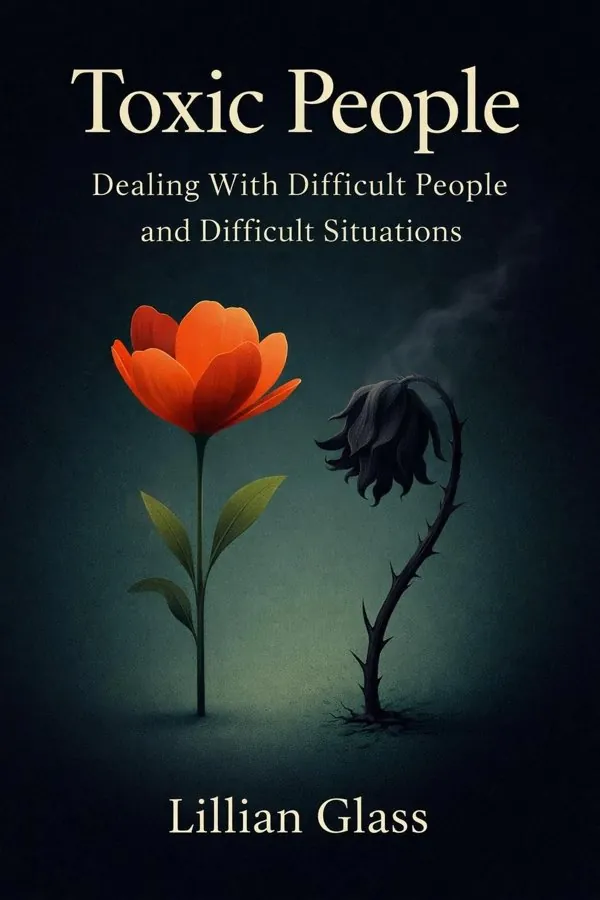
Toxic People: Dealing With Difficult People and Difficult Situations: Summary & Key Insights
 10 min6 chaptersAudio available
What Is Toxic People: Dealing With Difficult People and Difficult Situations About?
Toxic People: Dealing With Difficult People and Difficult Situations by Lillian Glass is a relationships book spanning 6 pages. In this influential self-help book, communication expert Dr. Lillian Glass identifies various types of 'toxic people'—those whose behavior drains, demeans, or manipulates others—and provides practical strategies for recognizing, confronting, and neutralizing their negative influence. The book offers readers tools to set boundaries, improve communication, and protect their emotional well-being in both personal and professional relationships.
This FizzRead summary covers all 6 key chapters of Toxic People: Dealing With Difficult People and Difficult Situations in approximately 10 minutes, distilling the most important ideas, arguments, and takeaways from Lillian Glass's work. Also available as an audio summary and Key Quotes Podcast.
Toxic People: Dealing With Difficult People and Difficult Situations
In this influential self-help book, communication expert Dr. Lillian Glass identifies various types of 'toxic people'—those whose behavior drains, demeans, or manipulates others—and provides practical strategies for recognizing, confronting, and neutralizing their negative influence. The book offers readers tools to set boundaries, improve communication, and protect their emotional well-being in both personal and professional relationships.
Who Should Read Toxic People: Dealing With Difficult People and Difficult Situations?
This book is perfect for anyone interested in relationships and looking to gain actionable insights in a short read. Whether you're a student, professional, or lifelong learner, the key ideas from Toxic People: Dealing With Difficult People and Difficult Situations by Lillian Glass will help you think differently.
- ✓Readers who enjoy relationships and want practical takeaways
- ✓Professionals looking to apply new ideas to their work and life
- ✓Anyone who wants the core insights of Toxic People: Dealing With Difficult People and Difficult Situations in just 10 minutes
Want the full summary?
Get instant access to this book summary and 100K+ more with Fizz Moment.
Get Free SummaryAvailable on App Store • Free to download
Key Chapters
When I use the word *toxic*, I am not dramatizing. Like a chemical toxin that alters the body’s chemistry, toxic individuals alter your emotional reactions and behaviors in subtle but powerful ways. These people may not always be evil or intentionally cruel. Often, they’re reacting to their own pain, insecurity, or need for control. But the effect is the same: being around them diminishes your sense of safety and self-worth.
Toxicity appears in countless disguises. There’s the chronic critic whose default mode is fault-finding. There’s the manipulator, who twists truth until you doubt your own perception. The narcissist demands attention and validation while erasing your needs. And sometimes toxicity comes wrapped in charm—the gossip who entices you into sharing secrets, the false friend who thrives on chaos, the family member who insists their dominance is love.
Yet, toxicity isn’t only about personality; it’s about interactions. When you stay in a relationship with a toxic person—whether romantic, familial, professional, or social—you begin to internalize their distortions. You may find yourself apologizing constantly, avoiding confrontation, or losing confidence in your instincts. That’s the psychological poison at work.
The first step in reclaiming your peace is insight. You must learn to identify not just who the toxic individuals are, but how they make you feel. Pay attention to your body when they speak. Does your stomach tighten? Do you feel compelled to defend yourself? That reaction is your internal alarm system signaling danger. Recognizing this emotional toxicity is the beginning of empowerment.
In my years of counseling and communication coaching, I’ve discovered that recognition transforms experience. Once a person sees the pattern—that their fatigue or confusion isn’t random but a direct response to manipulation—they can begin to make new choices. Awareness doesn’t solve everything immediately, but it breaks the illusion of helplessness. With that clarity, you are ready for change.
Every toxic relationship has its unique rhythm, but most toxic people fit into recognizable categories. Understanding these patterns isn’t about labeling—it’s about preparation. If you can anticipate how a toxic person might act, you can stay grounded rather than reactive.
Consider the *Controller*. This individual thrives on power. Whether through intimidation, guilt, or charm, the controller’s goal is to direct your emotions and decisions. You’ll know you’re dealing with a controller when your autonomy feels constantly challenged, when you’re pushed into doing what you don’t want to do, and when resistance provokes punishment or disdain.
Then comes the *Critic*, who sees the world through a lens of fault. Nothing you do is good enough. They may frame their attacks as “helpful advice” or “constructive feedback,” but the underlying message is always the same: you should be ashamed of your choices. Spending time with such individuals erodes confidence and breeds self-doubt.
The *Narcissist* is another deeply toxic type. Their universe revolves around themselves. Compassion is foreign to them unless it benefits their image. They manipulate through charm, attention, and emotional seduction. But beneath that allure lies exploitation; they take endlessly and give little.
And then there’s the *Gossip*, whose toxicity is covert. The gossip thrives on divisiveness, spreading rumors and building alliances through deceit. You may feel momentarily bonded through shared secrets, but the same tongue will soon turn against you.
These types are not myths—they’re drawn from years of clinical observation and research in communication psychology. Recognizing them doesn’t mean you must change them; in fact, most cannot be changed. What you can change is your response—how you set boundaries and how you maintain your emotional health despite their presence.
+ 4 more chapters — available in the FizzRead app
All Chapters in Toxic People: Dealing With Difficult People and Difficult Situations
About the Author
Dr. Lillian Glass is an American communication and body language expert, author, and media commentator. She holds a Ph.D. in communication disorders and has written numerous books on interpersonal communication, body language, and self-improvement. Her work has been featured widely in television and print media.
Get This Summary in Your Preferred Format
Read or listen to the Toxic People: Dealing With Difficult People and Difficult Situations summary by Lillian Glass anytime, anywhere. FizzRead offers multiple formats so you can learn on your terms — all free.
Available formats: App · Audio · PDF · EPUB — All included free with FizzRead
Download Toxic People: Dealing With Difficult People and Difficult Situations PDF and EPUB Summary
Key Quotes from Toxic People: Dealing With Difficult People and Difficult Situations
“When I use the word *toxic*, I am not dramatizing.”
“Every toxic relationship has its unique rhythm, but most toxic people fit into recognizable categories.”
Frequently Asked Questions about Toxic People: Dealing With Difficult People and Difficult Situations
Toxic People: Dealing With Difficult People and Difficult Situations by Lillian Glass is a relationships book that explores key ideas across 6 chapters. In this influential self-help book, communication expert Dr. Lillian Glass identifies various types of 'toxic people'—those whose behavior drains, demeans, or manipulates others—and provides practical strategies for recognizing, confronting, and neutralizing their negative influence. The book offers readers tools to set boundaries, improve communication, and protect their emotional well-being in both personal and professional relationships.
You Might Also Like

The 5 Love Languages
Gary Chapman
10 min
Men Are from Mars, Women Are from Venus
John Gray
10 min
She Comes First
Ian Kerner
10 min
No More Mr Nice Guy
Robert Glover
10 min
Hold Me Tight
Sue Johnson
10 min
Mating in Captivity
Esther Perel
10 minBrowse by Category
Ready to read Toxic People: Dealing With Difficult People and Difficult Situations?
Get the full summary and 100K+ more books with Fizz Moment.