

Time of the Magicians: Wittgenstein, Benjamin, Cassirer, Heidegger, and the Decade That Reinvented Philosophy: Summary & Key Insights
 10 min6 chaptersAudio available
What Is Time of the Magicians: Wittgenstein, Benjamin, Cassirer, Heidegger, and the Decade That Reinvented Philosophy About?
Time of the Magicians: Wittgenstein, Benjamin, Cassirer, Heidegger, and the Decade That Reinvented Philosophy by Wolfram Eilenberger is a western_phil book spanning 6 pages. Time of the Magicians tells the story of four philosophers—Ludwig Wittgenstein, Walter Benjamin, Martin Heidegger, and Ernst Cassirer—who transformed modern thought during the turbulent decade between 1919 and 1929. Wolfram Eilenberger explores how these thinkers, each in their own way, sought to redefine the meaning of reason, language, and existence in a world shaken by war and uncertainty.
This FizzRead summary covers all 6 key chapters of Time of the Magicians: Wittgenstein, Benjamin, Cassirer, Heidegger, and the Decade That Reinvented Philosophy in approximately 10 minutes, distilling the most important ideas, arguments, and takeaways from Wolfram Eilenberger's work. Also available as an audio summary and Key Quotes Podcast.
Time of the Magicians: Wittgenstein, Benjamin, Cassirer, Heidegger, and the Decade That Reinvented Philosophy
Time of the Magicians tells the story of four philosophers—Ludwig Wittgenstein, Walter Benjamin, Martin Heidegger, and Ernst Cassirer—who transformed modern thought during the turbulent decade between 1919 and 1929. Wolfram Eilenberger explores how these thinkers, each in their own way, sought to redefine the meaning of reason, language, and existence in a world shaken by war and uncertainty.
Who Should Read Time of the Magicians: Wittgenstein, Benjamin, Cassirer, Heidegger, and the Decade That Reinvented Philosophy?
This book is perfect for anyone interested in western_phil and looking to gain actionable insights in a short read. Whether you're a student, professional, or lifelong learner, the key ideas from Time of the Magicians: Wittgenstein, Benjamin, Cassirer, Heidegger, and the Decade That Reinvented Philosophy by Wolfram Eilenberger will help you think differently.
- ✓Readers who enjoy western_phil and want practical takeaways
- ✓Professionals looking to apply new ideas to their work and life
- ✓Anyone who wants the core insights of Time of the Magicians: Wittgenstein, Benjamin, Cassirer, Heidegger, and the Decade That Reinvented Philosophy in just 10 minutes
Want the full summary?
Get instant access to this book summary and 100K+ more with Fizz Moment.
Get Free SummaryAvailable on App Store • Free to download
Key Chapters
Wittgenstein’s story begins in silence—a silence inherited from war and from his own wealth and privilege. Upon returning from the front, he rejected the worldly comforts of his family and retreated into philosophical solitude. In those years he finished the *Tractatus Logico-Philosophicus*, a book that sought nothing less than to describe the logical skeleton of the world. His conviction was stark: the limits of my language mean the limits of my world.
Writing the *Tractatus*, he truly believed he had solved all the problems philosophy could pose. If language maps the world in logical propositions—if the structure of the sentence mirrors the structure of reality—then we can see clearly what can be meaningfully said and what must remain silent. Everything ethical, aesthetic, or spiritual lies beyond that boundary. Wittgenstein’s philosophy wasn’t a celebration of reason—it was an act of renunciation, an attempt to carve out a space for the unsayable.
In narrating his life, I show that his intellectual labor was inseparable from his moral seriousness. He wanted purity of thought and of soul; it was for this reason that he gave away his fortune and worked briefly as a schoolteacher in rural Austria. His philosophy became an ethos: one must discipline language as one disciplines the self.
Yet what makes Wittgenstein so compelling is that even after building his perfect logical edifice, he felt its insufficiency deeply. His later turn, away from the *Tractatus*’ vision, toward ordinary language, foreshadows the recognition that human meaning is not logical form but living use. This tension—between the precision of logic and the messiness of life—haunts every philosopher who seeks clarity in chaos. Wittgenstein’s achievement lies in making that boundary visible and reminding us that beyond logic lies silence, awe, and perhaps ethics itself.
Walter Benjamin’s quest was altogether different. Where Wittgenstein purified language into logical form, Benjamin infused it with spirit. His early essays on language and translation suggest that words are not human tools but living entities, each bearing a divine spark. To speak, for Benjamin, was not merely to communicate—it was to participate in the unfolding of meaning itself.
In those turbulent Berlin years, Benjamin wandered at the margins of academia, prolific yet never secure. He wrote on Baroque drama, on Goethe, on the experience of translation, on the idea of history as redemption. His thinking always carried a theological undercurrent: philosophy must awaken the lost aura of meaning that modernization and capitalism had stripped from the world.
In *Time of the Magicians*, I portray Benjamin as a philosopher-poet in exile from success. His isolation was both literal and metaphysical; his letters show a man who doubts whether philosophy can survive in a world of materialist reduction. Yet that doubt became his method. His idea of history was not linear progression but constellation—the intersection of past and present that flashes up in moments of recognition. No wonder his writings would later inspire cultural critics and artists: his philosophy turned the act of understanding into a creative awakening.
Benjamin’s struggle embodies the weighing of materialism against theology. Deeply influenced by Marx and by Jewish mysticism, he sought to reconcile the call for justice with the longing for transcendence. He is the tragic magician, conjuring meaning out of fragments, seeking redemption not through system but through illumination. His decade prepares the ground for his later essays on mechanical reproduction and the politics of art, where the philosopher must also be a critic of civilization itself.
+ 4 more chapters — available in the FizzRead app
All Chapters in Time of the Magicians: Wittgenstein, Benjamin, Cassirer, Heidegger, and the Decade That Reinvented Philosophy
About the Author
Wolfram Eilenberger is a German philosopher, writer, and public intellectual. Born in 1972 in Freiburg, he served as editor-in-chief of Philosophie Magazin and is known for his accessible works that bring complex philosophical ideas to a broad audience.
Get This Summary in Your Preferred Format
Read or listen to the Time of the Magicians: Wittgenstein, Benjamin, Cassirer, Heidegger, and the Decade That Reinvented Philosophy summary by Wolfram Eilenberger anytime, anywhere. FizzRead offers multiple formats so you can learn on your terms — all free.
Available formats: App · Audio · PDF · EPUB — All included free with FizzRead
Download Time of the Magicians: Wittgenstein, Benjamin, Cassirer, Heidegger, and the Decade That Reinvented Philosophy PDF and EPUB Summary
Key Quotes from Time of the Magicians: Wittgenstein, Benjamin, Cassirer, Heidegger, and the Decade That Reinvented Philosophy
“Wittgenstein’s story begins in silence—a silence inherited from war and from his own wealth and privilege.”
“Walter Benjamin’s quest was altogether different.”
Frequently Asked Questions about Time of the Magicians: Wittgenstein, Benjamin, Cassirer, Heidegger, and the Decade That Reinvented Philosophy
Time of the Magicians: Wittgenstein, Benjamin, Cassirer, Heidegger, and the Decade That Reinvented Philosophy by Wolfram Eilenberger is a western_phil book that explores key ideas across 6 chapters. Time of the Magicians tells the story of four philosophers—Ludwig Wittgenstein, Walter Benjamin, Martin Heidegger, and Ernst Cassirer—who transformed modern thought during the turbulent decade between 1919 and 1929. Wolfram Eilenberger explores how these thinkers, each in their own way, sought to redefine the meaning of reason, language, and existence in a world shaken by war and uncertainty.
You Might Also Like
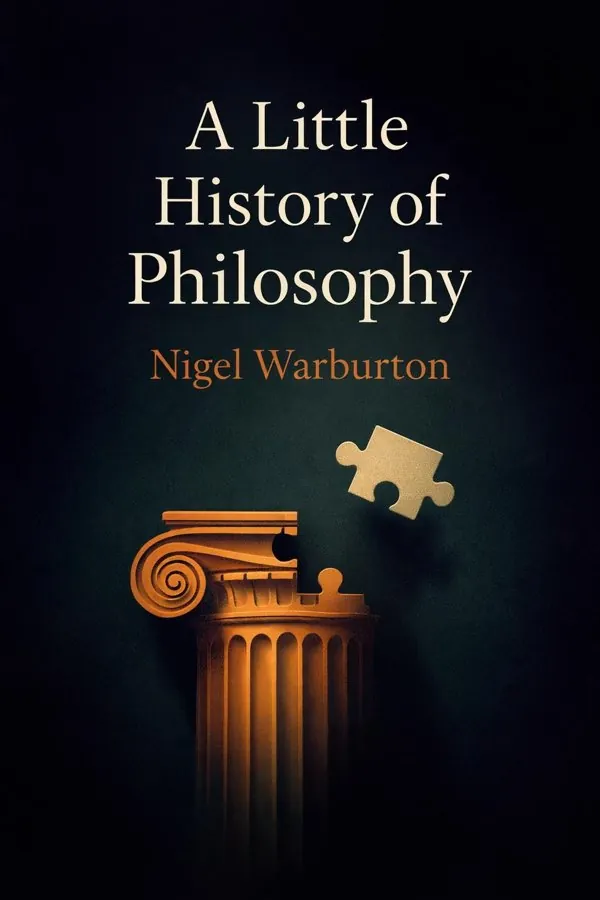
A Little History of Philosophy
Nigel Warburton
10 min
Areopagitica
John Milton
10 min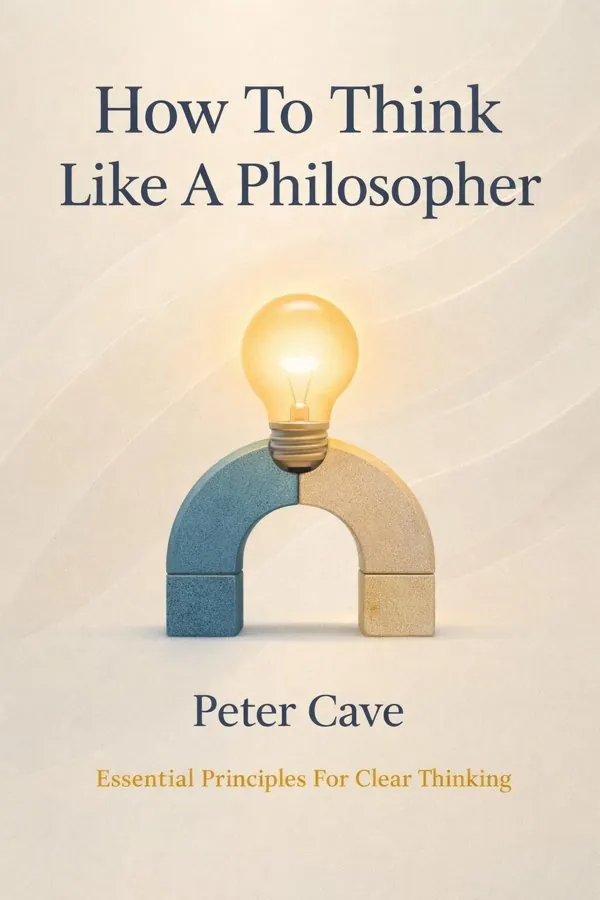
How To Think Like A Philosopher: Essential Principles For Clear Thinking
Peter Cave
10 min
Language, Truth and Logic
A. J. Ayer
10 min
The Age of Reason
Thomas Paine
10 min
The Essays
Michel De Montaigne
10 minBrowse by Category
Ready to read Time of the Magicians: Wittgenstein, Benjamin, Cassirer, Heidegger, and the Decade That Reinvented Philosophy?
Get the full summary and 100K+ more books with Fizz Moment.