
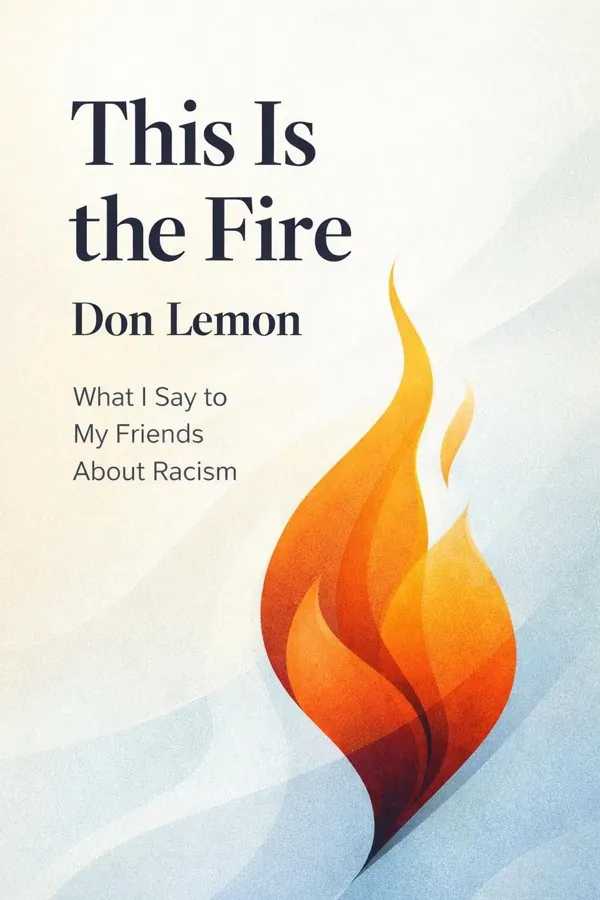
This Is the Fire: What I Say to My Friends About Racism: Summary & Key Insights
by Don Lemon
 10 min8 chaptersAudio available
What Is This Is the Fire: What I Say to My Friends About Racism About?
This Is the Fire: What I Say to My Friends About Racism by Don Lemon is a sociology book spanning 8 pages. In this powerful and personal work, CNN anchor Don Lemon reflects on the realities of racism in America, combining memoir, history, and social commentary. Written as a letter to his nephew, the book explores the roots of racial injustice, the persistence of inequality, and the urgent need for empathy and action. Lemon draws on his own experiences as a Black journalist and public figure to offer both a searing critique and a hopeful vision for change.
This FizzRead summary covers all 8 key chapters of This Is the Fire: What I Say to My Friends About Racism in approximately 10 minutes, distilling the most important ideas, arguments, and takeaways from Don Lemon's work. Also available as an audio summary and Key Quotes Podcast.
This Is the Fire: What I Say to My Friends About Racism
In this powerful and personal work, CNN anchor Don Lemon reflects on the realities of racism in America, combining memoir, history, and social commentary. Written as a letter to his nephew, the book explores the roots of racial injustice, the persistence of inequality, and the urgent need for empathy and action. Lemon draws on his own experiences as a Black journalist and public figure to offer both a searing critique and a hopeful vision for change.
Who Should Read This Is the Fire: What I Say to My Friends About Racism?
This book is perfect for anyone interested in sociology and looking to gain actionable insights in a short read. Whether you're a student, professional, or lifelong learner, the key ideas from This Is the Fire: What I Say to My Friends About Racism by Don Lemon will help you think differently.
- ✓Readers who enjoy sociology and want practical takeaways
- ✓Professionals looking to apply new ideas to their work and life
- ✓Anyone who wants the core insights of This Is the Fire: What I Say to My Friends About Racism in just 10 minutes
Want the full summary?
Get instant access to this book summary and 100K+ more with Fizz Moment.
Get Free SummaryAvailable on App Store • Free to download
Key Chapters
Growing up in Baton Rouge in the 1970s and ’80s meant growing up aware of difference. My earliest lessons in race were not delivered in classrooms but through glances, insults, and the subtle boundaries drawn around me. I saw how segregation lingered in the very air we breathed — schools, neighborhoods, even churches separated by color and class. But I also saw resilience. My grandmother and mother filled our home with pride, insisting that we were no less deserving than anyone else. It was through their strength that I first learned the paradox of being Black in America: to love a country that doesn’t always love you back.
As a child, I wrestled with the tension between belonging and otherness. I wanted to fit in with white classmates but could feel the line that divided us. Television and movies rarely showed faces like mine except as caricatures. I began to understand that identity is not just a matter of self-perception — it’s a negotiation with a society that insists on defining you. That realization became the seed for much of my later work. Every success I pursued was shadowed by questions about how far Black ambition was allowed to go. Baton Rouge taught me that prejudice could smile at you while shutting the door in your face, and that recognition pushed me to seek truth, no matter how uncomfortable.
Racism in America isn’t just about the words people say or the slurs shouted in anger — it is built into our institutions, our laws, our culture. That’s what makes it so insidious. From the schools where children of color receive fewer resources, to the criminal justice system that polices Black bodies with deadly precision, the structures remain tilted. I’ve seen this firsthand, both as a reporter covering police brutality and as a man who has driven home carefully, fully aware that a single traffic stop could end disastrously.
The media, my own industry, has played its part too. For decades, stories about Black people were filtered through white lenses, told in voices that lacked lived understanding. Representation matters not because it’s fashionable, but because perspective shapes truth. When we allow only one side to narrate history, we perpetuate half-truths that justify oppression.
Recognizing systemic racism means confronting the comfort of those who benefit from it — including well-meaning people who believe neutrality equals fairness. It doesn’t. Neutrality, in the face of injustice, is complicity. My goal in this book is not to shame but to awaken, to help readers see that dismantling racism requires each of us to question not only what we do but what we’ve accepted without question.
+ 6 more chapters — available in the FizzRead app
All Chapters in This Is the Fire: What I Say to My Friends About Racism
About the Author
Get This Summary in Your Preferred Format
Read or listen to the This Is the Fire: What I Say to My Friends About Racism summary by Don Lemon anytime, anywhere. FizzRead offers multiple formats so you can learn on your terms — all free.
Available formats: App · Audio · PDF · EPUB — All included free with FizzRead
Download This Is the Fire: What I Say to My Friends About Racism PDF and EPUB Summary
Key Quotes from This Is the Fire: What I Say to My Friends About Racism
“Growing up in Baton Rouge in the 1970s and ’80s meant growing up aware of difference.”
“Racism in America isn’t just about the words people say or the slurs shouted in anger — it is built into our institutions, our laws, our culture.”
Frequently Asked Questions about This Is the Fire: What I Say to My Friends About Racism
This Is the Fire: What I Say to My Friends About Racism by Don Lemon is a sociology book that explores key ideas across 8 chapters. In this powerful and personal work, CNN anchor Don Lemon reflects on the realities of racism in America, combining memoir, history, and social commentary. Written as a letter to his nephew, the book explores the roots of racial injustice, the persistence of inequality, and the urgent need for empathy and action. Lemon draws on his own experiences as a Black journalist and public figure to offer both a searing critique and a hopeful vision for change.
You Might Also Like
Between the World and Me
Ta-Nehisi Coates
10 min
Half the Sky
Nicholas D. Kristof, Sheryl WuDunn
10 min
Men Explain Things To Me
Rebecca Solnit
10 min
Rational Ritual
Michael Suk-Young Chwe
10 min
The New Jim Crow
Michelle Alexander
10 min
Beyond Culture
Edward T. Hall
10 minBrowse by Category
Ready to read This Is the Fire: What I Say to My Friends About Racism?
Get the full summary and 100K+ more books with Fizz Moment.