
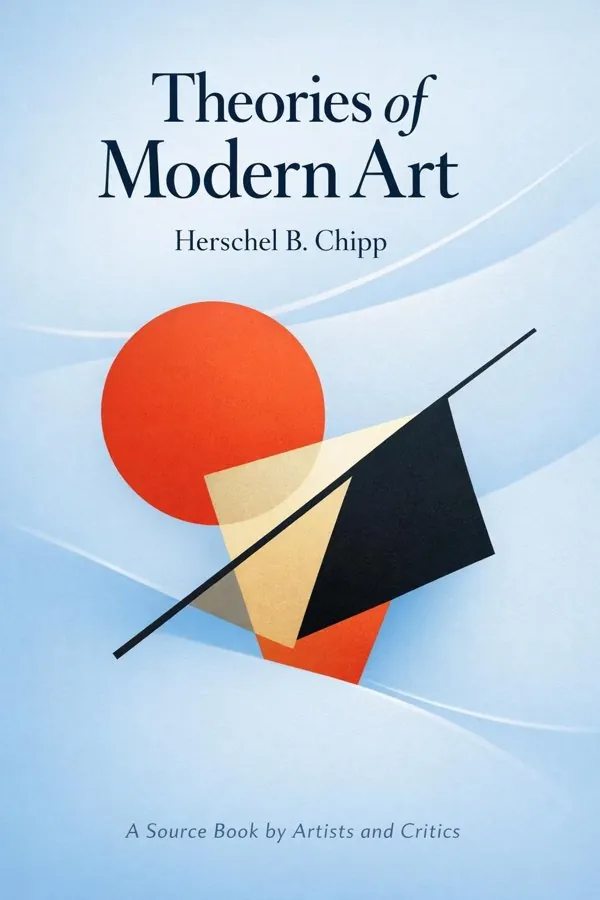
Theories of Modern Art: A Source Book by Artists and Critics: Summary & Key Insights
 10 min10 chaptersAudio available
What Is Theories of Modern Art: A Source Book by Artists and Critics About?
Theories of Modern Art: A Source Book by Artists and Critics by Herschel B. Chipp is a art_history book spanning 10 pages. A comprehensive anthology compiling writings, manifestos, and reflections by major modern artists and critics, this book traces the evolution of modern art theory from the late nineteenth century through the mid-twentieth century. It includes primary texts by artists such as Cézanne, Picasso, Kandinsky, and others, offering insight into the intellectual and aesthetic foundations of modernism.
This FizzRead summary covers all 10 key chapters of Theories of Modern Art: A Source Book by Artists and Critics in approximately 10 minutes, distilling the most important ideas, arguments, and takeaways from Herschel B. Chipp's work. Also available as an audio summary and Key Quotes Podcast.
Theories of Modern Art: A Source Book by Artists and Critics
A comprehensive anthology compiling writings, manifestos, and reflections by major modern artists and critics, this book traces the evolution of modern art theory from the late nineteenth century through the mid-twentieth century. It includes primary texts by artists such as Cézanne, Picasso, Kandinsky, and others, offering insight into the intellectual and aesthetic foundations of modernism.
Who Should Read Theories of Modern Art: A Source Book by Artists and Critics?
This book is perfect for anyone interested in art_history and looking to gain actionable insights in a short read. Whether you're a student, professional, or lifelong learner, the key ideas from Theories of Modern Art: A Source Book by Artists and Critics by Herschel B. Chipp will help you think differently.
- ✓Readers who enjoy art_history and want practical takeaways
- ✓Professionals looking to apply new ideas to their work and life
- ✓Anyone who wants the core insights of Theories of Modern Art: A Source Book by Artists and Critics in just 10 minutes
Want the full summary?
Get instant access to this book summary and 100K+ more with Fizz Moment.
Get Free SummaryAvailable on App Store • Free to download
Key Chapters
The story begins in the closing decades of the nineteenth century, an age of restless inquiry and scientific progress that made artists question reality itself. Naturalism, which had guided Western art for centuries, began to lose its grip. At the heart of this transformation stood Paul Cézanne. In his letters and reflections collected here, we see a man determined to reconcile sensation with structure. He no longer sought to imitate nature faithfully; instead, he pursued what he called 'realization' — the translation of perception into a durable pictorial order. His brushstrokes became disciplined acts of understanding, each color plane an attempt to capture the logic behind appearances. Cézanne’s legacy, I suggest, is not merely formal innovation but a new conception of truth.
Around him, the world was changing. Symbolist painters and writers such as Gauguin and Redon argued that art must evoke, not describe. They replaced the direct observation of nature with visions drawn from the imagination or memory. Theories of color and composition developed by Seurat and others pushed this further by grounding expression in scientific analysis, yet always with an emotional aim. The beginnings of modern art, then, emerged from a tension — between inner necessity and outer form, science and spirit, nature and mind. This tension would fuel every subsequent generation.
After Impressionism came a period of introspection. Artists like Gauguin, Van Gogh, and Seurat expanded painting beyond the fleeting impressions of light to embrace emotion and symbolic resonance. In their letters and manifestos, preserved in this volume, one finds the groundwork for modernism’s inward turn. Gauguin’s plea for expressive color, liberated from nature’s imitation, speaks of art as a language of dreams and ideas. Van Gogh, eternally balancing despair and ecstasy, found in color and gesture a path to the soul. Seurat, in contrast, sought a dogmatic harmony — he systematized emotion through scientific study, demonstrating that modernity could merge intuition and reason.
Symbolism, too, offered a refuge from materialism. Writers and painters insisted that the visible world was merely a sign of deeper truths. For Odilon Redon, images were vehicles of the invisible. What united these artists was the conviction that art must reveal the unseen, that paint could serve as a spiritual medium. This was the birth of abstraction as a moral endeavor. Modern art would henceforth be less about representation than revelation — a daring shift of the artist’s role from observer to prophet.
+ 8 more chapters — available in the FizzRead app
All Chapters in Theories of Modern Art: A Source Book by Artists and Critics
About the Author
Herschel Browning Chipp (1913–1992) was an American art historian and professor at the University of California, Berkeley. He specialized in modern art and was known for his scholarship on Picasso and the theoretical underpinnings of twentieth-century art movements.
Get This Summary in Your Preferred Format
Read or listen to the Theories of Modern Art: A Source Book by Artists and Critics summary by Herschel B. Chipp anytime, anywhere. FizzRead offers multiple formats so you can learn on your terms — all free.
Available formats: App · Audio · PDF · EPUB — All included free with FizzRead
Download Theories of Modern Art: A Source Book by Artists and Critics PDF and EPUB Summary
Key Quotes from Theories of Modern Art: A Source Book by Artists and Critics
“The story begins in the closing decades of the nineteenth century, an age of restless inquiry and scientific progress that made artists question reality itself.”
“After Impressionism came a period of introspection.”
Frequently Asked Questions about Theories of Modern Art: A Source Book by Artists and Critics
Theories of Modern Art: A Source Book by Artists and Critics by Herschel B. Chipp is a art_history book that explores key ideas across 10 chapters. A comprehensive anthology compiling writings, manifestos, and reflections by major modern artists and critics, this book traces the evolution of modern art theory from the late nineteenth century through the mid-twentieth century. It includes primary texts by artists such as Cézanne, Picasso, Kandinsky, and others, offering insight into the intellectual and aesthetic foundations of modernism.
You Might Also Like
Studies In Impressionism
John Rewald
10 min
Art Since 1900: Modernism, Antimodernism, Postmodernism
Hal Foster, Rosalind E. Krauss, Yve-Alain Bois, Benjamin H. D. Buchloh
10 min
Art Since 1940: Strategies of Being
Jonathan Fineberg
10 min
Color and Meaning: Art, Science, and Symbolism
John Gage
10 min
Color: Travels Through the Paintbox
Victoria Finlay
10 min
Curatorial Activism: Towards an Ethics of Curating
Maura Reilly
10 minBrowse by Category
Ready to read Theories of Modern Art: A Source Book by Artists and Critics?
Get the full summary and 100K+ more books with Fizz Moment.