
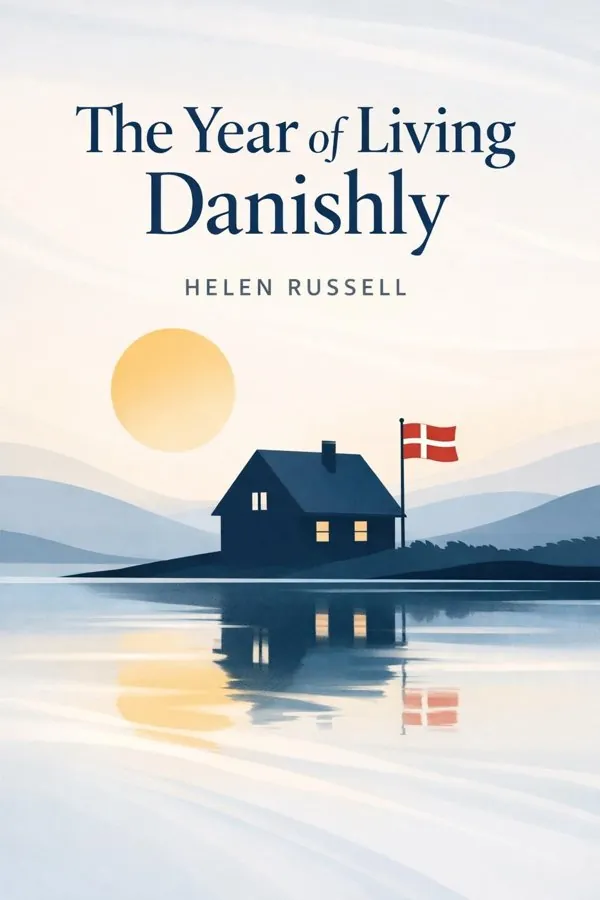
The Year of Living Danishly: Uncovering the Secrets of the World's Happiest Country: Summary & Key Insights
 10 min9 chaptersAudio available
Key Takeaways from The Year of Living Danishly: Uncovering the Secrets of the World's Happiest Country
Sometimes the first step toward understanding a culture is feeling completely out of place in it.
People are often happier not because life is easier, but because life feels less precarious.
A society reveals its real values through how it organizes work.
If a country wants happier adults, it may need to start by building calmer childhoods.
Happiness is not always built through dramatic success; often it is assembled from small moments of comfort repeated over time.
What Is The Year of Living Danishly: Uncovering the Secrets of the World's Happiest Country About?
The Year of Living Danishly: Uncovering the Secrets of the World's Happiest Country by Helen Russell is a sociology book spanning 8 pages. What if happiness were not just a private feeling, but something a society could quietly design into everyday life? In The Year of Living Danishly, journalist Helen Russell sets out to answer that question after leaving her high-speed London life for rural Jutland when her husband accepts a job with LEGO. What begins as a temporary relocation soon turns into a lively investigation into why Denmark so often ranks among the happiest countries in the world. Through sharp observation, humor, interviews, and personal trial and error, Russell examines the habits, institutions, and values that shape Danish life: trust, equality, welfare, work-life balance, education, family life, design, and hygge. The book matters because it moves beyond clichés about candles and pastries to ask a deeper sociological question: how do culture and public policy influence well-being? Russell is a particularly effective guide because she combines the outsider’s curiosity with a journalist’s discipline, testing idealized assumptions against real experience. The result is an engaging, insightful portrait of a country that has made contentment feel less accidental and more collective.
This FizzRead summary covers all 9 key chapters of The Year of Living Danishly: Uncovering the Secrets of the World's Happiest Country in approximately 10 minutes, distilling the most important ideas, arguments, and takeaways from Helen Russell's work. Also available as an audio summary and Key Quotes Podcast.
The Year of Living Danishly: Uncovering the Secrets of the World's Happiest Country
What if happiness were not just a private feeling, but something a society could quietly design into everyday life? In The Year of Living Danishly, journalist Helen Russell sets out to answer that question after leaving her high-speed London life for rural Jutland when her husband accepts a job with LEGO. What begins as a temporary relocation soon turns into a lively investigation into why Denmark so often ranks among the happiest countries in the world. Through sharp observation, humor, interviews, and personal trial and error, Russell examines the habits, institutions, and values that shape Danish life: trust, equality, welfare, work-life balance, education, family life, design, and hygge. The book matters because it moves beyond clichés about candles and pastries to ask a deeper sociological question: how do culture and public policy influence well-being? Russell is a particularly effective guide because she combines the outsider’s curiosity with a journalist’s discipline, testing idealized assumptions against real experience. The result is an engaging, insightful portrait of a country that has made contentment feel less accidental and more collective.
Who Should Read The Year of Living Danishly: Uncovering the Secrets of the World's Happiest Country?
This book is perfect for anyone interested in sociology and looking to gain actionable insights in a short read. Whether you're a student, professional, or lifelong learner, the key ideas from The Year of Living Danishly: Uncovering the Secrets of the World's Happiest Country by Helen Russell will help you think differently.
- ✓Readers who enjoy sociology and want practical takeaways
- ✓Professionals looking to apply new ideas to their work and life
- ✓Anyone who wants the core insights of The Year of Living Danishly: Uncovering the Secrets of the World's Happiest Country in just 10 minutes
Want the full summary?
Get instant access to this book summary and 100K+ more with Fizz Moment.
Get Free SummaryAvailable on App Store • Free to download
Key Chapters
Sometimes the first step toward understanding a culture is feeling completely out of place in it. When Helen Russell arrives in Billund, the small Danish town best known as LEGO’s headquarters, she is struck not by excitement but by silence. Gone are London’s crowded trains, relentless schedules, and constant stimulation. In their place are open spaces, bicycles, orderly homes, and a pace of life that initially feels almost suspiciously calm. Her discomfort becomes one of the book’s central insights: many of us are so accustomed to stress that tranquility can feel alien.
Russell uses her relocation to show that environment shapes expectations. In London, busyness signals status and purpose. In Jutland, calm is not laziness but normality. The difference is cultural as much as personal. Everyday tasks, social interactions, and even shopping seem slower, more deliberate, and less performative. This transition reveals how deeply place influences mood. It also shows that happiness is not always a dramatic emotional high; often it is the absence of unnecessary friction.
Her early adjustment is filled with practical challenges, from making friends to navigating local customs, but these moments illuminate a larger truth: belonging requires humility. Rather than immediately judging the Danish way of life, she learns by observing. Why are people less hurried? Why do neighborhoods feel safer? Why are expectations more moderate? Each question opens a door to understanding a society built around ease rather than excess.
A useful application is to examine your own daily environment. Which parts of your routine create needless urgency, noise, or status pressure? The actionable takeaway: make one deliberate change that replaces chaos with calm, whether that means simplifying your commute, reducing overscheduling, or protecting a quieter evening ritual.
People are often happier not because life is easier, but because life feels less precarious. One of Russell’s most striking discoveries is that Denmark’s high-tax welfare system is not experienced by many Danes as a burden, but as a shared investment in collective security. Instead of seeing taxes merely as money lost, Danes often see them as payment into a social contract that supports education, healthcare, childcare, and unemployment protection.
This matters because anxiety about falling behind can quietly dominate daily life. In societies where illness, job loss, or childcare costs can become personal crises, people may earn more yet feel less secure. Russell explores how Denmark reduces this background fear. Citizens are more willing to change jobs, start businesses, or have children because the consequences of failure are less catastrophic. Happiness here is linked not just to pleasure, but to resilience.
Russell does not present the Danish model as flawless or universally transferable. High taxes require trust in institutions, and that trust depends on transparency, competence, and a sense that everyone contributes fairly. But her reporting highlights an essential sociological point: well-being grows when citizens believe the system is on their side. A functioning safety net can produce emotional freedom, not just material support.
Readers can apply this idea personally even if they do not live in Denmark. Financial and emotional security often come from systems, not heroic self-reliance. You can create smaller versions of a safety net through emergency savings, reciprocal friendships, shared childcare, or community support. The actionable takeaway: identify one area of your life where insecurity causes chronic stress and build a simple support structure around it, whether financial, social, or practical.
A society reveals its real values through how it organizes work. In Denmark, Russell finds a culture that treats work as important but not sacred. Employees tend to leave at reasonable hours, hierarchy is flatter, and trust often replaces micromanagement. Rather than glorifying exhaustion, Danish workplaces generally assume that people can be productive without sacrificing their private lives.
This is a radical idea in many modern economies, where overwork is often rewarded with admiration. Russell contrasts this with the Danish mindset, where staying late may signal poor planning rather than commitment. Meetings are shorter, communication is more direct, and workers often enjoy considerable autonomy. This trust-based culture supports efficiency because people are not constantly performing busyness for managers. Equality also plays a role: power distance is lower, and employees may challenge leaders more comfortably, which can improve both morale and decision-making.
The deeper lesson is that happiness and productivity are not enemies. When people have time for family, exercise, hobbies, and rest, they bring more energy and clarity to work. Denmark’s approach suggests that sustainable output comes from balance, not from endless acceleration. Russell’s observations also challenge the myth that long hours equal seriousness. In fact, they often conceal waste, stress, or poor systems.
Even if your workplace is far from Danish, the principle still applies. You can set clearer boundaries, reduce unnecessary meetings, and focus on outcomes instead of performative availability. Teams can normalize trust by defining responsibilities and measuring results rather than time spent online. The actionable takeaway: choose one work habit that confuses visibility with value, such as replying instantly to every message or working late without need, and replace it with a boundary that protects both concentration and life outside work.
If a country wants happier adults, it may need to start by building calmer childhoods. Russell’s exploration of Danish family life and education reveals a culture that places remarkable value on trust, independence, and emotional steadiness. Children are not treated as miniature achievement machines. Instead, they are often given room to play, explore, and gradually take responsibility for themselves.
Danish parenting and schooling reflect a broader societal confidence that children benefit from freedom within stable boundaries. Russell notes practices that may surprise more anxious cultures: babies sleeping outside in prams, children walking or biking with relative independence, and schools that emphasize social development as much as academic performance. The goal is not relentless optimization but balanced human growth. Equality appears here too, in the expectation that fathers participate actively in childcare and that family life should not depend entirely on mothers absorbing the strain.
This approach matters because many societies burden families with impossible expectations. Parents feel pressured to enrich every minute, monitor every risk, and compete for educational advantage. Denmark offers an alternative vision in which well-being is supported by accessible childcare, parental leave, and a less frantic definition of success. Russell does not romanticize every aspect, but she makes clear that calmer systems help create calmer families.
A practical lesson is to distinguish support from overcontrol. Children often gain confidence when adults trust them with age-appropriate independence, and adults themselves benefit from rejecting perfectionism. Families can introduce more unstructured time, shared responsibilities, and lower-pressure routines. The actionable takeaway: remove one unnecessary source of pressure from family life this week, such as overscheduling, excessive comparison, or perfectionist expectations, and replace it with time for rest, play, or simple togetherness.
Happiness is not always built through dramatic success; often it is assembled from small moments of comfort repeated over time. One of the most famous Danish ideas Russell encounters is hygge, a term often translated as coziness but better understood as a feeling of warmth, ease, intimacy, and shared presence. Hygge is candles on a dark evening, coffee with friends, wool socks, simple meals, and conversations without performance. It turns ordinary life into a source of nourishment.
Russell is careful not to reduce Danish happiness to scented candles and blankets. Hygge matters because it expresses a deeper cultural skill: taking pleasure seriously. In climates marked by long winters and limited daylight, Danes have learned to make interior life emotionally rich. They create environments that reduce stress and encourage connection. Hygge is as much social design as personal style. It favors inclusion, informality, and modest pleasures over spectacle.
The sociological significance is easy to miss. Consumer culture often tells people that happiness arrives through novelty, luxury, and constant stimulation. Hygge suggests the opposite: contentment grows when people slow down, lower expectations, and pay attention to atmosphere. A modest evening with trusted company can be more restorative than an expensive night out designed for display.
This is one of the book’s most adaptable lessons. Almost anyone can practice hygge by making home more welcoming, creating recurring rituals, and choosing connection over distraction. Invite friends for a simple meal, dim the lights, put away phones, and let conversation unfold. The actionable takeaway: create one intentional weekly ritual of comfort and presence, however small, and protect it from productivity, noise, and digital interruption.
The spaces people inhabit quietly teach them how to live. Russell notices that Danish design is not merely decorative; it reflects a philosophy of simplicity, usefulness, and calm. From furniture to public spaces, Danish aesthetics often emphasize clean lines, durable materials, natural light, and function without fuss. This visual order contributes to psychological ease. Beauty is not reserved for elites; it is integrated into ordinary life.
What makes this meaningful is the connection between design and democratic values. When public buildings, homes, and shared spaces are thoughtfully designed, people experience dignity in the everyday. Russell shows that Danish design culture values objects that last, work well, and support comfort rather than clutter. This approach aligns with broader cultural habits of moderation and sustainability. Rather than owning more, the emphasis is often on owning better.
This simplicity is also a form of resistance to the chaos of modern consumption. Clutter, poor planning, and disposable goods create low-level stress. Thoughtful design reduces friction. A well-lit room invites calm. A functional kitchen makes daily tasks easier. A bike-friendly town encourages movement and lowers dependence on cars. In this way, design is not superficial. It shapes behavior, mood, and even social equality.
Readers do not need Scandinavian furniture budgets to learn from this idea. The real lesson is intentionality. Ask whether your home and routines support the life you want or simply reflect accumulation. Decluttering, improving lighting, buying fewer but better items, and prioritizing usefulness can all increase daily ease. The actionable takeaway: choose one room or one daily tool you use often, and redesign it for simplicity, comfort, and function rather than appearance alone.
One of the book’s quietest but most powerful insights is that happiness often depends less on having more than on needing less. Russell explores the Danish relationship with money and status and finds a culture shaped by relative modesty. While Danes are not indifferent to comfort, public displays of wealth tend to be muted, and social norms discourage excessive boasting or conspicuous superiority. This creates a different emotional climate from societies driven by visible competition.
When people constantly compare income, lifestyle, and possessions, satisfaction becomes unstable. There is always someone richer, more fashionable, or more successful. Denmark’s cultural ideals, including the influence of social equality and norms of restraint, reduce some of this pressure. Russell suggests that contentment is easier when social life is not organized around endless ranking. The result is not anti-ambition, but lower status anxiety.
This matters because much unhappiness is comparative rather than absolute. A person may have enough for a decent life and still feel deprived if surrounded by relentless signals to upgrade. Danish modesty works as a cultural buffer. It helps define wealth not only as income, but as time, trust, security, and manageable expectations. In that sense, contentment becomes a skill of perspective.
The practical application is to interrogate your own definition of success. Are you chasing what you truly value or what your environment tells you to envy? You can reduce unnecessary comparison by limiting aspirational media, setting value-based financial goals, and appreciating non-monetary forms of abundance. The actionable takeaway: write down what “enough” looks like in one area of life, such as housing, income, or lifestyle, and use that definition to guide one decision this month.
The most meaningful travel does not turn us into someone else; it makes us more conscious of how we already live. By the end of Russell’s year in Denmark, she has not become fully Danish, and that is part of the point. She remains an outsider in some ways, amused and occasionally bewildered by local habits. Yet she has changed. She has learned to question assumptions she once treated as natural: that busyness equals importance, that stress proves effort, that bigger is better, that happiness is mostly private rather than structural.
Her personal transformation gives the book its emotional depth. The lessons of Denmark are not presented as a rigid formula or national branding exercise. Instead, Russell shows that happiness is a mix of policy, culture, and personal practice. Some parts can be copied directly, such as creating cozier routines or defending work-life boundaries. Others require collective change, such as stronger social support systems. The real achievement of the book is that it invites readers to become investigators of their own societies and habits.
Russell’s humor keeps this from becoming moralizing. She understands that every culture has trade-offs and that not every Danish norm will suit every person. But she also demonstrates that many dissatisfactions we accept as inevitable are in fact cultural choices. That realization is liberating.
The practical lesson is to borrow wisely rather than imitate blindly. Ask which Danish principles genuinely address your life: more trust, more simplicity, stronger boundaries, better design, or less status anxiety. The actionable takeaway: choose two ideas from the book to test for one month and treat them as an experiment in living more intentionally rather than more perfectly.
All Chapters in The Year of Living Danishly: Uncovering the Secrets of the World's Happiest Country
About the Author
Helen Russell is a British journalist, bestselling author, and speaker whose work focuses on happiness, culture, psychology, and the ways societies shape everyday life. She previously worked as an editor at Marie Claire before relocating to Denmark, an experience that inspired her widely acclaimed book The Year of Living Danishly. Known for blending rigorous reporting with warmth and wit, Russell explores big questions through personal narrative, interviews, and cross-cultural observation. Her writing often examines how people pursue well-being in different environments, making complex social ideas accessible to a broad audience. Over time, she has built an international reputation as a thoughtful guide to Scandinavian living, emotional resilience, and modern life, appealing to readers interested in both practical insight and cultural understanding.
Get This Summary in Your Preferred Format
Read or listen to the The Year of Living Danishly: Uncovering the Secrets of the World's Happiest Country summary by Helen Russell anytime, anywhere. FizzRead offers multiple formats so you can learn on your terms — all free.
Available formats: App · Audio · PDF · EPUB — All included free with FizzRead
Download The Year of Living Danishly: Uncovering the Secrets of the World's Happiest Country PDF and EPUB Summary
Key Quotes from The Year of Living Danishly: Uncovering the Secrets of the World's Happiest Country
“Sometimes the first step toward understanding a culture is feeling completely out of place in it.”
“People are often happier not because life is easier, but because life feels less precarious.”
“A society reveals its real values through how it organizes work.”
“If a country wants happier adults, it may need to start by building calmer childhoods.”
“Happiness is not always built through dramatic success; often it is assembled from small moments of comfort repeated over time.”
Frequently Asked Questions about The Year of Living Danishly: Uncovering the Secrets of the World's Happiest Country
The Year of Living Danishly: Uncovering the Secrets of the World's Happiest Country by Helen Russell is a sociology book that explores key ideas across 9 chapters. What if happiness were not just a private feeling, but something a society could quietly design into everyday life? In The Year of Living Danishly, journalist Helen Russell sets out to answer that question after leaving her high-speed London life for rural Jutland when her husband accepts a job with LEGO. What begins as a temporary relocation soon turns into a lively investigation into why Denmark so often ranks among the happiest countries in the world. Through sharp observation, humor, interviews, and personal trial and error, Russell examines the habits, institutions, and values that shape Danish life: trust, equality, welfare, work-life balance, education, family life, design, and hygge. The book matters because it moves beyond clichés about candles and pastries to ask a deeper sociological question: how do culture and public policy influence well-being? Russell is a particularly effective guide because she combines the outsider’s curiosity with a journalist’s discipline, testing idealized assumptions against real experience. The result is an engaging, insightful portrait of a country that has made contentment feel less accidental and more collective.
You Might Also Like

Between the World and Me
Ta-Nehisi Coates
10 min
Half the Sky
Nicholas D. Kristof, Sheryl WuDunn
10 min
Men Explain Things To Me
Rebecca Solnit
10 min
Rational Ritual
Michael Suk-Young Chwe
10 min
The New Jim Crow
Michelle Alexander
10 min
Beyond Culture
Edward T. Hall
10 minBrowse by Category
Ready to read The Year of Living Danishly: Uncovering the Secrets of the World's Happiest Country?
Get the full summary and 100K+ more books with Fizz Moment.