
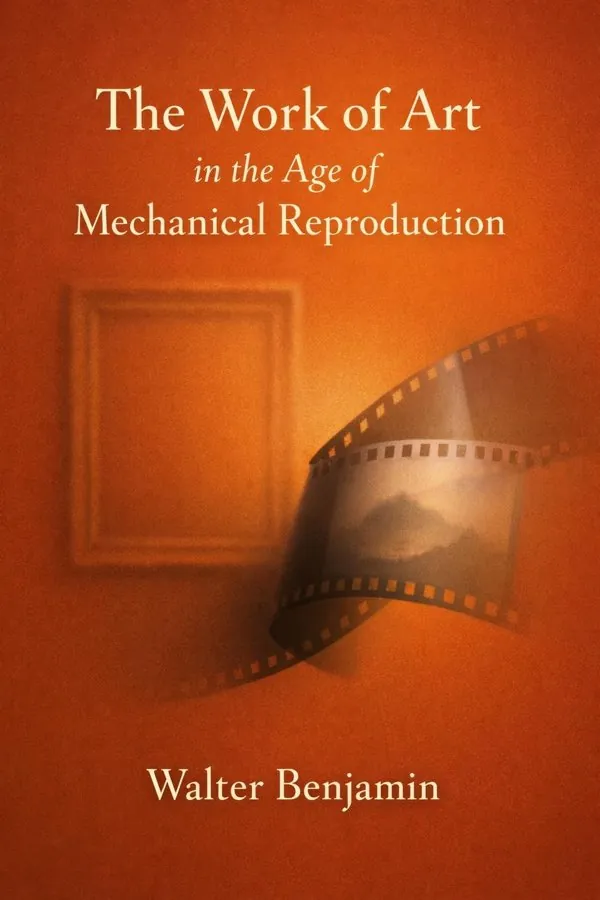
The Work of Art in the Age of Mechanical Reproduction: Summary & Key Insights
 10 min5 chaptersAudio available
What Is The Work of Art in the Age of Mechanical Reproduction About?
The Work of Art in the Age of Mechanical Reproduction by Walter Benjamin is a western_phil book spanning 5 pages. In this influential essay, Walter Benjamin examines how the technological means of reproduction—especially photography and film—transform the perception, status, and social function of art. He argues that the 'aura' of the original artwork diminishes in the age of mechanical reproduction, giving rise to new forms of artistic reception and political use.
This FizzRead summary covers all 5 key chapters of The Work of Art in the Age of Mechanical Reproduction in approximately 10 minutes, distilling the most important ideas, arguments, and takeaways from Walter Benjamin's work. Also available as an audio summary and Key Quotes Podcast.
The Work of Art in the Age of Mechanical Reproduction
In this influential essay, Walter Benjamin examines how the technological means of reproduction—especially photography and film—transform the perception, status, and social function of art. He argues that the 'aura' of the original artwork diminishes in the age of mechanical reproduction, giving rise to new forms of artistic reception and political use.
Who Should Read The Work of Art in the Age of Mechanical Reproduction?
This book is perfect for anyone interested in western_phil and looking to gain actionable insights in a short read. Whether you're a student, professional, or lifelong learner, the key ideas from The Work of Art in the Age of Mechanical Reproduction by Walter Benjamin will help you think differently.
- ✓Readers who enjoy western_phil and want practical takeaways
- ✓Professionals looking to apply new ideas to their work and life
- ✓Anyone who wants the core insights of The Work of Art in the Age of Mechanical Reproduction in just 10 minutes
Want the full summary?
Get instant access to this book summary and 100K+ more with Fizz Moment.
Get Free SummaryAvailable on App Store • Free to download
Key Chapters
The aura of a work of art — its unique presence in a particular time and place — has long been the secret source of its authority. To encounter an original painting by Leonardo or a sculpture in its intended temple is to sense its distance, its unapproachability, the singular trace of its history. This aura is not a purely aesthetic quality; it is embedded in tradition, ritual, and the weight of time. Yet with the emergence of mechanical reproduction, that singularity begins to fade. A photograph of a painting, for instance, allows one to experience the image without ever standing before the canvas itself; and a film, unfolding as a sequence of reproduced frames, dissolves any stable notion of the one and only original.
Mechanical reproduction emancipates the artwork from its parasitic dependence on ritual. This emancipation is double-edged. On the one hand, it liberates art from the cultic realm, allowing it to engage directly with the masses. On the other, it erases the reverence that once made art a privileged bearer of meaning. The aura, which once grounded art’s authenticity in unrepeatable presence, now disintegrates under the pressure of reproducibility. What remains is a dispersed experience — an immediacy of access but also an absence of depth.
Thus, when I speak of the decay of aura, I do not simply lament the loss of the sacred. Rather, I describe a historical condition: the modern human’s adjustment to an age in which perception itself is mediated by technology. This decline reflects not a moral failure but the birth of a new mode of apprehension, one that prepares mankind for forms of engagement unknown to earlier epochs.
Throughout most of history, art existed within ritual. The earliest images in cave walls were not made to be seen by an audience but to serve a magical or religious purpose — their value lay in their place within ceremony. Beauty and devotion were indistinguishable, and the authority of the artwork derived from its submission to the sacred. Even in later periods, whether in Byzantine iconography or Renaissance altarpieces, art’s reception was bound to faith and reverence, not detached contemplation.
But with the modern age, and especially through reproducibility, this function changes. The artwork’s value transitions from ritual value to what I call exhibition value — its worth now lies in being seen, displayed, circulated. A photograph, for example, demands to be shown; its essence is visibility. This shift from ritual to exhibition represents a profound reorientation: art now seeks its justification not in eternity but in reproducible visibility. Its existence depends on being perceived by the public rather than by the divine.
In this transformation, art participates in a larger process — the secularization of experience itself. When artworks become objects for collective inspection, their meaning no longer hinges on hidden mystery but on their capacity to engage, to communicate. This is the historical destiny of art in an age that worships distribution over distance. What the temple once provided, the cinema and the museum now offer: new rituals of mass participation, stripped of myth but alive with a new form of social energy.
+ 3 more chapters — available in the FizzRead app
All Chapters in The Work of Art in the Age of Mechanical Reproduction
About the Author
Walter Benjamin (1892–1940) was a German philosopher, cultural critic, and essayist. He is regarded as one of the most important thinkers of critical theory and aesthetics in the 20th century. His work combines Marxist theory, Jewish mysticism, and literary criticism.
Get This Summary in Your Preferred Format
Read or listen to the The Work of Art in the Age of Mechanical Reproduction summary by Walter Benjamin anytime, anywhere. FizzRead offers multiple formats so you can learn on your terms — all free.
Available formats: App · Audio · PDF · EPUB — All included free with FizzRead
Download The Work of Art in the Age of Mechanical Reproduction PDF and EPUB Summary
Key Quotes from The Work of Art in the Age of Mechanical Reproduction
“The aura of a work of art — its unique presence in a particular time and place — has long been the secret source of its authority.”
“Throughout most of history, art existed within ritual.”
Frequently Asked Questions about The Work of Art in the Age of Mechanical Reproduction
The Work of Art in the Age of Mechanical Reproduction by Walter Benjamin is a western_phil book that explores key ideas across 5 chapters. In this influential essay, Walter Benjamin examines how the technological means of reproduction—especially photography and film—transform the perception, status, and social function of art. He argues that the 'aura' of the original artwork diminishes in the age of mechanical reproduction, giving rise to new forms of artistic reception and political use.
You Might Also Like
A Little History of Philosophy
Nigel Warburton
10 min
Areopagitica
John Milton
10 min
How To Think Like A Philosopher: Essential Principles For Clear Thinking
Peter Cave
10 min
Language, Truth and Logic
A. J. Ayer
10 min
The Age of Reason
Thomas Paine
10 min
The Essays
Michel De Montaigne
10 minBrowse by Category
Ready to read The Work of Art in the Age of Mechanical Reproduction?
Get the full summary and 100K+ more books with Fizz Moment.