
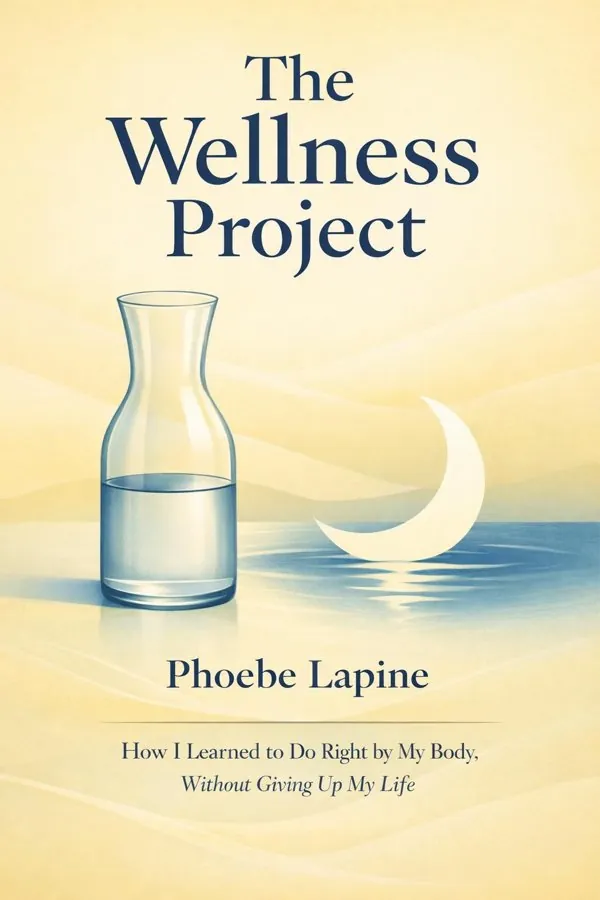
The Wellness Project: How I Learned to Do Right by My Body, Without Giving Up My Life: Summary & Key Insights
 10 min10 chaptersAudio available
Key Takeaways from The Wellness Project: How I Learned to Do Right by My Body, Without Giving Up My Life
Real change rarely begins with a grand transformation; it begins with a framework that is realistic enough to survive ordinary life.
The simplest interventions are often the easiest to dismiss, yet they can produce the fastest and most noticeable improvements.
Many people treat sleep as the negotiable edge of the day, the thing to trim when work runs late, social plans linger, or screens are too stimulating to put down.
Living with Hashimoto’s forced her to think beyond the common assumption that more exercise is always better.
Nutrition becomes far more meaningful when it is framed as information for the body rather than a battle against the body.
What Is The Wellness Project: How I Learned to Do Right by My Body, Without Giving Up My Life About?
The Wellness Project: How I Learned to Do Right by My Body, Without Giving Up My Life by Phoebe Lapine is a wellness book spanning 13 pages. The Wellness Project is part memoir, part year-long experiment, and part practical handbook for anyone who has ever wondered how to feel better without turning life into a full-time health project. After being diagnosed with Hashimoto’s thyroiditis, Phoebe Lapine found herself confronting the limits of hustle, convenience, and surface-level self-care. Rather than chasing a single miracle cure, she spent twelve months testing one area of wellness at a time, from hydration and sleep to gut health, stress, finances, and environmental toxins. What makes the book stand out is its honesty: Lapine is not a wellness guru preaching perfection, but a thoughtful guide trying to reconcile real life with better habits. As a chef, food writer, and woman living with chronic illness, she brings both curiosity and credibility to the process. Her approach is especially valuable in a culture crowded with extreme advice and contradictory health claims. The book matters because it reframes wellness as a sustainable practice of experimentation, self-awareness, and balance rather than a punishing quest for purity.
This FizzRead summary covers all 10 key chapters of The Wellness Project: How I Learned to Do Right by My Body, Without Giving Up My Life in approximately 10 minutes, distilling the most important ideas, arguments, and takeaways from Phoebe Lapine's work. Also available as an audio summary and Key Quotes Podcast.
The Wellness Project: How I Learned to Do Right by My Body, Without Giving Up My Life
The Wellness Project is part memoir, part year-long experiment, and part practical handbook for anyone who has ever wondered how to feel better without turning life into a full-time health project. After being diagnosed with Hashimoto’s thyroiditis, Phoebe Lapine found herself confronting the limits of hustle, convenience, and surface-level self-care. Rather than chasing a single miracle cure, she spent twelve months testing one area of wellness at a time, from hydration and sleep to gut health, stress, finances, and environmental toxins. What makes the book stand out is its honesty: Lapine is not a wellness guru preaching perfection, but a thoughtful guide trying to reconcile real life with better habits. As a chef, food writer, and woman living with chronic illness, she brings both curiosity and credibility to the process. Her approach is especially valuable in a culture crowded with extreme advice and contradictory health claims. The book matters because it reframes wellness as a sustainable practice of experimentation, self-awareness, and balance rather than a punishing quest for purity.
Who Should Read The Wellness Project: How I Learned to Do Right by My Body, Without Giving Up My Life?
This book is perfect for anyone interested in wellness and looking to gain actionable insights in a short read. Whether you're a student, professional, or lifelong learner, the key ideas from The Wellness Project: How I Learned to Do Right by My Body, Without Giving Up My Life by Phoebe Lapine will help you think differently.
- ✓Readers who enjoy wellness and want practical takeaways
- ✓Professionals looking to apply new ideas to their work and life
- ✓Anyone who wants the core insights of The Wellness Project: How I Learned to Do Right by My Body, Without Giving Up My Life in just 10 minutes
Want the full summary?
Get instant access to this book summary and 100K+ more with Fizz Moment.
Get Free SummaryAvailable on App Store • Free to download
Key Chapters
Real change rarely begins with a grand transformation; it begins with a framework that is realistic enough to survive ordinary life. One of Phoebe Lapine’s smartest moves was not choosing a dramatic cleanse or total lifestyle overhaul, but designing a year-long wellness experiment with clear boundaries. Each month focused on one theme, giving her enough time to explore a habit deeply without becoming overwhelmed by trying to fix everything at once. This structure mattered because chronic health issues can make you feel powerless, and too many wellness plans fail precisely because they demand perfection from the start.
Lapine’s monthly format also turns wellness into an act of observation rather than self-punishment. Instead of asking, "Can I become an entirely different person?" she asks, "What happens if I give sustained attention to one area of my life?" That shift is powerful. It allows progress to be measured through energy, mood, digestion, or consistency, not just through dramatic before-and-after results. It also leaves room for experimentation. If one habit does not help, that is information, not failure.
This approach is useful beyond chronic illness. Anyone trying to improve health can borrow the method: choose one theme for 30 days, define a few simple actions, and track what changes. A hydration month might mean carrying a water bottle and noticing headaches. A sleep month might mean setting a regular bedtime and cutting screens after 10 p.m. The point is to create enough focus to learn something meaningful.
Actionable takeaway: Build your own wellness calendar and give each month a single focus, with two or three manageable habits and one question you want that month to answer.
The simplest interventions are often the easiest to dismiss, yet they can produce the fastest and most noticeable improvements. Lapine begins her project with hydration, a choice that may seem almost too basic compared with trendier wellness fixes. But that is exactly the point. Water affects digestion, skin, energy, appetite, and even mental clarity, and many people move through their days mildly dehydrated without realizing how much it influences their physical state.
By treating hydration as a genuine wellness practice instead of an afterthought, Lapine discovers that small, foundational changes can create momentum. Drinking more water is not glamorous. It does not come with a dramatic identity or expensive equipment. Still, because it is repeatable and low-friction, it offers an immediate win. In behavior change, these wins matter. They create confidence and reinforce the idea that the body responds when cared for consistently.
The broader lesson is that wellness does not need to start with heroic discipline. It can begin with the habits that support basic biological function. Hydration is also a useful model because it can be personalized. Some people benefit from keeping a reusable bottle nearby, others from pairing water with routines like waking up, commuting, or meals. For someone who dislikes plain water, herbal tea, fruit-infused water, or high-water foods can help.
Lapine’s first month highlights a theme that runs through the book: when you stop chasing complexity, you can start noticing cause and effect. More water may not solve every health issue, but it can sharpen your awareness of what your body needs and set the tone for deeper change.
Actionable takeaway: For one week, anchor hydration to existing routines by drinking water upon waking, before each meal, and in the afternoon slump, then note any shifts in focus, hunger, or energy.
Many people treat sleep as the negotiable edge of the day, the thing to trim when work runs late, social plans linger, or screens are too stimulating to put down. Lapine’s sleep month challenges that mindset by showing that rest is not a luxury reward for productivity; it is one of the core systems that makes productivity, emotional regulation, and healing possible in the first place. For someone managing autoimmune symptoms, sleep becomes even more central because poor rest can intensify inflammation, anxiety, and fatigue.
What makes this chapter meaningful is that Lapine does not present sleep as a moral issue. She presents it as an environment and behavior issue. Better sleep often requires deliberate design: cooler bedrooms, more predictable schedules, dimmer lights, reduced caffeine late in the day, and routines that cue the body toward shutdown instead of stimulation. This is important because people often blame themselves for poor sleep while maintaining habits that practically guarantee it.
Lapine’s exploration points to a larger truth: rest is cumulative. One good night can help, but the real benefits come from consistency. The same is true of sleep debt. A pattern of pushing through exhaustion with coffee and adrenaline may feel normal until the body finally refuses to cooperate. Sleep, then, is not merely the absence of wakefulness; it is active maintenance for mood, immune function, memory, and decision-making.
Readers can apply this by treating bedtime with the same seriousness they give morning routines. A simple wind-down ritual, fewer late-night digital inputs, and awareness of what disrupts rest can produce major gains over time. Lapine’s message is not to become rigid but to stop sacrificing tomorrow’s well-being to tonight’s convenience.
Actionable takeaway: Create a 30-minute pre-sleep routine this week that includes no screens, lower lighting, and one calming cue such as reading, stretching, or herbal tea.
Exercise advice often comes wrapped in intensity, guilt, and transformation narratives, but Lapine’s experience suggests a more useful question: does your movement routine make your body more resilient, or simply more exhausted? Living with Hashimoto’s forced her to think beyond the common assumption that more exercise is always better. When energy is limited, movement has to be chosen with respect for recovery, hormones, and stress load, not just calorie burn.
This reframing matters because many people approach fitness from punishment or compensation. They work out to undo what they ate, to match an ideal image, or to prove discipline. Lapine’s project invites a different relationship to movement: one based on function, mood, circulation, strength, and long-term vitality. That means listening more carefully to what different kinds of exercise actually do. A hard workout may energize one person and flatten another. Gentle yoga, walking, strength training, or short bursts of activity may be more sustainable than punishing routines that cannot be maintained.
Her approach is especially helpful for people whose bodies do not fit conventional fitness messaging, including those with chronic illness, fatigue, or fluctuating symptoms. The right movement practice is not the one that looks most impressive; it is the one that you can return to consistently and that leaves you better, not worse, afterward. This perspective also removes some of the all-or-nothing thinking that derails healthy habits. Ten minutes of stretching or a brisk walk still counts.
In practical terms, readers can start tracking how different workouts affect sleep, hunger, mood, and energy the following day. That information is often more useful than calories or step counts alone. Lapine’s lesson is that exercise should be integrated into life as nourishment, not as punishment.
Actionable takeaway: Choose one form of movement this week that feels sustainable and restorative, and judge its success by how your body feels afterward and the next day.
Nutrition becomes far more meaningful when it is framed as information for the body rather than a battle against the body. In her exploration of food quality, Lapine moves beyond diet culture’s obsession with restriction and thinness to ask a more grounded question: what kinds of foods help me feel stable, nourished, and less inflamed? As a chef and food writer, she brings a practical sensibility to this topic. She is not interested in joyless eating or rigid purity. She wants food that supports health while still leaving room for pleasure and normal life.
That distinction is crucial. Many wellness conversations reduce eating to a list of forbidden ingredients, but Lapine’s project emphasizes upgrading what you eat before obsessing over elimination. Better food quality can mean more whole ingredients, better fats, more fiber, more colorful produce, and more meals prepared with intention. It can also mean paying attention to how food affects symptoms like bloating, fatigue, mental fog, and mood. For people with autoimmune concerns, those patterns can be especially revealing.
Lapine’s perspective is refreshingly balanced because it honors both physiology and enjoyment. A sustainable diet is not one that wins for two weeks and collapses by the third; it is one that fits your kitchen, budget, social life, and taste. Readers can apply this by auditing breakfast, lunch, or dinner and improving one meal at a time. For example, adding protein and healthy fat to breakfast may improve satiety and focus. Replacing ultra-processed snacks with more nourishing options may reduce energy crashes.
The larger message is that food quality shapes how you live, not just how you look. Better eating can improve steadiness, resilience, and self-trust. That is a more durable goal than chasing external standards.
Actionable takeaway: Pick one daily meal and upgrade its quality for the next seven days by adding more whole foods, protein, fiber, or vegetables, then observe how it affects hunger and energy.
The substances we use to get through the day often reveal what the day is doing to us. Lapine’s month focused on sugar and caffeine exposes a common modern pattern: relying on quick inputs to compensate for deeper deficits in sleep, blood sugar balance, stress regulation, or emotional depletion. Coffee can sharpen focus and sugar can provide comfort or speed, but when they become automatic coping mechanisms, they can hide the fact that the body is under strain.
Lapine does not demonize either caffeine or sweetness. Instead, she examines how dependency develops and what it costs. Too much caffeine can heighten anxiety, disrupt sleep, and create a cycle where exhaustion leads to stimulation, which leads to worse rest, which requires even more stimulation. Excess sugar can trigger spikes and crashes that destabilize appetite, mood, and energy. The issue is not moral weakness but feedback loops.
This chapter matters because many people do not notice the subtle way these substances shape their baseline. If your normal state includes afternoon crashes, jitteriness, cravings, or waking up tired, your system may be running on compensation. By reducing sugar and caffeine, even temporarily, you can see your true energy patterns more clearly. That awareness can lead to better solutions, such as balanced meals, more sleep, a gentler morning routine, or stress management practices.
A practical way to apply this is not necessarily full elimination, but mindful reduction. Delay your first coffee, pair caffeine with food, notice why you reach for sweets, or substitute one daily sugary habit with a more stabilizing option. Lapine’s insight is that habits often become easier to change once you understand what need they are serving.
Actionable takeaway: Track your caffeine and sugar use for three days, including the emotion or situation that triggered each craving, then test one small reduction that addresses the underlying need.
You can eat perfectly, sleep strategically, and follow every supplement trend, but if stress remains chronically high, it will leak into every other system. Lapine’s exploration of stress management recognizes something many wellness plans ignore: stress is not just a feeling in the mind, but a full-body condition that affects digestion, immunity, skin, hormones, and decision-making. For someone living with autoimmune disease, unmanaged stress can become both a trigger and an amplifier.
What makes Lapine’s approach compelling is that she treats stress reduction as a practical skill, not a vague aspiration. The solution is not to eliminate all pressure, which is impossible, but to build recovery into daily life. That may include meditation, therapy, boundaries, walks, breathing exercises, saying no more often, or simply creating moments of pause before the nervous system reaches overload. The real challenge is consistency. Many people wait until they are already overwhelmed before trying to relax, but stress management works best as a preventive practice.
This chapter also broadens the definition of stress. It includes overscheduling, digital overload, emotional labor, poor boundaries, and even financial uncertainty. In other words, wellness cannot be reduced to green juice if your life structure is constantly dysregulating you. Readers can apply this by identifying their top stressors and sorting them into three categories: what can be reduced, what can be buffered, and what must be accepted but processed differently.
Lapine’s deeper message is that self-care is not only about adding restorative rituals. It is also about removing unnecessary sources of strain. A body under constant threat mode cannot fully heal.
Actionable takeaway: Choose one daily stress reset you can repeat for five minutes or less, such as box breathing, a short walk, or a phone-free break, and use it at the same time each day.
Wellness becomes more nuanced when you realize that health is influenced not only by what you consciously choose, but also by the environments you inhabit. In the later months of her project, Lapine explores gut health, skin and beauty, and environmental toxins, drawing attention to less obvious but deeply influential factors. The gut, for example, is not merely a digestive tube; it is connected to immunity, inflammation, mood, and nutrient absorption. Skin is not just cosmetic but often reflective of internal balance and external exposures. And the home itself can quietly shape wellness through products, plastics, air quality, and daily chemical load.
Lapine’s treatment of these topics is grounded rather than alarmist. She does not suggest that readers must purify every corner of life overnight. Instead, she models thoughtful curiosity. Which foods support digestion and which trigger discomfort? Which beauty or cleaning products are worth swapping out? Which environmental changes are high-impact and financially realistic? This measured approach matters because wellness information can easily produce fear or obsessive control. Lapine keeps the focus on practical priorities.
The larger lesson is cumulative effect. No single toxin-free lotion or probiotic-rich meal is likely to transform your health overnight. But repeated choices can reduce burden and improve resilience over time. A reader might begin by eating more fiber and fermented foods, replacing one heavily fragranced product, ventilating living spaces better, or paying closer attention to how everyday products affect skin and breathing.
By connecting internal and external health, Lapine reminds us that taking care of the body means looking at the whole ecosystem in which it lives. Wellness is both personal and environmental.
Actionable takeaway: Make one supportive gut-health change and one low-tox swap this week, such as increasing fiber at lunch and replacing a frequently used household or beauty product with a simpler version.
One of the book’s most valuable insights is that wellness is not confined to the body’s mechanics. Social life and financial health have direct physiological consequences because they shape stress levels, emotional security, and the capacity to make nourishing choices. Lapine’s decision to devote months to social wellness and financial health expands the conversation beyond food and fitness and acknowledges that many people feel unwell not just because of what they eat, but because of how they live.
Supportive relationships can lower stress, improve resilience, and make healthy habits easier to maintain. Isolation, conflict, or constant social comparison can do the opposite. Likewise, money concerns can undermine sleep, increase anxiety, and limit access to time-saving or health-supportive resources. In this way, wellness is not just a private discipline; it is influenced by social and economic conditions.
Lapine’s strength is that she neither romanticizes friendship nor treats finances as purely technical. She sees both as forms of self-respect. Choosing relationships that nourish rather than drain you is a wellness practice. Creating a budget, reducing financial chaos, or aligning spending with values is also a wellness practice. These may not be the most marketable parts of the self-care industry, but they are often among the most consequential.
Readers can apply this by noticing where their energy leaks. Do certain interactions leave you depleted? Does financial avoidance create a constant hum of background stress? Simple interventions, such as scheduling more time with grounding people, reducing overcommitment, reviewing subscriptions, or setting one money goal, can produce surprising relief.
Lapine’s broader message is that well-being depends on the conditions that surround your body as much as on the habits performed directly on it.
Actionable takeaway: Identify one draining relationship pattern and one financial stress point, then take one concrete step on each this week, such as setting a boundary or reviewing recurring expenses.
The final challenge of any self-improvement project is not discovering what works, but deciding what to keep. Lapine’s integration month delivers the book’s core wisdom: wellness is not a collection of perfect habits performed in isolation, but a personalized system built from what genuinely improves your life. After twelve months of focused experiments, the goal is no longer novelty or optimization for its own sake. It is integration, which requires honesty about what is sustainable.
This is an essential antidote to the wellness industry’s tendency to turn health into an endless to-do list. There will always be another protocol, another test, another supplement, another rule. But if a practice makes life smaller, more anxious, or impossible to maintain, its value is questionable. Lapine’s title captures the point beautifully: doing right by your body should not require giving up your life. The healthiest routine is one that supports joy, flexibility, and participation in the world.
Integration also means accepting imperfection. Not every month leads to a breakthrough, and not every experiment belongs in the long term. Some habits may be seasonally useful. Others may work only during periods of stress or illness. The point is to build a toolkit rather than a rigid identity. Readers can benefit from conducting their own review: which practices improved energy, mood, digestion, sleep, or peace of mind enough to merit a permanent place?
Lapine ends up with a model of wellness rooted in self-knowledge rather than dogma. This is what makes the book durable. It does not ask readers to imitate her exactly. It asks them to become careful students of their own bodies and lives.
Actionable takeaway: Make a personal "keep, modify, let go" list of your current wellness habits and commit only to the ones that are both beneficial and realistically sustainable.
All Chapters in The Wellness Project: How I Learned to Do Right by My Body, Without Giving Up My Life
About the Author
Phoebe Lapine is a New York City-based food and health writer, home cook, and wellness advocate whose work sits at the intersection of delicious eating and practical self-care. She is the creator of the popular blog Feed Me Phoebe, where she shares recipes and insights about digestive health, autoimmune disease, and balanced living. After being diagnosed with Hashimoto’s thyroiditis, Lapine began exploring how food and lifestyle choices could help her manage symptoms without taking over her life. That personal journey became a defining influence on her writing. Known for her clear voice, humor, and grounded approach, she has built a reputation as a relatable guide for readers seeking better health without extreme rules. Her work emphasizes nourishment, experimentation, and sustainability over perfection.
Get This Summary in Your Preferred Format
Read or listen to the The Wellness Project: How I Learned to Do Right by My Body, Without Giving Up My Life summary by Phoebe Lapine anytime, anywhere. FizzRead offers multiple formats so you can learn on your terms — all free.
Available formats: App · Audio · PDF · EPUB — All included free with FizzRead
Download The Wellness Project: How I Learned to Do Right by My Body, Without Giving Up My Life PDF and EPUB Summary
Key Quotes from The Wellness Project: How I Learned to Do Right by My Body, Without Giving Up My Life
“Real change rarely begins with a grand transformation; it begins with a framework that is realistic enough to survive ordinary life.”
“The simplest interventions are often the easiest to dismiss, yet they can produce the fastest and most noticeable improvements.”
“Many people treat sleep as the negotiable edge of the day, the thing to trim when work runs late, social plans linger, or screens are too stimulating to put down.”
“Living with Hashimoto’s forced her to think beyond the common assumption that more exercise is always better.”
“Nutrition becomes far more meaningful when it is framed as information for the body rather than a battle against the body.”
Frequently Asked Questions about The Wellness Project: How I Learned to Do Right by My Body, Without Giving Up My Life
The Wellness Project: How I Learned to Do Right by My Body, Without Giving Up My Life by Phoebe Lapine is a wellness book that explores key ideas across 10 chapters. The Wellness Project is part memoir, part year-long experiment, and part practical handbook for anyone who has ever wondered how to feel better without turning life into a full-time health project. After being diagnosed with Hashimoto’s thyroiditis, Phoebe Lapine found herself confronting the limits of hustle, convenience, and surface-level self-care. Rather than chasing a single miracle cure, she spent twelve months testing one area of wellness at a time, from hydration and sleep to gut health, stress, finances, and environmental toxins. What makes the book stand out is its honesty: Lapine is not a wellness guru preaching perfection, but a thoughtful guide trying to reconcile real life with better habits. As a chef, food writer, and woman living with chronic illness, she brings both curiosity and credibility to the process. Her approach is especially valuable in a culture crowded with extreme advice and contradictory health claims. The book matters because it reframes wellness as a sustainable practice of experimentation, self-awareness, and balance rather than a punishing quest for purity.
You Might Also Like

How We Heal: Uncover Your Power and Set Yourself Free
Alexandra Elle
10 min
A Year of Self-Care: Daily Practices and Inspiration for Caring for Yourself
Zoe Shaw
10 min
Biohacker’s Handbook: Upgrade Your Life
Olli Sovijärvi, Teemu Arina, Jaakko Halmetoja
10 min
Bliss More: How to Succeed in Meditation Without Really Trying
Light Watkins
10 min
Body Kindness: Transform Your Health from the Inside Out—and Never Say Diet Again
Rebecca Scritchfield
10 min
Cook, Eat, Run: Cook Fast, Boost Performance with 75 Ultimate Recipes for Runners
Charlie Watson
10 minBrowse by Category
Ready to read The Wellness Project: How I Learned to Do Right by My Body, Without Giving Up My Life?
Get the full summary and 100K+ more books with Fizz Moment.