
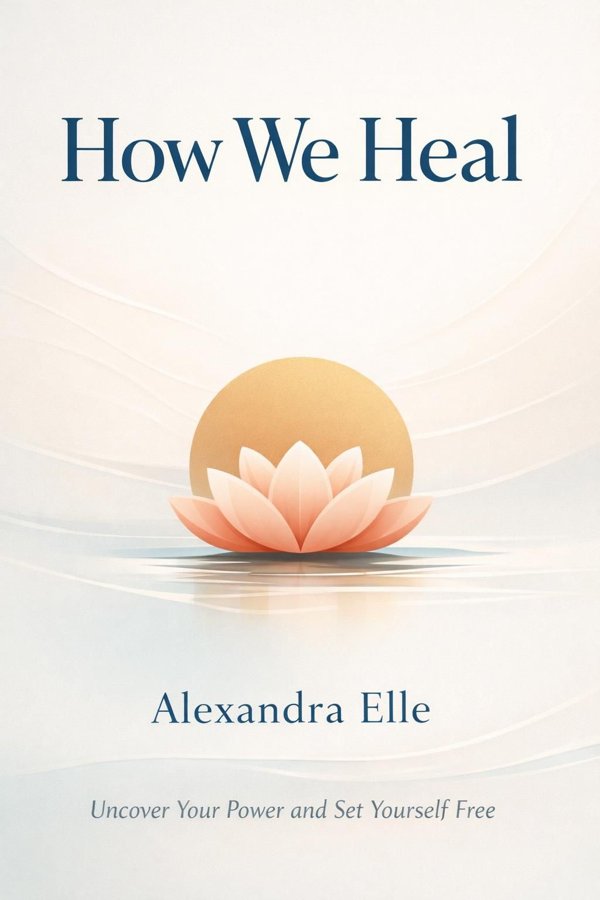
How We Heal: Uncover Your Power and Set Yourself Free: Summary & Key Insights
 10 min8 chaptersAudio available
Key Takeaways from How We Heal: Uncover Your Power and Set Yourself Free
One of the hardest truths about healing is that nothing changes until you are willing to see yourself clearly.
Many people carry pain as if it were evidence of failure, but Alexandra Elle argues that suffering should be met with compassion rather than judgment.
Healing cannot thrive in environments that constantly drain, disrespect, or destabilize you.
Transformation is often imagined as a dramatic breakthrough, but Alexandra Elle reminds readers that healing is usually shaped by repetition.
What once protected you can later become what confines you.
What Is How We Heal: Uncover Your Power and Set Yourself Free About?
How We Heal: Uncover Your Power and Set Yourself Free by Alexandra Elle is a wellness book. Healing rarely happens in a straight line, and Alexandra Elle’s How We Heal: Uncover Your Power and Set Yourself Free is a compassionate guide for anyone learning to live with greater honesty, softness, and self-trust. Blending personal reflection, emotional insight, and practical encouragement, the book explores what it really means to heal from pain, reconnect with yourself, and build a life rooted in intention rather than survival mode. Elle does not present healing as a quick fix or a polished transformation. Instead, she frames it as an ongoing practice of listening inward, honoring your story, and making gentle choices that support growth. The book matters because so many people are carrying grief, burnout, shame, and emotional wounds while still trying to function as if nothing is wrong. Elle gives language to that experience and offers a path forward that is accessible, humane, and empowering. As a bestselling author, wellness advocate, and respected voice in self-care and personal growth, Alexandra Elle brings both lived experience and deep emotional clarity to the topic. Her message is simple but powerful: healing begins when you believe you are worthy of care, truth, and freedom.
This FizzRead summary covers all 8 key chapters of How We Heal: Uncover Your Power and Set Yourself Free in approximately 10 minutes, distilling the most important ideas, arguments, and takeaways from Alexandra Elle's work. Also available as an audio summary and Key Quotes Podcast.
How We Heal: Uncover Your Power and Set Yourself Free
Healing rarely happens in a straight line, and Alexandra Elle’s How We Heal: Uncover Your Power and Set Yourself Free is a compassionate guide for anyone learning to live with greater honesty, softness, and self-trust. Blending personal reflection, emotional insight, and practical encouragement, the book explores what it really means to heal from pain, reconnect with yourself, and build a life rooted in intention rather than survival mode. Elle does not present healing as a quick fix or a polished transformation. Instead, she frames it as an ongoing practice of listening inward, honoring your story, and making gentle choices that support growth.
The book matters because so many people are carrying grief, burnout, shame, and emotional wounds while still trying to function as if nothing is wrong. Elle gives language to that experience and offers a path forward that is accessible, humane, and empowering. As a bestselling author, wellness advocate, and respected voice in self-care and personal growth, Alexandra Elle brings both lived experience and deep emotional clarity to the topic. Her message is simple but powerful: healing begins when you believe you are worthy of care, truth, and freedom.
Who Should Read How We Heal: Uncover Your Power and Set Yourself Free?
This book is perfect for anyone interested in wellness and looking to gain actionable insights in a short read. Whether you're a student, professional, or lifelong learner, the key ideas from How We Heal: Uncover Your Power and Set Yourself Free by Alexandra Elle will help you think differently.
- ✓Readers who enjoy wellness and want practical takeaways
- ✓Professionals looking to apply new ideas to their work and life
- ✓Anyone who wants the core insights of How We Heal: Uncover Your Power and Set Yourself Free in just 10 minutes
Want the full summary?
Get instant access to this book summary and 100K+ more with Fizz Moment.
Get Free SummaryAvailable on App Store • Free to download
Key Chapters
One of the hardest truths about healing is that nothing changes until you are willing to see yourself clearly. Alexandra Elle emphasizes that healing does not begin with perfection, productivity, or even confidence. It begins with honesty. That means noticing your pain without minimizing it, recognizing the habits that protect you but also limit you, and admitting where you are emotionally instead of pretending to be fine.
This kind of self-recognition is powerful because many people spend years disconnected from their own needs. They become experts at performing wellness while privately feeling exhausted, resentful, anxious, or numb. Elle invites readers to stop treating self-awareness as self-criticism. Looking inward is not about finding what is wrong with you. It is about understanding what happened to you, what you learned from it, and what you now need in order to live differently.
In practice, this can look like journaling about recurring emotional triggers, naming the beliefs you inherited from family or culture, or asking yourself simple but revealing questions: What am I carrying that no longer belongs to me? Where am I abandoning myself to keep others comfortable? What emotions do I avoid because they feel unsafe? These reflections help uncover the patterns beneath everyday stress.
Elle’s point is that healing becomes possible when you stop running from your inner experience. Awareness creates choice. Once you can name your wounds, you can begin responding to them with care instead of shame. Actionable takeaway: set aside ten quiet minutes each day to ask yourself, without judgment, “What am I truly feeling right now, and what might this feeling be trying to tell me?”
Many people carry pain as if it were evidence of failure, but Alexandra Elle argues that suffering should be met with compassion rather than judgment. A core message of the book is that healing deepens when you stop seeing your struggles as proof that you are broken. Emotional wounds, trauma responses, and difficult seasons are part of the human experience. They are not moral flaws.
Shame often keeps people stuck. It convinces them that they should be over it by now, that their needs are too much, or that asking for help makes them weak. Elle gently challenges this inner narrative by reminding readers that self-compassion is not indulgence. It is a necessary condition for healing. When you meet your pain with kindness, you create emotional safety. And safety is what allows change to happen.
In everyday life, compassion might mean speaking to yourself with the same patience you would offer a loved one. Instead of saying, “Why am I like this?” you might ask, “What happened that made this response necessary?” Instead of shaming yourself for being tired, you might see exhaustion as information that your body and spirit need restoration. Compassion can also involve practical support: rest, therapy, boundaries, nourishing routines, or saying no without apology.
Elle encourages readers to build a relationship with themselves that is rooted in tenderness. This does not erase accountability; it strengthens it. When you feel emotionally held rather than attacked, you are more capable of making honest changes. Actionable takeaway: when a painful emotion arises, pause and replace self-blame with one compassionate sentence, such as, “I am having a hard moment, and I deserve gentleness while I move through it.”
Healing cannot thrive in environments that constantly drain, disrespect, or destabilize you. Alexandra Elle presents boundaries as a vital part of emotional freedom, not as selfish walls but as clear expressions of self-respect. If healing is about returning to yourself, then boundaries are one of the ways you stay there.
Many people struggle with boundaries because they have been taught to prioritize being liked over being well. They overextend, overexplain, and ignore their limits in order to avoid conflict. But Elle shows that every time you abandon your needs to preserve someone else’s comfort, you reinforce the belief that your peace is negotiable. Boundaries interrupt that pattern.
A healthy boundary can be external or internal. External boundaries include limiting access to people who consistently disrespect you, protecting your time, declining obligations that lead to burnout, or refusing emotionally manipulative conversations. Internal boundaries involve paying attention to your own signals and not pushing past them simply because you feel guilty. For example, if social interaction leaves you depleted, honoring your need for solitude is a boundary. If a family dynamic repeatedly reopens old wounds, deciding how and when you engage is a boundary too.
Elle does not frame boundaries as punishments. They are tools for creating relationships that can hold honesty and care. Some people may resist your limits because they benefited from your lack of them. That discomfort does not mean the boundary is wrong. It often means it is necessary.
Actionable takeaway: identify one area where you feel consistently depleted and write a simple boundary statement for it, such as, “I am no longer available for last-minute demands that disrupt my rest,” then practice honoring it once this week.
Transformation is often imagined as a dramatic breakthrough, but Alexandra Elle reminds readers that healing is usually shaped by repetition. Small, consistent acts of care matter more than occasional bursts of motivation. The life you build is influenced less by what you do once in crisis and more by what you return to every day.
This perspective is especially important for people who feel overwhelmed by the idea of healing. If growth is measured only by huge milestones, it can feel unreachable. Elle offers a gentler and more sustainable framework: healing is a practice. It lives in daily choices that help you reconnect with your body, your values, and your inner voice. A few minutes of journaling, a morning check-in, a walk without your phone, a nourishing meal, a bedtime ritual, or a single deep breath before reacting can all become anchors.
These practices work because they communicate reliability to yourself. They say, “I will show up for my well-being, even in small ways.” Over time, that consistency can rebuild trust, especially for people who have long ignored their needs. Daily practices also make healing tangible. Instead of waiting to feel transformed, you participate in your own restoration one action at a time.
Elle’s approach reduces pressure while increasing agency. You do not need to have all the answers or redesign your whole life overnight. You need rhythms that support steadiness. Even on difficult days, one intentional act can be enough to keep you connected to your path.
Actionable takeaway: choose one healing ritual that takes less than five minutes, such as a morning affirmation or evening journal reflection, and commit to doing it every day for the next seven days.
What once protected you can later become what confines you. Alexandra Elle explores how many of the behaviors people rely on, such as people-pleasing, emotional shutdown, hyper-independence, perfectionism, or constant busyness, begin as survival strategies. They helped you navigate pain, uncertainty, or instability. But healing asks a difficult question: are these patterns still protecting you, or are they preventing you from fully living?
This is a compassionate way to approach change because it honors the intelligence of your past self. You do not need to hate the coping mechanisms that carried you through hard times. You simply need to notice when they no longer serve your growth. Hyper-independence may have helped you survive disappointment, but it may now block intimacy. Perfectionism may have earned praise, but it may now keep you anxious and exhausted. Emotional avoidance may have once felt necessary, but it may now keep you disconnected from joy as well as pain.
Elle encourages readers to view release as an act of liberation rather than betrayal. Letting go of old patterns does not erase your history. It updates your relationship to it. This process often involves discomfort because familiar coping can feel safer than the unknown. Yet freedom requires learning new responses, new beliefs, and new forms of trust.
A practical way to begin is to identify one recurring behavior and ask what need it is trying to meet. Then consider healthier ways to meet that same need. If people-pleasing seeks safety, perhaps honest communication and boundaries can offer real safety instead.
Actionable takeaway: choose one survival pattern you recognize in yourself and write down both how it once helped you and how it now limits you; use that insight to define one healthier replacement behavior.
In a culture that rewards constant output, rest can feel uncomfortable, even threatening. Alexandra Elle challenges this mindset by presenting rest not as laziness or escape, but as a critical component of healing. When you rest, you send yourself a powerful message: my worth is not dependent on how much I produce, prove, or endure.
For many people, the inability to rest is tied to deep conditioning. Productivity may have become a source of identity, validation, or control. Slowing down can then stir anxiety because it brings unresolved feelings to the surface. Elle understands this and treats rest as both practical and emotional work. It is not only about sleep or time off. It is about allowing your nervous system, body, and mind to experience relief.
Rest can take different forms. Physical rest might mean more sleep, a slower schedule, or intentional stillness. Mental rest could include taking breaks from information overload, social media, or multitasking. Emotional rest may require distancing yourself from draining relationships or giving yourself permission not to fix everything for everyone. Spiritual rest might mean silence, prayer, meditation, or time in nature.
The deeper insight is that rest teaches trust. It asks you to believe that your humanity is enough, even when you are not performing. It creates space for clarity, softness, and self-connection. From that place, better decisions become possible. You stop reacting from depletion and start responding from groundedness.
Actionable takeaway: schedule one non-negotiable period of rest this week, even if it is only thirty minutes, and protect it as seriously as you would any important appointment.
Healing is personal, but it is not meant to happen in complete isolation. Alexandra Elle highlights the importance of support while also making clear that no friend, partner, or mentor can do your healing for you. Community can reflect your worth, offer accountability, and remind you that you are not alone. But the decision to face yourself, tell the truth, and practice change must come from within.
This balance matters because people often swing between two extremes. Some try to heal entirely alone, believing independence is strength. Others look to relationships to rescue them from pain. Elle proposes a more grounded path: let others support your healing without making them responsible for it. This preserves both connection and agency.
Healthy support can take many forms. It may be a therapist who helps you untangle patterns, a trusted friend who listens without fixing, a support group that normalizes your experience, or a loved one who respects your boundaries. The quality of support matters. Safe relationships do not rush your process, weaponize your vulnerability, or demand emotional labor you cannot give. They make room for honesty.
At the same time, inner work is irreplaceable. No amount of encouragement can substitute for your willingness to reflect, practice, apologize, rest, or change. Community can hold a mirror, but you still have to look. It can offer a hand, but you still have to walk.
Elle’s message is encouraging rather than isolating: you are allowed to need people, and you are capable of doing the work. Actionable takeaway: identify one person or resource that feels emotionally safe and reach out for specific support, while also naming one part of your healing that only you can commit to doing.
Perhaps the most liberating idea in Alexandra Elle’s book is that healing is not a final destination you either reach or fail to reach. It is a lifelong return to yourself. This reframing removes the pressure to become permanently fixed, calm, or untriggered. Instead, it invites you to build a relationship with yourself that can hold change, setbacks, growth, and renewal.
Many people become discouraged when old feelings resurface. They assume that if pain returns, they have failed. Elle offers a wiser interpretation: revisiting old wounds does not mean you are back at the beginning. It often means you are meeting familiar pain with new awareness, more tools, and deeper compassion. Healing is circular in that way. The same themes may reappear, but you are not the same person meeting them.
This perspective encourages patience. It reminds readers that there will be seasons of clarity and seasons of confusion, moments of strength and moments of grief. All of them can belong to a healing life. The goal is not to avoid every hard emotion. The goal is to cultivate enough self-trust that you can move through difficulty without losing yourself.
Practically, this means building habits of return: pausing when overwhelmed, reconnecting with your body, revisiting your values, asking for support, and forgiving yourself when progress feels slow. A healing life is not one without pain. It is one in which pain no longer gets the final word.
Actionable takeaway: create a personal “return to self” list of three practices, such as breathing, journaling, and stepping outside, that you can use whenever life feels emotionally unsteady.
All Chapters in How We Heal: Uncover Your Power and Set Yourself Free
About the Author
Alexandra Elle is a bestselling author, wellness advocate, and influential voice in the self-care and healing space. She is known for writing that blends vulnerability, reflection, and practical encouragement, helping readers navigate emotional growth with compassion rather than pressure. Across her books, journals, and public work, Elle explores themes such as self-trust, rest, boundaries, mindfulness, and recovery from pain. Her approach resonates with readers because it is both deeply personal and widely relatable, offering guidance that feels gentle yet empowering. Through her writing and teaching, she has built a loyal audience seeking more intentional, grounded ways of living. How We Heal reflects her signature style: honest, nurturing, and focused on helping people reconnect with their worth and inner strength.
Get This Summary in Your Preferred Format
Read or listen to the How We Heal: Uncover Your Power and Set Yourself Free summary by Alexandra Elle anytime, anywhere. FizzRead offers multiple formats so you can learn on your terms — all free.
Available formats: App · Audio · PDF · EPUB — All included free with FizzRead
Download How We Heal: Uncover Your Power and Set Yourself Free PDF and EPUB Summary
Key Quotes from How We Heal: Uncover Your Power and Set Yourself Free
“One of the hardest truths about healing is that nothing changes until you are willing to see yourself clearly.”
“Many people carry pain as if it were evidence of failure, but Alexandra Elle argues that suffering should be met with compassion rather than judgment.”
“Healing cannot thrive in environments that constantly drain, disrespect, or destabilize you.”
“Transformation is often imagined as a dramatic breakthrough, but Alexandra Elle reminds readers that healing is usually shaped by repetition.”
“What once protected you can later become what confines you.”
Frequently Asked Questions about How We Heal: Uncover Your Power and Set Yourself Free
How We Heal: Uncover Your Power and Set Yourself Free by Alexandra Elle is a wellness book that explores key ideas across 8 chapters. Healing rarely happens in a straight line, and Alexandra Elle’s How We Heal: Uncover Your Power and Set Yourself Free is a compassionate guide for anyone learning to live with greater honesty, softness, and self-trust. Blending personal reflection, emotional insight, and practical encouragement, the book explores what it really means to heal from pain, reconnect with yourself, and build a life rooted in intention rather than survival mode. Elle does not present healing as a quick fix or a polished transformation. Instead, she frames it as an ongoing practice of listening inward, honoring your story, and making gentle choices that support growth. The book matters because so many people are carrying grief, burnout, shame, and emotional wounds while still trying to function as if nothing is wrong. Elle gives language to that experience and offers a path forward that is accessible, humane, and empowering. As a bestselling author, wellness advocate, and respected voice in self-care and personal growth, Alexandra Elle brings both lived experience and deep emotional clarity to the topic. Her message is simple but powerful: healing begins when you believe you are worthy of care, truth, and freedom.
You Might Also Like

A Year of Self-Care: Daily Practices and Inspiration for Caring for Yourself
Zoe Shaw
10 min
Biohacker’s Handbook: Upgrade Your Life
Olli Sovijärvi, Teemu Arina, Jaakko Halmetoja
10 min
Bliss More: How to Succeed in Meditation Without Really Trying
Light Watkins
10 min
Body Kindness: Transform Your Health from the Inside Out—and Never Say Diet Again
Rebecca Scritchfield
10 min
Cook, Eat, Run: Cook Fast, Boost Performance with 75 Ultimate Recipes for Runners
Charlie Watson
10 min
Corporate Wellness Programs That Work: Case Studies & Practical Tools
Laura Putnam
10 minBrowse by Category
Ready to read How We Heal: Uncover Your Power and Set Yourself Free?
Get the full summary and 100K+ more books with Fizz Moment.