
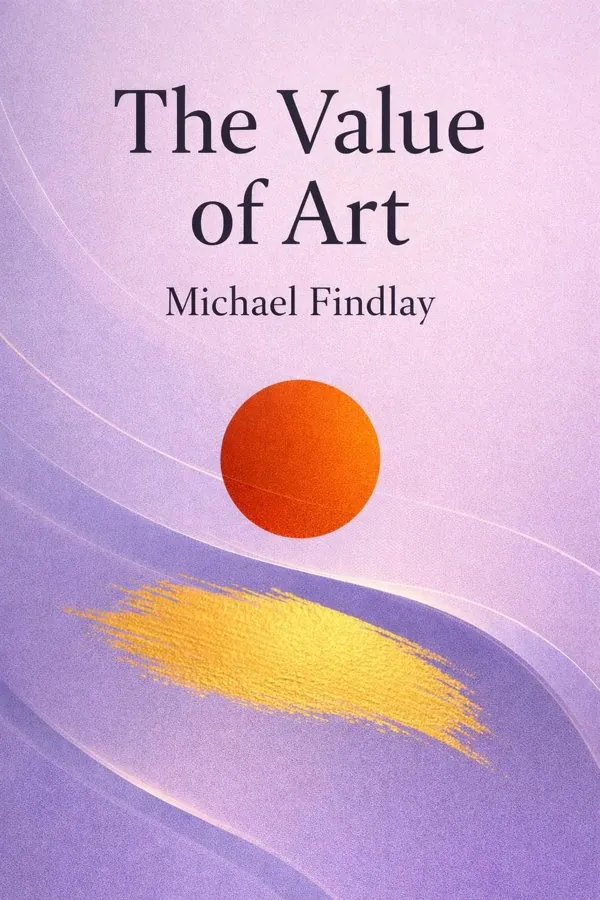
The Value of Art: Summary & Key Insights
 10 min7 chaptersAudio available
What Is The Value of Art About?
The Value of Art by Michael Findlay is a art book spanning 7 pages. In this insightful work, art dealer Michael Findlay explores how we assign value to art—financial, social, and emotional. Drawing on decades of experience in the art world, he examines the interplay between market forces, personal taste, and cultural significance, offering readers a nuanced understanding of what makes art meaningful and valuable beyond its price tag.
This FizzRead summary covers all 7 key chapters of The Value of Art in approximately 10 minutes, distilling the most important ideas, arguments, and takeaways from Michael Findlay's work. Also available as an audio summary and Key Quotes Podcast.
The Value of Art
In this insightful work, art dealer Michael Findlay explores how we assign value to art—financial, social, and emotional. Drawing on decades of experience in the art world, he examines the interplay between market forces, personal taste, and cultural significance, offering readers a nuanced understanding of what makes art meaningful and valuable beyond its price tag.
Who Should Read The Value of Art?
This book is perfect for anyone interested in art and looking to gain actionable insights in a short read. Whether you're a student, professional, or lifelong learner, the key ideas from The Value of Art by Michael Findlay will help you think differently.
- ✓Readers who enjoy art and want practical takeaways
- ✓Professionals looking to apply new ideas to their work and life
- ✓Anyone who wants the core insights of The Value of Art in just 10 minutes
Want the full summary?
Get instant access to this book summary and 100K+ more with Fizz Moment.
Get Free SummaryAvailable on App Store • Free to download
Key Chapters
The concept of value in art did not always revolve around money. In the past, art thrived under patronage systems. Kings, popes, and noble families commissioned works to glorify their reigns or express devotion. Artists’ reputations were defined not by auction records but by proximity to power and faith. Value then was moral and spiritual, not speculative.
As history unfolded, the Enlightenment brought shifts in intellectual freedom and commercial exchange. Art moved from being a sacred commission to a tradeable commodity. The rise of salons and academies formalized taste, and with that came hierarchy—the notion that certain artists and styles possessed greater value than others.
By the nineteenth century, with industrialization and the emergence of a bourgeois class, collecting became a pursuit of self-definition. Art began to speak of personal identity and social prestige rather than mere obedience to religious or royal authority. This laid the foundation for our contemporary notion of the art market, where prices became stand-ins for visibility and success.
Yet even as money grew central to art’s ecosystem, another kind of value persisted—the emotional. The Impressionists, largely rejected by established institutions, drew power not from endorsement but from genuine individual response. Their legacy taught us that beauty and truth in art are not dictated solely by financial or institutional validation.
The marketplace forms the visible skeleton of art’s financial world—galleries, auction houses, advisors, collectors, all playing their roles. But beneath the transactions lies a delicate balance between supply, demand, and desire. A painting’s price is not simply the result of its skill or beauty; it is a reflection of multiple beliefs and relationships within a network.
Galleries serve as interpreters, presenting artists’ visions to potential patrons. Auction houses act as theaters of excitement, amplifying desire through competition. Dealers, including myself, navigate these worlds, often bridging the private motivations of collectors with the public exposure of exhibitions. Every sale, every estimate, and every catalog entry forms part of an ongoing conversation about value.
Yet financial valuation remains notoriously fickle. A masterpiece may soar to an extraordinary price one year, only to fall from favor the next. These fluctuations remind us that money measures trends, not truths. The importance of understanding this structure is in seeing it as a means, not an end. The art market is not the voice of beauty—it is the echo of collective expectation. As such, it can tell us much about society’s aspirations but very little about the enduring meaning of art itself.
+ 5 more chapters — available in the FizzRead app
All Chapters in The Value of Art
About the Author
Michael Findlay is a renowned art dealer and director at Acquavella Galleries in New York. With a career spanning over five decades, he has worked with major artists and collectors worldwide and is recognized for his expertise in modern and contemporary art. He is also the author of several essays and lectures on the art market and collecting.
Get This Summary in Your Preferred Format
Read or listen to the The Value of Art summary by Michael Findlay anytime, anywhere. FizzRead offers multiple formats so you can learn on your terms — all free.
Available formats: App · Audio · PDF · EPUB — All included free with FizzRead
Download The Value of Art PDF and EPUB Summary
Key Quotes from The Value of Art
“The concept of value in art did not always revolve around money.”
“The marketplace forms the visible skeleton of art’s financial world—galleries, auction houses, advisors, collectors, all playing their roles.”
Frequently Asked Questions about The Value of Art
The Value of Art by Michael Findlay is a art book that explores key ideas across 7 chapters. In this insightful work, art dealer Michael Findlay explores how we assign value to art—financial, social, and emotional. Drawing on decades of experience in the art world, he examines the interplay between market forces, personal taste, and cultural significance, offering readers a nuanced understanding of what makes art meaningful and valuable beyond its price tag.
You Might Also Like
Alla Prima: Everything I Know About Painting
Richard Schmid
10 min
The Art Spirit
Robert Henri
10 min
The Artist’s Reality: Philosophies of Art
Mark Rothko
10 min
The Complete Guide to Anatomy for Artists & Illustrators
Gottfried Bammes
10 min
The Shape of Content
Ben Shahn
10 min
Together
Luke Adam Hawker
10 minBrowse by Category
Ready to read The Value of Art?
Get the full summary and 100K+ more books with Fizz Moment.