
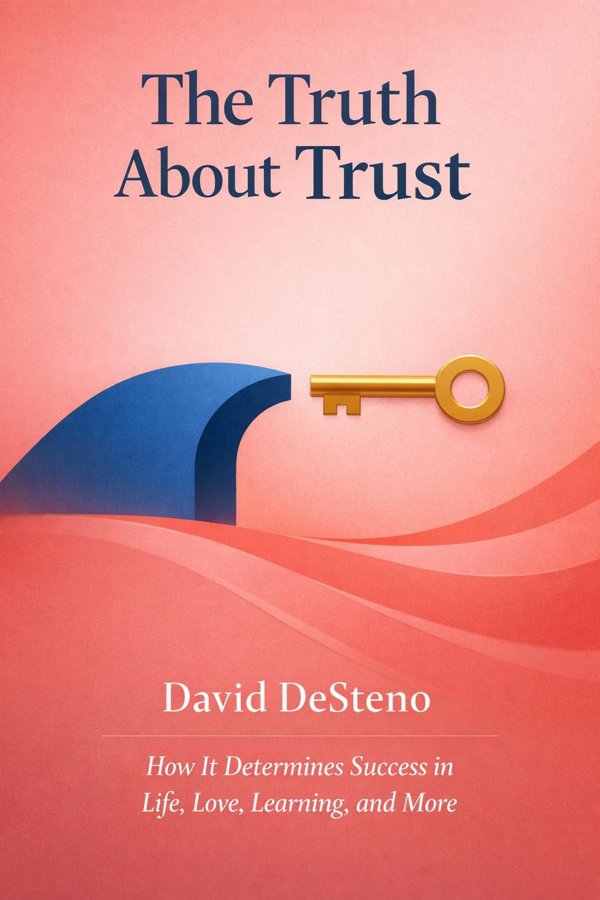
The Truth About Trust: How It Determines Success in Life, Love, Learning, and More: Summary & Key Insights
 10 min11 chaptersAudio available
What Is The Truth About Trust: How It Determines Success in Life, Love, Learning, and More About?
The Truth About Trust: How It Determines Success in Life, Love, Learning, and More by David DeSteno is a psychology book spanning 11 pages. In this insightful work, psychologist David DeSteno explores the science of trust—how it is built, broken, and repaired. Drawing on experimental research and real-world examples, he reveals that trust is not a fixed trait but a dynamic process shaped by emotion, context, and social cues. The book examines how trust influences relationships, business, and society, offering practical guidance for making better decisions about whom to trust and how to foster trustworthy behavior.
This FizzRead summary covers all 11 key chapters of The Truth About Trust: How It Determines Success in Life, Love, Learning, and More in approximately 10 minutes, distilling the most important ideas, arguments, and takeaways from David DeSteno's work. Also available as an audio summary and Key Quotes Podcast.
The Truth About Trust: How It Determines Success in Life, Love, Learning, and More
In this insightful work, psychologist David DeSteno explores the science of trust—how it is built, broken, and repaired. Drawing on experimental research and real-world examples, he reveals that trust is not a fixed trait but a dynamic process shaped by emotion, context, and social cues. The book examines how trust influences relationships, business, and society, offering practical guidance for making better decisions about whom to trust and how to foster trustworthy behavior.
Who Should Read The Truth About Trust: How It Determines Success in Life, Love, Learning, and More?
This book is perfect for anyone interested in psychology and looking to gain actionable insights in a short read. Whether you're a student, professional, or lifelong learner, the key ideas from The Truth About Trust: How It Determines Success in Life, Love, Learning, and More by David DeSteno will help you think differently.
- ✓Readers who enjoy psychology and want practical takeaways
- ✓Professionals looking to apply new ideas to their work and life
- ✓Anyone who wants the core insights of The Truth About Trust: How It Determines Success in Life, Love, Learning, and More in just 10 minutes
Want the full summary?
Get instant access to this book summary and 100K+ more with Fizz Moment.
Get Free SummaryAvailable on App Store • Free to download
Key Chapters
I begin by redefining trust not as a moral stance but as an emotional strategy. Evolution shaped it to balance the benefits of cooperation against the potential costs of betrayal. Long ago, our ancestors couldn’t survive alone; they depended on others for food, protection, and care. Being too trusting meant being exploited. Being too wary meant isolation. Over millennia, the human brain evolved finely tuned emotional systems to manage those competing demands. Emotions like gratitude, guilt, and empathy serve as behavioral regulators. They push us toward cooperation when it is likely to pay off, and away when warning signs appear.
In our daily lives, trust feels like a moral judgment—“he’s honest” or “she’s loyal”—but psychologically, it’s a prediction about the future based on emotional and contextual evidence. This is why we sometimes trust the wrong people: our emotions aren’t perfect calculators. Yet emotions still outperform logic when it comes to rapid social decisions. They integrate vast experiences, subtle cues, and memories into one instantaneous feeling. The paradox is that while trust feels moral, it is first and foremost strategic, designed to maximize mutual benefit.
One of the most compelling findings from my lab involved a simple game of money exchange. Two strangers could choose to share money, doubling its value if both cooperated. Over countless iterations, we found that when participants were induced to feel gratitude—say, after someone helped them in a different context—they returned the favor with remarkable reliability. Gratitude, it turned out, increased the likelihood of trusting and being trustworthy more effectively than any calculated incentive. Why? Because gratitude says, emotionally, 'You are safe to invest in; reciprocity benefits us both.'
Similarly, compassion and guilt play silent but significant roles. Compassion motivates prosocial behavior by linking another’s welfare to our own sense of satisfaction. Guilt, on the other hand, functions as a moral insurance policy, compelling us to repay breaches of trust. When people feel genuine guilt, they seek to repair harm instead of maximizing short-term gain. Trust, then, doesn’t thrive simply on rules or contracts—it thrives on well-calibrated emotions that align personal and collective interests.
+ 9 more chapters — available in the FizzRead app
All Chapters in The Truth About Trust: How It Determines Success in Life, Love, Learning, and More
About the Author
David DeSteno is a professor of psychology at Northeastern University, known for his research on emotion, morality, and social behavior. His work has been featured in major media outlets, and he is the author of several books on the science of human behavior.
Get This Summary in Your Preferred Format
Read or listen to the The Truth About Trust: How It Determines Success in Life, Love, Learning, and More summary by David DeSteno anytime, anywhere. FizzRead offers multiple formats so you can learn on your terms — all free.
Available formats: App · Audio · PDF · EPUB — All included free with FizzRead
Download The Truth About Trust: How It Determines Success in Life, Love, Learning, and More PDF and EPUB Summary
Key Quotes from The Truth About Trust: How It Determines Success in Life, Love, Learning, and More
“I begin by redefining trust not as a moral stance but as an emotional strategy.”
“One of the most compelling findings from my lab involved a simple game of money exchange.”
Frequently Asked Questions about The Truth About Trust: How It Determines Success in Life, Love, Learning, and More
The Truth About Trust: How It Determines Success in Life, Love, Learning, and More by David DeSteno is a psychology book that explores key ideas across 11 chapters. In this insightful work, psychologist David DeSteno explores the science of trust—how it is built, broken, and repaired. Drawing on experimental research and real-world examples, he reveals that trust is not a fixed trait but a dynamic process shaped by emotion, context, and social cues. The book examines how trust influences relationships, business, and society, offering practical guidance for making better decisions about whom to trust and how to foster trustworthy behavior.
You Might Also Like
The Body Keeps the Score
Bessel van der Kolk
10 min
Surrounded by Idiots
Thomas Erikson
10 min
Emotional Intelligence
Daniel Goleman
10 min
Attached
Amir Levine
10 min
Why Does He Do That
Lundy Bancroft
10 min
Women Who Run with the Wolves
Clarissa Pinkola Estés
10 minBrowse by Category
Ready to read The Truth About Trust: How It Determines Success in Life, Love, Learning, and More?
Get the full summary and 100K+ more books with Fizz Moment.