
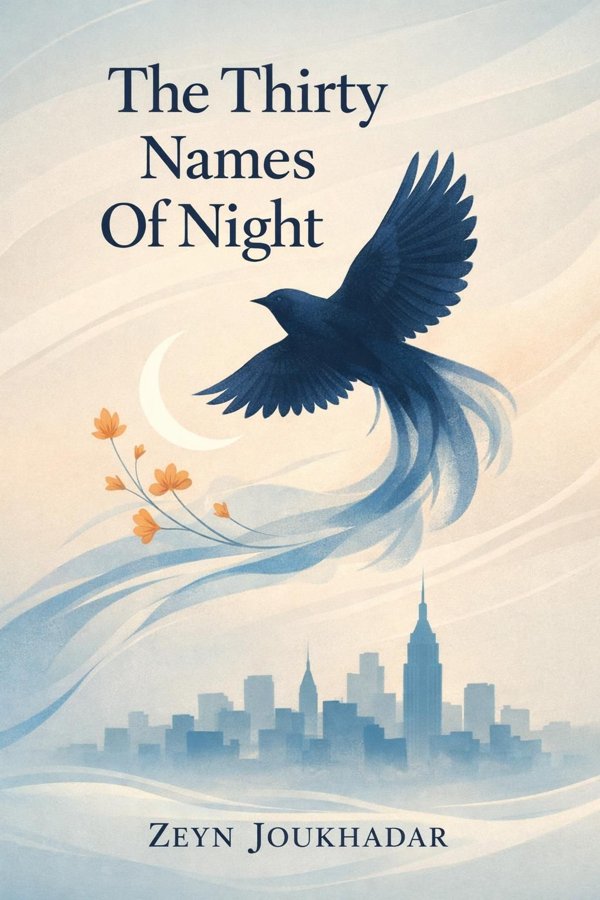
The Thirty Names Of Night: Summary & Key Insights
 10 min9 chaptersAudio available
Key Takeaways from The Thirty Names Of Night
Grief is often imagined as an ending, but in this novel it becomes a threshold.
Sometimes the past survives not in official histories but in what families tuck away and forget.
Art in The Thirty Names Of Night is not decoration.
To name yourself is to refuse the version of you that others find easiest to manage.
We often think belonging comes from present-day acceptance, but this novel suggests it can also come from discovering kinship with the dead.
What Is The Thirty Names Of Night About?
The Thirty Names Of Night by Zeyn Joukhadar is a bestsellers book spanning 5 pages. The Thirty Names Of Night is a luminous, emotionally layered novel about grief, identity, inheritance, and the stories communities leave behind when history refuses to keep them. Zeyn Joukhadar follows a young Syrian American trans man in New York who is reeling from the death of his mother, an artist and bird lover whose silence shaped his childhood as much as her love did. As he sorts through what she left behind, he discovers the journal of Laila Z, a Syrian American painter from decades earlier whose life, art, and disappearance begin to mirror his own search for self. What unfolds is both a mystery and a reclamation: of family history, queer identity, immigrant memory, and artistic lineage. The novel matters because it gives voice to lives often pushed to the margins—trans lives, Arab American lives, and the forgotten lives of women artists. Joukhadar, a Syrian American trans author celebrated for blending lyricism with historical depth, writes with rare sensitivity and authority. This is not just a story about finding the past. It is about learning how to survive long enough to name yourself inside it.
This FizzRead summary covers all 9 key chapters of The Thirty Names Of Night in approximately 10 minutes, distilling the most important ideas, arguments, and takeaways from Zeyn Joukhadar's work. Also available as an audio summary and Key Quotes Podcast.
The Thirty Names Of Night
The Thirty Names Of Night is a luminous, emotionally layered novel about grief, identity, inheritance, and the stories communities leave behind when history refuses to keep them. Zeyn Joukhadar follows a young Syrian American trans man in New York who is reeling from the death of his mother, an artist and bird lover whose silence shaped his childhood as much as her love did. As he sorts through what she left behind, he discovers the journal of Laila Z, a Syrian American painter from decades earlier whose life, art, and disappearance begin to mirror his own search for self. What unfolds is both a mystery and a reclamation: of family history, queer identity, immigrant memory, and artistic lineage. The novel matters because it gives voice to lives often pushed to the margins—trans lives, Arab American lives, and the forgotten lives of women artists. Joukhadar, a Syrian American trans author celebrated for blending lyricism with historical depth, writes with rare sensitivity and authority. This is not just a story about finding the past. It is about learning how to survive long enough to name yourself inside it.
Who Should Read The Thirty Names Of Night?
This book is perfect for anyone interested in bestsellers and looking to gain actionable insights in a short read. Whether you're a student, professional, or lifelong learner, the key ideas from The Thirty Names Of Night by Zeyn Joukhadar will help you think differently.
- ✓Readers who enjoy bestsellers and want practical takeaways
- ✓Professionals looking to apply new ideas to their work and life
- ✓Anyone who wants the core insights of The Thirty Names Of Night in just 10 minutes
Want the full summary?
Get instant access to this book summary and 100K+ more with Fizz Moment.
Get Free SummaryAvailable on App Store • Free to download
Key Chapters
Grief is often imagined as an ending, but in this novel it becomes a threshold. The unnamed young trans man at the center of The Thirty Names Of Night begins the story in the aftermath of his mother’s death, enclosed by loneliness, memory, and the heavy quiet of a life that has never fully belonged to him. His sorrow is not only for the parent he has lost. It is also for the years spent hidden, unnamed, and unable to claim himself openly. Joukhadar shows that mourning can expose buried truths because loss strips away the routines that help people avoid themselves.
The protagonist’s life with his mother was shaped by affection but also by silence. Her own fears, traumas, and cultural pressures created a household where much remained unspoken. After her death, the apartment becomes an archive of unresolved feeling. Every object carries emotional charge. Every absence asks a question. In that sense, grief becomes active rather than passive. It presses him toward discovery.
This idea reaches beyond the novel. In real life, major losses often force people to reexamine identity, family narratives, or inherited roles. Someone clearing out a loved one’s home may find old letters, photographs, or documents that reshape what they thought they knew. Others may realize that the life they have been living no longer fits after a death changes their sense of time.
Joukhadar does not romanticize pain. Grief remains painful, disorienting, and lonely. Yet the novel insists that transformation may begin precisely where certainty collapses. The protagonist’s mourning becomes the condition that allows him to move toward truth.
Actionable takeaway: When loss unsettles your life, resist the urge to rebuild too quickly. Sit with what the disruption reveals, and ask what hidden truth your grief is asking you to face.
Art in The Thirty Names Of Night is not decoration. It is evidence. It is memory. It is resistance. Through both the protagonist’s life and Laila Z’s story, Joukhadar explores how artistic expression preserves people whom history would rather ignore. Paintings, drawings, birds, textures, and visual motifs become ways of speaking when direct speech is dangerous or impossible.
Laila’s work carries the force of witness. As a Syrian American artist, she exists within overlapping structures of marginalization: immigrant displacement, gendered dismissal, and the ease with which institutions exclude artists who do not fit dominant narratives. Her disappearance, and the fragility of her artistic legacy, expose how often communities lose not only people but the records of their creativity. When art vanishes, a culture’s emotional memory vanishes with it.
The protagonist experiences art in a similarly vital way. It becomes a method of self-recognition, especially when language and family structures fail him. Art allows him to perceive continuity between himself and those who came before. It makes room for ambiguity and transformation where social categories feel rigid.
This idea has broad application. Marginalized communities frequently rely on music, murals, storytelling, crafts, performance, and visual art to preserve histories neglected by schools and institutions. A family that cannot find itself in textbooks may still see itself in inherited embroidery, a grandmother’s songs, or a neighborhood mural. Art stores memory in forms that can survive silence.
Joukhadar’s novel invites readers to treat creative work as archive and testimony. It asks us to notice what kinds of art get preserved, who gets celebrated, and who disappears.
Actionable takeaway: Support and document the art of underrepresented communities—visit exhibits, archive local work, share family creations—because cultural survival often depends on what ordinary people choose to keep.
To name yourself is to refuse the version of you that others find easiest to manage. One of the novel’s most powerful threads is the protagonist’s movement toward claiming his own name and identity. This is not presented as a sudden revelation but as a gradual, vulnerable process shaped by fear, desire, memory, and the risk of being seen.
Joukhadar understands naming as deeply personal and deeply political. For a trans person, a chosen name can be an act of survival, coherence, and truth. It marks the transition from being defined by external expectation to being defined by inner recognition. Yet the novel also broadens the meaning of naming. Immigrants often rename themselves to fit new countries. Families alter names to avoid scrutiny. Histories are renamed by institutions that want to control them. In this world, naming always involves power.
The protagonist’s struggle shows why self-naming matters. Without language for himself, he experiences a splintering between body, memory, and social role. As he moves toward self-recognition, he begins to inhabit his life differently. He is not becoming someone else; he is becoming legible to himself.
This resonates beyond gender identity. Many people experience the need to rename aspects of their lives: calling burnout by its true name instead of “stress,” identifying family dysfunction rather than minimizing it, or naming an ambition they have hidden out of fear. Clarity changes what becomes possible.
Joukhadar emphasizes that naming does not erase vulnerability. It may increase it. But it also creates the conditions for intimacy, dignity, and belonging.
Actionable takeaway: Identify one truth in your life that you have been avoiding language for, and name it clearly. Precise words can become the first step toward living more honestly.
We often think belonging comes from present-day acceptance, but this novel suggests it can also come from discovering kinship with the dead. As the protagonist traces Laila Z’s life, he finds more than historical curiosity. He finds a form of recognition that stretches across time. Their lives are not identical, but their struggles with art, silence, diaspora, and selfhood resonate deeply. Through that resonance, he feels less alone.
This is one of the novel’s most moving insights: sometimes we belong not because our immediate environment sees us clearly, but because we locate ourselves inside a longer lineage. For queer people, immigrants, and others whose identities may feel unsupported by family or society, discovering someone from the past who shared part of their experience can be life-changing. It offers proof that one’s existence is not accidental or isolated.
Joukhadar uses generational connection to challenge the assumption that history is static. The past is not finished. It continues to shape who gets remembered, who gets erased, and who feels authorized to exist. When the protagonist learns Laila’s story, he inherits not only sorrow but possibility. Her life becomes a map, warning, and blessing.
This has practical relevance in everyday life. Reading memoirs, researching community elders, collecting family stories, or learning local history can provide forms of belonging unavailable in contemporary spaces. People often discover courage by realizing they are part of a much older struggle for self-definition.
The novel argues that revelation does not merely answer questions. It creates relationship. To know who came before you is to feel accompanied.
Actionable takeaway: Seek out one story from your family, community, or cultural history that reflects your own struggles. Let that connection remind you that your path did not begin with you.
Silence in The Thirty Names Of Night is never empty. It is crowded with fear, love, shame, memory, and protection. The protagonist’s mother, like many people shaped by migration and vulnerability, withholds parts of herself and her past. Her silence may have been a strategy for survival, but it also leaves her child with unanswered questions and emotional distance. Joukhadar refuses a simplistic judgment. Silence is shown as both understandable and damaging.
This complexity matters. In immigrant families, silence often develops around trauma, war, queerness, poverty, racism, or gendered violence. Parents may avoid difficult truths because they want their children safe, or because language itself feels dangerous. But what remains unspoken does not disappear. It settles into family life as tension, misunderstanding, and inherited fear.
The novel demonstrates how children grow up reading what is never said. They become experts in mood, omission, and coded behavior. Yet this skill can also create confusion. Without direct language, people may mistake secrecy for rejection or interpret protection as indifference.
In practical life, many families live with similar patterns. A grandparent never discusses migration. A parent avoids talking about illness or identity. A child senses the emotional weather but lacks the framework to understand it. Healing often begins not with a complete confession, but with one brave conversation that interrupts the pattern.
Joukhadar’s brilliance lies in showing that speaking is difficult because silence once served a purpose. Breaking it requires compassion, not only confrontation. Understanding why people hid can coexist with recognizing the cost of that hiding.
Actionable takeaway: Notice one recurring silence in your family or community, and approach it with curiosity rather than blame. Honest dialogue begins when people feel safe enough to tell the truth.
Home in this novel is never a fixed place. It is a shifting emotional and cultural construction shaped by migration, memory, and the need to survive in a country that may never fully welcome you. Syrian American identity in The Thirty Names Of Night is not presented as a simple blend of two cultures. It is shown as an ongoing negotiation between inheritance and adaptation, intimacy and estrangement.
Joukhadar captures the double feeling common to diasporic life: one can be rooted and unrooted at once. The protagonist inherits stories, habits, and losses from Syria through family and community, yet his life unfolds in New York, where visibility and alienation coexist. The same city can offer anonymity, possibility, and exclusion. Migration does not only move bodies across borders; it changes what family means, what language can hold, and what forms of belonging are available.
Laila Z’s story deepens this insight by showing that these tensions are not new. Each generation confronts different versions of the same question: how do you remain connected to origin without becoming trapped by nostalgia or by the pressure to assimilate? The answer, the novel suggests, is not purity but creative continuity. Home survives through stories, art, rituals, and chosen relationships.
Readers can apply this idea broadly. Anyone living between identities—cultural, geographic, linguistic, or social—knows the strain of partial belonging. Creating home may mean cooking inherited food in a new city, preserving an accent, telling family stories, or building community with others who understand the in-between.
Actionable takeaway: If you live between worlds, define home through practices you can carry with you rather than through a single place. What you repeat with care can become a homeland.
In lesser hands, recurring bird imagery might become merely ornamental. In Joukhadar’s novel, birds carry emotional, spiritual, and structural weight. They connect the protagonist to his mother, to artistic seeing, and to the larger themes of migration and metamorphosis. Birds move between worlds. They migrate, vanish, return, and survive through navigation that humans barely understand. That makes them a powerful symbol for characters trying to orient themselves through loss and displacement.
The protagonist’s mother’s love of birds leaves behind more than a hobby. It becomes a coded legacy. Through birds, he remembers her tenderness as well as her opacity. They represent forms of attention she could give even when direct communication failed. Birds also suggest another way of understanding identity: not as fixed essence, but as motion, season, adaptation, and instinct.
For migrants and descendants of migrants, bird imagery carries obvious resonance. Movement is not always chosen. Routes are shaped by danger, climate, necessity, and the search for habitable ground. Yet birds also imply beauty and resilience. They survive by learning patterns of passage.
In practical terms, symbols matter because they help people hold difficult emotions indirectly. Many readers use recurring motifs—nature, music, objects, rituals—to process memory that is hard to state plainly. A person may feel connected to a loved one through a flower, a song, or a landscape long after conversation has ended.
Joukhadar uses birds to remind us that not all understanding is verbal. Some truths are carried in image, repetition, and flight.
Actionable takeaway: Pay attention to the symbols that recur in your life and memories. They may reveal emotional connections or unfinished meanings that direct explanation has not yet reached.
The novel moves like a mystery, but the deepest mystery is not simply what happened to Laila Z. It is how a person learns to read the clues of their own life. Joukhadar uses investigation not just to generate suspense, but to dramatize the process of identity formation. The protagonist follows documents, stories, absences, and community traces, and each discovery shifts his understanding of both Laila and himself.
This structure reflects a profound truth: self-knowledge rarely arrives as a direct confession. More often, it emerges through interpretation. We notice patterns. We revisit memories. We examine what draws us unexpectedly. We ask why a stranger’s story feels intimate. The protagonist’s search teaches him to trust these resonances rather than dismiss them.
The mystery form also highlights the role of community. He cannot solve the past alone. Archives, witnesses, neighborhood histories, and small acts of sharing all matter. Identity, the novel suggests, is relational. We become legible through what others remember, preserve, and risk telling us.
This idea applies well beyond literature. People often come to self-understanding through research, therapy, conversation, and historical inquiry. Someone exploring family origin might uncover painful truths but also liberating context. Someone questioning identity may find clarity not by looking inward alone, but by locating stories that echo their own.
Joukhadar ultimately reframes mystery as invitation. The unknown is not only frightening. It can become the route by which hidden continuity appears.
Actionable takeaway: Treat unanswered questions in your life as openings rather than failures. Follow one thread—family history, a recurring memory, a neglected passion—and see what it teaches you about who you are becoming.
All Chapters in The Thirty Names Of Night
About the Author
Zeyn Joukhadar is a Syrian American author whose fiction explores migration, memory, identity, and queer experience with lyrical intensity. A trans writer known for centering voices often omitted from mainstream literary history, Joukhadar brings together personal transformation and collective inheritance in ways that feel both intimate and expansive. His work frequently examines what exile, family silence, and cultural erasure do to the self, while also highlighting the resilience preserved through art, storytelling, and community. He is the author of The Map of Salt and Stars and The Thirty Names Of Night, both acclaimed for their poetic prose and emotionally rich treatment of Syrian and Arab American lives. Joukhadar is widely recognized for expanding contemporary literary fiction through narratives that are formally elegant, politically aware, and deeply humane.
Get This Summary in Your Preferred Format
Read or listen to the The Thirty Names Of Night summary by Zeyn Joukhadar anytime, anywhere. FizzRead offers multiple formats so you can learn on your terms — all free.
Available formats: App · Audio · PDF · EPUB — All included free with FizzRead
Download The Thirty Names Of Night PDF and EPUB Summary
Key Quotes from The Thirty Names Of Night
“Grief is often imagined as an ending, but in this novel it becomes a threshold.”
“Sometimes the past survives not in official histories but in what families tuck away and forget.”
“Art in The Thirty Names Of Night is not decoration.”
“To name yourself is to refuse the version of you that others find easiest to manage.”
“We often think belonging comes from present-day acceptance, but this novel suggests it can also come from discovering kinship with the dead.”
Frequently Asked Questions about The Thirty Names Of Night
The Thirty Names Of Night by Zeyn Joukhadar is a bestsellers book that explores key ideas across 9 chapters. The Thirty Names Of Night is a luminous, emotionally layered novel about grief, identity, inheritance, and the stories communities leave behind when history refuses to keep them. Zeyn Joukhadar follows a young Syrian American trans man in New York who is reeling from the death of his mother, an artist and bird lover whose silence shaped his childhood as much as her love did. As he sorts through what she left behind, he discovers the journal of Laila Z, a Syrian American painter from decades earlier whose life, art, and disappearance begin to mirror his own search for self. What unfolds is both a mystery and a reclamation: of family history, queer identity, immigrant memory, and artistic lineage. The novel matters because it gives voice to lives often pushed to the margins—trans lives, Arab American lives, and the forgotten lives of women artists. Joukhadar, a Syrian American trans author celebrated for blending lyricism with historical depth, writes with rare sensitivity and authority. This is not just a story about finding the past. It is about learning how to survive long enough to name yourself inside it.
More by Zeyn Joukhadar
You Might Also Like

The Godfather
Mario Puzo
10 min
The Handmaid's Tale
Margaret Atwood
10 min
The Hunger Games
Suzanne Collins
10 min
The Nightingale
Kristin Hannah
10 min
The Seven Husbands of Evelyn Hugo
Taylor Jenkins Reid
10 min
Backwater Justice
Fern Michaels
10 minBrowse by Category
Ready to read The Thirty Names Of Night?
Get the full summary and 100K+ more books with Fizz Moment.