
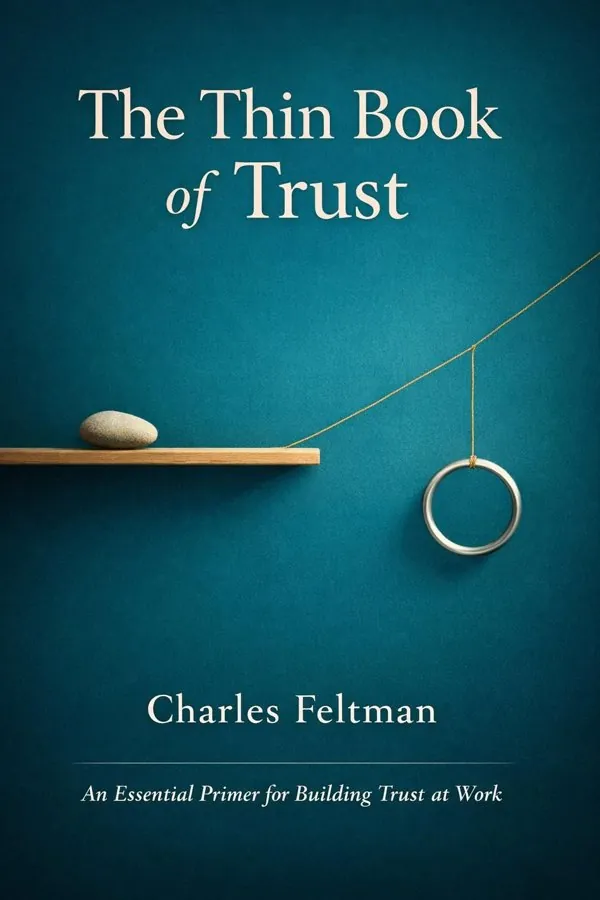
The Thin Book of Trust: An Essential Primer for Building Trust at Work: Summary & Key Insights
 10 min10 chaptersAudio available
What Is The Thin Book of Trust: An Essential Primer for Building Trust at Work About?
The Thin Book of Trust: An Essential Primer for Building Trust at Work by Charles Feltman is a leadership book spanning 10 pages. This concise guide explores the fundamental principles of trust in professional relationships. Charles Feltman defines trust as the choice to risk making something you value vulnerable to another person’s actions. The book provides practical frameworks for understanding, building, and repairing trust in workplace settings, emphasizing clarity, integrity, and reliability as key components.
This FizzRead summary covers all 10 key chapters of The Thin Book of Trust: An Essential Primer for Building Trust at Work in approximately 10 minutes, distilling the most important ideas, arguments, and takeaways from Charles Feltman's work. Also available as an audio summary and Key Quotes Podcast.
The Thin Book of Trust: An Essential Primer for Building Trust at Work
This concise guide explores the fundamental principles of trust in professional relationships. Charles Feltman defines trust as the choice to risk making something you value vulnerable to another person’s actions. The book provides practical frameworks for understanding, building, and repairing trust in workplace settings, emphasizing clarity, integrity, and reliability as key components.
Who Should Read The Thin Book of Trust: An Essential Primer for Building Trust at Work?
This book is perfect for anyone interested in leadership and looking to gain actionable insights in a short read. Whether you're a student, professional, or lifelong learner, the key ideas from The Thin Book of Trust: An Essential Primer for Building Trust at Work by Charles Feltman will help you think differently.
- ✓Readers who enjoy leadership and want practical takeaways
- ✓Professionals looking to apply new ideas to their work and life
- ✓Anyone who wants the core insights of The Thin Book of Trust: An Essential Primer for Building Trust at Work in just 10 minutes
Want the full summary?
Get instant access to this book summary and 100K+ more with Fizz Moment.
Get Free SummaryAvailable on App Store • Free to download
Key Chapters
Trust begins not as a given but as a choice. Every day in our professional lives, we make small and large decisions about whom to trust and how deeply. What’s often overlooked is that these decisions are guided by both psychological and relational factors—our perception of risk, our past experiences, and our understanding of the other person’s intentions and capabilities.
At work, trust operates as an invisible currency. It determines how openly we share ideas, whether we delegate or micromanage, and how we respond to feedback. Psychologically, trust triggers our sense of safety. When we trust someone, our nervous systems quiet down; we become more open, creative, and collaborative. When trust is missing, even the most capable teams revert to self-protection—guarding information, avoiding vulnerability, and misinterpreting intentions.
What makes trust complex is that it’s both rational and emotional. We can intellectually know that someone is competent yet emotionally hesitate because previous experiences taught us that people sometimes act out of self-interest. That’s why understanding trust requires looking at both sides: the external behaviors that show trustworthiness, and the internal process of deciding whether to risk vulnerability.
In organizations, trust is often treated as a soft concept—something nice to have. But as I’ve observed across dozens of teams, trust is central to performance. High-trust environments encourage honest conversations about mistakes and ideas, while low-trust environments breed silence and defensiveness. The difference doesn’t just affect morale; it impacts measurable outcomes such as decision speed, innovation, and customer satisfaction.
Once we grasp that trust is a choice involving vulnerability, we can start seeing its mechanics clearly. Every time we choose to trust, we weigh four questions implicitly: Is this person sincere? Are they reliable? Are they competent? Do they care? These are the Four Distinctions of Trust—the practical lenses through which you can assess, develop, and repair trust in any relationship. They give you language to talk about trust without turning it into a judgment of character but rather a reflection of behavior.
The strength of a trusting relationship can be understood through four distinct dimensions: Sincerity, Reliability, Competence, and Care. Together they form what I call the framework of trust. When they are all present in a relationship, trust flourishes. When any are missing, trust weakens or breaks.
Sincerity means that people say what they believe and act consistently with their words. It’s about authenticity and transparency—about being straightforward without hidden agendas. Reliability means doing what you say you’ll do. It’s the simple yet powerful act of following through, creating predictability in interactions. Competence is about having the skills and knowledge required to carry out your commitments effectively. And Care means showing genuine concern for others’ interests, not just your own.
These distinctions help us speak accurately about why trust succeeds or fails. If someone promises sincerely but doesn’t deliver, reliability is missing. If they are dependable but don’t have the skills, competence is absent. If they perform well but do so solely for their own gain, trust feels incomplete because care is lacking. Each distinction addresses a different dimension of human connection.
Understanding these distinctions also empowers us to repair broken trust. Instead of labeling someone as untrustworthy, we can pinpoint exactly what failed—maybe communication wasn’t sincere, or expectations weren’t reliably met—and focus our efforts there. It’s this clarity that transforms the idea of trust from emotion into actionable practice.
+ 8 more chapters — available in the FizzRead app
All Chapters in The Thin Book of Trust: An Essential Primer for Building Trust at Work
About the Author
Charles Feltman is an executive coach and organizational consultant specializing in leadership development and team effectiveness. He has worked with leaders across industries to foster trust, communication, and collaboration within organizations.
Get This Summary in Your Preferred Format
Read or listen to the The Thin Book of Trust: An Essential Primer for Building Trust at Work summary by Charles Feltman anytime, anywhere. FizzRead offers multiple formats so you can learn on your terms — all free.
Available formats: App · Audio · PDF · EPUB — All included free with FizzRead
Download The Thin Book of Trust: An Essential Primer for Building Trust at Work PDF and EPUB Summary
Key Quotes from The Thin Book of Trust: An Essential Primer for Building Trust at Work
“Trust begins not as a given but as a choice.”
“The strength of a trusting relationship can be understood through four distinct dimensions: Sincerity, Reliability, Competence, and Care.”
Frequently Asked Questions about The Thin Book of Trust: An Essential Primer for Building Trust at Work
The Thin Book of Trust: An Essential Primer for Building Trust at Work by Charles Feltman is a leadership book that explores key ideas across 10 chapters. This concise guide explores the fundamental principles of trust in professional relationships. Charles Feltman defines trust as the choice to risk making something you value vulnerable to another person’s actions. The book provides practical frameworks for understanding, building, and repairing trust in workplace settings, emphasizing clarity, integrity, and reliability as key components.
You Might Also Like

Extreme Ownership
Jocko Willink
10 min
Dare to Lead
Brene Brown
10 min
Leaders Eat Last
Simon Sinek
10 min
The 21 Irrefutable Laws of Leadership
John Maxwell
10 min
Start With Why
Simon Sinek
10 min
How to Lead When You're Not in Charge
Clay Scroggins
10 minBrowse by Category
Ready to read The Thin Book of Trust: An Essential Primer for Building Trust at Work?
Get the full summary and 100K+ more books with Fizz Moment.