
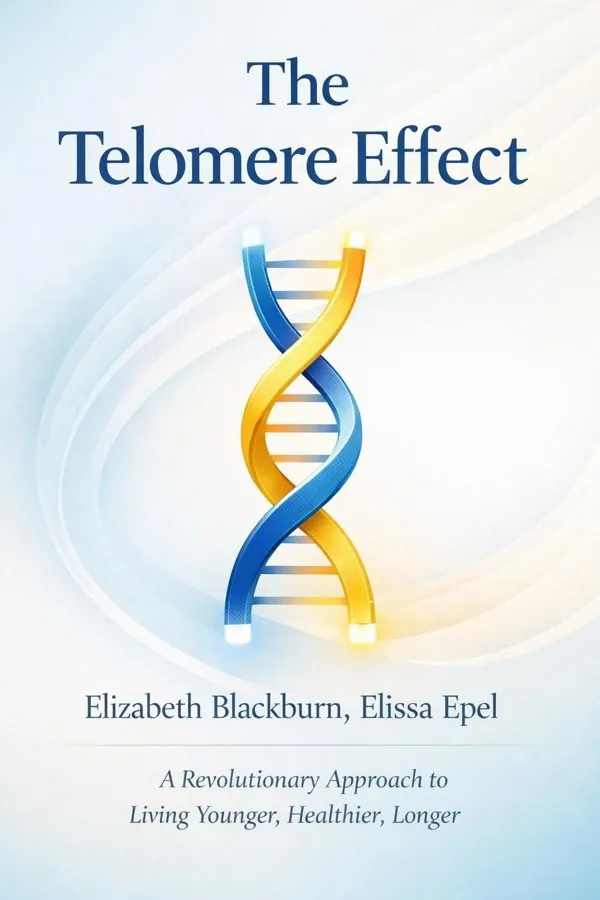
The Telomere Effect: A Revolutionary Approach to Living Younger, Healthier, Longer: Summary & Key Insights
by Elizabeth Blackburn, Elissa Epel
 10 min5 chaptersAudio available
What Is The Telomere Effect: A Revolutionary Approach to Living Younger, Healthier, Longer About?
The Telomere Effect: A Revolutionary Approach to Living Younger, Healthier, Longer by Elizabeth Blackburn, Elissa Epel is a life_science book spanning 5 pages. The Telomere Effect explains how the length and health of telomeres—the protective caps at the ends of chromosomes—affect aging and disease. Drawing on Nobel Prize–winning research, the authors show how lifestyle factors such as stress, sleep, exercise, and diet can influence cellular aging, and they provide practical strategies to improve health and longevity by protecting telomeres.
This FizzRead summary covers all 5 key chapters of The Telomere Effect: A Revolutionary Approach to Living Younger, Healthier, Longer in approximately 10 minutes, distilling the most important ideas, arguments, and takeaways from Elizabeth Blackburn, Elissa Epel's work. Also available as an audio summary and Key Quotes Podcast.
The Telomere Effect: A Revolutionary Approach to Living Younger, Healthier, Longer
The Telomere Effect explains how the length and health of telomeres—the protective caps at the ends of chromosomes—affect aging and disease. Drawing on Nobel Prize–winning research, the authors show how lifestyle factors such as stress, sleep, exercise, and diet can influence cellular aging, and they provide practical strategies to improve health and longevity by protecting telomeres.
Who Should Read The Telomere Effect: A Revolutionary Approach to Living Younger, Healthier, Longer?
This book is perfect for anyone interested in life_science and looking to gain actionable insights in a short read. Whether you're a student, professional, or lifelong learner, the key ideas from The Telomere Effect: A Revolutionary Approach to Living Younger, Healthier, Longer by Elizabeth Blackburn, Elissa Epel will help you think differently.
- ✓Readers who enjoy life_science and want practical takeaways
- ✓Professionals looking to apply new ideas to their work and life
- ✓Anyone who wants the core insights of The Telomere Effect: A Revolutionary Approach to Living Younger, Healthier, Longer in just 10 minutes
Want the full summary?
Get instant access to this book summary and 100K+ more with Fizz Moment.
Get Free SummaryAvailable on App Store • Free to download
Key Chapters
When I discovered telomerase—the enzyme that replenishes telomeres—it felt like uncovering the biological language of life itself. Every time a cell divides, its telomeres shorten ever so slightly. Think of telomeres as the plastic tips of shoelaces; without them, the ends fray, and the shoelace eventually breaks. Similarly, shortened telomeres lead to cellular instability, malfunction, and aging.
Our research revealed that telomerase can repair these ends, effectively extending the cellular lifespan. However, this process isn’t unlimited; it depends on an intricate balance of biological signals influenced by how you live. Cells with healthy telomeres maintain their integrity for longer, reducing risks of chronic diseases like cardiovascular disorders, diabetes, and neurodegeneration. But when stress, poor habits, or toxic environments overwhelm the body, telomere repair falters, and the aging clock accelerates.
The story of telomeres is also the story of hope against determinism. You might think your genes dictate your fate, but telomere biology shows otherwise. Your lifestyle acts as a moderator between your genetic blueprint and how it unfolds. This realization shifts aging from inevitability to something more pliable—something that science and wisdom can together reshape.
The beauty of telomere science lies in its holistic truth: biological aging mirrors emotional and social patterns. The same chemical that protects your chromosomes responds to how securely you love, how calmly you breathe, and how mindfully you face life’s challenges. As a biologist, seeing molecular structures respond to psychological experiences was profound. It taught us that what we call mind and body are not separate domains but continuous expressions of life’s intelligence.
When Elissa and I began exploring stress and telomere length, we were stunned by how psychological strain leaves a molecular footprint. Chronic stress floods the body with hormones like cortisol and adrenaline. While helpful in short bursts, constant exposure erodes telomere integrity.
We followed mothers caring for chronically ill children—surely one of life’s most demanding roles. Their telomeres were, on average, shorter than those of mothers with healthy children, reflecting years of emotional exhaustion. Yet, those who found meaning in their caregiving or maintained supportive relationships showed slower telomere shortening. This insight became a cornerstone of our understanding: stress isn’t merely mental anguish; it’s biological abrasion. But the way you perceive and process stress can either blunt or magnify that effect.
Stress management is therefore cellular protection. When you practice mindfulness, indulge in restorative sleep, or simply learn to reframe challenges as temporary rather than catastrophic, your biochemistry shifts. Telomerase activity can rise, inflammation subsides, and cellular repair resumes its natural rhythm. This doesn’t mean eliminating stress—it means reshaping your relationship to it.
Every breath, every thought is a dialogue with your cells. When you invite calm, you quiet their distress signals. When you let go of hostility or pessimism, your telomeres breathe easier, literally extending your life’s potential. As we tested these patterns in the lab and real-world settings, the results affirmed something deeply human: resilience isn’t abstract psychology; it is measurable biology.
+ 3 more chapters — available in the FizzRead app
All Chapters in The Telomere Effect: A Revolutionary Approach to Living Younger, Healthier, Longer
About the Authors
Elizabeth Blackburn is a molecular biologist who received the Nobel Prize in Physiology or Medicine in 2009 for her discovery of telomerase. Elissa Epel is a health psychologist known for her research on stress, aging, and mindfulness. Together, they explore the biological and psychological mechanisms of aging and how lifestyle choices can promote longevity.
Get This Summary in Your Preferred Format
Read or listen to the The Telomere Effect: A Revolutionary Approach to Living Younger, Healthier, Longer summary by Elizabeth Blackburn, Elissa Epel anytime, anywhere. FizzRead offers multiple formats so you can learn on your terms — all free.
Available formats: App · Audio · PDF · EPUB — All included free with FizzRead
Download The Telomere Effect: A Revolutionary Approach to Living Younger, Healthier, Longer PDF and EPUB Summary
Key Quotes from The Telomere Effect: A Revolutionary Approach to Living Younger, Healthier, Longer
“When I discovered telomerase—the enzyme that replenishes telomeres—it felt like uncovering the biological language of life itself.”
“When Elissa and I began exploring stress and telomere length, we were stunned by how psychological strain leaves a molecular footprint.”
Frequently Asked Questions about The Telomere Effect: A Revolutionary Approach to Living Younger, Healthier, Longer
The Telomere Effect: A Revolutionary Approach to Living Younger, Healthier, Longer by Elizabeth Blackburn, Elissa Epel is a life_science book that explores key ideas across 5 chapters. The Telomere Effect explains how the length and health of telomeres—the protective caps at the ends of chromosomes—affect aging and disease. Drawing on Nobel Prize–winning research, the authors show how lifestyle factors such as stress, sleep, exercise, and diet can influence cellular aging, and they provide practical strategies to improve health and longevity by protecting telomeres.
You Might Also Like
The Selfish Gene
Richard Dawkins
10 min
Awakenings
Oliver Sacks
10 min
Parasite Rex: Inside the Bizarre World of Nature's Most Dangerous Creatures
Carl Zimmer
10 min
The Atlas of Life on Earth
Various
10 min
The Book of Humans: The Story of How We Became Us
Adam Rutherford
10 min
The Horse
Wendy Williams
10 minBrowse by Category
Ready to read The Telomere Effect: A Revolutionary Approach to Living Younger, Healthier, Longer?
Get the full summary and 100K+ more books with Fizz Moment.