
The Subtle Art of Not Giving a F*ck: Summary & Key Insights
by Mark Manson
 10 min10 chapters
Key Takeaways from The Subtle Art of Not Giving a F*ck
Many of our worst emotional spirals do not begin with pain itself, but with our resistance to pain.
Everyone wants the rewards, but very few people ask what kind of pain they are willing to endure for them.
The more we treat happiness as something to capture and keep permanently, the more miserable we often become.
One of the most uncomfortable truths in the book is also one of the most useful: you are probably not exceptionally unique in your suffering, talent, or destiny.
Real commitment is measured not by what you say yes to, but by what you are willing to reject.
What Is The Subtle Art of Not Giving a F*ck About?
The Subtle Art of Not Giving a F*ck by Mark Manson is a self-help book published in 2016 spanning 10 pages. Mark Manson’s The Subtle Art of Not Giving a F*ck is a self-help book that rejects the glossy promise that constant positivity will solve life’s problems. Instead, Manson argues that a meaningful life comes from choosing what truly deserves your time, energy, and concern, then accepting the discomfort that follows. His central idea is simple but powerful: you cannot care about everything, so you must care about the right things. That means facing limitations, taking responsibility for your choices, and understanding that struggle is not a glitch in life but part of its structure. What makes the book resonate is its mix of blunt humor, psychological insight, and philosophical depth. Manson draws on personal stories, cultural observations, and ideas from thinkers such as the Stoics and existentialists to challenge modern habits of entitlement, avoidance, and emotional overreaction. Rather than teaching readers how to feel good all the time, he teaches them how to live honestly and sturdily. For anyone exhausted by perfectionism, comparison, or the pressure to optimize every part of life, this book offers a grounded and liberating alternative.
This FizzRead summary covers all 10 key chapters of The Subtle Art of Not Giving a F*ck in approximately 10 minutes, distilling the most important ideas, arguments, and takeaways from Mark Manson's work.
The Subtle Art of Not Giving a F*ck
Mark Manson’s The Subtle Art of Not Giving a F*ck is a self-help book that rejects the glossy promise that constant positivity will solve life’s problems. Instead, Manson argues that a meaningful life comes from choosing what truly deserves your time, energy, and concern, then accepting the discomfort that follows. His central idea is simple but powerful: you cannot care about everything, so you must care about the right things. That means facing limitations, taking responsibility for your choices, and understanding that struggle is not a glitch in life but part of its structure.
What makes the book resonate is its mix of blunt humor, psychological insight, and philosophical depth. Manson draws on personal stories, cultural observations, and ideas from thinkers such as the Stoics and existentialists to challenge modern habits of entitlement, avoidance, and emotional overreaction. Rather than teaching readers how to feel good all the time, he teaches them how to live honestly and sturdily. For anyone exhausted by perfectionism, comparison, or the pressure to optimize every part of life, this book offers a grounded and liberating alternative.
Who Should Read The Subtle Art of Not Giving a F*ck?
This book is perfect for anyone interested in self-help and looking to gain actionable insights in a short read. Whether you're a student, professional, or lifelong learner, the key ideas from The Subtle Art of Not Giving a F*ck by Mark Manson will help you think differently.
- ✓Readers who enjoy self-help and want practical takeaways
- ✓Professionals looking to apply new ideas to their work and life
- ✓Anyone who wants the core insights of The Subtle Art of Not Giving a F*ck in just 10 minutes
Want the full summary?
Get instant access to this book summary and 100K+ more with Fizz Moment.
Get Free SummaryAvailable on App Store • Free to download
Key Chapters
Many of our worst emotional spirals do not begin with pain itself, but with our resistance to pain. Manson calls this the “Feedback Loop from Hell”: you feel bad, then feel bad about feeling bad, and the second layer magnifies the first. Anxiety becomes anxiety about anxiety. Sadness turns into shame about sadness. Failure becomes panic about what failure means about your identity.
This insight matters because modern culture often sells the idea that negative emotions are evidence that something is wrong with us. If you are stressed, insecure, lonely, or confused, you may assume you are failing at life. Manson argues the opposite. Negative emotions are normal signals. They become destructive when we interpret them as unacceptable and then fight them with denial, perfectionism, or self-hatred.
A practical example is social anxiety. Someone feels nervous before a meeting, then starts thinking, “Why am I always like this? Other people are confident. I shouldn’t feel this way.” That self-judgment makes the original nerves far worse. The healthier move is to notice the feeling without dramatizing it: “I’m anxious right now. That’s uncomfortable, but manageable.” The emotional charge often drops once the resistance stops.
The same pattern appears in relationships, work, and health goals. Missing one workout is disappointing; concluding that you are lazy and hopeless is the second blow that causes real damage. Manson’s lesson is to stop turning ordinary human discomfort into a moral crisis.
Actionable takeaway: when you feel a negative emotion, name it plainly and refuse to add a second layer of judgment. Replace “I shouldn’t feel this” with “This is what I feel right now, and I can handle it.”
Everyone wants the rewards, but very few people ask what kind of pain they are willing to endure for them. Manson’s argument is that life is shaped less by what we want and more by what we are willing to struggle for. The question is not whether you want a successful career, loving relationship, or healthy body. The question is whether you want the frustrations, sacrifices, repetition, and uncertainty that come with them.
This reframes success in a deeply practical way. Many people say they want to write a book, but they do not want hours of lonely revision, rejection, and doubt. They say they want a great relationship, but they do not want difficult conversations, compromise, and emotional vulnerability. They say they want to be fit, but they do not want the boredom of consistency and the discomfort of discipline. In each case, the dream is attractive, but the suffering attached to it is what determines commitment.
Manson does not romanticize pain for its own sake. He argues that pain is unavoidable, so the only meaningful choice is which pain is worth it. This is liberating because it moves us away from fantasy and toward values. If your chosen struggle aligns with what matters most to you, then even hard days feel meaningful rather than empty.
A useful application is to examine a stalled goal and ask, “What is the price of this outcome, and am I willing to pay it?” If the answer is no, that is not failure. It is clarity. It may mean the goal is not truly yours, or not important enough right now.
Actionable takeaway: choose one major goal and write down the specific discomforts it requires. Decide consciously whether those are struggles you are willing to embrace.
The more we treat happiness as something to capture and keep permanently, the more miserable we often become. Manson argues that happiness is not a destination where problems disappear; it is a byproduct of solving meaningful problems. Life is always presenting challenges, and well-being comes less from eliminating struggle than from engaging with the right kind of struggle.
This idea pushes back against a popular fantasy: that there is a future version of life where everything is easy, balanced, and emotionally smooth. In reality, each stage of life simply offers new problems. If you are unemployed, your problem may be uncertainty. If you get the job, your problems become deadlines and office politics. If you build a business, your problems become leadership and risk. Progress does not remove problems; it upgrades them.
Manson’s point is not cynical. It is freeing. When you stop expecting life to become problem-free, you stop interpreting every obstacle as a sign that something has gone wrong. A parent can stop resenting the chaos of raising children and instead recognize that these are the problems that come with a deeply valued role. An entrepreneur can stop fantasizing about effortless success and accept that stress is part of building something real.
This perspective also improves emotional resilience. Rather than asking, “How do I feel happy all the time?” you ask, “What problems do I want to have?” That shift moves your attention from mood management to value-based living.
Actionable takeaway: when you feel frustrated, ask yourself whether this is a problem you chose because it serves something meaningful. If it is, stop wishing it away and start solving it with purpose.
One of the most uncomfortable truths in the book is also one of the most useful: you are probably not exceptionally unique in your suffering, talent, or destiny. Manson challenges the modern obsession with feeling extraordinary, arguing that the need to be special often creates fragility, entitlement, and constant disappointment.
When people build their identity around being exceptional, ordinary setbacks become unbearable. A small criticism feels like a threat to self-worth. Mediocre results feel humiliating. Waiting in line, being ignored, or not getting immediate recognition can trigger anger because reality is not affirming the special status the ego demands.
Manson’s point is not that individuals have no value. It is that maturity begins when we stop needing constant proof that we are more important than others. Accepting ordinariness can be deeply grounding. It allows you to learn, to fail, and to improve without every outcome becoming a referendum on your worth.
For example, a new manager who believes they must be naturally brilliant may avoid asking questions for fear of looking average. Another manager who accepts being a learner will seek feedback, make mistakes, and grow faster. Likewise, someone pursuing art for status may burn out quickly, while someone who accepts being one creator among many can focus on craft.
This idea also increases empathy. When you stop viewing your pain as uniquely tragic or your perspective as uniquely enlightened, you become more open to others. You can join the human experience instead of performing superiority within it.
Actionable takeaway: notice one area where your ego demands exceptional treatment. Practice humility by learning, listening, or starting as a beginner without needing to look impressive.
Real commitment is measured not by what you say yes to, but by what you are willing to reject. Manson argues that values become meaningful only when they create boundaries. If you try to keep every option open, please everyone, and avoid disappointing anyone, your life becomes scattered and shallow.
Saying no is difficult because it forces trade-offs into the open. Every yes costs time, energy, attention, and opportunity. Agreeing to a project may mean less time for family. Staying in a lukewarm relationship may mean postponing the possibility of a better one. Accepting every invitation may leave no room for rest or focused work. People often avoid these realities by drifting, but drift is just decision-making by default.
Manson connects this to emotional maturity. Healthy relationships, careers, and identities are all built through exclusion. A strong relationship means saying no to countless alternative paths. A clear career means not pursuing every interesting possibility. A stable sense of self means not changing values every time social approval shifts.
A practical example is work overload. Many professionals feel stressed because they keep accepting requests to appear cooperative and capable. But without boundaries, they become resentful and ineffective. Saying no respectfully can actually improve trust because it signals self-awareness and reliability.
This idea also applies internally. Saying no to distraction, comparison, and approval-seeking is often what allows meaningful work to happen. Manson’s broader message is that depth requires limitation.
Actionable takeaway: identify one recurring commitment that drains you but does not align with your priorities. Set a clear boundary this week, even if it feels uncomfortable, and use that discomfort as proof that the boundary matters.
If you always need to feel certain before acting, you will stay stuck. Manson argues that growth is built through error, embarrassment, and revision. Failure is not just something that happens on the way to progress; it is the mechanism of progress itself. We discover better beliefs, better skills, and better strategies by confronting the limits of our current ones.
This matters because many people secretly use perfectionism as a form of avoidance. They overthink, plan endlessly, or wait for confidence because they want to avoid the pain of being bad at something. But confidence usually comes after experience, not before it. The first draft is clumsy. The first business idea is incomplete. The first conversation after conflict may be awkward. That is normal.
Manson also notes that our identities can trap us. If you see yourself as “the smart one” or “the talented one,” failure feels threatening, so you avoid situations that expose weakness. But if you see yourself as a learner, setbacks become data. This is why humble people often improve faster than gifted but defensive people.
A practical example is someone trying to change careers. They may spend months consuming advice and imagining the perfect next move, but real clarity often comes only after trying projects, speaking with people in the field, and making imperfect attempts. Action creates information that thought alone cannot provide.
Failure also strengthens values. It reveals what you care enough about to continue despite frustration. When a goal survives repeated setbacks, it is usually becoming more real.
Actionable takeaway: choose one area where you have been waiting to feel ready. Take a small imperfect step within 48 hours and treat the result as feedback, not a verdict on your worth.
Not everything that happens to you is your fault, but much of it is still your responsibility. Manson makes a crucial distinction between fault and responsibility. Fault concerns who caused a problem. Responsibility concerns who must respond to it now. Confusing the two keeps people stuck in blame, resentment, and passivity.
This idea is especially powerful because many difficult experiences are genuinely unfair. You may inherit family dysfunction, economic hardship, betrayal, illness, or trauma that you did not choose. Manson does not deny this. His argument is that healing and progress still require ownership of your response. Waiting for life to become fair before acting usually prolongs suffering.
For example, if you grew up with poor emotional models, that is not your fault. But learning communication skills as an adult is your responsibility. If a colleague undermines you, their behavior may be the cause, but it is your responsibility to address the issue, set boundaries, or change environments. If your health declines through circumstances beyond your control, the diagnosis may not be your fault, but treatment and adaptation become your responsibility.
This principle restores agency. Blame can feel morally satisfying, but it rarely produces change. Responsibility, by contrast, gives you leverage. It asks, “Given reality as it is, what can I do next?” That question is often uncomfortable, but it is also empowering.
Manson’s broader point is that freedom and responsibility rise together. The more ownership you take over your choices, interpretations, and habits, the less helpless you become.
Actionable takeaway: think of one recurring frustration in your life. Separate fault from responsibility in writing, then list one concrete response that is within your control today.
Strong relationships are not built on constant excitement or perfect compatibility, but on trust, shared values, and the willingness to face uncomfortable truths together. Manson argues that mature love depends less on intensity and more on commitment grounded in reality. When people stop expecting relationships to erase insecurity or provide endless emotional highs, they can begin building something more durable.
A key part of this is honesty. Many relationships deteriorate because partners avoid difficult conversations in the name of peace. They suppress resentment, soften boundaries, or perform versions of themselves they think will be accepted. The result is not harmony but distance. Real trust grows when people can tell the truth kindly, hear disappointment without collapse, and work through conflict without turning every issue into a threat.
Manson also emphasizes choice. Commitment means repeatedly choosing the same person, values, or path while letting go of endless alternatives. In a culture obsessed with optimization, this can feel restrictive. But commitment often creates the depth people say they want. Without it, relationships remain negotiable and fragile.
The same principle extends beyond romance. Friendships, creative projects, and careers all deepen through trust and sustained investment. If you constantly hedge, compare, and keep one foot out the door, you deny yourself the rewards that only commitment can produce.
A practical application is to examine where you are withholding honesty or overprotecting yourself from vulnerability. Often the relationship is not failing because the bond is weak, but because the truth is not being spoken.
Actionable takeaway: have one direct, respectful conversation you have been avoiding. Use honesty not as a weapon, but as an act of care and commitment.
Action often creates motivation more reliably than motivation creates action. Manson challenges the common belief that we must first feel inspired, confident, or emotionally ready before we begin. In reality, momentum usually starts with behavior. You do something small, that action changes your mood or perspective, and the resulting energy makes further action easier.
This principle is especially useful in periods of apathy, grief, burnout, or confusion. When people feel stuck, they often wait for clarity. But waiting can become a trap. The more inactive you are, the more powerless you feel. The more powerless you feel, the less likely you are to act. Small actions interrupt this cycle by proving that movement is still possible.
For example, someone overwhelmed by a messy home may imagine they need a full day of energy to fix it. Instead, washing five dishes or clearing one surface can shift the emotional atmosphere enough to continue. A writer blocked by perfectionism may regain flow by drafting one bad paragraph. A person grieving a breakup may not be ready for a complete reinvention, but taking a walk, calling a friend, or updating a routine can slowly restore agency.
Manson is not suggesting mindless busyness. The point is to stop idolizing perfect emotional states. Often the path to feeling better runs through behavior, not introspection alone. Action generates evidence, and evidence changes belief.
This principle also strengthens confidence. Confidence is not a prerequisite for action but a memory of action taken repeatedly.
Actionable takeaway: choose the smallest possible version of a task you have been avoiding and do it immediately. Do not aim to finish; aim to begin and let movement do its work.
Nothing sharpens values like remembering that time is limited. In one of the book’s most reflective ideas, Manson argues that awareness of death is not morbid but clarifying. When we face our mortality, trivial concerns lose some of their grip, and deeper priorities become easier to see. We stop asking how to avoid all discomfort and start asking what is worth our finite life.
Much of modern anxiety comes from acting as if every option must remain available forever. We postpone decisions, chase validation, and obsess over minor inconveniences because we avoid the larger truth that our days are numbered. Mortality strips away that illusion. It reminds us that attention is precious, relationships are fragile, and time spent on empty status games cannot be recovered.
This perspective changes everyday choices. The need to win every argument fades when you remember how little such victories matter in the long run. The urge to impress strangers weakens when you realize that what endures is often character, contribution, and love. The fear of starting something meaningful can also lessen, because doing nothing becomes more costly when life is seen as finite.
Manson’s point is not to live recklessly or sentimentally. It is to use death as a filter. If a concern would not matter much at the end of life, it may not deserve your deepest emotional investment now. Mortality can become a compass for choosing values that outlast ego.
Actionable takeaway: ask yourself, “If I had one year to live, what would matter more, and what would matter less?” Use your answers to make one concrete change in how you spend your time this month.
All Chapters in The Subtle Art of Not Giving a F*ck
About the Author
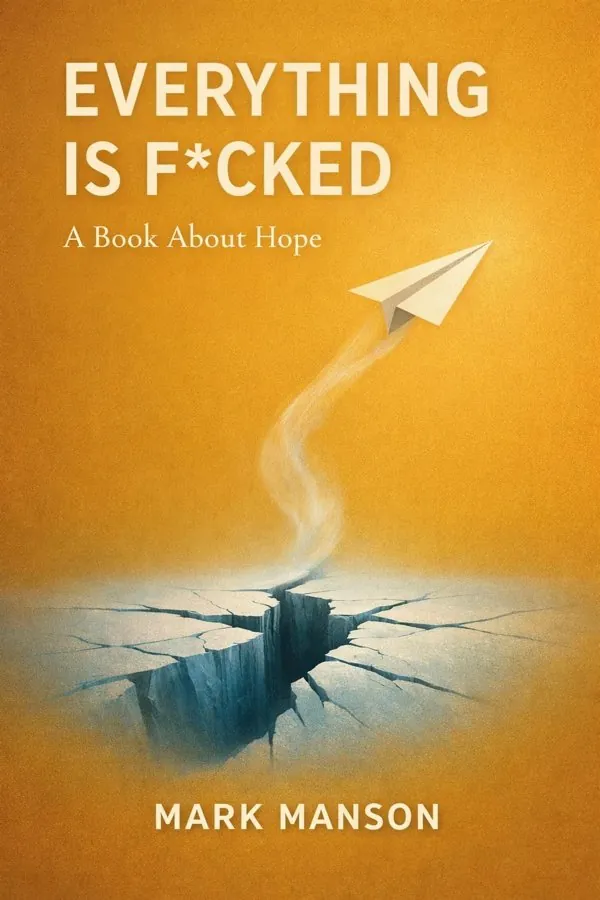
Mark Manson is an American author, blogger, and personal development thinker best known for bringing a blunt, psychologically grounded voice to the self-help genre. He first gained a large audience through his online writing, where he explored relationships, emotional health, values, and modern culture with a mix of humor and directness. His approach often draws from philosophy, especially Stoicism and existentialism, while remaining practical and accessible for everyday readers. Manson achieved international fame with The Subtle Art of Not Giving a F*ck, a bestseller that challenged the self-help industry’s obsession with positivity and urged readers to embrace responsibility, limits, and meaningful struggle. He later expanded these themes in his other writing, including Everything Is F*cked, and remains a widely read voice in contemporary personal development.
Get This Summary in Your Preferred Format
Read or listen to the The Subtle Art of Not Giving a F*ck summary by Mark Manson anytime, anywhere. FizzRead offers multiple formats so you can learn on your terms — all free.
Available formats: App · Audio · PDF · EPUB — All included free with FizzRead
Download The Subtle Art of Not Giving a F*ck PDF and EPUB Summary
Key Quotes from The Subtle Art of Not Giving a F*ck
“Many of our worst emotional spirals do not begin with pain itself, but with our resistance to pain.”
“Everyone wants the rewards, but very few people ask what kind of pain they are willing to endure for them.”
“The more we treat happiness as something to capture and keep permanently, the more miserable we often become.”
“One of the most uncomfortable truths in the book is also one of the most useful: you are probably not exceptionally unique in your suffering, talent, or destiny.”
“Real commitment is measured not by what you say yes to, but by what you are willing to reject.”
Frequently Asked Questions about The Subtle Art of Not Giving a F*ck
The Subtle Art of Not Giving a F*ck by Mark Manson is a self-help book that explores key ideas across 10 chapters. Mark Manson’s The Subtle Art of Not Giving a F*ck is a self-help book that rejects the glossy promise that constant positivity will solve life’s problems. Instead, Manson argues that a meaningful life comes from choosing what truly deserves your time, energy, and concern, then accepting the discomfort that follows. His central idea is simple but powerful: you cannot care about everything, so you must care about the right things. That means facing limitations, taking responsibility for your choices, and understanding that struggle is not a glitch in life but part of its structure. What makes the book resonate is its mix of blunt humor, psychological insight, and philosophical depth. Manson draws on personal stories, cultural observations, and ideas from thinkers such as the Stoics and existentialists to challenge modern habits of entitlement, avoidance, and emotional overreaction. Rather than teaching readers how to feel good all the time, he teaches them how to live honestly and sturdily. For anyone exhausted by perfectionism, comparison, or the pressure to optimize every part of life, this book offers a grounded and liberating alternative.
More by Mark Manson
You Might Also Like

Browse by Category
Ready to read The Subtle Art of Not Giving a F*ck?
Get the full summary and 100K+ more books with Fizz Moment.