
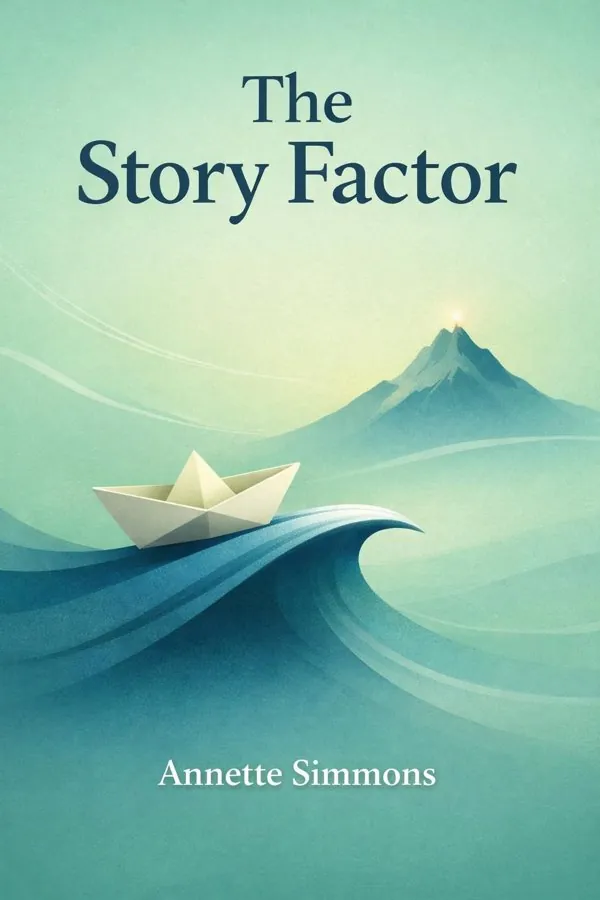
The Story Factor: Inspiration, Influence, and Persuasion Through the Art of Storytelling: Summary & Key Insights
 10 min6 chaptersAudio available
What Is The Story Factor: Inspiration, Influence, and Persuasion Through the Art of Storytelling About?
The Story Factor: Inspiration, Influence, and Persuasion Through the Art of Storytelling by Annette Simmons is a communication book spanning 6 pages. The Story Factor explores how storytelling can be used as a powerful tool for persuasion, leadership, and communication. Annette Simmons demonstrates that stories are more effective than arguments or data in inspiring trust, motivating action, and shaping beliefs. Through examples and practical guidance, she shows how anyone can harness the emotional and psychological impact of stories to influence others authentically.
This FizzRead summary covers all 6 key chapters of The Story Factor: Inspiration, Influence, and Persuasion Through the Art of Storytelling in approximately 10 minutes, distilling the most important ideas, arguments, and takeaways from Annette Simmons's work. Also available as an audio summary and Key Quotes Podcast.
The Story Factor: Inspiration, Influence, and Persuasion Through the Art of Storytelling
The Story Factor explores how storytelling can be used as a powerful tool for persuasion, leadership, and communication. Annette Simmons demonstrates that stories are more effective than arguments or data in inspiring trust, motivating action, and shaping beliefs. Through examples and practical guidance, she shows how anyone can harness the emotional and psychological impact of stories to influence others authentically.
Who Should Read The Story Factor: Inspiration, Influence, and Persuasion Through the Art of Storytelling?
This book is perfect for anyone interested in communication and looking to gain actionable insights in a short read. Whether you're a student, professional, or lifelong learner, the key ideas from The Story Factor: Inspiration, Influence, and Persuasion Through the Art of Storytelling by Annette Simmons will help you think differently.
- ✓Readers who enjoy communication and want practical takeaways
- ✓Professionals looking to apply new ideas to their work and life
- ✓Anyone who wants the core insights of The Story Factor: Inspiration, Influence, and Persuasion Through the Art of Storytelling in just 10 minutes
Want the full summary?
Get instant access to this book summary and 100K+ more with Fizz Moment.
Get Free SummaryAvailable on App Store • Free to download
Key Chapters
Every time you tell a story, you call forth emotion—the sense of being alive that pure information cannot evoke. Stories are the oldest behavioral technology we possess; they give facts emotional gravity. I explain that a story creates meaning because it situates events in a human context. When I tell you that 'someone faced a choice,' 'made a mistake,' or 'learned something,' your brain becomes engaged as if participating. That empathy is what builds connection. Research and experience both show that people act from emotion first and then justify with reason later. So if your argument lacks emotional resonance, your data may never find purchase.
In leadership and persuasion, trust is currency, and stories mint that currency faster than anything else. A well-told story allows your audience to experience the moment with you rather than receiving conclusions passively. It bypasses defensiveness. Stories replace 'You should believe me' with 'Let me show you who I am and what I’ve learned.' When others hear authenticity rather than agenda, belief follows naturally.
Consider the difference between a manager ordering cooperation and one who shares a story about a difficult project she once survived, emphasizing teamwork and resilience. The second approach humanizes authority, inviting empathy rather than resistance. In every field—from business to politics to education—the people who connect through story wield deep persuasive strength because they’re trusted. They move people not through knowledge but through shared experience.
To me, understanding the power of story is about unlocking our natural capacity for empathy. It reminds us that influence is emotional alignment, not domination. Once you accept that storytelling is how humans code meaning, you’ll see every conversation as a potential act of creative leadership.
You might ask, why exactly do stories exert such influence? The answer lies both in psychology and in neuroscience. Story carries the architecture of human attention; we’re hardwired to remember patterns of cause and consequence, struggle and resolution. When information arrives embedded in story, our brains release neurochemicals that make us feel connected—oxytocin, dopamine—turning passive listening into active experience.
Stories are cognitive simulators. Hearing one activates regions of the brain associated with sensory and motor experiences, which means we live the story vicariously. This immersion builds empathy automatically. In *The Story Factor*, I show how narrative coherence—beginning, obstacle, transformation—mirrors the way we structure memory. A fact presented without story remains isolated; a fact housed in a narrative becomes meaning.
Psychologically, people trust storytellers who reveal vulnerability. Unlike logical argument, stories allow the teller to say, 'I’ve been confused, scared, or humbled,' and paradoxically that makes listeners feel safer. It’s authenticity that persuades, not perfection. When stories connect to an emotion we already understand—fear, hope, pride—they bypass rational gatekeepers. Belief shifts quietly because the listener feels instead of debating.
Important too is that stories wrap messages in metaphor. Metaphor speaks to the intuitive mind, freeing us from the limits of literal logic. When I teach persuasion, I remind my students that story isn’t about tricking the mind—it’s about speaking the language it already understands. This is why data without narrative seldom changes behavior; it fails to touch identity. Story, however, invites us to see ourselves within it, which is the essence of motivation.
+ 4 more chapters — available in the FizzRead app
All Chapters in The Story Factor: Inspiration, Influence, and Persuasion Through the Art of Storytelling
About the Author
Annette Simmons is an American author, speaker, and consultant specializing in storytelling, leadership, and organizational culture. She is the founder of Group Process Consulting and has written several influential books on communication and influence, including Whoever Tells the Best Story Wins.
Get This Summary in Your Preferred Format
Read or listen to the The Story Factor: Inspiration, Influence, and Persuasion Through the Art of Storytelling summary by Annette Simmons anytime, anywhere. FizzRead offers multiple formats so you can learn on your terms — all free.
Available formats: App · Audio · PDF · EPUB — All included free with FizzRead
Download The Story Factor: Inspiration, Influence, and Persuasion Through the Art of Storytelling PDF and EPUB Summary
Key Quotes from The Story Factor: Inspiration, Influence, and Persuasion Through the Art of Storytelling
“Every time you tell a story, you call forth emotion—the sense of being alive that pure information cannot evoke.”
“You might ask, why exactly do stories exert such influence?”
Frequently Asked Questions about The Story Factor: Inspiration, Influence, and Persuasion Through the Art of Storytelling
The Story Factor: Inspiration, Influence, and Persuasion Through the Art of Storytelling by Annette Simmons is a communication book that explores key ideas across 6 chapters. The Story Factor explores how storytelling can be used as a powerful tool for persuasion, leadership, and communication. Annette Simmons demonstrates that stories are more effective than arguments or data in inspiring trust, motivating action, and shaping beliefs. Through examples and practical guidance, she shows how anyone can harness the emotional and psychological impact of stories to influence others authentically.
You Might Also Like
Magic Words: The Science and Secrets Behind Seven Words That Motivate, Engage, and Influence
Tim David
10 min
Talking Across The Divide: How to Communicate with People You Disagree with and Maybe Even Change the World
Justin Lee
10 min
The Exceptional Presenter: A Proven Formula to Open Up! and Own the Room
Timothy J. Koegel
10 min
4 Essential Keys to Effective Communication in Love, Life, Work--Anywhere!: Including the 12-Day Communication Challenge!
Bento C. Leal III
10 min
Active Listening Techniques: 30 Practical Tools to Hone Your Communication Skills
Nisha Gupta
10 min
Bargaining for Advantage: Negotiation Strategies for Reasonable People
G. Richard Shell
10 minBrowse by Category
Ready to read The Story Factor: Inspiration, Influence, and Persuasion Through the Art of Storytelling?
Get the full summary and 100K+ more books with Fizz Moment.