
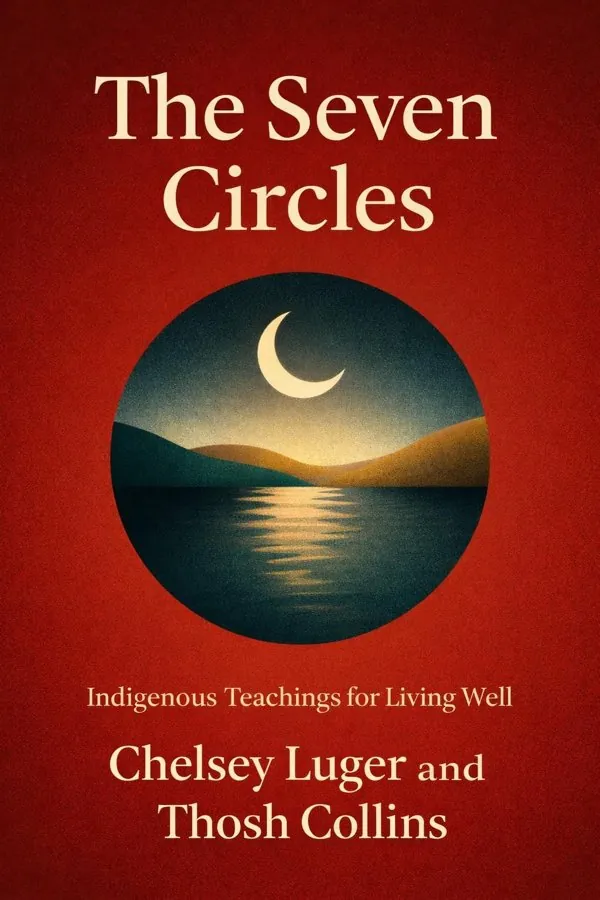
The Seven Circles: Indigenous Teachings for Living Well: Summary & Key Insights
by Chelsey Luger, Thosh Collins
 10 min8 chaptersAudio available
What Is The Seven Circles: Indigenous Teachings for Living Well About?
The Seven Circles: Indigenous Teachings for Living Well by Chelsey Luger, Thosh Collins is a wellness book spanning 8 pages. The Seven Circles: Indigenous Teachings for Living Well presents a holistic wellness philosophy rooted in Indigenous traditions. The authors, Chelsey Luger and Thosh Collins, outline seven interconnected circles—food, movement, sleep, ceremony, sacred space, land, and community—that guide readers toward balance and harmony in modern life. Drawing from their Native American heritage, they blend ancestral wisdom with practical advice for physical, mental, and spiritual well-being.
This FizzRead summary covers all 8 key chapters of The Seven Circles: Indigenous Teachings for Living Well in approximately 10 minutes, distilling the most important ideas, arguments, and takeaways from Chelsey Luger, Thosh Collins's work. Also available as an audio summary and Key Quotes Podcast.
The Seven Circles: Indigenous Teachings for Living Well
The Seven Circles: Indigenous Teachings for Living Well presents a holistic wellness philosophy rooted in Indigenous traditions. The authors, Chelsey Luger and Thosh Collins, outline seven interconnected circles—food, movement, sleep, ceremony, sacred space, land, and community—that guide readers toward balance and harmony in modern life. Drawing from their Native American heritage, they blend ancestral wisdom with practical advice for physical, mental, and spiritual well-being.
Who Should Read The Seven Circles: Indigenous Teachings for Living Well?
This book is perfect for anyone interested in wellness and looking to gain actionable insights in a short read. Whether you're a student, professional, or lifelong learner, the key ideas from The Seven Circles: Indigenous Teachings for Living Well by Chelsey Luger, Thosh Collins will help you think differently.
- ✓Readers who enjoy wellness and want practical takeaways
- ✓Professionals looking to apply new ideas to their work and life
- ✓Anyone who wants the core insights of The Seven Circles: Indigenous Teachings for Living Well in just 10 minutes
Want the full summary?
Get instant access to this book summary and 100K+ more with Fizz Moment.
Get Free SummaryAvailable on App Store • Free to download
Key Chapters
Food is more than fuel—it is story, memory, and relationship. When we talk about Indigenous foodways, we speak of ecology and kinship. Before you eat, ask: where did this come from, who helped it arrive, and what gift does it offer? Our ancestors viewed eating as a prayer in action; gratitude was the first ingredient of every meal.
In our communities, food traditions tell us how balance sustains health. For thousands of years, Indigenous peoples ate seasonally and locally—berries in summer, game in winter, seeds and roots throughout the year. This rhythm nourished not just the body but the land itself. The over-processed foods dominating modern diets disconnect us from that natural cadence. Food sovereignty—choosing and preparing foods that honor origin—becomes a way to reclaim culture and vitality.
When we prepare food today, we remember that the kitchen is sacred space. Chopping vegetables can be ceremony. Cooking with children can be storytelling. Sharing a meal is an act of relationship-building. The lesson of this circle is simple but transformative: eat consciously. Whether you harvest wild rice, roast squash, or gather around a potluck table, eat with awareness of your connection to life. As you do so, healing begins—not just physically, but spiritually.
Movement, like food, is a form of ceremony. Our bodies were never meant to sit still all day. Indigenous people moved with purpose—tracking, dancing, tending the land. Each motion mirrored the rhythms of Earth, guided by respect for function and flow.
When I train or stretch, I think of movement as prayer. That mindset shifts everything. You’re not moving to punish yourself or to chase an aesthetic. You’re moving because movement keeps the spirit alive. Traditional games, dances, and hunts were ways of sustaining life and celebrating strength. We carry that tradition when we run freely, lift our children, or dig our hands into soil.
In the book we describe movement as cyclical rather than linear; the very notion of exercise shifts from performance to participation. You engage your body the way you engage ceremony. You honor its needs, respond to its signals, and express gratitude for what it can do. Everyday motion—walking in stillness, stretching before sleep, flowing through breath—reintegrates you with the rhythm of land and wind. Movement reminds us that health is action wrapped in awareness.
+ 6 more chapters — available in the FizzRead app
All Chapters in The Seven Circles: Indigenous Teachings for Living Well
About the Authors
Chelsey Luger is a wellness advocate and journalist from the Turtle Mountain Band of Chippewa and Standing Rock Sioux Tribe. Thosh Collins is a photographer and wellness educator from the Onk-Akimel O’odham, Seneca-Cayuga, and Osage Nations. Together, they co-founded Well For Culture, a movement promoting Indigenous approaches to health and wellness.
Get This Summary in Your Preferred Format
Read or listen to the The Seven Circles: Indigenous Teachings for Living Well summary by Chelsey Luger, Thosh Collins anytime, anywhere. FizzRead offers multiple formats so you can learn on your terms — all free.
Available formats: App · Audio · PDF · EPUB — All included free with FizzRead
Download The Seven Circles: Indigenous Teachings for Living Well PDF and EPUB Summary
Key Quotes from The Seven Circles: Indigenous Teachings for Living Well
“Food is more than fuel—it is story, memory, and relationship.”
“Movement, like food, is a form of ceremony.”
Frequently Asked Questions about The Seven Circles: Indigenous Teachings for Living Well
The Seven Circles: Indigenous Teachings for Living Well by Chelsey Luger, Thosh Collins is a wellness book that explores key ideas across 8 chapters. The Seven Circles: Indigenous Teachings for Living Well presents a holistic wellness philosophy rooted in Indigenous traditions. The authors, Chelsey Luger and Thosh Collins, outline seven interconnected circles—food, movement, sleep, ceremony, sacred space, land, and community—that guide readers toward balance and harmony in modern life. Drawing from their Native American heritage, they blend ancestral wisdom with practical advice for physical, mental, and spiritual well-being.
You Might Also Like
How We Heal: Uncover Your Power and Set Yourself Free
Alexandra Elle
10 min
A Year of Self-Care: Daily Practices and Inspiration for Caring for Yourself
Zoe Shaw
10 min
Biohacker’s Handbook: Upgrade Your Life
Olli Sovijärvi, Teemu Arina, Jaakko Halmetoja
10 min
Bliss More: How to Succeed in Meditation Without Really Trying
Light Watkins
10 min
Body Kindness: Transform Your Health from the Inside Out—and Never Say Diet Again
Rebecca Scritchfield
10 min
Cook, Eat, Run: Cook Fast, Boost Performance with 75 Ultimate Recipes for Runners
Charlie Watson
10 minBrowse by Category
Ready to read The Seven Circles: Indigenous Teachings for Living Well?
Get the full summary and 100K+ more books with Fizz Moment.