
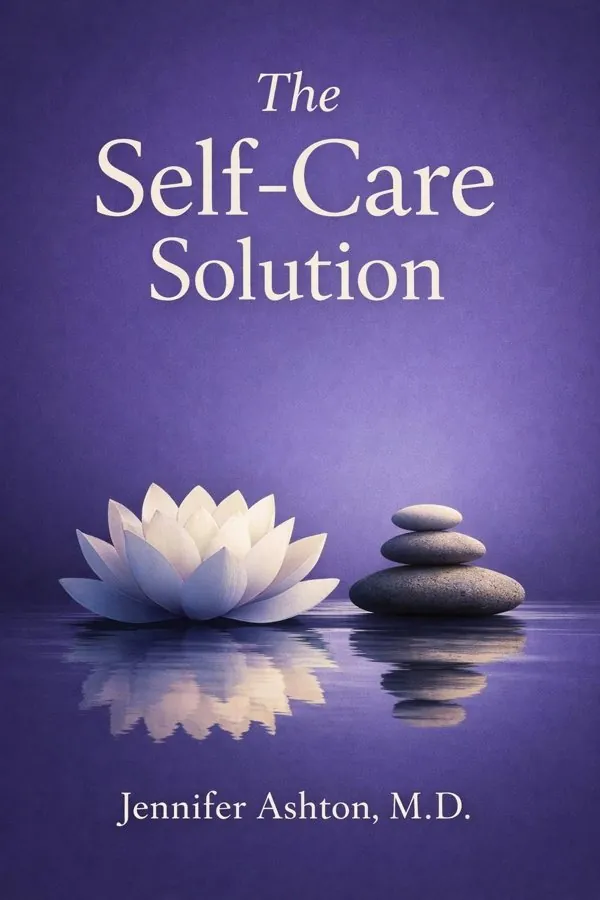
The Self-Care Solution: A Year of Becoming Happier, Healthier, and Fitter—One Month at a Time: Summary & Key Insights
by Jennifer Ashton, M.D.
 10 min9 chaptersAudio available
Key Takeaways from The Self-Care Solution: A Year of Becoming Happier, Healthier, and Fitter—One Month at a Time
Big transformations often begin with something so basic that people dismiss it.
Many people treat exercise as punishment for what they ate or as a cosmetic project.
People often wear exhaustion like a badge of honor, but Ashton argues that poor sleep quietly sabotages nearly every self-care goal.
Nutrition becomes counterproductive when it is ruled by guilt, extremes, and confusion.
One of the most powerful forms of self-care is not adding more activity but becoming more aware.
What Is The Self-Care Solution: A Year of Becoming Happier, Healthier, and Fitter—One Month at a Time About?
The Self-Care Solution: A Year of Becoming Happier, Healthier, and Fitter—One Month at a Time by Jennifer Ashton, M.D. is a health_med book spanning 12 pages. In The Self-Care Solution, Jennifer Ashton, M.D., turns wellness into something far more practical than a vague promise to “do better.” Instead of offering another all-or-nothing health reset, she presents a structured, month-by-month plan that helps readers improve their lives through focused, manageable changes. Each month highlights one area of self-care—hydration, movement, sleep, nutrition, mindfulness, digital habits, gratitude, finances, relationships, sexual health, service, and reflection—so that progress feels sustainable rather than overwhelming. What makes this book especially valuable is its blend of medical credibility and personal honesty. Ashton is not just a physician dispensing clinical advice from a distance; she is a board-certified doctor, media health expert, and someone who openly shares her own efforts to build better habits. That combination gives the book both authority and warmth. Her message is simple but powerful: health is not created by dramatic overhauls. It is built through repeated, intentional choices made over time. For readers who want a realistic roadmap to feeling happier, healthier, and more in control, this book offers a clear and encouraging place to begin.
This FizzRead summary covers all 9 key chapters of The Self-Care Solution: A Year of Becoming Happier, Healthier, and Fitter—One Month at a Time in approximately 10 minutes, distilling the most important ideas, arguments, and takeaways from Jennifer Ashton, M.D.'s work. Also available as an audio summary and Key Quotes Podcast.
The Self-Care Solution: A Year of Becoming Happier, Healthier, and Fitter—One Month at a Time
In The Self-Care Solution, Jennifer Ashton, M.D., turns wellness into something far more practical than a vague promise to “do better.” Instead of offering another all-or-nothing health reset, she presents a structured, month-by-month plan that helps readers improve their lives through focused, manageable changes. Each month highlights one area of self-care—hydration, movement, sleep, nutrition, mindfulness, digital habits, gratitude, finances, relationships, sexual health, service, and reflection—so that progress feels sustainable rather than overwhelming.
What makes this book especially valuable is its blend of medical credibility and personal honesty. Ashton is not just a physician dispensing clinical advice from a distance; she is a board-certified doctor, media health expert, and someone who openly shares her own efforts to build better habits. That combination gives the book both authority and warmth. Her message is simple but powerful: health is not created by dramatic overhauls. It is built through repeated, intentional choices made over time. For readers who want a realistic roadmap to feeling happier, healthier, and more in control, this book offers a clear and encouraging place to begin.
Who Should Read The Self-Care Solution: A Year of Becoming Happier, Healthier, and Fitter—One Month at a Time?
This book is perfect for anyone interested in health_med and looking to gain actionable insights in a short read. Whether you're a student, professional, or lifelong learner, the key ideas from The Self-Care Solution: A Year of Becoming Happier, Healthier, and Fitter—One Month at a Time by Jennifer Ashton, M.D. will help you think differently.
- ✓Readers who enjoy health_med and want practical takeaways
- ✓Professionals looking to apply new ideas to their work and life
- ✓Anyone who wants the core insights of The Self-Care Solution: A Year of Becoming Happier, Healthier, and Fitter—One Month at a Time in just 10 minutes
Want the full summary?
Get instant access to this book summary and 100K+ more with Fizz Moment.
Get Free SummaryAvailable on App Store • Free to download
Key Chapters
Big transformations often begin with something so basic that people dismiss it. Ashton starts the year with hydration because water affects nearly everything: energy, digestion, concentration, exercise performance, appetite regulation, and even mood. Many people assume they are functioning normally when they are actually operating in a mildly dehydrated state. That can make fatigue, headaches, sluggishness, and overeating feel like personal failures when they may partly be physiological.
Her deeper point is that self-care works best when it begins with foundations rather than heroic effort. Drinking more water is simple, measurable, and accessible. It creates an early win, and early wins matter because they build confidence. Instead of demanding a complete life overhaul in January, Ashton asks readers to focus on a single practice they can realistically maintain.
She encourages practical strategies: carry a refillable bottle, drink water before coffee or meals, track intake, and pay attention to environmental factors such as exercise, heat, or travel. Hydration can also replace less helpful habits, such as mindless snacking or constant sugary drinks. The goal is not perfection or obsessive counting, but awareness.
This chapter sets the tone for the entire book. Small habits are not trivial; they are often the gateway to larger change. When you consistently do one healthy thing, you begin to see yourself differently. You become someone who cares for your body on purpose.
Actionable takeaway: Pick a daily hydration target, attach it to existing routines like waking up and meals, and track it for one full month before trying to change anything else.
Many people treat exercise as punishment for what they ate or as a cosmetic project. Ashton reframes it as medicine. That shift matters because medicine is not optional when health is on the line. Movement supports cardiovascular health, brain function, bone strength, metabolic stability, sleep quality, and emotional resilience. In other words, exercise is not one wellness category among many; it influences almost all the others.
Her approach is refreshingly realistic. You do not need to become a marathoner or spend hours in the gym to benefit. What matters first is consistency. Ashton emphasizes choosing forms of movement that fit your body, schedule, and preferences. Walking, strength training, yoga, cycling, stretching, or interval sessions can all count. The best exercise plan is the one you will actually do repeatedly.
She also challenges the excuse that there is never enough time. A busy life does not eliminate the need for movement; it increases it. Short sessions still matter. Ten minutes of brisk walking, taking stairs, doing bodyweight exercises at home, or building movement breaks into the workday can create real benefits when repeated often.
Perhaps the most empowering insight is that exercise changes identity as much as physiology. Once you start moving regularly, you begin to see yourself as active rather than inactive, capable rather than stuck. That mindset helps future habits take root.
Actionable takeaway: Schedule movement like an appointment, choose a form you dislike the least or enjoy the most, and commit to a minimum baseline you can maintain even on your busiest days.
Nutrition becomes counterproductive when it is ruled by guilt, extremes, and confusion. Ashton’s approach is more grounded: food should support energy, health, and enjoyment without becoming a source of constant emotional strain. Rather than promoting a trendy diet, she encourages readers to focus on sustainable patterns—more whole foods, better portion awareness, balanced meals, and smarter defaults.
Her medical perspective helps cut through the noise. The goal is not dietary perfection or rigid purity. It is to nourish the body consistently enough that blood sugar, hunger, mood, and energy become more stable. When meals are balanced with protein, fiber, healthy fats, and hydration, people often feel better and make better decisions throughout the day. That creates a virtuous cycle.
Ashton also recognizes that eating is shaped by real life: work schedules, family demands, emotional triggers, convenience, culture, and budget. Effective self-care must account for those realities. Practical improvements might include planning breakfasts in advance, keeping nutritious snacks nearby, cooking more often at home, reducing ultra-processed defaults, or noticing when stress drives unnecessary eating.
An important subtext of this chapter is that self-care should reduce chaos. If your eating plan is so strict that it causes obsession or collapse, it is not serving you. Good nutrition is meant to create steadiness and confidence, not fear.
Actionable takeaway: Choose one nutritional upgrade for the month—such as eating a protein-rich breakfast, adding vegetables to lunch and dinner, or reducing sugary drinks—and repeat it until it becomes automatic.
One of the most powerful forms of self-care is not adding more activity but becoming more aware. Ashton introduces mindfulness as a way to observe thoughts, stress, and habits without being immediately controlled by them. In a culture of constant stimulation and speed, that pause can feel radical. It allows people to respond intentionally rather than react automatically.
This chapter is not about becoming perfectly calm or spiritually transformed overnight. It is about training attention. Mindfulness can mean meditation, deep breathing, journaling, prayer, or simply taking a moment to notice your body and emotions before acting. The practical benefit is enormous: when you become more aware of what you feel, you are less likely to numb yourself with food, screens, overwork, or irritability.
Ashton links mindfulness to health because stress is not just emotional; it is physiological. Chronic stress can affect sleep, appetite, blood pressure, concentration, and relationships. A mindfulness practice helps interrupt that cascade. Even a few minutes a day can improve self-regulation and reduce the sense that life is happening at you all the time.
She also emphasizes accessibility. Mindfulness does not require a retreat or a perfect environment. It can happen during a commute, before a meeting, while walking, or during a pause between tasks. The key is repetition, not complexity.
Actionable takeaway: Create a daily five-minute mindfulness ritual—breathing, meditation, or journaling—and use it at the same time each day so it becomes a mental reset rather than an occasional rescue tool.
Technology promises connection and efficiency, yet unchecked digital use often leaves people distracted, depleted, and strangely absent from their own lives. Ashton’s digital detox month explores how screens can erode sleep, focus, relationships, and emotional well-being when they are used without limits. The problem is not technology itself; it is reflexive overuse.
A useful insight here is that digital habits are rarely neutral. Endless scrolling, constant notifications, and the pressure to remain available keep the brain in a state of fragmentation. That weakens attention and makes restoration harder. Social media can also intensify comparison, anxiety, and dissatisfaction, especially when people confuse curated images with real life.
Ashton encourages readers to audit their digital behavior honestly. When are devices helping, and when are they merely filling silence or avoiding discomfort? A detox does not have to mean disappearing from modern life. It can mean no phones during meals, no screens in the bedroom, checking email at set times, turning off nonessential notifications, or taking regular social media breaks.
The larger lesson is about reclaiming agency. Self-care sometimes means not adding another healthy practice but removing a constant drain. Once digital noise decreases, many people rediscover time for walking, reading, conversation, sleep, and reflection.
Actionable takeaway: Identify your biggest digital stressor, create one hard boundary around it this week, and protect at least one device-free zone or hour every day.
Health is often reduced to diet and exercise, but Ashton expands self-care into emotional, financial, and relational life. That broader definition is one of the book’s most valuable contributions. Gratitude, financial wellness, and healthy relationships may seem like separate topics, yet all three shape stress levels, daily choices, and overall resilience.
Gratitude is not denial or forced positivity. It is a discipline of noticing what is still good, stable, and meaningful, even during difficulty. Practiced consistently, gratitude can shift attention away from constant lack and toward sufficiency, which supports emotional balance.
Financial wellness enters the conversation because money stress affects sleep, relationships, and mental health. Ashton does not suggest that budgeting solves every problem, but she does argue that avoiding finances increases anxiety. Honest review, spending awareness, saving habits, and practical planning are forms of self-care because they reduce chronic uncertainty.
Relationships are equally central. The quality of our connections influences happiness, stress, and even physical health. Supportive relationships buffer hardship; unhealthy ones drain energy and confidence. Ashton encourages readers to invest in communication, boundaries, and intentional time with people who matter.
By placing these topics inside a health book, she makes an important point: wellness is not merely what happens in your body. It is also shaped by what happens in your mind, bank account, home, and conversations.
Actionable takeaway: Begin a simple gratitude practice, review one area of personal spending, and reach out intentionally to one important person this week to strengthen a meaningful relationship.
Many wellness books avoid topics that feel personal, uncomfortable, or morally complex. Ashton does the opposite by including sexual health and giving back as essential parts of a whole life. Her inclusion of these themes signals that self-care is not selfish indulgence; it is honest, mature stewardship of physical, emotional, and social well-being.
Sexual health matters because it intersects with hormones, relationships, self-image, communication, and preventive care. Yet many people neglect it out of embarrassment, misinformation, or busyness. Ashton encourages readers to approach this area with the same seriousness they bring to exercise or nutrition: ask questions, seek medical guidance, stay informed, and communicate openly. Shame should never be the default framework for health.
The month on giving back may initially seem less personal, but it carries a profound insight: caring for others can strengthen our own well-being. Service creates meaning, perspective, and connection. It interrupts self-absorption and reminds people that they are part of a larger community. Volunteering, mentoring, donating, or simply showing up for someone in need can improve both mental health and life satisfaction.
Together, these chapters challenge narrow ideas of wellness. A healthy life is not only about reducing risk or optimizing performance. It is also about intimacy, purpose, contribution, and feeling connected to something beyond yourself.
Actionable takeaway: Schedule one overdue conversation or checkup related to sexual health, and choose one concrete act of service this month that you can complete without waiting for perfect timing.
The book’s final lesson is that change does not stick unless people stop to recognize it. Ashton closes the year with reflection and reset, underscoring that self-care is an ongoing process, not a twelve-month challenge that ends in December. Reflection helps readers measure what worked, what did not, and what they want to carry forward.
This matters because progress is often invisible when it is gradual. A person may sleep better, react less impulsively, move more, and feel calmer around food without noticing the full shift. Reflection makes growth visible. It also protects against the common tendency to abandon habits after one slip or one difficult season. Instead of seeing setbacks as failure, Ashton frames them as data.
Her broader argument throughout the book is that health is built one domain at a time. By dedicating each month to a single focus, readers reduce overwhelm and increase follow-through. Over time, these monthly experiments become part of a larger identity: someone who pays attention, makes adjustments, and takes responsibility for their well-being.
The beauty of this method is that it is renewable. Once the year ends, readers can revisit the areas that need attention most. Different life seasons may require stronger focus on sleep, finances, stress, or relationships. Self-care remains dynamic.
Actionable takeaway: At the end of each month, write down what improved, what obstacles appeared, and the one habit from that month you will deliberately carry into the next.
All Chapters in The Self-Care Solution: A Year of Becoming Happier, Healthier, and Fitter—One Month at a Time
About the Authors
Jennifer Ashton, M.D., is a board-certified physician, author, and prominent medical media figure best known as the Chief Medical Correspondent for ABC News. Trained as an obstetrician-gynecologist, she has built a career translating complex health information into clear, practical guidance for the public. Ashton is especially respected for her work in women’s health, wellness, prevention, and lifestyle medicine. Beyond television, she has written several books that encourage readers to take a realistic, evidence-based approach to improving their well-being. Her writing combines clinical expertise with personal candor, making her advice both authoritative and relatable. In The Self-Care Solution, she draws on her medical background and lived experience to show that lasting health is built through consistent, manageable habits rather than perfection or extremes.
Get This Summary in Your Preferred Format
Read or listen to the The Self-Care Solution: A Year of Becoming Happier, Healthier, and Fitter—One Month at a Time summary by Jennifer Ashton, M.D. anytime, anywhere. FizzRead offers multiple formats so you can learn on your terms — all free.
Available formats: App · Audio · PDF · EPUB — All included free with FizzRead
Download The Self-Care Solution: A Year of Becoming Happier, Healthier, and Fitter—One Month at a Time PDF and EPUB Summary
Key Quotes from The Self-Care Solution: A Year of Becoming Happier, Healthier, and Fitter—One Month at a Time
“Big transformations often begin with something so basic that people dismiss it.”
“Many people treat exercise as punishment for what they ate or as a cosmetic project.”
“People often wear exhaustion like a badge of honor, but Ashton argues that poor sleep quietly sabotages nearly every self-care goal.”
“Nutrition becomes counterproductive when it is ruled by guilt, extremes, and confusion.”
“One of the most powerful forms of self-care is not adding more activity but becoming more aware.”
Frequently Asked Questions about The Self-Care Solution: A Year of Becoming Happier, Healthier, and Fitter—One Month at a Time
The Self-Care Solution: A Year of Becoming Happier, Healthier, and Fitter—One Month at a Time by Jennifer Ashton, M.D. is a health_med book that explores key ideas across 9 chapters. In The Self-Care Solution, Jennifer Ashton, M.D., turns wellness into something far more practical than a vague promise to “do better.” Instead of offering another all-or-nothing health reset, she presents a structured, month-by-month plan that helps readers improve their lives through focused, manageable changes. Each month highlights one area of self-care—hydration, movement, sleep, nutrition, mindfulness, digital habits, gratitude, finances, relationships, sexual health, service, and reflection—so that progress feels sustainable rather than overwhelming. What makes this book especially valuable is its blend of medical credibility and personal honesty. Ashton is not just a physician dispensing clinical advice from a distance; she is a board-certified doctor, media health expert, and someone who openly shares her own efforts to build better habits. That combination gives the book both authority and warmth. Her message is simple but powerful: health is not created by dramatic overhauls. It is built through repeated, intentional choices made over time. For readers who want a realistic roadmap to feeling happier, healthier, and more in control, this book offers a clear and encouraging place to begin.
You Might Also Like

On Immunity
Eula Biss
10 min
The Three-Body Problem
Liu Cixin
10 min
Community Health Volunteer Toolkit: Training and Practical Activities
World Health Organization
10 min
Healing Back Pain: The Mind-Body Connection
John E. Sarno
10 min
Health Literacy for All: Practical Guides to Communicate Health Information (Compilations)
World Health Organization
10 min
The Complete Guide to Sports Supplements: An Evidence-Based Review
Anita Bean
10 minBrowse by Category
Ready to read The Self-Care Solution: A Year of Becoming Happier, Healthier, and Fitter—One Month at a Time?
Get the full summary and 100K+ more books with Fizz Moment.