
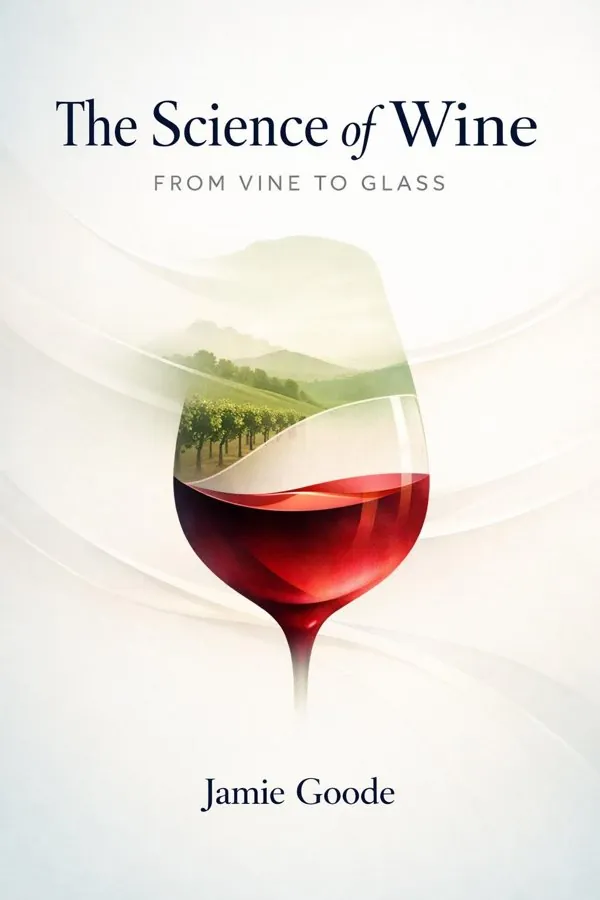
The Science of Wine: From Vine to Glass: Summary & Key Insights
by Jamie Goode
 10 min5 chaptersAudio available
What Is The Science of Wine: From Vine to Glass About?
The Science of Wine: From Vine to Glass by Jamie Goode is a popular_sci book spanning 5 pages. This book explores the scientific principles behind viticulture and winemaking, explaining how chemistry, biology, and physics influence the taste, aroma, and quality of wine. It bridges the gap between science and the art of wine appreciation, offering insights into fermentation, terroir, and sensory perception.
This FizzRead summary covers all 5 key chapters of The Science of Wine: From Vine to Glass in approximately 10 minutes, distilling the most important ideas, arguments, and takeaways from Jamie Goode's work. Also available as an audio summary and Key Quotes Podcast.
The Science of Wine: From Vine to Glass
This book explores the scientific principles behind viticulture and winemaking, explaining how chemistry, biology, and physics influence the taste, aroma, and quality of wine. It bridges the gap between science and the art of wine appreciation, offering insights into fermentation, terroir, and sensory perception.
Who Should Read The Science of Wine: From Vine to Glass?
This book is perfect for anyone interested in popular_sci and looking to gain actionable insights in a short read. Whether you're a student, professional, or lifelong learner, the key ideas from The Science of Wine: From Vine to Glass by Jamie Goode will help you think differently.
- ✓Readers who enjoy popular_sci and want practical takeaways
- ✓Professionals looking to apply new ideas to their work and life
- ✓Anyone who wants the core insights of The Science of Wine: From Vine to Glass in just 10 minutes
Want the full summary?
Get instant access to this book summary and 100K+ more with Fizz Moment.
Get Free SummaryAvailable on App Store • Free to download
Key Chapters
The grapevine is not merely a passive bearer of fruit; it is a sophisticated living system whose physiology determines the potential of any wine. In this section, I explore how photosynthesis, nutrient absorption, and genetic variation shape grape development. Grapevines thrive because they have evolved mechanisms to balance exposure and stress: their leaves capture sunlight and drive sugar accumulation, while roots negotiate complex exchanges with soil microbes. The plant’s genetic lineage—whether Cabernet Sauvignon or Chardonnay—encodes specific metabolic pathways influencing flavor precursors and phenolic composition.
I emphasize how grapevine genetics intersects with vineyard management. Pruning, canopy arrangement, and water stress are not just practical chores; they manipulate biochemical outcomes. When sunlight filters through leaves, it triggers the synthesis of anthocyanins—the pigments responsible for a red wine’s color brightness. When drought stress occurs, hormonal signals reshape fruit chemistry, leading to concentrated flavors. These processes are not random; they are orchestrated biological responses to the environment.
Understanding grapevine physiology reveals how winemaking begins long before harvest. A vine’s health determines sugar levels, acid balance, and aromatic potential. A poor understanding here can lead to imbalance later in fermentation. Thus, the science of viticulture is the first act in the play of wine creation—a dance between genetics and climate that sets the stage for everything that follows.
Terroir is perhaps the most poetic term in the wine world, often used to invoke mystery and culture. Yet beneath that poetry lies a deep scientific truth. Terroir is the integration of soil chemistry, topography, climate, and even microbial life. In the book, I unpack how each component leaves a measurable imprint on the grape and, consequently, the wine’s flavor.
Soils are the vine’s foundation. Calcareous soils increase water retention and influence pH balance, while volcanic soils enrich mineral uptake, subtly shaping mouthfeel and aromatic expression. Temperature and humidity modulate vine metabolism—too cool and acidity remains high; too warm and sugars spike prematurely. Even the microbes living around roots contribute to terroir, forming intimate symbiotic relationships that affect nutrient availability and stress resistance. It’s a living ecosystem, not merely a backdrop.
When you taste a wine and say, “This comes from the Rhône” or “It’s distinctly Marlborough,” what you’re identifying is an environmental fingerprint written by physics and biology. The miracle of terroir lies in its reproducibility: science shows that these local interactions consistently yield distinct chemical signatures. Understanding terroir does not undermine its romance; it validates it. We’re not sentimental when we say soil and sky make flavor; we’re describing a physical reality—the Earth as co-creator of art.
+ 3 more chapters — available in the FizzRead app
All Chapters in The Science of Wine: From Vine to Glass
About the Author
Jamie Goode is a British wine writer with a PhD in plant biology. He is known for his expertise in the science of wine and contributes to various publications, including The Sunday Express. He runs the website wineanorak.com and is recognized for making complex scientific topics accessible to wine enthusiasts.
Get This Summary in Your Preferred Format
Read or listen to the The Science of Wine: From Vine to Glass summary by Jamie Goode anytime, anywhere. FizzRead offers multiple formats so you can learn on your terms — all free.
Available formats: App · Audio · PDF · EPUB — All included free with FizzRead
Download The Science of Wine: From Vine to Glass PDF and EPUB Summary
Key Quotes from The Science of Wine: From Vine to Glass
“The grapevine is not merely a passive bearer of fruit; it is a sophisticated living system whose physiology determines the potential of any wine.”
“Terroir is perhaps the most poetic term in the wine world, often used to invoke mystery and culture.”
Frequently Asked Questions about The Science of Wine: From Vine to Glass
The Science of Wine: From Vine to Glass by Jamie Goode is a popular_sci book that explores key ideas across 5 chapters. This book explores the scientific principles behind viticulture and winemaking, explaining how chemistry, biology, and physics influence the taste, aroma, and quality of wine. It bridges the gap between science and the art of wine appreciation, offering insights into fermentation, terroir, and sensory perception.
You Might Also Like

Structures: Or Why Things Don"t Fall Down
J.E. Gordon
10 min
The Road to Wigan Pier
George Orwell
10 min
Bonk: The Curious Coupling of Science and Sex
Mary Roach
10 min
First Bite: How We Learn to Eat
Bee Wilson
10 min
In Pursuit Of The Unknown: 17 Equations That Changed The World
Ian Stewart
10 min
Napoleon's Buttons: 17 Molecules That Changed History
Penny Le Couteur and Jay Burreson
10 minBrowse by Category
Ready to read The Science of Wine: From Vine to Glass?
Get the full summary and 100K+ more books with Fizz Moment.