
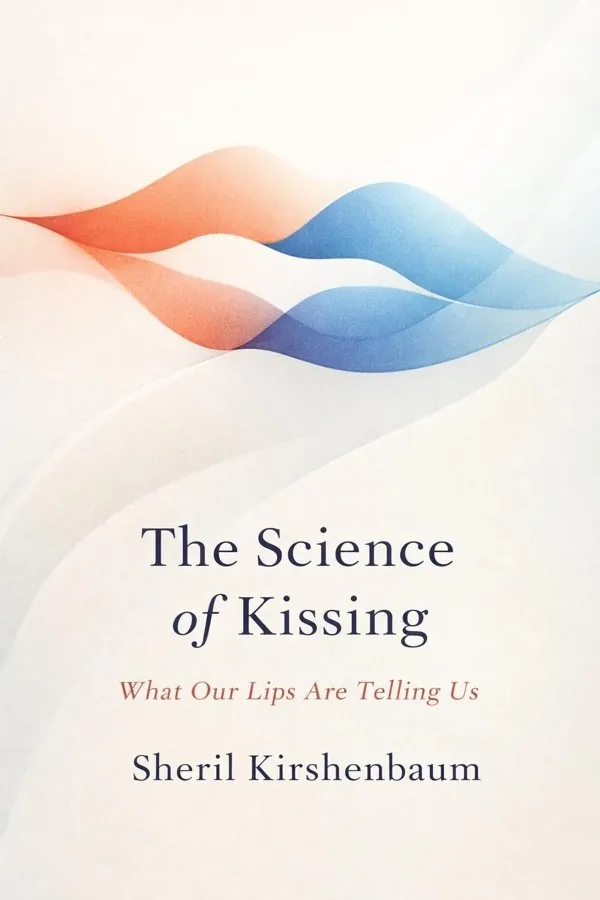
The Science of Kissing: What Our Lips Are Telling Us: Summary & Key Insights
 10 min9 chaptersAudio available
What Is The Science of Kissing: What Our Lips Are Telling Us About?
The Science of Kissing: What Our Lips Are Telling Us by Sheril Kirshenbaum is a popular_sci book spanning 9 pages. In this engaging exploration, science writer Sheril Kirshenbaum delves into the biological, evolutionary, and cultural aspects of kissing. Drawing from neuroscience, anthropology, and psychology, she explains why humans kiss, how it affects our brains and relationships, and what it reveals about human connection and communication.
This FizzRead summary covers all 9 key chapters of The Science of Kissing: What Our Lips Are Telling Us in approximately 10 minutes, distilling the most important ideas, arguments, and takeaways from Sheril Kirshenbaum's work. Also available as an audio summary and Key Quotes Podcast.
The Science of Kissing: What Our Lips Are Telling Us
In this engaging exploration, science writer Sheril Kirshenbaum delves into the biological, evolutionary, and cultural aspects of kissing. Drawing from neuroscience, anthropology, and psychology, she explains why humans kiss, how it affects our brains and relationships, and what it reveals about human connection and communication.
Who Should Read The Science of Kissing: What Our Lips Are Telling Us?
This book is perfect for anyone interested in popular_sci and looking to gain actionable insights in a short read. Whether you're a student, professional, or lifelong learner, the key ideas from The Science of Kissing: What Our Lips Are Telling Us by Sheril Kirshenbaum will help you think differently.
- ✓Readers who enjoy popular_sci and want practical takeaways
- ✓Professionals looking to apply new ideas to their work and life
- ✓Anyone who wants the core insights of The Science of Kissing: What Our Lips Are Telling Us in just 10 minutes
Want the full summary?
Get instant access to this book summary and 100K+ more with Fizz Moment.
Get Free SummaryAvailable on App Store • Free to download
Key Chapters
To understand kissing, we must first recognize how diverse and ancient this behavior truly is. The earliest documentation of a kiss comes from India, etched in Sanskrit texts more than three thousand years ago, describing lovers ‘joining mouths.’ Yet even before written history, in cave paintings or ancient sculptures, anthropologists find hints of protokissing gestures—affectionate nuzzling or mouth contact—that illustrate a deeply rooted human inclination.
In ancient Rome, kisses were political and social tools as much as romantic ones. A kiss could signify respect, allegiance, or social rank. In contrast, early Christian authorities were ambivalent, sometimes embracing the kiss as a gesture of peace and at other times condemning it as sinful intimacy. Across continents, different traditions emerged: in parts of Africa and Asia, some cultures have historically avoided lip-kissing altogether, communicating affection through touch, smell, or gesture instead.
This cultural variability challenges the notion that kissing is universal. Anthropological surveys show that while many societies engage in kissing or similar acts, others simply don’t. Yet even among those who abstain, we see behaviors that serve similar bonding and signaling functions. Everywhere, the urge to express closeness—physically and emotionally—takes shape in some shared form. By tracing these customs, we learn that kissing, while not identical everywhere, fulfills a singular human desire: to connect and communicate intimacy in physical proximity.
Why do we kiss at all? Biologists suspect that the origins of kissing lie deep in our evolutionary past. One plausible root is what researchers term ‘kiss-feeding’—the behavior of mothers pre-chewing food and passing it to infants mouth-to-mouth in early human ancestors. This intimate feeding built a foundation for close contact associated with safety, nurturing, and bonding. Over millennia, that gesture may have evolved into a behavior that signalized affection and trust.
Another evolutionary hypothesis links kissing to mate assessment. Our lips and tongues are rich with sensory receptors that pick up subtle biochemical cues. When we kiss, we unconsciously sample another person’s genetic compatibility. The scent and taste of saliva can reveal information about immune system genes (MHC—major histocompatibility complex). Studies show that individuals are often more attracted to the scent of those with differing MHC profiles, a factor that might produce healthier offspring. Essentially, kissing becomes nature’s way of running a silent compatibility test.
Over time, kissing may have evolved into a social and reproductive strategy—a physiological shorthand for evaluating partners and reinforcing pair bonds. That’s why across time and cultures, kisses are so often connected to courtship and love. When lips meet, we are engaging in an evolutionary ritual that transcends conscious choice, carrying echoes of survival and species perpetuation.
+ 7 more chapters — available in the FizzRead app
All Chapters in The Science of Kissing: What Our Lips Are Telling Us
About the Author
Sheril Kirshenbaum is an American science writer and researcher known for her work bridging the gap between science and the public. She has written for major publications and co-hosted science communication programs, focusing on topics such as human behavior, biology, and science policy.
Get This Summary in Your Preferred Format
Read or listen to the The Science of Kissing: What Our Lips Are Telling Us summary by Sheril Kirshenbaum anytime, anywhere. FizzRead offers multiple formats so you can learn on your terms — all free.
Available formats: App · Audio · PDF · EPUB — All included free with FizzRead
Download The Science of Kissing: What Our Lips Are Telling Us PDF and EPUB Summary
Key Quotes from The Science of Kissing: What Our Lips Are Telling Us
“To understand kissing, we must first recognize how diverse and ancient this behavior truly is.”
“Biologists suspect that the origins of kissing lie deep in our evolutionary past.”
Frequently Asked Questions about The Science of Kissing: What Our Lips Are Telling Us
The Science of Kissing: What Our Lips Are Telling Us by Sheril Kirshenbaum is a popular_sci book that explores key ideas across 9 chapters. In this engaging exploration, science writer Sheril Kirshenbaum delves into the biological, evolutionary, and cultural aspects of kissing. Drawing from neuroscience, anthropology, and psychology, she explains why humans kiss, how it affects our brains and relationships, and what it reveals about human connection and communication.
You Might Also Like

Structures: Or Why Things Don"t Fall Down
J.E. Gordon
10 min
The Road to Wigan Pier
George Orwell
10 min
Bonk: The Curious Coupling of Science and Sex
Mary Roach
10 min
First Bite: How We Learn to Eat
Bee Wilson
10 min
In Pursuit Of The Unknown: 17 Equations That Changed The World
Ian Stewart
10 min
Napoleon's Buttons: 17 Molecules That Changed History
Penny Le Couteur and Jay Burreson
10 minBrowse by Category
Ready to read The Science of Kissing: What Our Lips Are Telling Us?
Get the full summary and 100K+ more books with Fizz Moment.