
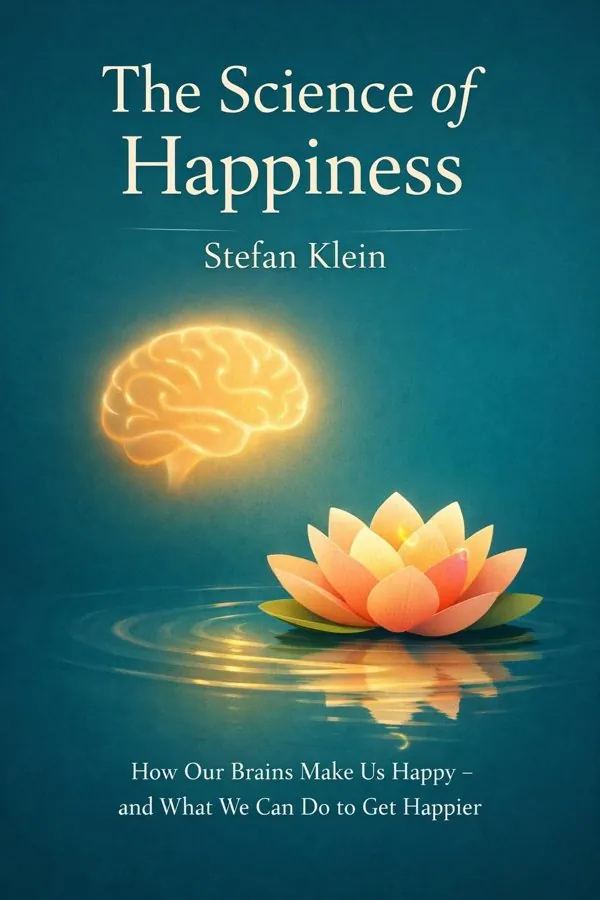
The Science of Happiness: How Our Brains Make Us Happy – and What We Can Do to Get Happier: Summary & Key Insights
by Stefan Klein
 10 min11 chaptersAudio available
What Is The Science of Happiness: How Our Brains Make Us Happy – and What We Can Do to Get Happier About?
The Science of Happiness: How Our Brains Make Us Happy – and What We Can Do to Get Happier by Stefan Klein is a popular_sci book spanning 11 pages. In this accessible and engaging exploration of the science behind happiness, Stefan Klein draws on research from neuroscience, psychology, and biology to explain how our brains generate positive emotions and what we can do to cultivate them. He examines the roles of love, wealth, activity, and even drugs in shaping our well-being, offering readers practical insights into how to live a more fulfilling life.
This FizzRead summary covers all 11 key chapters of The Science of Happiness: How Our Brains Make Us Happy – and What We Can Do to Get Happier in approximately 10 minutes, distilling the most important ideas, arguments, and takeaways from Stefan Klein's work. Also available as an audio summary and Key Quotes Podcast.
The Science of Happiness: How Our Brains Make Us Happy – and What We Can Do to Get Happier
In this accessible and engaging exploration of the science behind happiness, Stefan Klein draws on research from neuroscience, psychology, and biology to explain how our brains generate positive emotions and what we can do to cultivate them. He examines the roles of love, wealth, activity, and even drugs in shaping our well-being, offering readers practical insights into how to live a more fulfilling life.
Who Should Read The Science of Happiness: How Our Brains Make Us Happy – and What We Can Do to Get Happier?
This book is perfect for anyone interested in popular_sci and looking to gain actionable insights in a short read. Whether you're a student, professional, or lifelong learner, the key ideas from The Science of Happiness: How Our Brains Make Us Happy – and What We Can Do to Get Happier by Stefan Klein will help you think differently.
- ✓Readers who enjoy popular_sci and want practical takeaways
- ✓Professionals looking to apply new ideas to their work and life
- ✓Anyone who wants the core insights of The Science of Happiness: How Our Brains Make Us Happy – and What We Can Do to Get Happier in just 10 minutes
Want the full summary?
Get instant access to this book summary and 100K+ more with Fizz Moment.
Get Free SummaryAvailable on App Store • Free to download
Key Chapters
Human beings did not evolve to be constantly happy; we evolved to survive and cooperate. Emotions like joy, trust, fear, and sorrow are not random—they are adaptive responses honed by millions of years of evolution. In our earliest communities, happiness served as reinforcement. It rewarded behaviors that enhanced survival—sharing, bonding, exploration, and mastery. By examining historical and biological evidence, I show that happiness functions as nature’s motivational system: it nudges us toward social cohesion and meaningful action.
Consider a hunter-gatherer group: pleasure arises when sharing food because communal generosity strengthens tribe solidarity. The feeling of joy motivates repetition of the act. This same principle guides our modern tendencies—helping others still brings satisfaction because it fulfills our evolved expectation of mutual support. Happiness, therefore, is not a luxury but a biological tool. Recognizing this biological heritage can liberate us from guilt about seeking pleasure. It is not selfish—it is survival-oriented. The key lies in understanding how ancient mechanisms sometimes clash with modern reality. Today our instincts for security and success can drive overwork or material obsession, yet acknowledging the evolutionary origins allows us to reclaim balance between instinct and insight.
At the heart of happiness lies a complex neurochemical network—the brain’s reward system. Dopamine acts as the spark of desire, urging us toward goals, while serotonin offers contentment once those goals are achieved. Endorphins deliver relief and comfort; oxytocin builds bonds of trust and attachment. Together, these molecules orchestrate our emotional symphony.
In the book, I discuss how modern neuroscience maps these circuits. When we anticipate a reward—success, affection, even tasting chocolate—our brain floods with dopamine. But interestingly, it’s not the achievement itself that matters most; it’s the expectation and journey toward it. That is why a life filled only with passive pleasures leads to boredom, while challenges ignite vitality. Serotonin, on the other hand, regulates mood stability. Its presence is tied to social standing and confidence—when people feel valued, their serotonin rises; exclusion diminishes it.
Understanding this chemistry reveals that happiness is not static—it is dynamic and self-regulating. Our brains are designed to seek novelty and meaning, not endless comfort. Thus, genuine pleasure emerges when we engage with life rather than escape from it. The science teaches humility: our joy is literally wired to action, creativity, and connection.
+ 9 more chapters — available in the FizzRead app
All Chapters in The Science of Happiness: How Our Brains Make Us Happy – and What We Can Do to Get Happier
About the Author
Stefan Klein is a German science writer and author known for his works on neuroscience, psychology, and philosophy. He studied physics and philosophy and worked as a science editor for Der Spiegel. His books, including 'The Science of Happiness' and 'The Secret Pulse of Time,' have been translated into many languages and have become international bestsellers.
Get This Summary in Your Preferred Format
Read or listen to the The Science of Happiness: How Our Brains Make Us Happy – and What We Can Do to Get Happier summary by Stefan Klein anytime, anywhere. FizzRead offers multiple formats so you can learn on your terms — all free.
Available formats: App · Audio · PDF · EPUB — All included free with FizzRead
Download The Science of Happiness: How Our Brains Make Us Happy – and What We Can Do to Get Happier PDF and EPUB Summary
Key Quotes from The Science of Happiness: How Our Brains Make Us Happy – and What We Can Do to Get Happier
“Human beings did not evolve to be constantly happy; we evolved to survive and cooperate.”
“At the heart of happiness lies a complex neurochemical network—the brain’s reward system.”
Frequently Asked Questions about The Science of Happiness: How Our Brains Make Us Happy – and What We Can Do to Get Happier
The Science of Happiness: How Our Brains Make Us Happy – and What We Can Do to Get Happier by Stefan Klein is a popular_sci book that explores key ideas across 11 chapters. In this accessible and engaging exploration of the science behind happiness, Stefan Klein draws on research from neuroscience, psychology, and biology to explain how our brains generate positive emotions and what we can do to cultivate them. He examines the roles of love, wealth, activity, and even drugs in shaping our well-being, offering readers practical insights into how to live a more fulfilling life.
You Might Also Like

Structures: Or Why Things Don"t Fall Down
J.E. Gordon
10 min
The Road to Wigan Pier
George Orwell
10 min
Bonk: The Curious Coupling of Science and Sex
Mary Roach
10 min
First Bite: How We Learn to Eat
Bee Wilson
10 min
In Pursuit Of The Unknown: 17 Equations That Changed The World
Ian Stewart
10 min
Napoleon's Buttons: 17 Molecules That Changed History
Penny Le Couteur and Jay Burreson
10 minBrowse by Category
Ready to read The Science of Happiness: How Our Brains Make Us Happy – and What We Can Do to Get Happier?
Get the full summary and 100K+ more books with Fizz Moment.