
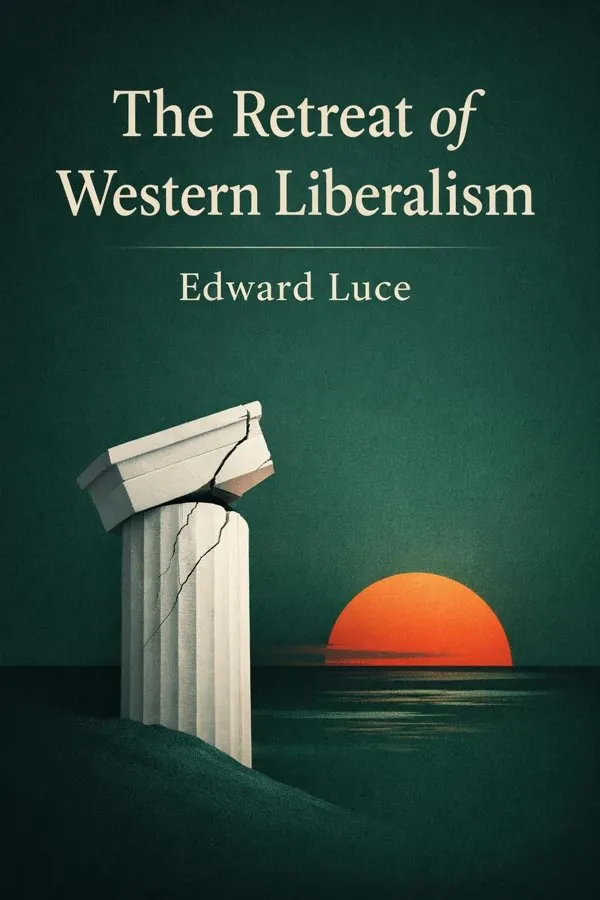
The Retreat of Western Liberalism: Summary & Key Insights
by Edward Luce
 10 min9 chaptersAudio available
What Is The Retreat of Western Liberalism About?
The Retreat of Western Liberalism by Edward Luce is a politics book spanning 9 pages. In this incisive work, Financial Times columnist Edward Luce examines the decline of Western liberal democracy and the rise of populism. He explores the economic, political, and cultural forces that have eroded faith in liberal institutions, arguing that the West faces a profound crisis of confidence. Through analysis of global trends and historical context, Luce warns that the retreat of liberalism threatens the stability and values that have defined Western civilization.
This FizzRead summary covers all 9 key chapters of The Retreat of Western Liberalism in approximately 10 minutes, distilling the most important ideas, arguments, and takeaways from Edward Luce's work. Also available as an audio summary and Key Quotes Podcast.
The Retreat of Western Liberalism
In this incisive work, Financial Times columnist Edward Luce examines the decline of Western liberal democracy and the rise of populism. He explores the economic, political, and cultural forces that have eroded faith in liberal institutions, arguing that the West faces a profound crisis of confidence. Through analysis of global trends and historical context, Luce warns that the retreat of liberalism threatens the stability and values that have defined Western civilization.
Who Should Read The Retreat of Western Liberalism?
This book is perfect for anyone interested in politics and looking to gain actionable insights in a short read. Whether you're a student, professional, or lifelong learner, the key ideas from The Retreat of Western Liberalism by Edward Luce will help you think differently.
- ✓Readers who enjoy politics and want practical takeaways
- ✓Professionals looking to apply new ideas to their work and life
- ✓Anyone who wants the core insights of The Retreat of Western Liberalism in just 10 minutes
Want the full summary?
Get instant access to this book summary and 100K+ more with Fizz Moment.
Get Free SummaryAvailable on App Store • Free to download
Key Chapters
Liberal democracy’s postwar triumph was grounded in an economic and moral compact. After the devastation of the Second World War, Western societies embraced institutions designed to secure peace and prosperity. The Marshall Plan rebuilt Europe on a foundation of cooperation; the American middle class expanded through a blend of industrial strength and public investment. Citizens believed that government served them, that capitalism could balance efficiency with fairness, and that democracy would protect the dignity of the individual.
Those years were characterized by confidence. The Cold War framed liberalism as the moral counterpoint to Soviet authoritarianism, and that rivalry, paradoxically, gave the West direction. Economic growth underpinned political faith, and social mobility confirmed that merit mattered. But with the collapse of the Soviet Union, liberal democracy won by default—and, in victory, began to lose its urgency. Without a visible enemy, the West’s institutions turned inward. Inequality, globalization, and financial speculation gradually eroded the postwar consensus. The 1990s represented a high watermark of optimism—Fukuyama’s thesis that history had ended, the belief in global liberal convergence. Yet, the seeds of today’s crisis were already planted. The merger of market fundamentalism and political complacency stripped liberalism of moral depth. What had been a living creed hardened into technocratic routine.
In the years after globalization accelerated, the promise of opportunity turned sour for vast segments of society. Automation and outsourcing rewarded a narrow elite while hollowing out manufacturing communities. Wages stagnated as profits soared. The middle class, long the backbone of democratic stability, found itself squeezed between insecurity and resentment. To understand populism’s rise, we must acknowledge this material betrayal. People were told that open markets would lift all boats, yet the tide favored only the few.
I wrote this section not to lament capitalism’s vitality but to highlight its imbalance. The link between effort and reward, once tangible, frayed. Citizens began to suspect that the system was rigged—a suspicion enhanced by the 2008 financial crisis, which revealed moral rot at the heart of global finance. Ordinary taxpayers bore the cost while bankers were rescued. This moral rupture severed the contract between citizens and elites. Technological change intensified the problem, creating a divide between those fluent in the digital economy and those displaced by it. When I spoke to factory workers across the U.S. Rust Belt, I heard not abstract economic complaints but statements of wounded pride. Liberalism, they felt, had lost interest in their lives.
+ 7 more chapters — available in the FizzRead app
All Chapters in The Retreat of Western Liberalism
About the Author
Edward Luce is a British journalist and author, serving as the U.S. national editor and columnist for the Financial Times. He previously worked as the paper’s Washington bureau chief and speechwriter for the U.S. Treasury Secretary. Luce is known for his insightful commentary on global politics, economics, and the future of democracy.
Get This Summary in Your Preferred Format
Read or listen to the The Retreat of Western Liberalism summary by Edward Luce anytime, anywhere. FizzRead offers multiple formats so you can learn on your terms — all free.
Available formats: App · Audio · PDF · EPUB — All included free with FizzRead
Download The Retreat of Western Liberalism PDF and EPUB Summary
Key Quotes from The Retreat of Western Liberalism
“Liberal democracy’s postwar triumph was grounded in an economic and moral compact.”
“In the years after globalization accelerated, the promise of opportunity turned sour for vast segments of society.”
Frequently Asked Questions about The Retreat of Western Liberalism
The Retreat of Western Liberalism by Edward Luce is a politics book that explores key ideas across 9 chapters. In this incisive work, Financial Times columnist Edward Luce examines the decline of Western liberal democracy and the rise of populism. He explores the economic, political, and cultural forces that have eroded faith in liberal institutions, arguing that the West faces a profound crisis of confidence. Through analysis of global trends and historical context, Luce warns that the retreat of liberalism threatens the stability and values that have defined Western civilization.
You Might Also Like
Antifa: The Anti-Fascist Handbook
Mark Bray
10 min
Attack from Within: How Disinformation Is Sabotaging America
Barbara McQuade
10 min
Coercion, Capital, and European States, AD 990–1992
Charles Tilly
10 min
Digital Democracy: Concepts, Methodologies, Tools, and Applications
Various Authors
10 min
Fascism
Stanley G. Payne
10 min
Fire And Fury: Inside The Trump White House
Michael Wolff
10 minBrowse by Category
Ready to read The Retreat of Western Liberalism?
Get the full summary and 100K+ more books with Fizz Moment.