
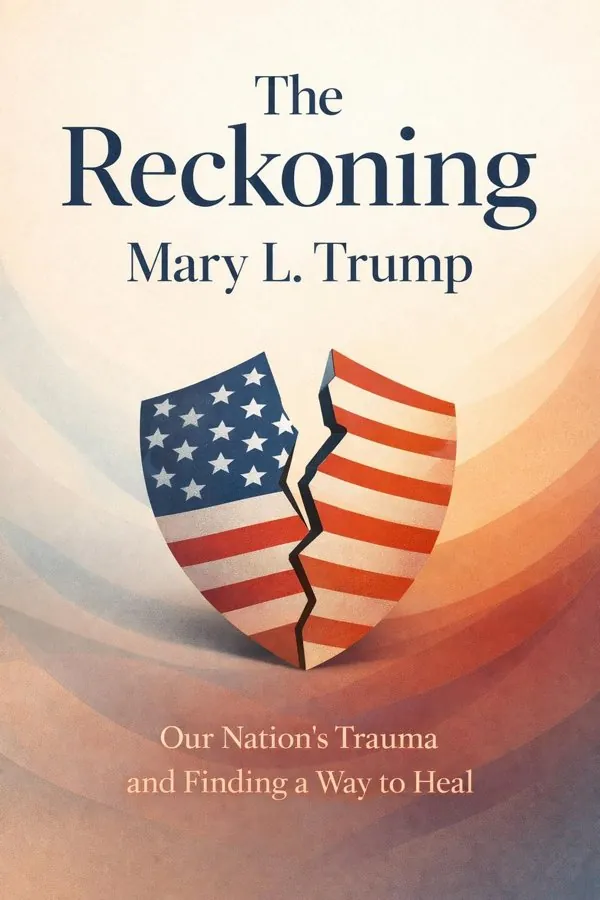
The Reckoning: Our Nation's Trauma and Finding a Way to Heal: Summary & Key Insights
 10 min6 chaptersAudio available
What Is The Reckoning: Our Nation's Trauma and Finding a Way to Heal About?
The Reckoning: Our Nation's Trauma and Finding a Way to Heal by Mary L. Trump is a politics book spanning 6 pages. In this follow-up to her bestselling memoir, Mary L. Trump examines the collective psychological trauma that has gripped the United States, exploring how historical injustices, systemic racism, and recent political turmoil have left the nation suffering from a form of post-traumatic stress. Drawing on her background as a clinical psychologist, she offers insights into how Americans can confront and heal from these wounds, both individually and collectively.
This FizzRead summary covers all 6 key chapters of The Reckoning: Our Nation's Trauma and Finding a Way to Heal in approximately 10 minutes, distilling the most important ideas, arguments, and takeaways from Mary L. Trump's work. Also available as an audio summary and Key Quotes Podcast.
The Reckoning: Our Nation's Trauma and Finding a Way to Heal
In this follow-up to her bestselling memoir, Mary L. Trump examines the collective psychological trauma that has gripped the United States, exploring how historical injustices, systemic racism, and recent political turmoil have left the nation suffering from a form of post-traumatic stress. Drawing on her background as a clinical psychologist, she offers insights into how Americans can confront and heal from these wounds, both individually and collectively.
Who Should Read The Reckoning: Our Nation's Trauma and Finding a Way to Heal?
This book is perfect for anyone interested in politics and looking to gain actionable insights in a short read. Whether you're a student, professional, or lifelong learner, the key ideas from The Reckoning: Our Nation's Trauma and Finding a Way to Heal by Mary L. Trump will help you think differently.
- ✓Readers who enjoy politics and want practical takeaways
- ✓Professionals looking to apply new ideas to their work and life
- ✓Anyone who wants the core insights of The Reckoning: Our Nation's Trauma and Finding a Way to Heal in just 10 minutes
Want the full summary?
Get instant access to this book summary and 100K+ more with Fizz Moment.
Get Free SummaryAvailable on App Store • Free to download
Key Chapters
To understand the trauma that now defines so much of our national life, we must return to its origins. From the moment Europeans set foot on this continent, America’s story has been one of profound contradiction: ideals of liberty built atop systems of oppression. The genocide of Indigenous peoples and the enslavement of Africans formed the twin pillars of an economy—and a psychology—rooted in domination. Those events were not merely political or economic crimes; they were psychic ruptures, teaching generation after generation that cruelty could coexist with righteousness.
In my work as a psychologist, I have seen how unresolved trauma embeds itself in the personality. Families carry unspoken patterns of violence, guilt, and denial. The same is true of nations. America learned to compartmentalize: to celebrate freedom while perpetuating bondage, to preach equality while enforcing hierarchy. Over time, that split created what I would call a moral dissociation—an inability to integrate what we know about our origins with what we wish to believe about ourselves.
Each historical moment of progress—from Reconstruction to civil rights—has been shadowed by backlash. That pendulum swing is not a coincidence. It reflects our repeated failure to metabolize pain. Instead of engaging in collective mourning and accountability, we rush to forget. Denial keeps the trauma alive, manifesting in new forms of disenfranchisement, violence, and political extremism. Until we recognize that our national history is also our national psyche, we will continue to reenact the same cycles of injury and avoidance.
Denial lies at the heart of America’s dysfunction. It is our most enduring coping mechanism. We tell ourselves stories of exceptionalism, of manifest destiny, of “the American dream,” but beneath those myths runs a constant current of fear—fear of reckoning with what we have done and who we have harmed. Denial allows us to disown collective guilt, but it also keeps us from healing.
In clinical terms, denial is a form of psychological defense that protects the ego from overwhelming reality. It can keep a family intact in the short term, but over time it corrodes trust and intimacy. The same is true at the national level. Whether through sanitized textbooks, selective memory, or the perpetuation of historical myths, America has preferred to repress rather than reflect.
The danger is that denial never eliminates trauma; it only forces it underground. When the truth is buried, it returns in symptoms: violence, polarization, dehumanization. We have seen these symptoms erupt in every generation. The cultural insistence that we are “the best” blinds us to the ways we fall short. And so, denial is not neutral—it is active complicity. It allows white supremacy to persist, prevents empathy from flourishing, and undermines our capacity for collective growth.
To move forward, we must replace denial with acknowledgment. That does not mean wallowing in guilt, but embracing responsibility. Healing begins when we can tell an honest story about who we are and where we’ve been.
+ 4 more chapters — available in the FizzRead app
All Chapters in The Reckoning: Our Nation's Trauma and Finding a Way to Heal
About the Author
Mary L. Trump, Ph.D., is a clinical psychologist, author, and niece of former U.S. President Donald J. Trump. She is known for her psychological and political analyses of her family and American society. Her previous book, 'Too Much and Never Enough,' was a major bestseller.
Get This Summary in Your Preferred Format
Read or listen to the The Reckoning: Our Nation's Trauma and Finding a Way to Heal summary by Mary L. Trump anytime, anywhere. FizzRead offers multiple formats so you can learn on your terms — all free.
Available formats: App · Audio · PDF · EPUB — All included free with FizzRead
Download The Reckoning: Our Nation's Trauma and Finding a Way to Heal PDF and EPUB Summary
Key Quotes from The Reckoning: Our Nation's Trauma and Finding a Way to Heal
“To understand the trauma that now defines so much of our national life, we must return to its origins.”
“Denial lies at the heart of America’s dysfunction.”
Frequently Asked Questions about The Reckoning: Our Nation's Trauma and Finding a Way to Heal
The Reckoning: Our Nation's Trauma and Finding a Way to Heal by Mary L. Trump is a politics book that explores key ideas across 6 chapters. In this follow-up to her bestselling memoir, Mary L. Trump examines the collective psychological trauma that has gripped the United States, exploring how historical injustices, systemic racism, and recent political turmoil have left the nation suffering from a form of post-traumatic stress. Drawing on her background as a clinical psychologist, she offers insights into how Americans can confront and heal from these wounds, both individually and collectively.
You Might Also Like

Antifa: The Anti-Fascist Handbook
Mark Bray
10 min
Attack from Within: How Disinformation Is Sabotaging America
Barbara McQuade
10 min
Coercion, Capital, and European States, AD 990–1992
Charles Tilly
10 min
Digital Democracy: Concepts, Methodologies, Tools, and Applications
Various Authors
10 min
Fascism
Stanley G. Payne
10 min
Fire And Fury: Inside The Trump White House
Michael Wolff
10 minBrowse by Category
Ready to read The Reckoning: Our Nation's Trauma and Finding a Way to Heal?
Get the full summary and 100K+ more books with Fizz Moment.