
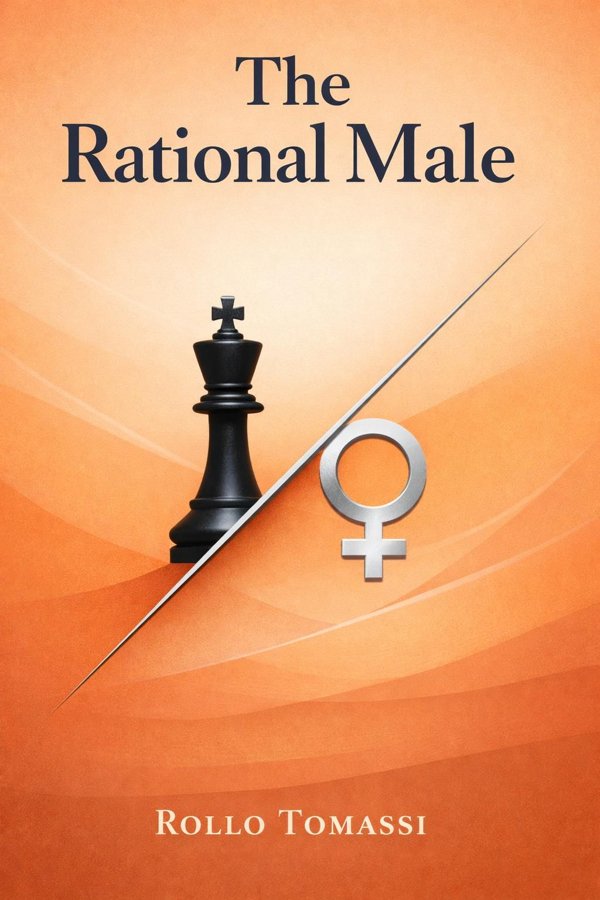
The Rational Male: Summary & Key Insights
 10 min9 chaptersAudio available
Key Takeaways from The Rational Male
A useful way to understand dating is to stop seeing it as purely emotional and start seeing it as an exchange of perceived value.
Much of modern confusion about relationships comes from assuming that social progress has erased human instinct.
One of the book’s most discussed ideas is hypergamy, Tomassi’s term for the tendency he believes leads women to prefer the best available mating option they can secure.
Tomassi’s use of “alpha” and “beta” is less about fixed personality types and more about patterns of behavior.
Tomassi uses the metaphor of the “red pill” to describe waking up from comforting social myths about relationships.
What Is The Rational Male About?
The Rational Male by Rollo Tomassi is a relationships book spanning 9 pages. The Rational Male by Rollo Tomassi is a provocative examination of modern male-female dynamics through the lenses of evolutionary psychology, social conditioning, and relationship strategy. Rather than offering sentimental advice about love, the book argues that men benefit from understanding the incentives, instincts, and power structures that shape attraction, commitment, and behavior. Tomassi’s central claim is that many relationship frustrations come from idealized narratives that ignore how people actually choose partners and pursue self-interest. The book matters because it speaks to readers who feel confused by contradictory cultural messages: be vulnerable but strong, committed but detached, agreeable but dominant. Tomassi tries to resolve these tensions by encouraging men to think critically, observe patterns, and develop a stronger sense of self rather than relying on romantic myths. Whether one agrees with all of his conclusions or not, his framework has had a major influence on discussions around masculinity and dating. As a writer and long-running blogger, Tomassi became known for developing concepts such as hypergamy, frame, and “red pill” awareness, making this book one of the most widely discussed titles in contemporary relationship discourse.
This FizzRead summary covers all 9 key chapters of The Rational Male in approximately 10 minutes, distilling the most important ideas, arguments, and takeaways from Rollo Tomassi's work. Also available as an audio summary and Key Quotes Podcast.
The Rational Male
The Rational Male by Rollo Tomassi is a provocative examination of modern male-female dynamics through the lenses of evolutionary psychology, social conditioning, and relationship strategy. Rather than offering sentimental advice about love, the book argues that men benefit from understanding the incentives, instincts, and power structures that shape attraction, commitment, and behavior. Tomassi’s central claim is that many relationship frustrations come from idealized narratives that ignore how people actually choose partners and pursue self-interest.
The book matters because it speaks to readers who feel confused by contradictory cultural messages: be vulnerable but strong, committed but detached, agreeable but dominant. Tomassi tries to resolve these tensions by encouraging men to think critically, observe patterns, and develop a stronger sense of self rather than relying on romantic myths. Whether one agrees with all of his conclusions or not, his framework has had a major influence on discussions around masculinity and dating.
As a writer and long-running blogger, Tomassi became known for developing concepts such as hypergamy, frame, and “red pill” awareness, making this book one of the most widely discussed titles in contemporary relationship discourse.
Who Should Read The Rational Male?
This book is perfect for anyone interested in relationships and looking to gain actionable insights in a short read. Whether you're a student, professional, or lifelong learner, the key ideas from The Rational Male by Rollo Tomassi will help you think differently.
- ✓Readers who enjoy relationships and want practical takeaways
- ✓Professionals looking to apply new ideas to their work and life
- ✓Anyone who wants the core insights of The Rational Male in just 10 minutes
Want the full summary?
Get instant access to this book summary and 100K+ more with Fizz Moment.
Get Free SummaryAvailable on App Store • Free to download
Key Chapters
A useful way to understand dating is to stop seeing it as purely emotional and start seeing it as an exchange of perceived value. Tomassi argues that men and women meet in what he calls the “sexual marketplace,” where attraction, status, appearance, confidence, resources, social proof, and timing all affect desirability. This does not mean people are coldly calculating at every moment; it means choices are influenced by incentives, options, and relative value, whether consciously or not.
In this framework, every person brings a combination of traits into the marketplace. A man may increase his value through competence, ambition, fitness, social confidence, and emotional control. A woman may be judged on beauty, youth, sociability, and relational appeal. Tomassi’s point is not simply that standards exist, but that many frustrations come from ignoring them. People often want outcomes their current habits do not support.
For example, a man who believes loyalty alone should make him attractive may be confused when he is overlooked by women who prioritize charisma, decisiveness, and confidence. Likewise, a man who improves his health, career, and social skills often notices a change in how others respond to him. The marketplace metaphor helps explain why self-improvement changes dating results more than complaint or wishful thinking.
Tomassi also suggests that the marketplace changes over time. In youth, looks and social energy may dominate. Later, stability and life direction can matter more. Understanding this prevents men from taking rejection too personally or interpreting relationship outcomes as random.
Actionable takeaway: honestly assess your current dating value in areas you can control—fitness, style, competence, confidence, and social ability—and improve them systematically instead of relying on good intentions alone.
Much of modern confusion about relationships comes from assuming that social progress has erased human instinct. Tomassi argues that beneath changing norms, men and women still carry evolved preferences shaped by reproductive pressures. Men tend to prioritize signs of fertility and sexual access, while women tend to prioritize signs of security, competence, strength, and genetic quality. Culture can modify these tendencies, but it rarely removes them.
This idea helps explain why people often say one thing and respond to another. Someone may claim to want kindness above all, yet consistently choose partners who display confidence, social dominance, or physical appeal. Tomassi’s argument is that attraction often operates faster and deeper than stated preferences. If men ignore this, they may build relationship strategies around moral ideals instead of observed behavior.
A practical example appears in courtship. A man may believe that excessive availability, over-explaining feelings, and constant reassurance demonstrate sincerity. But if these behaviors signal insecurity or neediness, they may reduce attraction even when his intentions are good. In Tomassi’s view, women are often more responsive to a man who demonstrates purpose, boundaries, and calm self-possession because those traits suggest underlying strength and competence.
The book does not present evolution as destiny or excuse bad behavior. Instead, it uses evolved psychology as a base layer for understanding repeated patterns in dating, mating, and commitment. This perspective encourages readers to observe what behaviors reliably generate attraction rather than what cultural narratives insist should work.
Actionable takeaway: compare what people say they want with the choices they consistently make, and build your relationship expectations around recurring behavior patterns rather than idealized scripts.
One of the book’s most discussed ideas is hypergamy, Tomassi’s term for the tendency he believes leads women to prefer the best available mating option they can secure. In his view, women are generally oriented toward men they perceive as superior in some meaningful way—status, confidence, attractiveness, leadership, intelligence, social standing, or future potential. This is not presented as moral failure but as a built-in mating filter.
Tomassi argues that understanding hypergamy helps men make sense of seemingly inconsistent behavior. A woman may genuinely care for a man yet still become less invested if she perceives him as weak, stagnant, or lower in value than alternatives. Conversely, she may tolerate flaws in a man she sees as exceptional because his strengths outweigh his deficits in the broader competitive field.
In practice, this concept is meant to warn men against becoming complacent in relationships. Commitment, according to Tomassi, does not freeze attraction in place. A man who stops growing, loses confidence, becomes dependent, or abandons self-respect may weaken the traits that made him attractive initially. Hypergamy, in this framing, means attraction is responsive to perceived relative standing, not merely promises or history.
Consider a long-term relationship where one partner keeps improving while the other becomes passive and resentful. Tomassi would say that emotional loyalty alone may not sustain desire if admiration disappears. Men who expect sacrifice to be permanently rewarded may be blindsided when attraction shifts.
The concept is controversial and can be oversimplified, but Tomassi uses it to push men toward realism: attraction is not secured once and for all.
Actionable takeaway: never assume commitment eliminates the need to remain attractive, competent, ambitious, and self-directed in a relationship.
Tomassi’s use of “alpha” and “beta” is less about fixed personality types and more about patterns of behavior. Alpha traits include confidence, leadership, assertiveness, independence, and sexual boldness. Beta traits include reliability, comfort, provisioning, patience, and willingness to invest. His argument is that many men overdevelop beta behaviors while neglecting the alpha qualities that spark desire.
This distinction matters because a man can be dependable yet sexually unexciting, generous yet easy to exploit, loving yet unrespected. Tomassi suggests that many modern men are socialized to believe that being safe, agreeable, and self-sacrificing automatically makes them attractive. In reality, these traits often support relationship stability only after attraction has been created by stronger cues of confidence and autonomy.
For example, a man on a date who asks endless permission, avoids flirting, and tries too hard to impress may come across as beta-reactive rather than grounded. Another man who listens well, makes decisions calmly, teases playfully, and carries himself with ease may create more attraction even if he says less. The difference is not cruelty versus kindness; it is anxious validation-seeking versus confident self-possession.
Tomassi does not claim men should become domineering caricatures. Instead, he argues for integrating useful beta qualities with an underlying alpha frame. A man who can provide, commit, and support is valuable, but those traits are strongest when paired with standards, backbone, and independent identity.
Actionable takeaway: strengthen traits that generate respect and desire—decisiveness, physical presence, boundaries, and confidence—while keeping reliability and generosity as complements, not substitutes, for attraction.
Tomassi uses the metaphor of the “red pill” to describe waking up from comforting social myths about relationships. In his view, many men are raised on narratives that portray attraction as primarily about being nice, loyal, emotionally expressive, and endlessly accommodating. When real-world outcomes contradict those lessons, men often blame themselves without questioning the framework they were given.
The red pill, as Tomassi presents it, is not cynicism for its own sake. It is the willingness to observe uncomfortable truths about how attraction, status, power, and self-interest shape male-female interactions. A red-pill perspective asks: what consistently happens in dating, marriage, divorce, and mate selection? What incentives drive choices? Which beliefs help men navigate reality, and which leave them vulnerable to disappointment?
A practical application of this idea is learning to distinguish moral aspiration from behavioral reality. People may endorse fairness, romance, and lifelong devotion, yet still respond strongly to confidence, beauty, social proof, and options. Tomassi argues that mature thinking requires holding both truths at once: ideals matter, but incentives often win.
For many readers, this framework is initially unsettling because it challenges deeply held assumptions. Yet Tomassi believes that disillusionment can be productive if it leads to stronger boundaries, better decision-making, and less dependency on fantasy. His message is that reality, however imperfect, is easier to navigate than illusion.
Actionable takeaway: test your relationship beliefs against repeated real-life patterns, and keep the principles that help you act clearly, confidently, and without self-deception.
One of Tomassi’s most practical concepts is “frame,” the ability to maintain your own mental point of origin rather than being pulled entirely into someone else’s expectations, emotions, or agenda. A man with frame knows who he is, what he values, what he will and will not tolerate, and what direction his life is taking. A man without frame becomes reactive, approval-seeking, and easily manipulated.
Tomassi argues that frame is essential because attraction is not only about external traits; it is also about emotional gravity. People are drawn to those who seem centered and self-directed. In relationships, the person with stronger frame often sets the tone. This does not require aggression. It requires steadiness. A man can be warm, flexible, and caring while still remaining rooted in his own identity.
For example, if a partner tests boundaries through drama, guilt, or shifting expectations, a man with weak frame may panic, over-explain, apologize excessively, or abandon his standards to restore harmony. A man with strong frame listens, responds calmly, and makes decisions that align with his principles. He does not collapse under pressure just to avoid discomfort.
Frame also matters in daily life outside romance. Career direction, friendships, health habits, and personal goals all reinforce a man’s sense of self. The more his life has structure and purpose, the less likely he is to make a relationship his sole source of meaning.
Actionable takeaway: define your non-negotiables, strengthen your life mission, and practice calm responses under pressure so your choices come from conviction rather than fear of losing approval.
Many men think love means endless accommodation, but Tomassi argues that relationships are healthier when they are shaped by boundaries, standards, and self-respect. Without boundaries, affection turns into overinvestment, resentment, or covert contracts—the unspoken hope that sacrifice will guarantee loyalty, appreciation, or desire. Tomassi warns that this strategy often backfires because unassertive giving can make a man easier to use rather than easier to love.
Boundaries clarify what behavior is acceptable and what consequences follow when standards are ignored. This applies to honesty, respect, fidelity, time, emotional regulation, and mutual investment. In Tomassi’s view, men who fear conflict often tolerate patterns that steadily erode attraction and stability. They avoid difficult conversations, excuse repeated disrespect, or overcommit too early in hopes of securing reassurance.
A practical example is the early stage of dating. A man who ignores clear signs of inconsistency, manipulation, or low interest because he wants the relationship to work may become increasingly emotionally entangled with the wrong person. By contrast, a man with boundaries notices mismatches quickly and is willing to walk away rather than negotiate against his own standards.
In long-term relationships, boundaries preserve polarity and respect. Tomassi argues that a man who can say no, enforce consequences, and protect his time and identity is often more valued than one who becomes endlessly available. Boundaries do not destroy intimacy; they make healthy intimacy possible.
Actionable takeaway: identify the behaviors you will not tolerate in dating or commitment, communicate them clearly, and be prepared to leave situations that repeatedly violate your standards.
Tomassi challenges the popular idea that unrestricted emotional disclosure automatically strengthens relationships. His position is that men benefit more from emotional mastery than emotional exhibition. This does not mean repression or dishonesty. It means learning to process feelings without letting them dictate behavior, status, or self-concept. In his view, attraction often suffers when a man turns a partner into his therapist, source of validation, or emotional regulator.
The distinction is subtle but important. Vulnerability can be healthy when it is grounded, selective, and proportional. But emotional flooding, chronic insecurity, and dependency can weaken a man’s perceived stability. Tomassi argues that many men are told to “open up” without being taught discernment—when to share, how to share, and with whom. As a result, they may reveal fears in ways that burden attraction rather than deepen trust.
Imagine a man who loses his job. One response is panic, spiraling self-doubt, and constant reassurance-seeking from his partner. Another is honest acknowledgment of stress paired with a clear plan, self-command, and continued action. Both responses involve emotion, but only one projects resilience. Tomassi believes the second approach better preserves respect and relational confidence.
His broader point is that rational self-command allows men to navigate disappointment, jealousy, conflict, and uncertainty without collapsing into reaction. Emotional intelligence is not measured by how intensely one feels, but by how effectively one responds.
Actionable takeaway: build habits that increase emotional self-regulation—exercise, journaling, trusted male friendships, therapy when needed, and deliberate reflection—so you can share feelings from strength rather than desperation.
At the core of The Rational Male is the argument that a man’s best defense against confusion, exploitation, and stagnation is continuous self-development. Tomassi repeatedly pushes readers to stop organizing their lives around female approval and instead build strength in every domain: body, finances, social skill, discipline, knowledge, and mission. Attraction then becomes one outcome of a well-structured life, not its central purpose.
This idea is powerful because it shifts attention away from obsession with tactics and toward identity. A man who spends all his energy decoding texts, chasing validation, or managing anxiety about women is operating from scarcity. A man focused on becoming competent and purposeful creates optionality. He is less likely to tolerate poor treatment because he has standards, momentum, and alternatives.
Practical self-improvement in Tomassi’s framework includes lifting weights, improving style, earning more, building networks, choosing challenging goals, and cultivating social confidence. It also includes intellectual honesty: learning from mistakes rather than blaming women, society, or luck for every disappointment. The aim is not perfection, but leverage.
Tomassi sees this as a long-term strategy, especially because the dating landscape changes across life stages. The man who invests in himself early gains freedom later. He can choose relationships from abundance rather than fear. Even in committed partnerships, ongoing growth preserves confidence and attractiveness.
Actionable takeaway: create a personal development system with measurable goals for fitness, income, social competence, and purpose, and review progress weekly so your life keeps expanding regardless of relationship status.
All Chapters in The Rational Male
About the Author
Rollo Tomassi is the pen name of an American author, commentator, and blogger best known for The Rational Male series. He built his reputation by writing about intersexual dynamics, masculinity, dating behavior, and evolutionary psychology, often challenging mainstream ideas about romance and gender roles. Through his long-running blog and books, Tomassi developed a vocabulary that has become influential in online discussions of male self-improvement and relationship strategy, including terms such as hypergamy, frame, and red-pill awareness. His work is controversial, but it has had a notable impact on contemporary conversations about attraction, commitment, and male identity. Readers turn to Tomassi for a direct, analytical style that prioritizes pattern recognition, behavioral realism, and personal responsibility over conventional relationship idealism.
Get This Summary in Your Preferred Format
Read or listen to the The Rational Male summary by Rollo Tomassi anytime, anywhere. FizzRead offers multiple formats so you can learn on your terms — all free.
Available formats: App · Audio · PDF · EPUB — All included free with FizzRead
Download The Rational Male PDF and EPUB Summary
Key Quotes from The Rational Male
“A useful way to understand dating is to stop seeing it as purely emotional and start seeing it as an exchange of perceived value.”
“Much of modern confusion about relationships comes from assuming that social progress has erased human instinct.”
“One of the book’s most discussed ideas is hypergamy, Tomassi’s term for the tendency he believes leads women to prefer the best available mating option they can secure.”
“Tomassi’s use of “alpha” and “beta” is less about fixed personality types and more about patterns of behavior.”
“Tomassi uses the metaphor of the “red pill” to describe waking up from comforting social myths about relationships.”
Frequently Asked Questions about The Rational Male
The Rational Male by Rollo Tomassi is a relationships book that explores key ideas across 9 chapters. The Rational Male by Rollo Tomassi is a provocative examination of modern male-female dynamics through the lenses of evolutionary psychology, social conditioning, and relationship strategy. Rather than offering sentimental advice about love, the book argues that men benefit from understanding the incentives, instincts, and power structures that shape attraction, commitment, and behavior. Tomassi’s central claim is that many relationship frustrations come from idealized narratives that ignore how people actually choose partners and pursue self-interest. The book matters because it speaks to readers who feel confused by contradictory cultural messages: be vulnerable but strong, committed but detached, agreeable but dominant. Tomassi tries to resolve these tensions by encouraging men to think critically, observe patterns, and develop a stronger sense of self rather than relying on romantic myths. Whether one agrees with all of his conclusions or not, his framework has had a major influence on discussions around masculinity and dating. As a writer and long-running blogger, Tomassi became known for developing concepts such as hypergamy, frame, and “red pill” awareness, making this book one of the most widely discussed titles in contemporary relationship discourse.
You Might Also Like

The 5 Love Languages
Gary Chapman
10 min
Men Are from Mars, Women Are from Venus
John Gray
10 min
She Comes First
Ian Kerner
10 min
No More Mr Nice Guy
Robert Glover
10 min
Hold Me Tight
Sue Johnson
10 min
Mating in Captivity
Esther Perel
10 minBrowse by Category
Ready to read The Rational Male?
Get the full summary and 100K+ more books with Fizz Moment.