
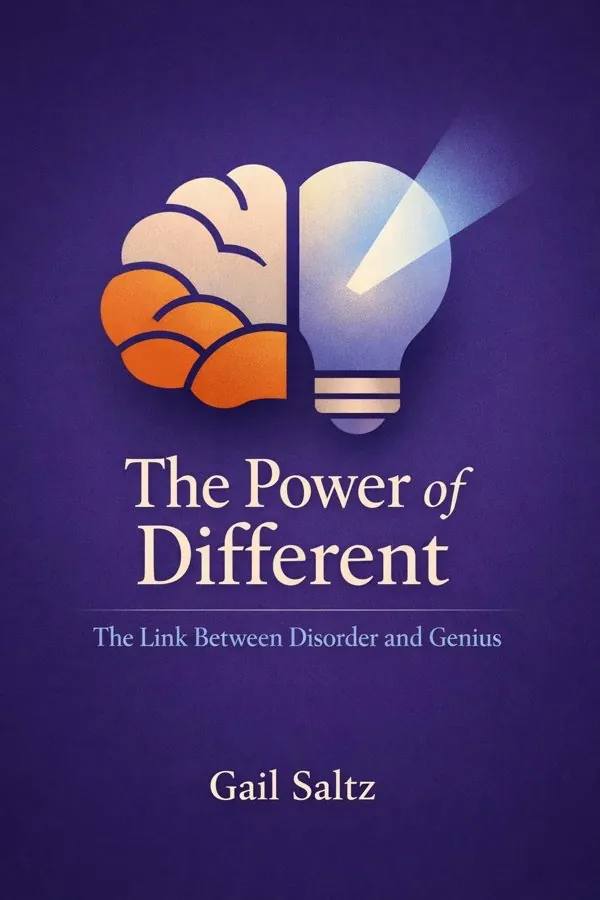
The Power of Different: The Link Between Disorder and Genius: Summary & Key Insights
by Gail Saltz
 10 min13 chaptersAudio available
What Is The Power of Different: The Link Between Disorder and Genius About?
The Power of Different: The Link Between Disorder and Genius by Gail Saltz is a psychology book spanning 13 pages. In this insightful work, psychiatrist Gail Saltz explores how traits often labeled as mental disorders—such as ADHD, anxiety, depression, and dyslexia—can also be sources of exceptional creativity, innovation, and achievement. Drawing on neuroscience, psychology, and real-life stories, Saltz argues that the same brain differences that cause difficulties can also fuel unique strengths, offering a new perspective on neurodiversity and human potential.
This FizzRead summary covers all 13 key chapters of The Power of Different: The Link Between Disorder and Genius in approximately 10 minutes, distilling the most important ideas, arguments, and takeaways from Gail Saltz's work. Also available as an audio summary and Key Quotes Podcast.
The Power of Different: The Link Between Disorder and Genius
In this insightful work, psychiatrist Gail Saltz explores how traits often labeled as mental disorders—such as ADHD, anxiety, depression, and dyslexia—can also be sources of exceptional creativity, innovation, and achievement. Drawing on neuroscience, psychology, and real-life stories, Saltz argues that the same brain differences that cause difficulties can also fuel unique strengths, offering a new perspective on neurodiversity and human potential.
Who Should Read The Power of Different: The Link Between Disorder and Genius?
This book is perfect for anyone interested in psychology and looking to gain actionable insights in a short read. Whether you're a student, professional, or lifelong learner, the key ideas from The Power of Different: The Link Between Disorder and Genius by Gail Saltz will help you think differently.
- ✓Readers who enjoy psychology and want practical takeaways
- ✓Professionals looking to apply new ideas to their work and life
- ✓Anyone who wants the core insights of The Power of Different: The Link Between Disorder and Genius in just 10 minutes
Want the full summary?
Get instant access to this book summary and 100K+ more with Fizz Moment.
Get Free SummaryAvailable on App Store • Free to download
Key Chapters
Before we can fully appreciate the link between disorder and genius, we must understand the concept of neurodiversity. The term refers to the idea that variations in brain wiring are a natural and valuable part of human diversity. Just as biodiversity strengthens ecosystems, neurodiversity strengthens our collective intelligence, creativity, and resilience as a species.
Brains differ in how they process information, regulate emotion, or respond to the environment. Some are wired for hyperfocus, some for heightened sensitivity, others for abstract visualization or linguistic agility. These differences can manifest as struggles—difficulty paying attention, managing mood, or reading words on a page—but they can also produce unique insights and capacities that more typical brains might lack.
When I say that mental differences can be sources of strength, I’m not diminishing the reality of their hardships. I’ve treated many individuals who battle depression so profound it seems to freeze time, or anxiety that robs them of peace. But buried within those experiences are perceptual gifts—heightened empathy, emotional nuance, or relentless curiosity—that have driven human innovation since the beginning of history.
Neurodiversity challenges the medical model that sees difference only as disorder. It calls us instead to recognize the adaptive value of diversity, both in individuals and societies. From the painter who translates emotional turmoil into art to the engineer who devises intricate systems out of obsessive focus, the link between suffering and creativity is undeniable. Understanding neurodiversity allows us to embrace that connection without stigma.
Modern neuroscience has provided us with powerful tools for observing how brain differences shape cognition and behavior. Functional MRI, genetic studies, and cognitive testing have begun to reveal that many disorders are not simply malfunctions but variations in neural circuitry.
For instance, the dopamine pathways that regulate focus and reward in ADHD create both distraction and curiosity. Low serotonin levels linked to depression may also increase self-reflective thinking. The emotional intensity of bipolar disorder can correspond with bursts of creativity fueled by changes in neural connectivity and neurotransmitter flow. Even dyslexia, traditionally seen as a reading impairment, often correlates with exceptional visual-spatial processing and holistic thinking.
In every case, the same set of neural characteristics that creates difficulty in one domain can lead to enhanced ability in another. Brain plasticity—the capacity of the brain to adapt—allows individuals to use alternate neural routes to solve problems. This flexibility can produce new ways of seeing and thinking that deviate from the norm but lead to creative breakthroughs.
The science shows that genius and disorder are not opposite ends of a spectrum but often intertwined expressions of the same neural differences. By studying these patterns, we’re learning not only how to support those who struggle but also how human diversity fuels culture, science, and art.
+ 11 more chapters — available in the FizzRead app
All Chapters in The Power of Different: The Link Between Disorder and Genius
About the Author
Gail Saltz, M.D., is a clinical associate professor of psychiatry at the New York Presbyterian Hospital, Weill-Cornell Medical College, and a psychoanalyst with the New York Psychoanalytic Institute. She is a bestselling author, columnist, and frequent media commentator on mental health, relationships, and emotional well-being.
Get This Summary in Your Preferred Format
Read or listen to the The Power of Different: The Link Between Disorder and Genius summary by Gail Saltz anytime, anywhere. FizzRead offers multiple formats so you can learn on your terms — all free.
Available formats: App · Audio · PDF · EPUB — All included free with FizzRead
Download The Power of Different: The Link Between Disorder and Genius PDF and EPUB Summary
Key Quotes from The Power of Different: The Link Between Disorder and Genius
“Before we can fully appreciate the link between disorder and genius, we must understand the concept of neurodiversity.”
“Modern neuroscience has provided us with powerful tools for observing how brain differences shape cognition and behavior.”
Frequently Asked Questions about The Power of Different: The Link Between Disorder and Genius
The Power of Different: The Link Between Disorder and Genius by Gail Saltz is a psychology book that explores key ideas across 13 chapters. In this insightful work, psychiatrist Gail Saltz explores how traits often labeled as mental disorders—such as ADHD, anxiety, depression, and dyslexia—can also be sources of exceptional creativity, innovation, and achievement. Drawing on neuroscience, psychology, and real-life stories, Saltz argues that the same brain differences that cause difficulties can also fuel unique strengths, offering a new perspective on neurodiversity and human potential.
You Might Also Like
The Body Keeps the Score
Bessel van der Kolk
10 min
Surrounded by Idiots
Thomas Erikson
10 min
Emotional Intelligence
Daniel Goleman
10 min
Attached
Amir Levine
10 min
Why Does He Do That
Lundy Bancroft
10 min
Women Who Run with the Wolves
Clarissa Pinkola Estés
10 minBrowse by Category
Ready to read The Power of Different: The Link Between Disorder and Genius?
Get the full summary and 100K+ more books with Fizz Moment.