
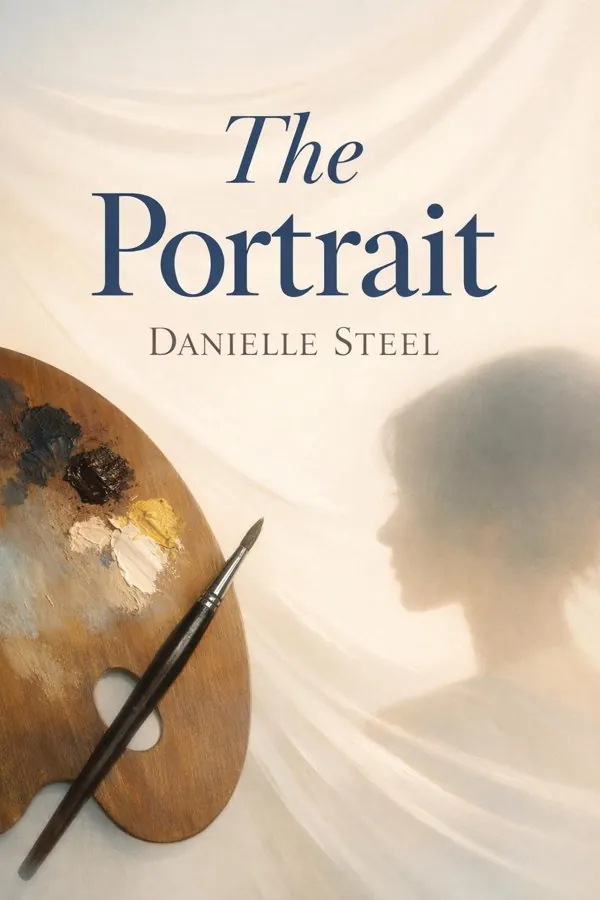
The Portrait: Summary & Key Insights
 10 min8 chaptersAudio available
Key Takeaways from The Portrait
The most radical act in a restrictive world is often not rebellion for its own sake, but simply becoming who you were meant to be.
Freedom is rarely free; it often arrives carrying loneliness, uncertainty, and sacrifice.
Sometimes the hardest conflict is not between ourselves and society, but between the person we were raised to be and the person we have become.
A meaningful life is not defined only by what we achieve, but by what our choices make possible for others.
To paint a portrait well, one must look beyond surfaces, and that is also what the novel asks us to do with human lives.
What Is The Portrait About?
The Portrait by Danielle Steel is a bestsellers book spanning 4 pages. Danielle Steel’s The Portrait is a sweeping historical novel about talent, identity, and the courage it takes to live beyond the role society assigns. Set against the strict expectations of the nineteenth century, the story follows Francesca, a young woman born into privilege but drawn toward a life of artistic purpose. What begins as a quiet inner rebellion becomes a lifelong journey through Europe, where love, heartbreak, ambition, and reinvention shape her into a remarkable portrait painter. At its core, the novel asks a timeless question: what must a person risk to become fully themselves? The book matters because it turns a personal story into a broader reflection on freedom, especially for women whose gifts were often confined by class, marriage, and reputation. Steel uses Francesca’s emotional and creative evolution to explore themes of independence, resilience, and the cost of authenticity. Known as one of the world’s most widely read novelists, Danielle Steel brings her trademark emotional clarity and accessible storytelling to a richly atmospheric tale. The result is a compelling novel that blends romance, social constraint, and self-discovery into an inspiring portrait of a woman determined to claim her own life.
This FizzRead summary covers all 8 key chapters of The Portrait in approximately 10 minutes, distilling the most important ideas, arguments, and takeaways from Danielle Steel's work. Also available as an audio summary and Key Quotes Podcast.
The Portrait
Danielle Steel’s The Portrait is a sweeping historical novel about talent, identity, and the courage it takes to live beyond the role society assigns. Set against the strict expectations of the nineteenth century, the story follows Francesca, a young woman born into privilege but drawn toward a life of artistic purpose. What begins as a quiet inner rebellion becomes a lifelong journey through Europe, where love, heartbreak, ambition, and reinvention shape her into a remarkable portrait painter. At its core, the novel asks a timeless question: what must a person risk to become fully themselves?
The book matters because it turns a personal story into a broader reflection on freedom, especially for women whose gifts were often confined by class, marriage, and reputation. Steel uses Francesca’s emotional and creative evolution to explore themes of independence, resilience, and the cost of authenticity. Known as one of the world’s most widely read novelists, Danielle Steel brings her trademark emotional clarity and accessible storytelling to a richly atmospheric tale. The result is a compelling novel that blends romance, social constraint, and self-discovery into an inspiring portrait of a woman determined to claim her own life.
Who Should Read The Portrait?
This book is perfect for anyone interested in bestsellers and looking to gain actionable insights in a short read. Whether you're a student, professional, or lifelong learner, the key ideas from The Portrait by Danielle Steel will help you think differently.
- ✓Readers who enjoy bestsellers and want practical takeaways
- ✓Professionals looking to apply new ideas to their work and life
- ✓Anyone who wants the core insights of The Portrait in just 10 minutes
Want the full summary?
Get instant access to this book summary and 100K+ more with Fizz Moment.
Get Free SummaryAvailable on App Store • Free to download
Key Chapters
The most radical act in a restrictive world is often not rebellion for its own sake, but simply becoming who you were meant to be. Francesca begins life in a social order that values appearance, lineage, and obedience above individuality. Her family expects her to embody refinement, marry suitably, and preserve the image of respectability. In that environment, artistic ambition is not seen as a calling. For a woman of her class, it is treated as a decorative hobby at best and a dangerous deviation at worst.
What makes Francesca’s journey compelling is that her desire to paint is not a passing whim. It is the clearest expression of her identity. She does not want to shock society; she wants to answer something essential within herself. Steel shows how difficult that can be when external approval is tied to survival, affection, and belonging. Francesca’s struggle is therefore not only against social convention, but against the guilt and fear that convention creates.
This idea still resonates. Many people inherit expectations about what success should look like: a certain profession, lifestyle, marriage, or public image. Like Francesca, they may feel torn between duty and authenticity. Her story reminds us that gifts ignored do not disappear; they become sources of quiet dissatisfaction.
In practical terms, this theme invites readers to examine where they may be living by expectation rather than conviction. It may be in a career chosen to please others, a talent dismissed as impractical, or a dream postponed indefinitely. Francesca’s example suggests that identity becomes stronger when it is expressed, not hidden.
Actionable takeaway: Identify one part of your life where you are conforming more than creating, and take one concrete step toward the work, craft, or calling that feels most truly yours.
Freedom is rarely free; it often arrives carrying loneliness, uncertainty, and sacrifice. In Paris, Francesca enters a world very different from the controlled elegance of her upbringing. Among artists and intellectuals, she encounters a culture that prizes expression, experimentation, and intensity. The city widens her imagination. Here, art is not a decorative accomplishment but a way of seeing, living, and daring. It is also where love enters her life with transformative force.
Steel uses this period to show how emotional and creative awakening often unfold together. Love makes Francesca feel seen in a way she has not before, while art gives form to feelings she could not previously name. Yet the novel refuses to romanticize liberation. The life she chooses comes with instability. Passion does not erase vulnerability, and a freer existence demands that she surrender the protections of convention.
This tension is one of the book’s strongest insights. We often imagine that once we choose the authentic path, everything aligns. In reality, meaningful freedom usually requires trade-offs. Pursuing work we love may mean financial risk. Leaving familiar structures may lead to social judgment. Loving deeply may expose us to grief. Francesca’s life demonstrates that fulfillment and pain are not opposites; they are often intertwined.
Readers can apply this idea by approaching major choices with both courage and realism. Instead of asking only, “What do I want?” we can also ask, “What cost am I willing to bear for a life that feels true?” That question leads to more grounded, responsible freedom.
Actionable takeaway: Choose one dream you value and write down both its rewards and its costs. Then decide deliberately whether you are willing to pay that price.
Sometimes the hardest conflict is not between ourselves and society, but between the person we were raised to be and the person we have become. When Francesca returns to the world she once knew, she brings back more than experience. She returns changed. Her artistic life, emotional history, and inner independence have altered her beyond easy recognition. Yet the social codes of home remain intact, still demanding the same performance of decorum and submission.
Steel captures the psychological strain of reentering a familiar environment after profound transformation. Francesca cannot unknow what she has learned about art, desire, and selfhood. But she also cannot completely sever her ties to family, memory, and class. This creates a subtle but powerful inner battle. She is no longer the obedient young woman others remember, but neither is she untouched by their expectations.
Many readers will recognize this experience in modern forms. It can happen when someone returns to their hometown after years away, revisits family after therapy or personal growth, or reenters a workplace after changing values. Old systems often try to pull us back into old roles. Growth becomes fragile if it depends only on distance.
The novel suggests that true maturity involves integration rather than simple escape. Francesca must learn how to stand in the old world without surrendering the truth of her new one. This requires emotional steadiness, not just talent. She must tolerate misunderstanding and resist the urge to shrink herself for comfort.
In practical terms, readers can use this theme to reflect on where they are still reacting from old identities. The challenge is not merely to change privately, but to live that change publicly and calmly.
Actionable takeaway: Think of one relationship or setting that pushes you into an outdated version of yourself, and decide in advance how you will respond differently the next time you enter it.
A meaningful life is not defined only by what we achieve, but by what our choices make possible for others. Francesca’s rise as a portrait painter matters on the surface because it reflects discipline, talent, and recognition. But her deeper achievement is the life she constructs for herself in a world that offered women little room for self-definition. Her legacy is therefore not just artistic. It is existential. She becomes proof that a woman can be more than the role prescribed to her.
Steel frames legacy as something built through endurance as much as brilliance. Francesca’s success does not come from a single moment of triumph. It comes from years of persistence, losses survived, judgments endured, and work refined. This is important because it shifts attention away from glamour and toward character. A self-made life is usually assembled gradually, under pressure, and often without applause.
This theme has contemporary relevance in professional and personal life. People who break molds within families, industries, or communities often underestimate the significance of what they are doing. A woman starting a business where none in her family have worked independently, an artist creating despite financial instability, or a person choosing integrity over approval may be shaping a legacy larger than immediate results reveal.
The novel encourages readers to think beyond reputation. What matters is not only how one is seen, but what one stands for. Francesca’s life leaves behind an example of courage, autonomy, and commitment to craft. That example can outlive praise.
Practically, legacy becomes clearer when we ask not just what we want to gain, but what model we want our lives to offer. This reframes success from private status to enduring influence.
Actionable takeaway: Write a short statement describing the values you want your life to represent, and use it as a guide for one important decision this week.
To paint a portrait well, one must look beyond surfaces, and that is also what the novel asks us to do with human lives. In Francesca’s work, portraiture is more than technical skill. It becomes a metaphor for attention, empathy, and truth. A portrait can flatter, conceal, or reveal. The painter’s task is not simply to reproduce a face, but to capture presence, history, vulnerability, and character.
Steel uses this artistic form to deepen the novel’s emotional texture. Francesca becomes skilled not only because she has talent, but because she learns how to see people fully. That includes noticing contradiction: dignity mixed with sorrow, beauty shadowed by fear, confidence covering loneliness. In this way, her art parallels her own personal growth. As she becomes more honest with herself, she becomes better able to perceive others honestly too.
This idea has applications far beyond painting. In daily life, people often reduce one another to roles, labels, or first impressions. We see the accomplished executive, the difficult parent, the charming friend, the quiet colleague. But like a superficial portrait, those impressions can miss what is most real. Deeper attention creates better relationships, wiser judgments, and more compassionate leadership.
Francesca’s practice suggests that observation is a moral act. To really see someone is to resist simplification. In practical settings, this can mean listening for what is unsaid, asking better questions, or recognizing that behavior often has a backstory. Whether in friendship, management, parenting, or creative work, depth of attention changes outcomes.
Actionable takeaway: In one conversation this week, focus less on preparing your response and more on noticing the other person’s emotions, contradictions, and unspoken concerns before you speak.
The most meaningful love does not create identity from nothing; it reveals and strengthens what is already there. In Francesca’s life, romance matters deeply, but Steel does not reduce her journey to finding the right man. Love becomes significant because it helps Francesca feel understood, encouraged, and emotionally awakened. It can inspire confidence and deepen courage. Yet it cannot replace her own inner work, artistic discipline, or difficult decisions.
This is a valuable distinction. Many stories suggest that love rescues people from uncertainty and gives life purpose. The Portrait offers a more mature view. Love can illuminate hidden parts of the self, but it does not remove the need for agency. Francesca still has to choose, endure, and create. Her artistic life is not a side effect of romance; it remains central to who she is.
This idea is especially relevant for readers navigating relationships while building independent lives. A healthy partnership supports growth rather than consuming it. It makes room for vocation, self-respect, and truth. Unhealthy love, by contrast, may ask for self-erasure in exchange for belonging.
In practical application, this means evaluating relationships by the kind of person they help you become. Do they expand your courage or increase your compliance? Do they support your gifts or subtly discourage them? Francesca’s story suggests that the best love is not possessive. It sees, honors, and strengthens individuality.
By refusing to make romance the sole answer, Steel gives the novel greater emotional credibility. Love matters enormously, but a whole life requires more than being loved. It requires becoming oneself.
Actionable takeaway: Reflect on one important relationship and ask whether it supports your growth, your values, and your best work. If not, decide what boundary or conversation is needed.
Transformation is sustained not by dramatic feelings alone, but by repeated acts of commitment. Francesca’s success as a portrait painter does not emerge simply from talent or passion. It is built through study, practice, resilience, and an ongoing devotion to craft. Steel emphasizes that reinvention is not a magical event. It is labor. The self Francesca becomes is shaped in studios, through setbacks, and across years of showing up to the work.
This matters because many people romanticize change. They imagine that once clarity arrives, a new life will unfold naturally. The novel offers a firmer truth: vision matters, but discipline turns possibility into reality. Francesca’s independence becomes credible because she earns it through sustained effort. Art is not merely her dream; it is her practice.
This theme applies to almost any field. Someone changing careers, writing a book, starting a business, or rebuilding life after loss may feel inspired at first, but progress depends on routine. Excellence is usually less theatrical than people expect. It often looks like perseverance when no one is watching.
Steel also suggests that work can be healing. Craft offers structure when emotions are turbulent. Purpose can become a way through grief, confusion, or dislocation. This does not mean overworking to avoid pain. It means recognizing that disciplined creation can restore dignity and direction.
Readers can apply this lesson by shifting attention from identity statements to habits. It is less useful to say, “I want to become this kind of person,” than to ask, “What repeated actions would make that identity real?” Francesca’s life demonstrates that ambition gains power when it becomes a routine.
Actionable takeaway: Choose one goal that matters to you and establish a small, repeatable weekly practice that moves it forward, even if progress seems modest at first.
All Chapters in The Portrait
About the Author
Danielle Steel is an American novelist and one of the most commercially successful fiction writers in the world. She is known for her prolific output and for writing emotionally resonant novels that explore love, family, adversity, resilience, and reinvention. Across decades of publishing, her books have reached a vast international audience and have often appeared on bestseller lists. Steel’s storytelling style is accessible, dramatic, and deeply focused on the emotional lives of her characters, which has helped her build a loyal readership across generations. In addition to contemporary family and relationship dramas, she has also written historical novels that place personal transformation within richly drawn social settings. The Portrait reflects many of her signature strengths: a compelling heroine, high emotional stakes, and an uplifting belief in the power of courage and self-determination.
Get This Summary in Your Preferred Format
Read or listen to the The Portrait summary by Danielle Steel anytime, anywhere. FizzRead offers multiple formats so you can learn on your terms — all free.
Available formats: App · Audio · PDF · EPUB — All included free with FizzRead
Download The Portrait PDF and EPUB Summary
Key Quotes from The Portrait
“The most radical act in a restrictive world is often not rebellion for its own sake, but simply becoming who you were meant to be.”
“Freedom is rarely free; it often arrives carrying loneliness, uncertainty, and sacrifice.”
“Sometimes the hardest conflict is not between ourselves and society, but between the person we were raised to be and the person we have become.”
“A meaningful life is not defined only by what we achieve, but by what our choices make possible for others.”
“To paint a portrait well, one must look beyond surfaces, and that is also what the novel asks us to do with human lives.”
Frequently Asked Questions about The Portrait
The Portrait by Danielle Steel is a bestsellers book that explores key ideas across 8 chapters. Danielle Steel’s The Portrait is a sweeping historical novel about talent, identity, and the courage it takes to live beyond the role society assigns. Set against the strict expectations of the nineteenth century, the story follows Francesca, a young woman born into privilege but drawn toward a life of artistic purpose. What begins as a quiet inner rebellion becomes a lifelong journey through Europe, where love, heartbreak, ambition, and reinvention shape her into a remarkable portrait painter. At its core, the novel asks a timeless question: what must a person risk to become fully themselves? The book matters because it turns a personal story into a broader reflection on freedom, especially for women whose gifts were often confined by class, marriage, and reputation. Steel uses Francesca’s emotional and creative evolution to explore themes of independence, resilience, and the cost of authenticity. Known as one of the world’s most widely read novelists, Danielle Steel brings her trademark emotional clarity and accessible storytelling to a richly atmospheric tale. The result is a compelling novel that blends romance, social constraint, and self-discovery into an inspiring portrait of a woman determined to claim her own life.
More by Danielle Steel




You Might Also Like

The Godfather
Mario Puzo
10 min
The Handmaid's Tale
Margaret Atwood
10 min
The Hunger Games
Suzanne Collins
10 min
The Nightingale
Kristin Hannah
10 min
The Seven Husbands of Evelyn Hugo
Taylor Jenkins Reid
10 min
Backwater Justice
Fern Michaels
10 minBrowse by Category
Ready to read The Portrait?
Get the full summary and 100K+ more books with Fizz Moment.