
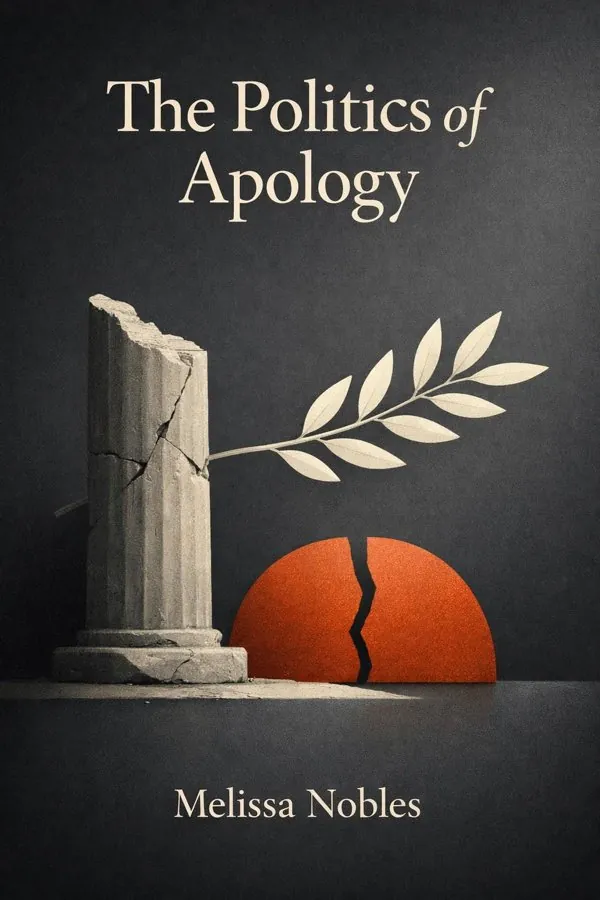
The Politics of Apology: Summary & Key Insights
 10 min8 chaptersAudio available
What Is The Politics of Apology About?
The Politics of Apology by Melissa Nobles is a politics book spanning 8 pages. This book examines the political and moral dimensions of official apologies issued by governments for past injustices. Melissa Nobles explores how states use apologies to address historical wrongs such as slavery, colonialism, and racial discrimination, analyzing their implications for national identity, justice, and reconciliation.
This FizzRead summary covers all 8 key chapters of The Politics of Apology in approximately 10 minutes, distilling the most important ideas, arguments, and takeaways from Melissa Nobles's work. Also available as an audio summary and Key Quotes Podcast.
The Politics of Apology
This book examines the political and moral dimensions of official apologies issued by governments for past injustices. Melissa Nobles explores how states use apologies to address historical wrongs such as slavery, colonialism, and racial discrimination, analyzing their implications for national identity, justice, and reconciliation.
Who Should Read The Politics of Apology?
This book is perfect for anyone interested in politics and looking to gain actionable insights in a short read. Whether you're a student, professional, or lifelong learner, the key ideas from The Politics of Apology by Melissa Nobles will help you think differently.
- ✓Readers who enjoy politics and want practical takeaways
- ✓Professionals looking to apply new ideas to their work and life
- ✓Anyone who wants the core insights of The Politics of Apology in just 10 minutes
Want the full summary?
Get instant access to this book summary and 100K+ more with Fizz Moment.
Get Free SummaryAvailable on App Store • Free to download
Key Chapters
In the latter decades of the twentieth century, something remarkable happened: states began to speak the moral language of apology. Until then, governments had largely treated history as a resource for national pride, not as a burden of guilt. But as the postwar era unfolded—marked by decolonization, civil rights movements, and the global diffusion of human rights norms—societies started to look inward, reexamining their complicity in historical injustices. Apologies for slavery, colonization, indigenous dispossession, and wartime atrocities signaled a new readiness to acknowledge moral responsibility at the state level.
This development was neither spontaneous nor universally embraced. It reflected a confluence of forces: democratization, transnational advocacy networks, and the growth of international law emphasizing accountability. Civil society groups brought forward buried histories of abuse; victims and descendants demanded recognition. In this environment, official apologies became possible—and, at times, politically necessary. Governments that sought legitimacy in liberal norms had to demonstrate moral awareness. Thus, to apologize became an act of political self-preservation as much as a moral gesture.
Apologies also became part of an emerging global script of reconciliation. Influenced by postwar Germany’s model of acknowledgment and reparation, other nations found their own paths toward public contrition. Yet the meaning of apology differed dramatically across contexts. In some places, like post-apartheid South Africa, apology was tied to truth commissions and systemic transformation. Elsewhere, it served primarily symbolic needs, a way for states to reaffirm moral authority without fully redistributing power or resources. What unites these cases is their recognition that history exerts an enduring moral claim upon the present.
To understand why governments apologize, we must see apology as both a moral and political act. Morally, it acknowledges wrongdoing and recognizes victims as wronged. It affirms that certain acts—slavery, forced assimilation, discrimination—were not merely unfortunate byproducts of history but profound violations of ethical norms. Politically, apology functions as a performance of accountability by institutions that wish to restore trust.
In liberal democracies, such acts of acknowledgment are crucial to legitimacy. The modern state derives moral authority from its representation of citizens as equals. When parts of the citizenry have suffered historical exclusion, that contract is broken. The apology becomes a ritual of repair, reaffirming that the state’s moral boundaries now include those it once marginalized. This logic helps explain why political apologies often accompany broader projects of nation-building, reconciliation, or constitutional reform.
But apologies also reveal tension: between sincerity and pragmatism, moral depth and political expediency. Critics question whether governments can truly feel remorse, or whether apologies simply serve to close chapters without real change. My argument acknowledges this skepticism while insisting that the very act of public acknowledgment matters. Even if imperfect, apology shifts the moral terrain of politics; it creates a language through which citizens can demand accountability and justice.
+ 6 more chapters — available in the FizzRead app
All Chapters in The Politics of Apology
About the Author
Melissa Nobles is an American political scientist and academic administrator. She is known for her research on race, ethnicity, and political accountability, and has served as Chancellor and Professor of Political Science at the Massachusetts Institute of Technology (MIT).
Get This Summary in Your Preferred Format
Read or listen to the The Politics of Apology summary by Melissa Nobles anytime, anywhere. FizzRead offers multiple formats so you can learn on your terms — all free.
Available formats: App · Audio · PDF · EPUB — All included free with FizzRead
Download The Politics of Apology PDF and EPUB Summary
Key Quotes from The Politics of Apology
“In the latter decades of the twentieth century, something remarkable happened: states began to speak the moral language of apology.”
“To understand why governments apologize, we must see apology as both a moral and political act.”
Frequently Asked Questions about The Politics of Apology
The Politics of Apology by Melissa Nobles is a politics book that explores key ideas across 8 chapters. This book examines the political and moral dimensions of official apologies issued by governments for past injustices. Melissa Nobles explores how states use apologies to address historical wrongs such as slavery, colonialism, and racial discrimination, analyzing their implications for national identity, justice, and reconciliation.
You Might Also Like

Antifa: The Anti-Fascist Handbook
Mark Bray
10 min
Attack from Within: How Disinformation Is Sabotaging America
Barbara McQuade
10 min
Coercion, Capital, and European States, AD 990–1992
Charles Tilly
10 min
Digital Democracy: Concepts, Methodologies, Tools, and Applications
Various Authors
10 min
Fascism
Stanley G. Payne
10 min
Fire And Fury: Inside The Trump White House
Michael Wolff
10 minBrowse by Category
Ready to read The Politics of Apology?
Get the full summary and 100K+ more books with Fizz Moment.