
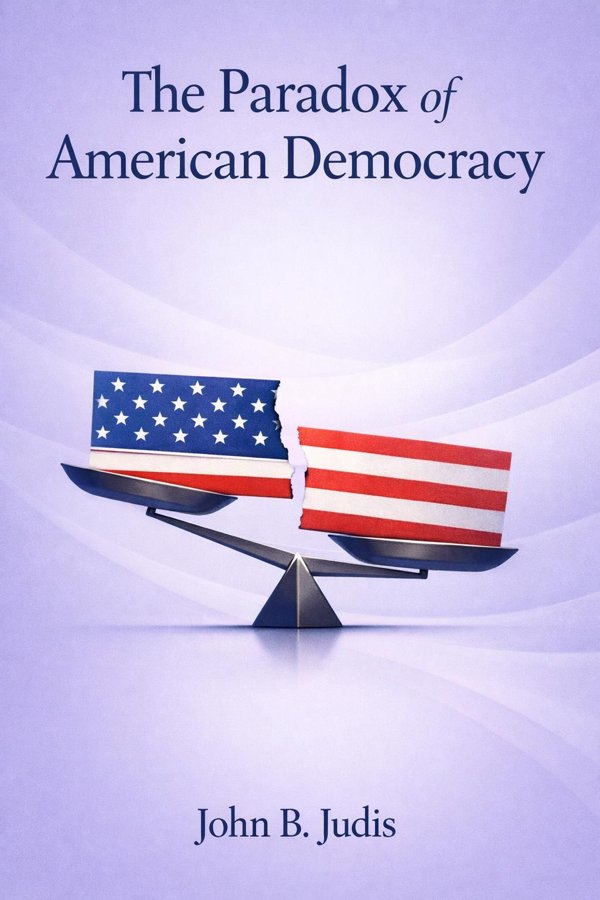
The Paradox of American Democracy: Elites, Special Interests, and the Betrayal of Public Trust: Summary & Key Insights
 10 min9 chaptersAudio available
What Is The Paradox of American Democracy: Elites, Special Interests, and the Betrayal of Public Trust About?
The Paradox of American Democracy: Elites, Special Interests, and the Betrayal of Public Trust by John B. Judis is a politics book spanning 9 pages. In this incisive work, John B. Judis explores the tension between democratic ideals and the influence of elites and special interests in the United States. He argues that American democracy has always contained a paradox: while it promises equality and popular sovereignty, it has been continually shaped and constrained by powerful groups that manipulate institutions and public opinion to serve their own ends. Through historical analysis and political critique, Judis traces how this dynamic has evolved from the founding era to the modern age, revealing how the erosion of public trust threatens the very foundations of democratic governance.
This FizzRead summary covers all 9 key chapters of The Paradox of American Democracy: Elites, Special Interests, and the Betrayal of Public Trust in approximately 10 minutes, distilling the most important ideas, arguments, and takeaways from John B. Judis's work. Also available as an audio summary and Key Quotes Podcast.
The Paradox of American Democracy: Elites, Special Interests, and the Betrayal of Public Trust
In this incisive work, John B. Judis explores the tension between democratic ideals and the influence of elites and special interests in the United States. He argues that American democracy has always contained a paradox: while it promises equality and popular sovereignty, it has been continually shaped and constrained by powerful groups that manipulate institutions and public opinion to serve their own ends. Through historical analysis and political critique, Judis traces how this dynamic has evolved from the founding era to the modern age, revealing how the erosion of public trust threatens the very foundations of democratic governance.
Who Should Read The Paradox of American Democracy: Elites, Special Interests, and the Betrayal of Public Trust?
This book is perfect for anyone interested in politics and looking to gain actionable insights in a short read. Whether you're a student, professional, or lifelong learner, the key ideas from The Paradox of American Democracy: Elites, Special Interests, and the Betrayal of Public Trust by John B. Judis will help you think differently.
- ✓Readers who enjoy politics and want practical takeaways
- ✓Professionals looking to apply new ideas to their work and life
- ✓Anyone who wants the core insights of The Paradox of American Democracy: Elites, Special Interests, and the Betrayal of Public Trust in just 10 minutes
Want the full summary?
Get instant access to this book summary and 100K+ more with Fizz Moment.
Get Free SummaryAvailable on App Store • Free to download
Key Chapters
The paradox of American democracy did not appear suddenly; it is encoded in the founding itself. When the framers gathered in Philadelphia, they held two convictions in tension — the necessity of popular consent and the dread of popular passions. Men like James Madison and Alexander Hamilton envisioned a republic that would protect liberty through checks and balances, not by direct rule of the people. They distrusted factionalism and feared the tyranny of majority sentiment. Madison’s vision for the extended republic was deliberately designed to filter democratic impulses through a layer of educated leadership.
This ambivalence toward democracy meant that from the start, the political order favored property, education, and influence. The Senate, the Electoral College, and the judiciary were instruments that insulated decision-making from direct popular sway. Yet that insulation also created space for enduring elites to consolidate control. Even at the founding, elite dominance was justified as a safeguard for the public good. American democracy was thus built not as an open agora but as a managed balance between authority and consent.
This design both empowered and limited democracy. It shielded institutions from mob rule but entrenched hierarchies of power that would persist for centuries. Understanding this contradiction is essential: it reveals how the United States could preach government by the people while crafting a system designed to restrain them.
If the Constitution planted the seeds of elite control, the rise of political parties watered them. By the early nineteenth century, Americans were learning that democracy required mediation. The Federalists and Jeffersonian Republicans were not simply competing factions; they were mechanisms by which opinion was organized, filtered, and channeled. Parties allowed citizens to feel represented, but they also allowed elites to steer mass participation.
Andrew Jackson’s populism upended elite consensus temporarily, bringing the language of the people into the center of national debate. Yet even the so-called ‘Age of the Common Man’ depended on party machines, brokers, and influential newspapers. Parties became instruments through which elites governed in the name of democracy, not necessarily by it. The paradox sharpened: collective participation expanded, but the system that mediated it remained managed and manipulated by those who understood it best.
By mid-century, this party system became a stabilizing force — yet one that preserved elite coordination under the guise of democratic competition. The people had voices, but those voices were orchestrated within structures that remained controlled from the top.
+ 7 more chapters — available in the FizzRead app
All Chapters in The Paradox of American Democracy: Elites, Special Interests, and the Betrayal of Public Trust
About the Author
John B. Judis is an American journalist and author known for his political analysis and commentary. He has written for publications such as The New Republic and The Washington Post, and authored several influential books on American politics and ideology.
Get This Summary in Your Preferred Format
Read or listen to the The Paradox of American Democracy: Elites, Special Interests, and the Betrayal of Public Trust summary by John B. Judis anytime, anywhere. FizzRead offers multiple formats so you can learn on your terms — all free.
Available formats: App · Audio · PDF · EPUB — All included free with FizzRead
Download The Paradox of American Democracy: Elites, Special Interests, and the Betrayal of Public Trust PDF and EPUB Summary
Key Quotes from The Paradox of American Democracy: Elites, Special Interests, and the Betrayal of Public Trust
“The paradox of American democracy did not appear suddenly; it is encoded in the founding itself.”
“If the Constitution planted the seeds of elite control, the rise of political parties watered them.”
Frequently Asked Questions about The Paradox of American Democracy: Elites, Special Interests, and the Betrayal of Public Trust
The Paradox of American Democracy: Elites, Special Interests, and the Betrayal of Public Trust by John B. Judis is a politics book that explores key ideas across 9 chapters. In this incisive work, John B. Judis explores the tension between democratic ideals and the influence of elites and special interests in the United States. He argues that American democracy has always contained a paradox: while it promises equality and popular sovereignty, it has been continually shaped and constrained by powerful groups that manipulate institutions and public opinion to serve their own ends. Through historical analysis and political critique, Judis traces how this dynamic has evolved from the founding era to the modern age, revealing how the erosion of public trust threatens the very foundations of democratic governance.
You Might Also Like

Antifa: The Anti-Fascist Handbook
Mark Bray
10 min
Attack from Within: How Disinformation Is Sabotaging America
Barbara McQuade
10 min
Coercion, Capital, and European States, AD 990–1992
Charles Tilly
10 min
Digital Democracy: Concepts, Methodologies, Tools, and Applications
Various Authors
10 min
Fascism
Stanley G. Payne
10 min
Fire And Fury: Inside The Trump White House
Michael Wolff
10 minBrowse by Category
Ready to read The Paradox of American Democracy: Elites, Special Interests, and the Betrayal of Public Trust?
Get the full summary and 100K+ more books with Fizz Moment.