
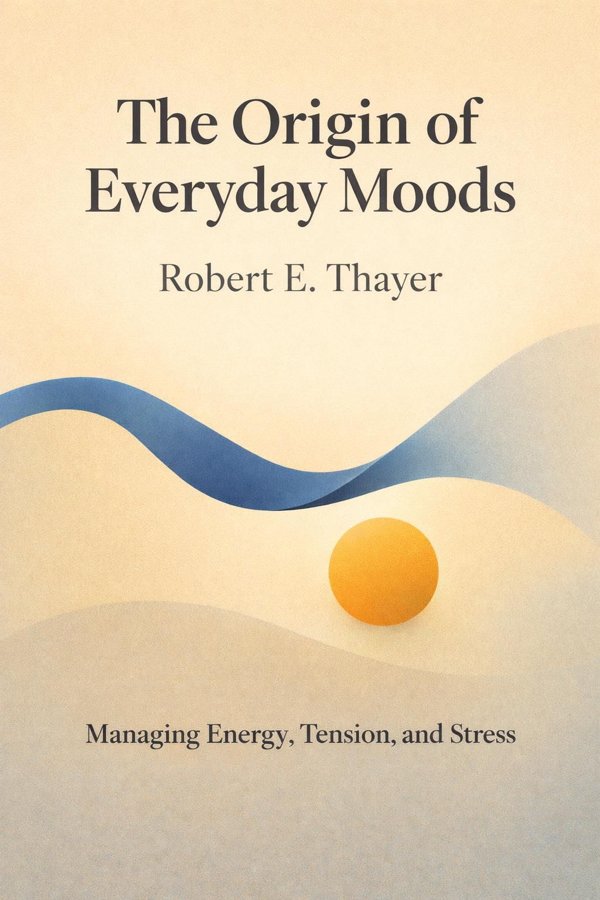
The Origin of Everyday Moods: Managing Energy, Tension, and Stress: Summary & Key Insights
 10 min5 chaptersAudio available
What Is The Origin of Everyday Moods: Managing Energy, Tension, and Stress About?
The Origin of Everyday Moods: Managing Energy, Tension, and Stress by Robert E. Thayer is a psychology book spanning 5 pages. This book explores the psychological and physiological foundations of everyday moods, explaining how energy and tension interact to shape emotional states. Thayer presents a model of mood regulation based on scientific research, offering insights into how lifestyle factors such as sleep, exercise, and diet influence mood patterns and stress management.
This FizzRead summary covers all 5 key chapters of The Origin of Everyday Moods: Managing Energy, Tension, and Stress in approximately 10 minutes, distilling the most important ideas, arguments, and takeaways from Robert E. Thayer's work. Also available as an audio summary and Key Quotes Podcast.
The Origin of Everyday Moods: Managing Energy, Tension, and Stress
This book explores the psychological and physiological foundations of everyday moods, explaining how energy and tension interact to shape emotional states. Thayer presents a model of mood regulation based on scientific research, offering insights into how lifestyle factors such as sleep, exercise, and diet influence mood patterns and stress management.
Who Should Read The Origin of Everyday Moods: Managing Energy, Tension, and Stress?
This book is perfect for anyone interested in psychology and looking to gain actionable insights in a short read. Whether you're a student, professional, or lifelong learner, the key ideas from The Origin of Everyday Moods: Managing Energy, Tension, and Stress by Robert E. Thayer will help you think differently.
- ✓Readers who enjoy psychology and want practical takeaways
- ✓Professionals looking to apply new ideas to their work and life
- ✓Anyone who wants the core insights of The Origin of Everyday Moods: Managing Energy, Tension, and Stress in just 10 minutes
Want the full summary?
Get instant access to this book summary and 100K+ more with Fizz Moment.
Get Free SummaryAvailable on App Store • Free to download
Key Chapters
At the heart of this book lies a model that redefines how we think about mood—not as a single continuum from good to bad, but as a dynamic interplay between two dimensions: energy and tension.
Energy, in psychological terms, represents the degree of physiological activation or vitality one experiences. It is linked to how awake, alert, and physically capable we feel. Tension, on the other hand, refers to feelings of pressure, nervousness, or psychological strain. Together, these two variables create four primary mood quadrants.
When energy is high and tension is low, we find ourselves in the state of energetic calm—a mood conducive to creativity, productivity, and social engagement. When energy is low and tension is high, we feel tired and tense—an unpleasant blend that fosters anxiety and irritability. High-energy tension produces excitement and agitation, often leading to overwork or impulsivity. Low-energy calm leads to relaxation and recuperation, an essential condition for recovery.
This model is not theoretical speculation; it emerged from rigorous empirical work involving thousands of self-reports, physiological measurements, and behavioral analyses. In laboratory and real-life settings, people’s self-ratings of energy and tension reliably predicted emotional patterns, reaction times, and problem-solving efficiency. I found that the transitions between these quadrants often occur gradually throughout the day, guided by internal biological rhythms and external events.
For example, most people’s energy peaks midmorning and again in late afternoon, whereas tension tends to rise with mental load and environmental demands. Understanding this interplay gives us the ability to forecast our emotional weather. We learn that the tired-and-tense state is not necessarily pathological—it can arise naturally from accumulated stress or poor sleep—and knowing where we are in this two-dimensional space allows corrective strategies to restore balance.
By learning this two-axis structure, you start to see mood as a self-regulating system rather than a random series of highs and lows. It’s a scientific map for guiding emotional energy back to stability and vitality.
Our moods follow biological laws. Beneath the surface of our consciousness, the body operates through rhythmic patterns—cycles of hormonal secretion, body temperature, and neural arousal—that shape how energetic or tense we feel.
In the book, I describe how circadian rhythms significantly govern daily mood variations. The body regulates alertness and fatigue in roughly 24-hour cycles, influenced by light exposure, sleep, and activity patterns. Most people experience natural energy lows in early morning and mid-afternoon, often misinterpreted as psychological weakness. In reality, these fluctuations are biological, not personal failings.
Experimental data show that physiological arousal—linked to brain activity and endocrine responses—rises throughout the morning, peaks around midday, and declines into the evening. Correspondingly, tension follows environmental stress cues: workload, social demands, and emotional challenges. When biological rhythm and social rhythm fall out of sync, we feel irritable, sluggish, or stressed.
Through the lens of this model, managing mood becomes an exercise in synchronizing lifestyle with rhythm. Sleep consistency, exposure to natural light, and timing of meals can recalibrate the body's internal clock, transforming mood predictability. I emphasize that even mood disorders often manifest as rhythm disruptions—an inability of the body’s timing systems to regulate energy and tension effectively.
By observing your own cycles, you begin to predict when you will feel creative, relaxed, or pressured. This self-awareness is the cornerstone of emotional regulation. You migrate from reactively experiencing moods to proactively designing your days around them—using your biology instead of fighting against it.
+ 3 more chapters — available in the FizzRead app
All Chapters in The Origin of Everyday Moods: Managing Energy, Tension, and Stress
About the Author
Robert E. Thayer (1935–2014) was an American psychologist and professor at California State University, Long Beach. He was known for his research on mood, energy, and self-regulation, and authored several influential works on the psychology of everyday life.
Get This Summary in Your Preferred Format
Read or listen to the The Origin of Everyday Moods: Managing Energy, Tension, and Stress summary by Robert E. Thayer anytime, anywhere. FizzRead offers multiple formats so you can learn on your terms — all free.
Available formats: App · Audio · PDF · EPUB — All included free with FizzRead
Download The Origin of Everyday Moods: Managing Energy, Tension, and Stress PDF and EPUB Summary
Key Quotes from The Origin of Everyday Moods: Managing Energy, Tension, and Stress
“At the heart of this book lies a model that redefines how we think about mood—not as a single continuum from good to bad, but as a dynamic interplay between two dimensions: energy and tension.”
“Beneath the surface of our consciousness, the body operates through rhythmic patterns—cycles of hormonal secretion, body temperature, and neural arousal—that shape how energetic or tense we feel.”
Frequently Asked Questions about The Origin of Everyday Moods: Managing Energy, Tension, and Stress
The Origin of Everyday Moods: Managing Energy, Tension, and Stress by Robert E. Thayer is a psychology book that explores key ideas across 5 chapters. This book explores the psychological and physiological foundations of everyday moods, explaining how energy and tension interact to shape emotional states. Thayer presents a model of mood regulation based on scientific research, offering insights into how lifestyle factors such as sleep, exercise, and diet influence mood patterns and stress management.
You Might Also Like
The Body Keeps the Score
Bessel van der Kolk
10 min
Surrounded by Idiots
Thomas Erikson
10 min
Emotional Intelligence
Daniel Goleman
10 min
Attached
Amir Levine
10 min
Why Does He Do That
Lundy Bancroft
10 min
Women Who Run with the Wolves
Clarissa Pinkola Estés
10 minBrowse by Category
Ready to read The Origin of Everyday Moods: Managing Energy, Tension, and Stress?
Get the full summary and 100K+ more books with Fizz Moment.