
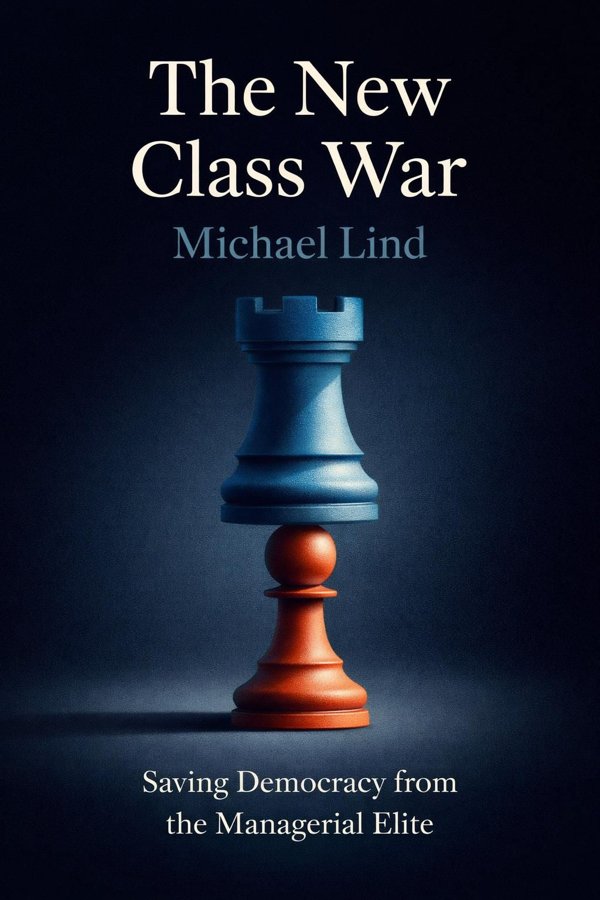
The New Class War: Saving Democracy from the Managerial Elite: Summary & Key Insights
by Michael Lind
 10 min6 chaptersAudio available
What Is The New Class War: Saving Democracy from the Managerial Elite About?
The New Class War: Saving Democracy from the Managerial Elite by Michael Lind is a politics book spanning 6 pages. In The New Class War, Michael Lind argues that Western democracies are being undermined by a new managerial elite that has replaced the traditional working class as the dominant social force. He explores how this elite controls institutions, culture, and politics, leading to widespread populist backlash. Lind calls for a restoration of democratic pluralism and a rebalancing of power between the elite and the working class.
This FizzRead summary covers all 6 key chapters of The New Class War: Saving Democracy from the Managerial Elite in approximately 10 minutes, distilling the most important ideas, arguments, and takeaways from Michael Lind's work. Also available as an audio summary and Key Quotes Podcast.
The New Class War: Saving Democracy from the Managerial Elite
In The New Class War, Michael Lind argues that Western democracies are being undermined by a new managerial elite that has replaced the traditional working class as the dominant social force. He explores how this elite controls institutions, culture, and politics, leading to widespread populist backlash. Lind calls for a restoration of democratic pluralism and a rebalancing of power between the elite and the working class.
Who Should Read The New Class War: Saving Democracy from the Managerial Elite?
This book is perfect for anyone interested in politics and looking to gain actionable insights in a short read. Whether you're a student, professional, or lifelong learner, the key ideas from The New Class War: Saving Democracy from the Managerial Elite by Michael Lind will help you think differently.
- ✓Readers who enjoy politics and want practical takeaways
- ✓Professionals looking to apply new ideas to their work and life
- ✓Anyone who wants the core insights of The New Class War: Saving Democracy from the Managerial Elite in just 10 minutes
Want the full summary?
Get instant access to this book summary and 100K+ more with Fizz Moment.
Get Free SummaryAvailable on App Store • Free to download
Key Chapters
The transformation from industrial democracy to managerial hierarchy did not happen overnight. Globalization, deregulation, and the revolution in information technology combined to create a new elite class — highly educated professionals who manage information, systems, and people rather than produce goods. Unlike the corporate executives of the mid-20th century, these elites are transnational and technocratic; their loyalty is to their institutions and their peer networks, not to communities or countries.
This new managerial class flourished in universities, NGOs, corporations, and bureaucracies. They share an ethos of expertise, credentialism, and cultural cosmopolitanism. From their perspective, they embody rational governance: efficient, data-driven, and merit-based. But from the standpoint of those governed, they represent a remote, self-reinforcing oligarchy. The decisions about trade, immigration, cultural policy, and regulation are made in boardrooms and policy circles insulated from democratic accountability.
Technocracy promised to make politics scientific. Instead, it replaced democratic mediation with managerial fiat. Citizens became consumers of governance rather than participants in it. This elite justifies its power through moral rhetoric — appeals to diversity, sustainability, and innovation — but in practice these slogans often mask the consolidation of authority. They command global networks rather than local loyalties. In doing so, they unshackled themselves from the working class that once shared in national destiny.
The rise of the managerial elite is central to understanding contemporary alienation. It reshaped institutions around administrative control and cultural signaling, not around negotiation and representation. What they call efficiency often serves as a euphemism for exclusion. The managerial ethos values procedure over participation, and expertise over experience. As a result, democracy becomes technocracy, and the citizen becomes an audience rather than a sovereign.
+ 4 more chapters — available in the FizzRead app
All Chapters in The New Class War: Saving Democracy from the Managerial Elite
About the Author
Michael Lind is an American writer, policy analyst, and professor known for his works on political economy, history, and national strategy. He co-founded New America and has written extensively on class, economics, and American identity.
Get This Summary in Your Preferred Format
Read or listen to the The New Class War: Saving Democracy from the Managerial Elite summary by Michael Lind anytime, anywhere. FizzRead offers multiple formats so you can learn on your terms — all free.
Available formats: App · Audio · PDF · EPUB — All included free with FizzRead
Download The New Class War: Saving Democracy from the Managerial Elite PDF and EPUB Summary
Key Quotes from The New Class War: Saving Democracy from the Managerial Elite
“To understand the new class war, we must first recall the old one and how it was resolved.”
“The transformation from industrial democracy to managerial hierarchy did not happen overnight.”
Frequently Asked Questions about The New Class War: Saving Democracy from the Managerial Elite
The New Class War: Saving Democracy from the Managerial Elite by Michael Lind is a politics book that explores key ideas across 6 chapters. In The New Class War, Michael Lind argues that Western democracies are being undermined by a new managerial elite that has replaced the traditional working class as the dominant social force. He explores how this elite controls institutions, culture, and politics, leading to widespread populist backlash. Lind calls for a restoration of democratic pluralism and a rebalancing of power between the elite and the working class.
You Might Also Like
Antifa: The Anti-Fascist Handbook
Mark Bray
10 min
Attack from Within: How Disinformation Is Sabotaging America
Barbara McQuade
10 min
Coercion, Capital, and European States, AD 990–1992
Charles Tilly
10 min
Digital Democracy: Concepts, Methodologies, Tools, and Applications
Various Authors
10 min
Fascism
Stanley G. Payne
10 min
Fire And Fury: Inside The Trump White House
Michael Wolff
10 minBrowse by Category
Ready to read The New Class War: Saving Democracy from the Managerial Elite?
Get the full summary and 100K+ more books with Fizz Moment.